

Qinglian Bio Unveils Fully Automated, End-to-End Proteomics Platform—Reducing Workflow from 10 Days to 4 Hours
Proteins are fundamental units that execute the functions of living organisms, carrying out biological roles through complex pathway networks. Proteomics research is relatively intricate, encompassing investigations into protein expression levels, post-translational modifications, protein-protein interactions, and the regulation and function of signaling and metabolic pathways, often requiring high-throughput, large-scale omics approaches.
In recent years, the global proteomics market has experienced significant growth, driven by the increasing applicability of proteomics in disease diagnosis and drug development. Since late 2020, several biotechnology companies offering proteomics technologies, including Seer, Olink, Nautilus, Quantum-Si, and SomaLogic, have gone public one after another, attracting enthusiastic interest from investors.
Compared with overseas markets, China’s proteomics market has kept pace with global trends and has initially established a complete industry chain encompassing upstream mass spectrometry instrument and proteomics reagent suppliers, midstream proteomics technical service providers, and downstream end-users in protein application and detection, giving rise to a cohort of outstanding enterprises specializing in proteomics.
Qinglian Bio is a next-generation proteomics platform enterprise dedicated to proteomics-driven drug development and precision medicine,Equipped with unique nanomagnetic bead-based enrichment technology for low-abundance proteins and an intelligent robotic system for fully automated sample processing across the entire proteomics workflow. In terms of experience with full-spectrum clinical samples, particularly for low-abundance and ultra-trace samples such as plasma and exosomes, an integrated platform for biomarker discovery and detection has been achieved.
The company's independently developedThe New-Generation DMB Workflow (Deep Mining Beads Workflow) Proteomics Platform, Comprising Multifunctional Nanomagnetic Bead Enrichment Kits, Fully Automated Sample Processing Instruments, and Fully Automated Big Data Analysis Software, it not only provides standardized solutions for upstream tools but also offers diagnostic and therapeutic biomarker development services for clinical mass spectrometry, delivering a one-stop, closed-loop R&D service from clinical needs to the commercialization of diagnostic and therapeutic products.
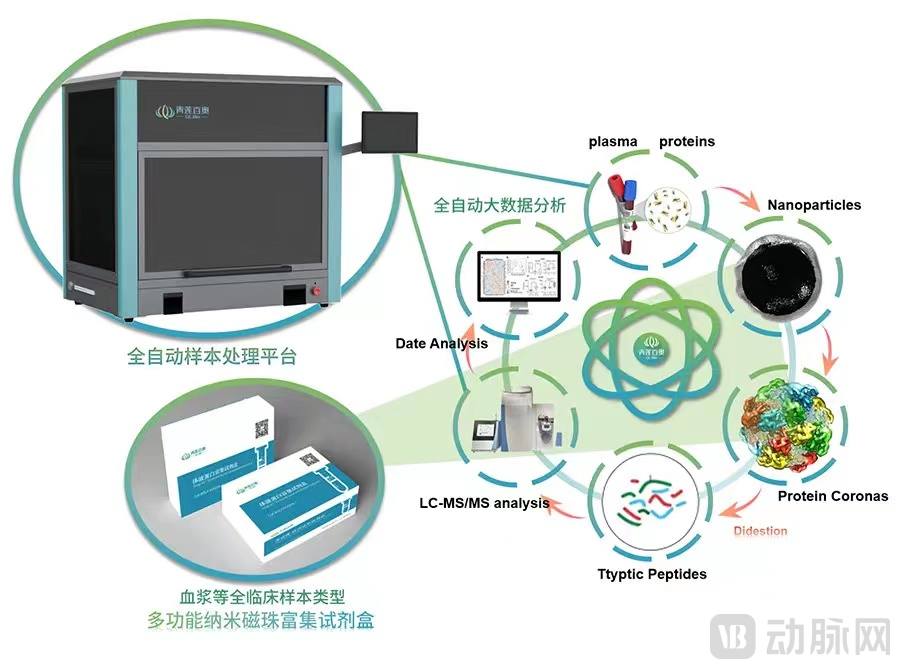
The development trajectory of proteomics mirrors that of genomics, requiring innovative technologies to empower the field and address all current bottlenecks hindering its emergence as a translational medicine technology. Key pain points include the analysis of ultra-trace samples, acquisition of low-abundance and highly heterogeneous signals, high-throughput and automated processing workflows, and the integration of artificial intelligence algorithms.
Among these, the challenges in acquiring low-abundance signals are the most prominent.Despite the rapid advancement of analytical instruments and computational tools in proteomics, one of the greatest challenges remains the acquisition of protein samples characterized by low abundance and high heterogeneity, spanning a dynamic range of over six orders of magnitude. In particular, the blood proteome comprises approximately 10,000 distinct protein forms, with a dynamic range covering nearly 1012orders of magnitude, and is dominated by high-abundance proteins, whose concentrations can reach mg/mL, whereas low-abundance proteins are present at only pg/mL.Conventional enrichment methods result in the loss of signals from a large number of low-abundance proteins, leading to severely insufficient data for subsequent analysis. However, these low-abundance proteins are often the disease-specific biomarkers or target protein molecules for drug action.
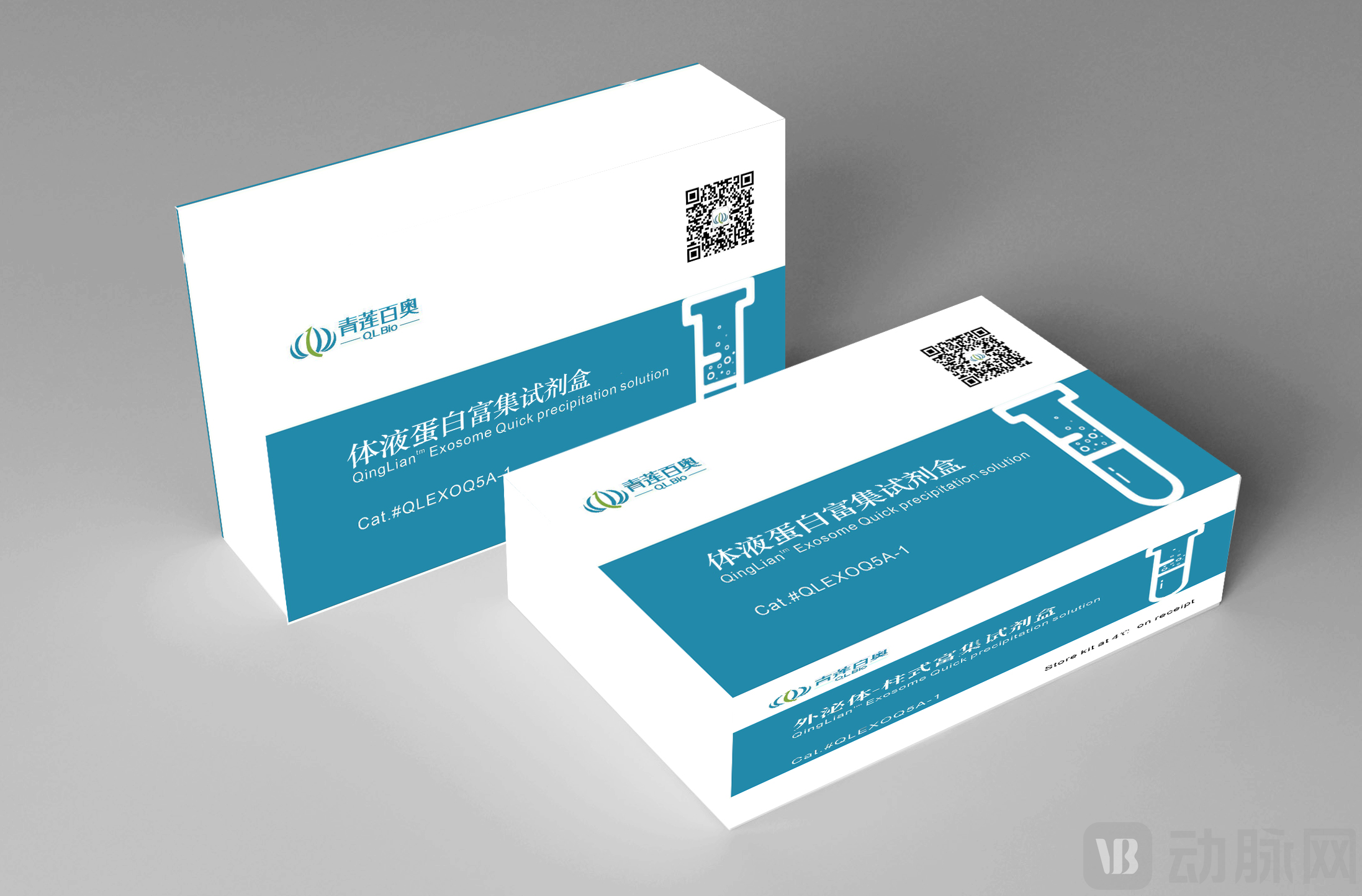
To address the challenges in detecting low-abundance proteins, Qinglian Bio’s independently developed multifunctional magnetic bead enrichment kit enables high-depth capture of low-abundance proteins using various types of magnetic beads, significantly enhancing detection sensitivity.
Meanwhile, Qinglian Bio has successively developed protein enrichment kits targeting various functional dimensions of proteins (dimensions influencing protein function include protein expression levels, post-translational modification levels, protein-protein interaction levels, subcellular localization, etc.). The product portfolio encompasses seven major categories: blood-based, other body fluid-based, exosome-based, post-translationally modified, protein interaction-focused, spatial proteomics, and general proteomics. Furthermore, these kits enable highly sensitive detection with only microliter-level sample input, resulting in minimal sample loss and easily accommodating various ultra-micro clinical samples.
A typical proteomics study encompasses multiple steps, including sample enrollment, experimental design, pre-analytical processing for clinical mass spectrometry, data acquisition via LC-MS/MS, database searching, quality control, bioinformatics analysis, and data mining. Currently, proteomics research protocols in China rely heavily on manual operations, which are cumbersome and time-consuming, with data quality constrained by the expertise of personnel performing the processing.
“Therefore, we independently developed China’s first fully automated sample preparation system for proteomics (also known as a proteomics robot, model QLBIO-AP-96), which covers the entire workflow from protein extraction and enrichment of clinical body fluid/tissue samples to liquid chromatography-tandem mass spectrometry (LC-MS/MS) analysis. This end-to-end automation solution facilitates proteomics research and accelerates the discovery and translation of clinical biomarkers and drug targets,” said Li Jingli.
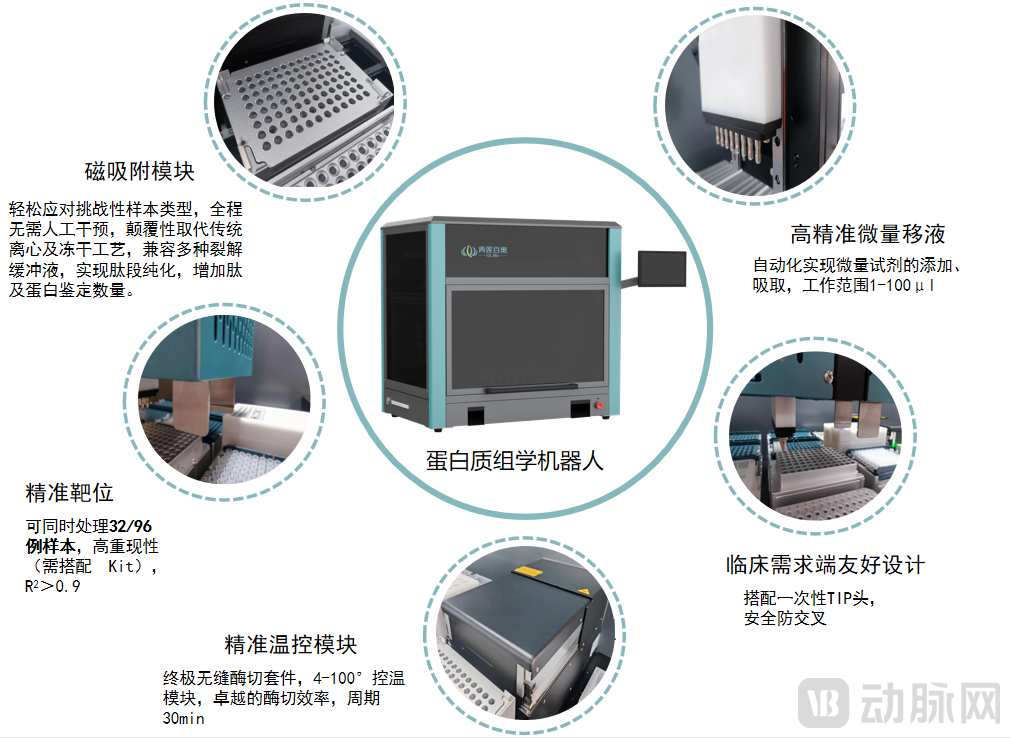
Qinglian Bio’s proteomics robot features a magnetic adsorption module, precise temperature control module, micro-volume liquid handling workstation, and compatible reagents and consumables. It can process 32 or 96 samples simultaneously, is equipped with an integrated, user-friendly interface, and allows flexible editing of processing protocols. The system is compatible with DIA, TMT, and LFQ workflows on LC-MS/MS platforms from Thermo, Bruker, and AB Sciex, enabling fully automated and standardized processing of clinical mass spectrometry protein samples.
“To conduct proteomics research, identify potential biomarkers, or investigate disease pathogenesis, simply load the samples, select the appropriate functional magnetic bead enrichment kit, and wait for fully automated data generation,” introduced Li Jingli. This proteomics robot is capable ofReducing the manual pre-processing time for 100 samples from the traditional 10-day cycle to just 4 hours helps address the challenges of preparation and stability in large-scale clinical cohort studies.
Li Jingli also stated that the company’s four co-founders have personally witnessed the iterative development of proteomics technologies over the past 20 years,From a throughput that could detect 20 proteins in a single sample over two weeks, to today witnessing our platform process 10 samples per day, with each sample yielding data on nearly 10,000 proteins.This signifies that elucidating the mechanisms of biological changes through proteomics holds significant strategic importance for providing solutions to the prevention and treatment of serious diseases, enhancing originality in new drug development, and promoting the growth of the biopharmaceutical industry.
Currently, Qinglian BaiAo has established partnerships with over 300 key domestic clients, including hospitals and pharmaceutical manufacturers. Its business spans multiple areas, such as drug target discovery, disease biomarker screening, drug characterization, and IVD product development.
Regarding future plans, Li Jingli stated that Qinglian BaiAo will adhere to a clinical problem-oriented approach and prioritize source innovation as its core driving force. The company will continue to leverage proteomics technologies to facilitate the clinical and pharmaceutical translation of diagnostic and therapeutic protein biomarkers, thereby truly achieving the integration of biomarker discovery and detection platforms.