Home Eli Lilly Rises to Global No.3 in Top 20 Pharma Rankings Driven by GLP-1 Blockbusters

Eli Lilly Rises to Global No.3 in Top 20 Pharma Rankings Driven by GLP-1 Blockbusters

Apr 21, 2026 19:04 CST Updated 19:04
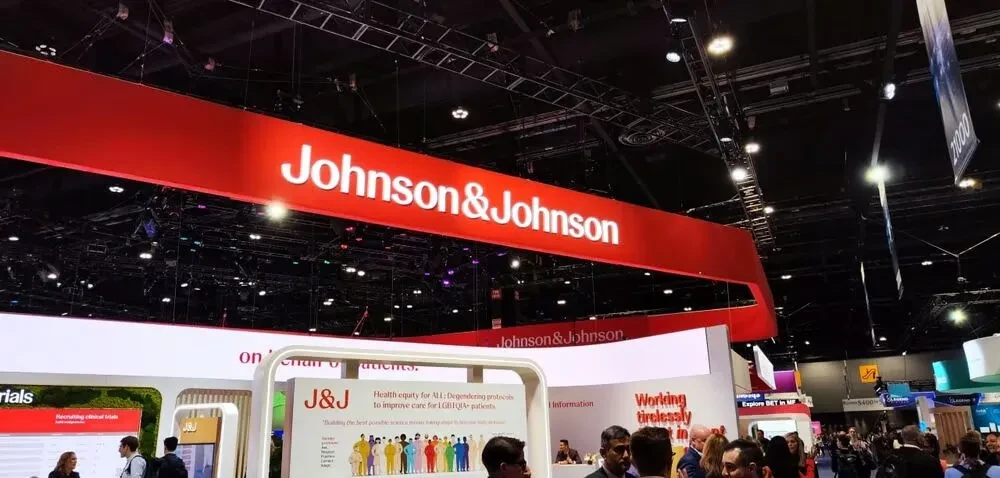
Johnson & Johnson

Medical Device R&D and Manufacturer

Image

Based on the revenue situation of major pharmaceutical companies in 2025, the well-known industry media Fierce Pharma recently releasedTop 20 Global Biopharmaceutical CompaniesAs the global pharmaceutical industry enters a new cycle of innovation and iteration, this list not only visually presents the changes in the scale rankings of leading companies but also clearly outlines the deep structural transformations taking place in the global pharmaceutical industry.
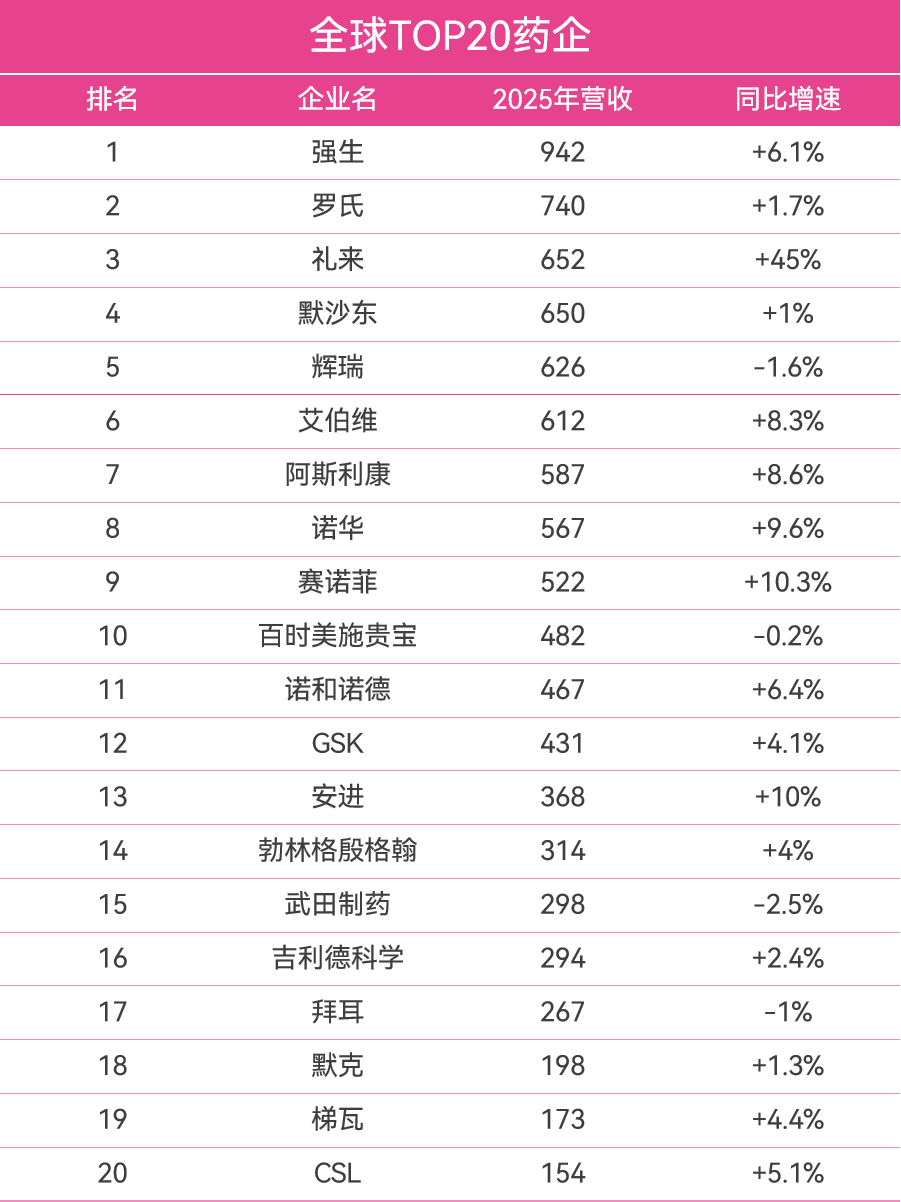
Among them,Metabolic drugs represented by GLP-1 have become the core variable in reshaping the industry landscape, with Eli Lilly's revenue growth of 45% propelling it six places higher to rank third globally.; Johnson & Johnson continues to maintain its position as the industry leader and is expected to reach the $100 billion revenue threshold by 2026; meanwhile, several established pharmaceutical companies are facing a patent cliff, putting pressure on their revenue growth, further intensifying the Matthew Effect and track differentiation in the global pharmaceuticals industry.
Image
Top 20 Global Biopharmaceutical Companies in 2025
(Unit: billion USD, data source: Fierce Pharma)


GLP-1 Drugs Spark Growth

The most core variable in the TOP20 list is undoubtedly the explosion of GLP-1 drugs.
Eli Lilly's total revenue for 2025 reached $65.2 billion, a year-on-year increase of 45%, far outpacing other companies in the TOP20.This impressive performance was almost entirely driven by its two tirzepatide products.Mounjaro, a diabetes drug, and Zepbound, a weight-loss medication, achieved combined annual sales of $36.5 billion, doubling from $16.5 billion in 2024, accounting for 56% of Eli Lilly's total annual revenue.
These two products not only surpassed Novo Nordisk's semaglutide combination (Ozempic, Wegovy) with $31.1 billion in annual sales, but also made tirzepatide the best-selling drug globally in 2025. With the explosive growth of GLP-1 products, Eli Lilly achieved a significant leap in rankings, climbing from the 15th position globally in 2020 to the 3rd spot globally in 2025, and becoming the world's first pharmaceutical company to break through a trillion-dollar market value in November 2025.
Image
By contrast, Novo Nordisk, the early mover in the GLP-1 space, has clearly slowed down.Novo Nordisk's revenue in 2025 is approximately US$46.7 billion, increasing by 6.4% year-on-year. This marks the first time this decade that double-digit growth has not been achieved, with its ranking remaining at 11th place.At the same time, it is expected that revenue will decline by 5% to 13% in 2026, attributing the pressure to tightened pricing, increased competition, and the impact of the most-favored-nation pricing mechanism.
This also marks the GLP-1 track moving from "one dominant player" into a new phase of dual-power competition led by Eli Lilly.


Stable Head Structure

Apart from Lilly's leap, the list as a whole shows significant stability.
Johnson & Johnson Remains First with $94.2 Billion in RevenueSince 2012, Johnson & Johnson has consistently maintained its position as the industry leader, except for a brief period in 2022 when Pfizer temporarily surpassed it due to pandemic-related products. In 2025, Johnson & Johnson's revenue is expected to grow by 6.1% year-over-year. After spinning off its consumer health division, Kenvue, the company’s structure, driven by dual engines of innovative pharmaceuticals and medical technology, has become even clearer. Johnson & Johnson's revenue in 2026 is projected to reach between $99.5 billion and $101.08 billion, potentially making it the second pharmaceutical company after Pfizer to achieve annual revenue exceeding $100 billion.
Image
Roche ranked second on the list with $74 billion in revenue., despite the slowdown in the core oncology pipeline, ophthalmology drug Vabysmo and multiple sclerosis drug Ocrevus continue to contribute stable revenue. Meanwhile, the company is also expanding into the GLP-1 sector through acquisitions, aiming to seize the next wave of industry growth.
Overall,Apart from Eli Lilly, the ranking changes of TOP20 companies generally range between 1-2 positions, and even most remain unchanged.. This means,The barriers at the top of the industry have gradually stabilized, and regular product iterations can hardly change the rankings. What can truly reshape the landscape are still a few disruptive blockbuster products.


Patent Cliff Becomes a Matter of Life and Death

In contrast to the stable head, the patent cliff continues to impact some pharmaceutical companies.
Most companies with declining revenue in 2025 are concentrated around this factor: Bristol-Myers Squibb (BMS) saw a slight 0.2% drop in revenue in 2025, falling two places to 10th, primarily due to a 16% year-on-year decline in sales of mature drugs like Revlimid; Takeda Pharmaceutical's revenue fell by 2.5%, dropping its ranking to 15th, mainly impacted by generic competition for Vyvanse; Bayer’s revenue decreased by 1%, with core products Xarelto and Eylea experiencing continued sales declines following patent expiration, and pressure is expected to persist into 2026.
In stark contrast,Multiple pharmaceutical companies have achieved counter-cyclical growth by focusing on innovative drugs through business spin-offs.After Johnson & Johnson and Sanofi divested their consumer health businesses, their growth improved significantly. Sanofi's revenue is expected to grow by 10.3% in 2025, ranking back up to 9th place, as it has emerged from the initial trough following the spin-off.
At the same time,Large-scale M&A has become a core strategy for pharmaceutical companies to complete their pipelines and address patent expirations.To mitigate the risk of Keytruda's patent expiration in 2028, Merck has completed several large-scale acquisitions in recent years. Since 2024, it has acquired Verona and Cidara Therapeutics; Novartis spent $12 billion to acquire Avidity Biosciences, a leader in RNA therapeutics, setting a record for the largest acquisition in nearly a decade; Pfizer, through a $43 billion acquisition of Seagen, has made a deep push into the ADC sector, seeking its second growth curve.


The differentiation of tracks continues to intensify.
From the perspective of therapeutic areas, the industry differentiation will further deepen by 2025.
Metabolism, Autoimmunity, and Oncology Remain the Three Core Drivers of Growth for Large Pharmaceutical CompaniesCompanies on the list that have achieved rapid growth almost all rely on blockbuster products in these three major fields.
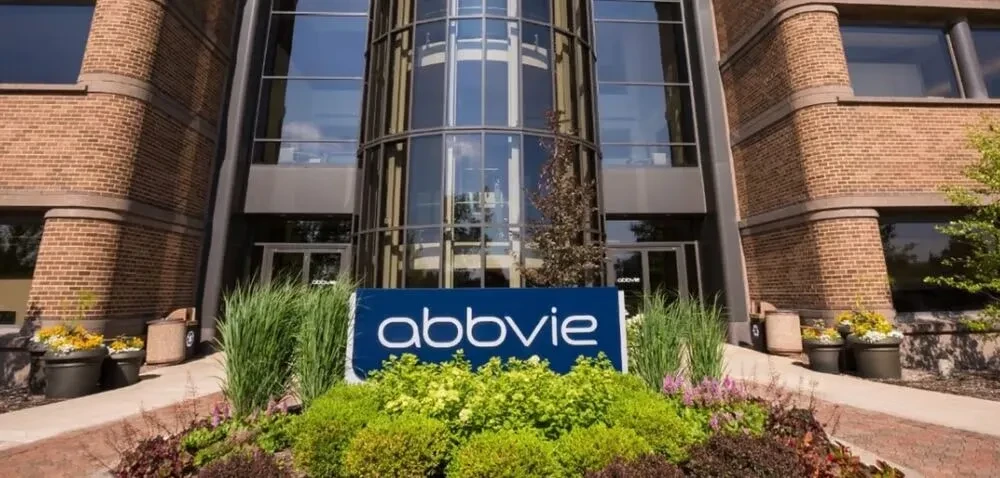
Lilly's metabolic GLP-1 products, AbbVie's autoimmune duo Skyrizi and Rinvoq, and the ADC oncology drug Enhertu, co-developed by AstraZeneca and Daiichi Sankyo, have all become core pillars of their respective companies' performance. Among them, AbbVie, driven by the continued growth of Skyrizi and Rinvoq, achieved an 8.3% year-on-year increase in revenue, reaching a new historical high.
Image
In contrast,Vaccine Track Welcomes Collective WinterMerck's HPV vaccine Gardasil sales fell from $8.6 billion in 2024 to $5.2 billion, a year-on-year decline of 39%, mainly due to the impact of domestic substitution in the Chinese market and a pullback in demand in Japan; GSK's shingles vaccine Shingrix saw an 17% sales decline in the U.S. market, and its RSV vaccine Arexvy also experienced a downturn in the U.S. Overall, vaccine companies are facing challenges such as domestic substitution in China, declining vaccination rates, and growth momentum significantly weaker than the core track of innovative drugs.


Core Performance of Leading Enterprises

Johnson & Johnson: Firmly in First Place, a Billion-Dollar Threshold in Sight

Johnson & Johnson Achieves $94.2 Billion in Revenue in 2025, Up 6.1% Year-on-Year, Remaining the World's Largest. After Spinning Off the Consumer Health Business, the Company’s Dual Engine Strategy, Focused on Innovative Pharmaceuticals and Medical Technology, Becomes Even Clearer.
Products such as the multiple myeloma pipeline, the antidepressant Spravato, and the anticoagulant Xarelto have maintained stable contributions. Meanwhile, the company has strengthened its central nervous system layout through the acquisition of Intra-Cellular Therapies. Johnson & Johnson expects revenue to reach between $99.5 billion and $101.08 billion by 2026, with the $100 billion mark within sight.

Lilly: Largest Source of Growth, Highly Concentrated Increase

Lilly is the most representative growth sample of the year. A 45% revenue growth rate propelled it to the third largest globally.
Two products of Tirzepatide contributed $36.5 billion in revenue, accounting for more than half, making the company's growth highly concentrated on a single mechanism. Meanwhile, the company is advancing its oral GLP-1 product portfolio. By 2026, Eli Lilly expects revenue to reach between $80 billion and $83 billion, but the growth rate will decline compared to 2025, with pricing pressures and intensifying competition gradually becoming apparent.

Novo Nordisk: Growth Slows, Enters Adjustment Phase

Novo Nordisk's revenue in 2025 is approximately US$46.7 billion, increasing by 6.4% year-on-year. This marks the first time this decade that double-digit growth has not been achieved.
Despite maintaining high sales, semaglutide has been overtaken by Eli Lilly. The company forecasts a 5% to 13% decline in revenue by 2026. Under the dual pressures of pricing and a changing competitive landscape, Novo Nordisk is entering a phase of transitioning from rapid expansion to structural adjustment.

Merck & Pfizer: Rebalancing After the Dividend Clearance

Two giants that once rapidly expanded due to their COVID-19 products have both entered an adjustment phase in 2025.
Merck's revenue increased by 1% year-over-year. The growth rate of its core product Keytruda dropped to 7%, significantly lower than the previous range of 18%-22%; sales of the HPV vaccine Gardasil plummeted by 39%. Against the backdrop of the upcoming patent expiration for its core products in 2028, the company is bolstering its pipeline through continuous acquisitions.
Pfizer's Revenue Drops 1.6% Year-over-Year: Comirnaty and Paxlovid Sales Continue to Decline, with Paxlovid Plummeting 59%. Company Forecasts Further Minor Revenue Decline by 2026, Now Relying on Seagen’s ADC Assets to Rebuild Oncology Growth Trajectory.

About VectorBuilderCloud Boat Biotech


VectorBuilder, founded by world-renowned molecular biologist Dr. Lan Tian, is a leading gene delivery company with over 10 subsidiaries and offices worldwide. In 2023, it was promoted to a global unicorn enterprise.

Cloud舟Bio independently developed the "VectorBuilder" platform, ushering in the commercial era of personalized gene vectors; it has currently empowered more than 130 countries and regions worldwide, serving over 7,000 top research institutions and pharmaceutical companies. Its customer coverage in QS Top 100 universities has reached 90%, and its customer coverage among the global TOP30 pharmaceutical enterprises also exceeds 90%. The global citation volume of its product achievements exceeds 7,000 papers.

Cloud舟Bio's gene drug CRO and CDMO projects span multiple countries and regions, including North America, Europe, and Japan. It has successfully supported dozens of projects worldwide in conducting IIT or IND research. Among them, GMP-grade plasmids and lentiviral vectors have received formal IND approval from the U.S. FDA for use in multicenter clinical trials in the United States.

Cloud Boat Biotech is committed to systematically overcoming key technical bottlenecks in the gene delivery industry, creating irreplaceable value for the industry and the world.

Image

Image
Image
Image
Image
 
 
Image
Image