

Songyan Tech: From Premium Massage Chairs to AI-Driven Mental Health and Sleep Solutions
During his layover, we interviewed Yang Jianwen, Chairman of SHOUKEN.
We first came into contact with him in late March this year. At that time, the “series” of corporate introduction materials he provided caught our attention. The reason he only accepted an interview from VCBeat four months later was that he was simply too busy.
Throughout the interview, we were repeatedly interrupted by incoming calls from him. Despite the fragmented nature of our conversation, we managed to clarify the development trajectory of SHOUKEN. Founded in 2006, SHOUKEN has evolved from a manufacturer of high-end massage chair equipment into a company with extensive layouts in the fields of sleep and mental health. Leveraging its accumulated expertise in mechatronics and the integration of artificial intelligence with IoT technologies, SHOUKEN has centered its offerings on mind-body interaction, stress relief, sleep regulation, and spinal care. By achieving seamless interconnectivity between hardware and software, the company has become a provider of intelligent, data-driven, prescription-based, and systematic solutions.
From Smart Massage Chairs to High-Tech Slow-Wave Sleep Pods
Transitioning from a leading Chinese manufacturer of high-end intelligent massage and relaxation devices to a current provider of digital-intelligent service solutions for mind-body interaction, psychology, and sleep health, Yang Jianwen describes this shift as “evolving from the physical relaxation services offered by massage chairs to the mental and spiritual relaxation services provided by the Slow Wave Sleep Pods, truly achieving an ultimate integration of body, mind, and spirit for stress reduction and rejuvenation.” In reality, this process was neither as effortless as a joke nor merely a visible transformation in the form of physical equipment. It involved countless hardships and twists along the way.
Founded in 2006, SHOUKEN, despite being backed by Shogun Electromechanical (Queyou)’s profound expertise in integrated electromechanical and optoelectronic technologies, once faced a severe crisis characterized by massive product inventory overhang and significant challenges in channel expansion due to strategic missteps. It was not until the arrival of Yang Jianwen, who brought over a decade of experience in strategic and marketing management for listed companies, that the company navigated through the crisis and ushered in new growth by swiftly adjusting its strategy, implementing internal reforms, and expanding externally. In 2009, Yang Jianwen accepted the appointment during this critical period and chose to break through from two directions—
First, the innovation of marketing channels.SHOUKEN’s massage chairs are positioned for the high-end consumer market. After conducting precise user profiling, the company targeted high-net-worth individuals and prioritized premium venues such as airports and authorized car dealerships (4S stores) as key distribution channels. “At that time, our coverage in these channels was the most comprehensive.” For SHOUKEN, most customers spend three to four hours at authorized car dealerships during vehicle maintenance, providing a natural setting for the “experiential marketing” of its massage chair products.
Second, continuous iteration of the product.While other manufacturers at the time viewed foreign trade as a breakthrough point to achieve profits through scale expansion, SHOUKEN, as an “outlier” in the industry, chose a strategy focused on domestic high-end clients and in-depth technological research. In collaboration with Professor Wang Jian, Director of the Institute of Sports Science and Technology at Zhejiang University, Council Member of the Chinese Ergonomics Society, and Deputy Director of its Biomechanics Professional Committee, as well as other “Red Wall Doctors,” SHOUKEN conducted theoretical and practical research on body relaxation and intelligent massage from the perspectives of both Traditional Chinese Medicine and Western medicine, ultimately translating these efforts into commercial products. Innovations in product efficacy and functionality enabled SHOUKEN to be the first to launch models featuring digital massage chairs controlled via Bluetooth and smart touchscreens, rapidly garnering a loyal base of high-end users within the industry.
These initiatives enabled SHOUKEN to rapidly penetrate the Chinese market, subsequently achieving rapid year-on-year growth in annual revenue.
2013,SHOUKEN and the Zhejiang Yangtze Delta Region Institute of Tsinghua University have established a “Joint R&D Center” dedicated to the development and application of cutting-edge technologies in health tech and biofeedback.Yang Jianwen pointed out that at the time, a team returning from overseas and dedicated to psychological diagnosis and treatment sought collaboration with SHOUKEN, which was then gaining significant momentum in China. By transplanting a comprehensive American psychological stress relief and intervention system into “massage chair” devices, they initiated SHOUKEN’s strategic shift from physical relaxation to psychological stress management.
In early 2020, SHOUKEN once again faced a major strategic transformation. Its existing massage chair products and high-end distribution channels were beset by crises under the triple pressures of pandemic control measures, sluggish consumer spending, and low-price competition from e-commerce and shared massage chairs. Yang Jianwen was once again appointed to take charge during this critical period, assuming leadership of SHOUKEN. He restructured the shareholders and management team, and implemented a strategy of relaunching the business in the mind-body sleep industry.
In R&DSHOUKEN has made substantial investments in the research and development of mind-body interaction technologies and devices for psychological and sleep intervention. The company has recruited top domestic experts in the fields of psychology and sleep medicine, and established multiple industry-academia-research collaboration projects with prestigious institutions—including Zhejiang University, Tsinghua University, Beijing Normal University, China Household Electric Appliance Research Institute, and Hangzhou Seventh People’s Hospital—focused on the development of application-oriented products.
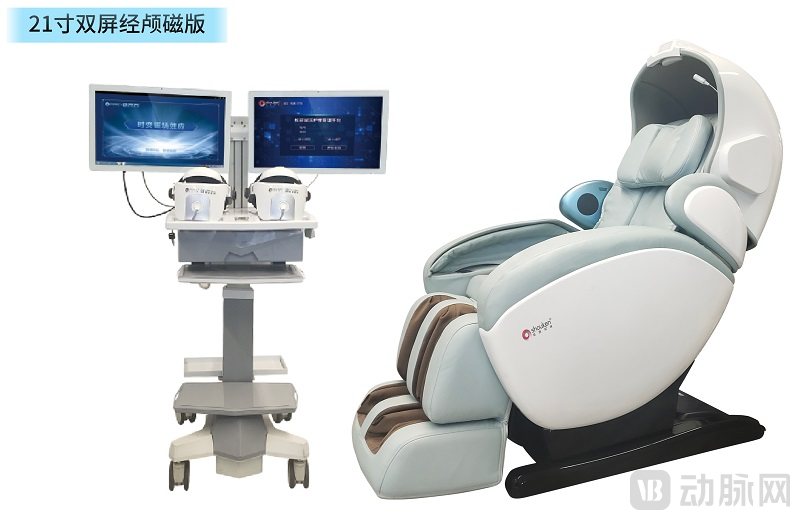
In terms of products, a comprehensive overhaul was undertaken, with thorough upgrades and transformations implemented across software, hardware, systems, and platforms.By incorporating advanced physical functionalities involving sound, light, electricity, magnetism, and waves, it has been further developed into a mind-body interactive device for psychological stress reduction and sleep regulation intervention. Through the deep integration of subjective multi-dimensional assessment scales with real-time objective monitoring of Heart Rate Variability (HRV)—which assesses sympathetic and parasympathetic nervous tone, their balance, and their impact on cardiovascular activity—alongside psychological interventions, the system combines visualized biofeedback training and an autonomic nervous system regulation module. It offers nearly 30 intelligent intervention methods and prescriptive solutions, including mindfulness-based stress reduction training, to help users achieve mind-body stress relief and improved sleep quality.
After progressively refining its hardware and software systems, SHOUKEN has developed a system featuring personalized user data archive management, subjective and objective assessment and testing, and emotion computation with analytical early-warning capabilities. This system integrates autonomous intervention, one-on-one manual intervention, and psychological robot intervention. It serves as an intelligent device that seamlessly combines psychotherapy and physical therapy, supporting smart, prescription-based mental health and sleep center solutions—including microcurrent and transcranial magnetic stimulation (TMS) therapy systems, multidimensional intelligent catharsis systems, digital psychology classrooms, and future community initiatives. This device is the Slow Wave Sleep Enjoyment Cabin series.
"In terms of channels, we achieved 'dimensionality elevation followed by dimensionality reduction.'"— The dimension-raising strategy involves aiming high and striking hard. By establishing industry application benchmarks across sectors such as the All-China Federation of Trade Unions system, professional medical and health-care institutions, public security, procuratorates, courts, and judicial administrations, finance, disciplinary inspection and supervision, emergency fire and rescue services, and government agencies, SHOUKEN further achieves a dimension-reducing strike, extending top-down into the consumer-grade market for community and industrial park scenarios, thereby realizing chain development.
Developing Different Versions of Slow-Wave Sleep Pods for Industry Clients
The decision to focus on the fields of psychology and sleep is actually driven by two considerations:
On the one hand, Yang Jianwen pointed out that psychological stress reduction is directly associated with sleep. Excessive psychological stress, along with anxiety and depression, can severely impair sleep quality; conversely, poor sleep quality can continuously exacerbate anxiety and depression. The two factors mutually influence each other.
On the other hand, there are currently as many as 300 million patients with sleep disorders in China. Intervening in sleep disorders presents huge development potential and a market expansion space worth trillions of yuan.
“We have developed over 100 application cases across various specialized industries,” said Yang Jianwen, adding that SHOUKEN is currently providing tailored solutions for different customer segments.
From the perspective of the B2B segment (temporarily classifying both government and enterprise clients under the B2B category), such as fire brigades, hospitals, sanatoriums, and universities. SHOUKEN primarily provides its solutions to these institutionsMental Health-Centricsoftware and hardware solutions, including the Slow Wave Sleep Pods, reflecting the greater emphasis that B-side enterprise users place on employees’ individual mental health.
From the perspective of the consumer end,SHOUKEN previously conducted research on consumer acceptance behavior and found that “consumers are more receptive when the discussion focuses on addressing their poor sleep quality, rather than implying issues with their mental health.” Targeting the characteristics of B2C users, SHOUKEN primarily focuses on itsLaunch of a flagship sleep regulation interventionEquipment and System Solutions.
From the perspective of implementation scenarios, the early-stage channel expansion in automotive 4S dealerships and airports has also created application spaces for end-users to utilize related devices. Currently, SHOUKEN itself operates offline retail stores. Users can leverage devices such as the Slow Wave Sleep Enjoyment Pod and their associated applications to perform self-assessment and self-intervention. The devices provide features including test reports, health record management, and logs of previous conditioning sessions. Users need only register and log in to their personal accounts to access these devices, and the corresponding reports can be saved directly to their mobile phones.
In the process of developing industry application cases for different customer segments,SHOUKEN’s Slow Wave Sleep Pod product line continues to diversify and evolve into various versions, including the Standard Edition, Weiyitong Edition, and AR Edition.The Weiyitong version not only controls the Slow Wave Sleep Pod but also provides comprehensive medical and health management services for the entire household. The AR version of the Slow Wave Sleep Pod was developed in response to some patients opting out of fully immersive VR experiences due to conditions such as claustrophobia. SHOUKEN has partnered with DreamGlass to co-create the AR version of the Slow Wave Sleep Pod, delivering a more comfortable, convenient, and personalized user experience.
In fact, SHOUKEN places great emphasis on its scientific research foundation. “As a comprehensive device, obtaining medical device registration requires costly clinical validation, demanding significant time and effort,” added Yang Jianwen.The portable device for monitoring intracranial blood flow during sleep and certain components of the chamber have already obtained medical device certification.Other certifications are still in progress. The Slow Wave Sleep Pod is currently equipped with comprehensive monitoring and intervention devices, featuring a high degree of intelligence. During product usage, such as during mindfulness meditation sessions, relevant user data will be better integrated into the software program under the monitoring of millimeter-wave radar, providing a more comprehensive display of the user's status.
In addition to the Slow Wave Sleep Pods designed for sleep, psychological monitoring, and intervention,SHOUKEN is also advancing toward deeply integrated solutions.For instance, SHOUKEN provides a comprehensive “Blue Sky Comfort Harbor” solution tailored for fire departments, encompassing services such as counseling and therapy, self-intervention techniques, and cathartic sandplay therapy. By continuously integrating these elements into a cohesive ecosystem, SHOUKEN is able to offer more holistic support in helping users address their personal well-being concerns. Currently, SHOUKEN has also achieved integration with the HarmonyOS ecosystem; health data from compatible monitoring devices within Huawei’s ecosystem can be seamlessly transferred to the Slow Wave Sleep Pod with one-click authorization. This enables SHOUKEN to deliver personalized wellness regimens based on each user’s physical condition.
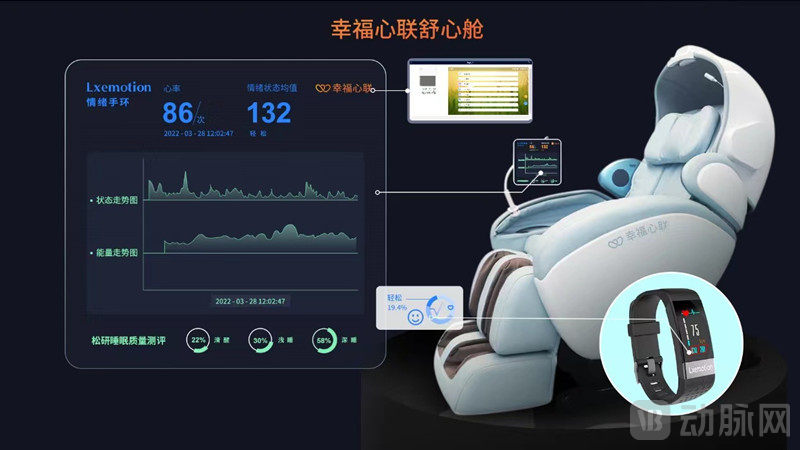
Collaborate to Accelerate Product Iteration for Slow-Wave Sleep Pods and Other Products
SHOUKEN’s emphasis on scientific research has enabled it to continuously iterate its products and secure a foothold in the field of psychological and sleep monitoring interventions.
It is reported that SHOUKEN currently employs over 100 people, with R&D and marketing personnel each accounting for 30% of the workforce. Notable experts who have contributed to SHOUKEN include Dr. Wang Weidong, Director of the Sleep Psychology Department at Guang'anmen Hospital of the China Academy of Chinese Medical Sciences, and Professor Liu Tao from the Institute of Micro-Nano Technology and Precision Engineering at Zhejiang University’s College of Mechanical Engineering. Moreover, the majority of its R&D staff hail from leading companies such as Huawei and Shenzhen Kaifa Technology. In addition, SHOUKEN operates its own manufacturing facilities dedicated to the production of its core products: sleep devices and psychological monitoring equipment.
In addition to the advantages of its talent team, Yang Jianwen also pointed out that SHOUKEN has unique advantages in product technology, with its level of intelligence and technological capabilities potentially leading peers by 3–5 years. In terms of industry applications, numerous government agencies, enterprises, and public institutions proactively approached SHOUKEN to competitively procure relevant equipment and system solutions, even without prior marketing or promotional efforts. To date, the company has accumulated a client base spanning more than one hundred industry sectors; andIn terms of future technological accumulation, efforts are also intensively underway in areas such as continuous near-infrared monitoring of intracranial blood flow, millimeter-wave radar-based unobtrusive vital signs monitoring, unobtrusive emotion recognition, and affective computing.
In 2022, building on its prior collaborations with major universities and research institutes, SHOUKEN initiated several new partnerships. For instance, it collaborated with the Institute of Micro-Nano Technology and Precision Engineering at the College of Mechanical Engineering, Zhejiang University, to conduct research on millimeter-wave radar for tracking user behavior and health data; partnered with Huayuan Education Technology Group to promote digital psychology classrooms in campuses across China; and jointly developed the “Happy Heart Link” Relaxation Pod with the Diandi Lingxi team from Beijing Normal University, while advancing community mental health services. Additionally, SHOUKEN has been engaged in clinical sleep research in collaboration with the Physical Combined Therapy Center of Hangzhou Seventh People’s Hospital, and is participating in the National Health Commission’s “Open Competition Mechanism” projects.
SHOUKEN aims to secure certifications as a “Specialized, Refined, Differential, and Innovative” (SRDI) enterprise and as a “Hidden Champion” (Little Giant) over the next two years. The company also has plans to go public within five years. To achieve this goal, it is currently introducing strategic investors.
Currently, SHOUKEN is further advancing the innovation and upgrading of its products. “We update our hardware and software products almost every month to maintain our competitive edge and barriers,” added Yang Jianwen. SHOUKEN is striving to further expand into the trillion-level sleep consumption market.