

Zhongsheng Peptide Files for IPO After Securing Nearly RMB 300 Million in Orders Including AstraZeneca Collaboration
PepLib
Peptide Drug Developer
Recently, Hunan Zonsen PepLib Biochemical Co., Ltd. (“Zonsen PepLib”) announced that it has entered into a feasibility study collaboration with AstraZeneca. The study aims to discover peptide molecules with high-affinity activity against a selected target protein.
The study leveraged PepLib’s peptide screening platform, which provides a highly diverse, proprietary one-peptide-per-well peptide library.
In addition to AstraZeneca,Since initiating its business development efforts last year, PepLib has established collaborations with numerous domestic and international pharmaceutical companies, including Simcere Pharmaceutical, Livzon Pharmaceutical Group, Tasly Holding Group, Kanion Pharmaceutical, Immetas, and Sanegene Bio, with contract orders totaling nearly RMB 300 million.
PepLib, established in September 2017, is a platform-based enterprise dedicated to peptide lead drug discovery.

PepLib possesses the globally unique Peptide Information Compression Technology (PICT) and has completed the construction of an ultra-large peptide entity library containing nearly 500 million peptide sequences, providing a one-of-a-kind global “seed bank” for novel peptide drug discovery.
In October 2019, PepLib secured RMB 100 million in Series A financing; less than two years later, it completed a Series A+ round of RMB 220 million, doubling the previous amount. The company received investments from several well-known institutions, including CDH Investments, Fortune Capital, Cowin Capital, and Silver River Capital.
“Currently, we are the only company in China that has built an ultra-large-scale physical peptide library using our proprietary core technology.”“PepLib founder Chen Lei said confidently.”
Chen Lei is an entrepreneur and investor with over 20 years of extensive experience in market development, corporate operations, transaction negotiations, and commercial investment.
He joined Hunan Jinsha Pharmaceutical Co., Ltd. in 1996 and remained with the company for 18 years. Rising from an ordinary employee to Executive Director through a management buyout (MBO), he subsequently spearheaded the company’s private placement and listing, and ultimately facilitated its acquisition by a listed company via private placement. In doing so, he gained comprehensive experience across the entire operational lifecycle of an enterprise.
As centralized procurement and the consistency evaluation of generic drugs advance, the operating space for traditional pharmaceutical companies is being further squeezed. Chen Lei believes that innovative drugs represent the future. To gain deeper insights into the industry and entrepreneurship, he entered the venture capital sector as an investor, having invested in more than 10 companies, including Jinsha Pharmaceutical, Bomai Medical, Huateng Pharmaceutical, Moon Biotech, and Anxin Biologics.
In 2015, Chen Lei encountered the startup venture of scientists Dr. Li Xiangqun and Dr. Wang Zhuyin. Highly endorsing their pioneering PICT (Peptide Information Compression Technology), the three decided to co-found a company. In September 2017, PepLib was officially established and commenced operations.
Li Xiangqun holds a Ph.D. in Chemistry from Peking University and completed postdoctoral research at the University of Maryland, Purdue University, and Osaka University in Japan. Wang Zhuyin completed his postdoctoral training in Pathology at Columbia University in the United States. Both individuals have over 30 years of research and industrial experience in the field of peptides. Li Xiangqun previously served as Executive Director of the Peptide R&D Department at WuXi AppTec and as Vice President of R&D at Chengdu Shengnuo. Wang Zhuyin formerly held the position of Vice President of R&D at GenScript.
During their provision of peptide drug development services,The development of peptide drugs requires continuous design, customization, and synthesis; therefore, customers need to place repeated orders, which involves substantial costs and a prolonged cycle.
Small-molecule drugs have undergone more than a century of development. Major pharmaceutical companies have each built extensive small-molecule compound libraries, enabling rapid screening against newly identified targets to identify novel drug candidates and further accelerate their path to market approval.
Inspired by this, the two parties aim to leverage a peptide molecular library to provide clients with screening results that are high-efficiency, low-cost, and high-success-rate, thereby shortening the cycle of the peptide new drug discovery phase and further accelerating the market launch of innovative peptide drugs.
There are 20 naturally occurring amino acids. Therefore, to include all possible dipeptides, the library capacity of a comprehensive peptide library must reach 20²; to include all tripeptides, the capacity must increase to 20³; to include all tetrapeptides, the capacity becomes 20⁴, and so on.
This results in prohibitively high library construction costs and excessively long development cycles. Taking common pentapeptides as an example, a comprehensive library containing all possible pentapeptides would require a capacity of 3.2 million compounds, with an estimated manufacturing cost of approximately $160 million. Using traditional synthesis techniques, this process would take decades to complete.
Through extensive research, the two pioneers developed a novel PICT technology. This approach replaces traditional chemical synthesis with biotechnology for the construction and production of peptide libraries, significantly reducing manufacturing costs and production timelines, thereby shortening drug screening cycles and accelerating the R&D of peptide-based therapeutics.
PICT technology is a patented technology exclusively owned by PepLib. It has been granted patents in Europe, Australia, Japan, Canada, and China, with the U.S. patent currently under examination. This technology employs biological methods to compress peptide information, integrating the data of multiple peptides into a single peptide, thereby enabling a relatively small library capacity to encompass a larger volume of peptide information.
“The company has been established for nearly five years,It took us approximately three and a half years to build a large-scale library of macrocyclic peptide compounds.“Chen Lei introduced that PepLib has successfully constructed an ultra-large peptide compound library using PICT technology, containing information on nearly 500 million peptide sequences. This library includes a complete sub-library of pentapeptides and shorter peptides, as well as a partial sub-library covering hexapeptides to octapeptides and beyond (hereinafter referred to as the ZSenithFive Complete Pentapeptide Library).”®), comprising approximately 80,000 80-mer cyclic peptides, with each compound independently and quantitatively aliquoted, providing a unique global “seed bank” for peptide drug screening.
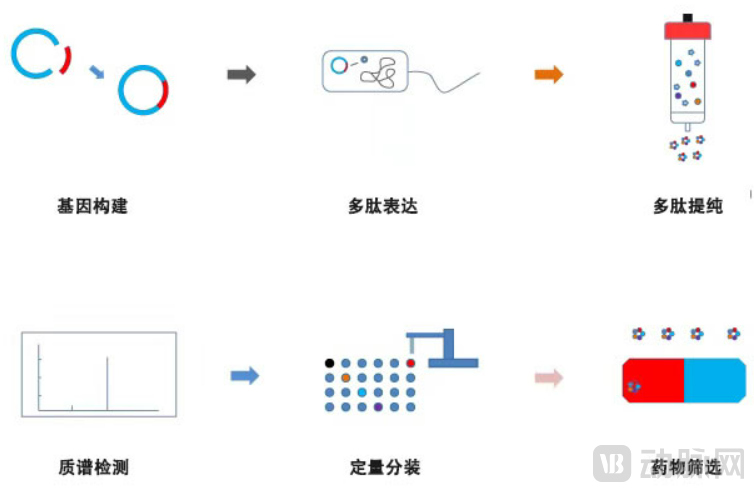 Process of Constructing a Peptide Compound Library Using PICT
Overall, compared with traditional chemically synthesized peptide libraries and mixed peptide libraries constructed by conventional methods such as phage display technology, PepLib’s pentapeptide comprehensive library, ZSenithFive®There are multiple advantages.
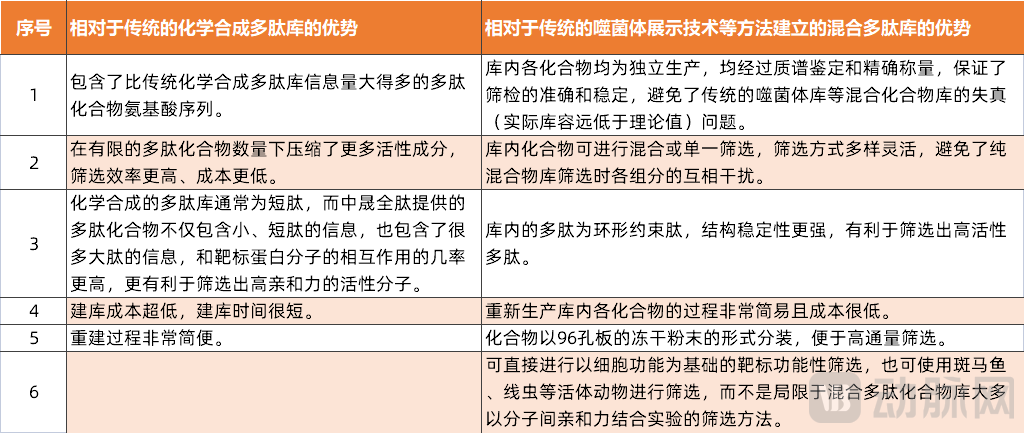
Advantages of the Comprehensive Peptide Library Constructed by PepLib Using PICT
“There are many CRO/CDMO companies in China engaged in peptide drug R&D, but these enterprises often only provide custom synthesis services and have not established their own proprietary peptide libraries. We are the only company in China capable of building an ultra-large physical peptide library,” stated Chen Lei confidently.
“From a global market perspective, there are already companies that have built large peptide libraries, such as Japan’s PeptiDream (listed on the Tokyo Stock Exchange in 2013) and the UK’s Bicycle Therapeutics (listed on NASDAQ in 2019). ‘These two companies employ technologies different from ours to construct their peptide libraries and rank among the world’s leaders. Today, PepLib has become one of the three major mainstream players globally.’”
Chen Lei emphasized that, compared with competitors, the differentiation of PepLib is mainly reflected in two aspects. First, PepLib’s peptide library is individually packaged, achieving a “one-well, one-state” format, with consistent content, concentration, and purity, making it suitable for blind screening against both known and emerging targets. Second, PepLib’s peptide library enables screening at the molecular, cellular, and even in vivo animal levels.
PepLib plans to further expand its existing peptide library capacity over the next three years, achieving an ultra-large-scale peptide compound library containing information on more than 10 billion peptide sequences. Meanwhile, multiple discovery platforms—including the nano-cyclic peptide library platform, the third-generation PICT physical library platform, the animal peptide library platform, the target protein expression platform, and the AI-assisted screening technology platform—will be sequentially established and launched for commercial operation.
Currently, the largest market for peptide drugs is in Europe and the United States; however, driven by a large patient population, rising healthcare expenditures, and a growing focus on innovative therapies, the Asian regionThe peptide therapy market is growing rapidly.
Currently, there are numerous outstanding CRO/CDMO companies in China’s peptide sector, such as Chengdu Shengnuo, China Peptides, and Hybio Pharmaceutical. In contrast, the number of enterprises dedicated to innovative peptide drug development remains relatively low. Moreover, whether in academic research or industrial settings, the majority of R&D personnel actually come from a small-molecule research background.There is a severe shortage of professionals with genuine experience in peptide research.
However, in recent years, with the breakthrough of core bottlenecks in drugability and molecular discovery of peptide drugs, the field of innovative peptide drug research and development in China has made significant progress. Pharmaceutical companies such as Fosun Pharma, Hengrui Medicine, Pulai Medicine, and Sinomedix have all laid out their strategies in the peptide track.
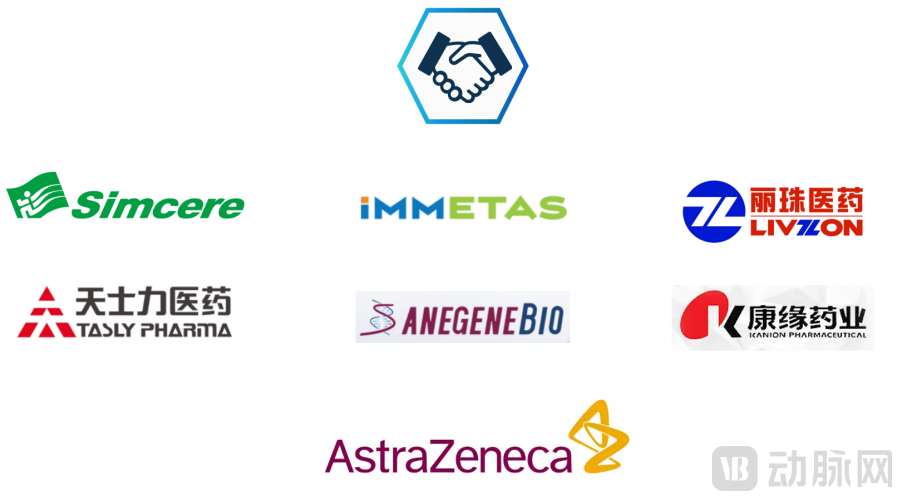
Selected Partner Clients
Coupled with China’s policy incentives for innovative drugs, numerous traditional generic and Chinese patent medicine manufacturers, including Tasly Pharmaceutical and Kanion Pharmaceutical, have also begun to pivot toward the peptide-based innovative drug sector.
Since launching comprehensive market expansion efforts in 2021, PepLib has established collaborations with numerous domestic and international pharmaceutical companies, including AstraZeneca, Simcere Pharmaceutical, Livzon Pharmaceutical Group, Tasly Holding Group, Kanion Pharmaceutical, Immetas, and Sanegene Bio, with contract orders totaling nearly RMB 300 million. The company has gradually formed a business model centered on providing “milestone”-based services for target identification by leveraging its peptide library, supplemented by the transfer of projects at various stages, such as Preclinical Candidate (PCC) selection and Investigational New Drug (IND) application.
Leveraging its strengths in expert teams, platform innovation capabilities, and diversified business models, PepLib has garnered significant interest from investors and has successfully completed two rounds of financing totaling RMB 320 million.
A platform’s innovation capability, the pace of project advancement, and the outcomes achieved are often positively correlated with the progress of financing rounds and investor recognition. Chen Lei stated that while PepLib is recruiting more high-level talent, it will place significant emphasis on R&D investment, “with an expected R&D expenditure of RMB 100 million this year.”
Regarding future plans, Chen Lei aims to expedite the company’s initial public offering (IPO) in the short term. By leveraging the capital markets, he intends to further optimize and upgrade the technology platform, accelerate the development of multi-platform, multi-center capabilities centered on its physical peptide library, and establish complementary platforms including an animal peptide library, a cyclic nanopeptide library, a target protein expression platform, and an AI-driven intelligent screening platform.
In the long term, he aims to focus on building capabilities in the discovery phase within the peptide drug sector, enabling PepLib to become a globally leading supplier and technology service provider of peptide lead compounds and candidate new drugs, thereby empowering the global development of peptide therapeutics.