

Orange Growth Initiative Officially Launches: Focused on Translating Scientific Research into Early-Stage Medical Innovations
The enthusiasm for translating scientific research achievements into practical applications seems to be becoming a consensus.
However, the journey from an initial scientific concept to laboratory results, and then to the transformation of these results into mature commercial products with successful industrial implementation, is a long and complex process.
This process involves multiple stakeholders, including researchers, research institutions and universities, investment firms, healthcare enterprises, and innovation ecosystems. How to effectively integrate these innovative elements and maximize their respective values is a critical challenge currently facing the translation of scientific research achievements in China.
To find the answer to the problem, byGuided by the National Engineering Center for Individualized Diagnosis and Treatment Technologies,VCBeat, VB100, VCBeat Orange Bureau, Danke Capital, in partnership with Legend Capital, Sequoia China, Matrix Partners China, Qiming Venture Partners, Honghui Capital, Sinovation Ventures, CAS Star, Mint Angel, AstraZeneca, BD Medical, Boston Scientific, Ascletis Pharma, and Osmunda13 Industry Partners Jointly Launch a Series of Branded Activities for Medical Innovation in the Translation of Scientific Research Achievements—“Orange Growth Plan”。
July 15, 2022“Orange Growth Program” Online Launch EventSuccessfully convened.
Bian Zhenjia, former Deputy Director of the State Food and Drug Administration; Li Datao, Founder of VCBeat; and Huang Zhijun, Director of the Office of Medical Scientific Research at Xiangya School of Medicine, Central South University, delivered speeches at the launch event.. They unanimously stated that medical innovation in China is entering a new stage of development, with research institutions and market-oriented entities demonstrating strong enthusiasm for the translation of medical research achievements. However, the translation process in the healthcare sector involves numerous stages and participating elements, and imposes high requirements on the technology itself. Therefore,Unite the scattered forces within research institutions, universities, and industries., jointly promoting the translation of scientific research achievements into practical applications is an urgent priority. This is precisely the responsibility and mission of the “Orange Growth Initiative.”
What is the “Orange Growth Plan”?
Many challenges remain to be addressed within the “Pasteur’s Quadrant” of the medical field. There is an urgent need to identify a collaborative co-creation force to accelerate the translation of scientific research achievements.
Wei Xiaolin, Deputy General Manager of VCBeat VB100It stated that, through a series of initiatives under the “Orange Growth Program”—including project solicitations, thematic exchanges, project roadshows, knowledge training, and specialized incubation—it aims to connect research institutions with industry players, establish a platform for showcasing projects and facilitating collaborative dialogue on the translation of scientific achievements, and accelerate the commercialization of more innovations.

Regarding the future plans and objectives of the “Orange Growth Initiative,” Wei Xiaolin highlighted three key points.
The first is to promote industry consensus。At present, although enthusiasm for translational research is high in China, many issues remain unresolved. For instance, many scientists are still unfamiliar with how to translate their findings into practical applications; there is a lack of consensus on the current state of regional translational development; and there is limited awareness of the most advanced translational practices, among other concerns.
To address these issues, the “Orange Growth Initiative” has launched three thematic reporting series: a Scientist Interview Series, a report on the “Top 100 Innovators in Future Healthcare,” and coverage of a series of events focused on the commercialization of scientific research achievements. To date, VCBeat Orange Fruit Bureau has conducted interviews with45 Scientists, with77 ScientistsFace-to-face connections were established. Moving forward, VCBeat Orange Bureau will continue to monitor the progress of domestic and international activities related to the commercialization of scientific research achievements, reporting on the most cutting-edge developments. Meanwhile, it will also organize exchange events to share the latest innovative practices.
Second, to promote Chinese practicesThe “Orange Growth Initiative” aims to explore additional pathways and models for the translation of scientific achievements, thereby driving innovation in return. Wei Xiaolin stated that a series of project evaluations and calls for submissions will be launched nationwide in the future, including the establishment of domestic awards focused on medical innovation and the solicitation of exemplary cases in the translation of scientific research outcomes.
3. Collaborative Value Creation“Orange Growth Initiative” achieves greater value by fostering collaborative synergy among diverse stakeholders. To this end, the following three categories of activities will be carried out.
The first aspect is to establish a project showcase and communication platform centered on regions, named “Orange Growth Plan: City-Specific Sessions.”Regarding this initiative, Wei Xiaolin revealed that ten “Orange Fruit Tours” will be organized in the second half of this year, with two additional regional special events scheduled for October and November.
"Orange Walk"The target audience comprises two categories: first, experts and technology transfer officers from universities and research institutes; second, industry-side investors, including heads of incubators and enablement organizations. Both parties will engage in exchanges centered on topic-based research, clinical needs, technology transfer, and project presentations.
City-Specific SessionThe initiative primarily focuses on showcasing regional achievements and facilitating the exchange of commercialization experience. Each session spans two days: Day 1 features offline activities divided into three segments—Chengzhang Forum, Pitch Session, and Roundtable Discussion; Day 2 is conducted online, with dedicated sessions for China and overseas markets. Each session showcases five to six projects, thereby enhancing the diversity of regional projects and sharing innovative practices.
The second aspect is the establishment of a summit brand focused on the commercialization of research outcomes—the “Orange Growth Summit.”“The Orange Growth Summit” focuses on presenting the latest developments in policy, technology, clinical practice, and market dynamics from both domestic and international perspectives, while helping practitioners gain a more comprehensive understanding of trends in translational innovation.
Wei Xiaolin revealed that the results of the one-year call for outstanding cases under the “Orange Growth Initiative” would be announced at the summit, along with the annual series of awards and reports. She expressed her hope that the “Orange Growth Summit” would become an industry bellwether in the fields of scientific achievement translation and medical innovation.
The third aspect is to establish a platform for training, investment, and incubation in the commercialization of scientific research achievements.Wei Xiaolin stated that, in collaboration with relevant institutions, a series of public courses will be launched to address the uncertainties, challenges, and pain points across all stages of innovation and translation. These initiatives aim to help scientists systematically learn the pathways for translational development, build a professional knowledge-sharing platform for achievement translation, and leverage additional capital to accelerate project incubation.
Research Institutions and Investors Discuss New Trends in the Development of Technology Transfer
In the relay race of translating medical research achievements into practical applications, research institutions and industry players undoubtedly bear the critical responsibilities of passing the baton and accelerating toward the finish line. However, constrained by systemic barriers and a communication “chasm,” China’s efforts in medical innovation and the commercialization of research outcomes remain largely in their nascent stages.
As the source of innovation, how can research institutions and universities identify more effective pathways for translating scientific achievements? As deep participants in this translation process, how can investment institutions engage with early-stage projects?
To address these questions,Fang Li, Director of the Xiangya Medical Department, Intellectual Property Center, Central South UniversityandYu Xiang, Partner at CAS StarShared insights on technology transfer from the perspectives of research institutions and investment firms.
Director Fang Li Interprets the Development Trends and Optimization Strategies for Research Institutes in Technology Transfer
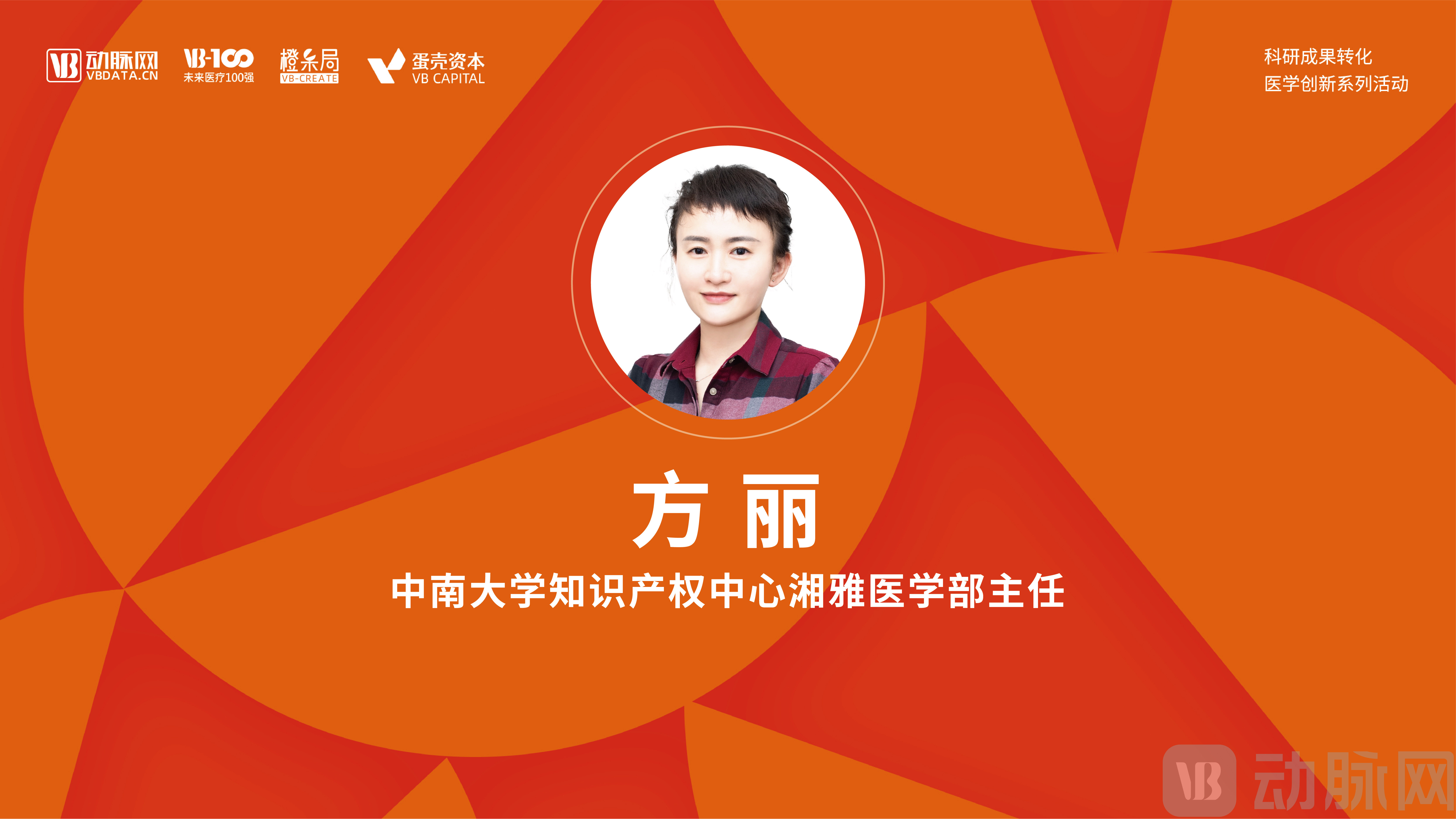
She pointed out that there are three trends in the translation of scientific research achievements in the medical field.
First isNational Policies on the Commercialization of Scientific and Technological Achievements Are Becoming Increasingly Comprehensive, with steady increases in investment in scientific research and innovation, many typical mechanisms and models for the translation of research findings have emerged. Next isWidespread Participation from All Sectors of Society in the Translation of Research Achievements, including strong support from the national government, innovation and entrepreneurship competitions organized by medical associations, and special initiatives conducted by industry institutions.
Lastly,Deepening Collaboration Between Research Institutes and Local Governments. The long cycle of translating medical research into practical applications, coupled with substantial upfront investment, makes early-stage involvement by national research funds and social capital less likely; therefore, securing financial support from local governments is particularly crucial.
In the quest for better translational pathways, Director Fang Li shared Xiangya’s attempts: first,Furong LaboratoryConduct basic research and then apply the resulting findingsNational Engineering Research CenterConduct proof-of-concept and translation, and then transfer it toNational Medical CenterConduct clinical validation and promotion. The three national-level platforms approved for Xiangya have undoubtedly formed a closed loop for achievement transformation.
Meanwhile, the National Engineering Research Center can subsequently become an independent legal entity, offering advantages over the traditional public institution model in areas such as technology transfer processes, fund allocation ratios, and corporate collaboration.
Yu Xiang, Partner at CAS StarAn Analysis of Investment Firms’ Current Focus on the Early-Stage Market.
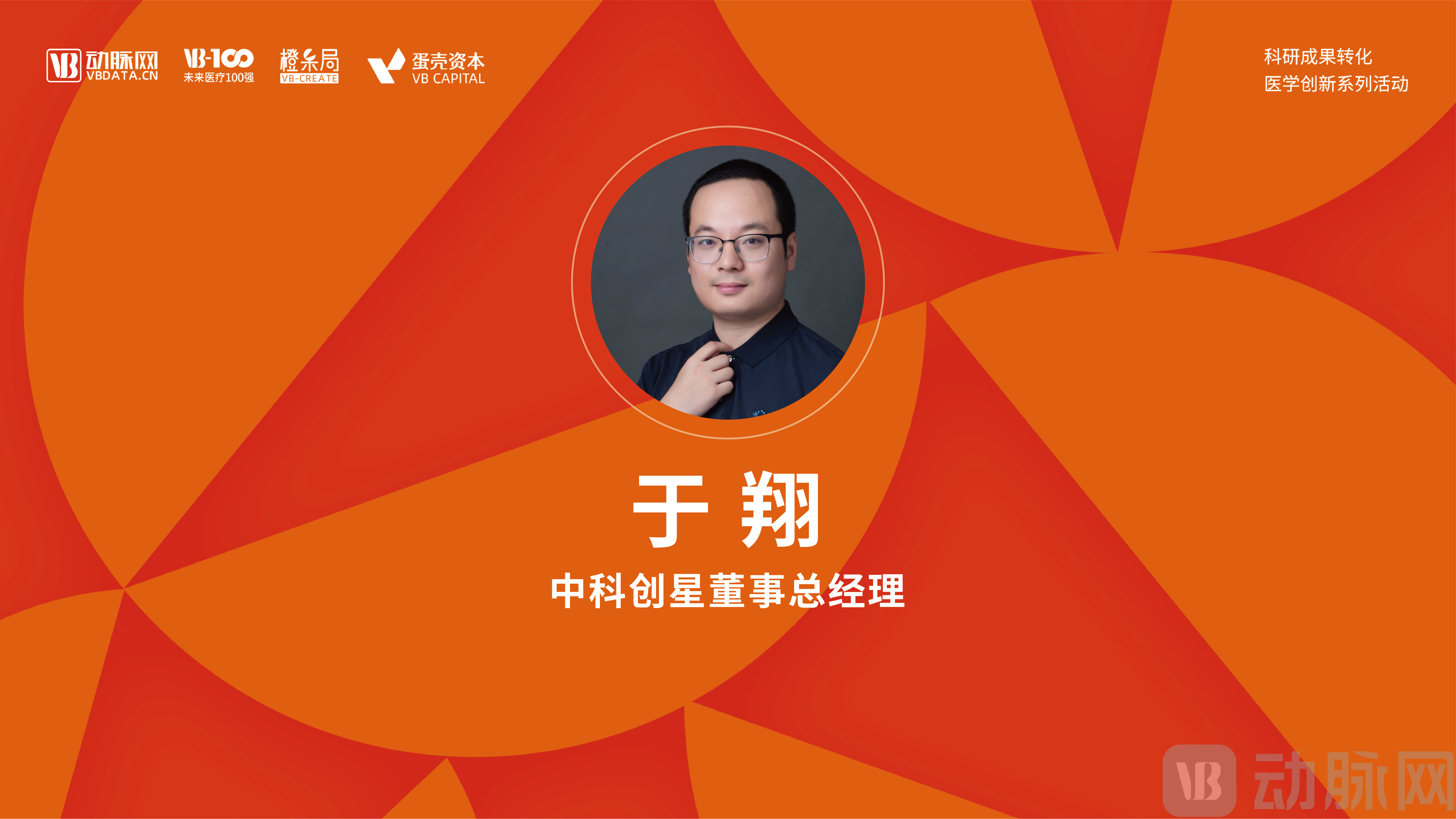
He believes that there are four reasons why capital focuses on early-stage medical projects.
First,The STAR Market’s Disdain for “License-in” Deals, the predicament of PD-1 inhibitors is forcing capital to focus on original innovation; second, China’s scientific research output ranks second globally,Return of Outstanding Overseas Scientists, is harboring immense potential for translation. Thirdly,Investors’ Scientific Literacy in Medicine Continues to Improve; fourth, it is inseparable fromOptimization of the Review Process and Strong Support from Clinical Experts。
Furthermore, the investment rationale of venture capital firms is continuously evolving, shifting from a “linear logic” that previously focused on titles and prestige to a “multi-dimensional logic” that comprehensively evaluates technological feasibility and business models.
Regarding how investment institutions choose the timing to intervene in the commercialization of research outcomes, Yu Xiang frankly stated: "Currently, the primary and secondary markets in the healthcare sector are relatively sluggish. As returns for mid-to-late-stage investment firms have shrunk, they are gradually shifting their focus toward early-stage and innovative investments."
This trend has forced early-stage investors to move even further upstream. In the face of intensifying competition among investment firms for top talent, drawing on Flagship Pioneering’s successful deep-incubation model may offer a path forward. Providing scientists with comprehensive “software” and “hardware” support across the entire journey—from scientific innovation and fundraising to commercialization—could well become the key strategic focus for future investment institutions.
Focus Dialogue between Research Institutes and Industry Players
As one of the key issues addressed by the “Orange Growth Initiative”: How can research institutes and industry partners better collaborate while meeting their respective needs?
To address this question, the online launch event of the “Orange Growth Plan” featured a special roundtable discussion session and extended targeted invitations to specially appointed professors at the University of Shanghai for Science and Technology and the Dean of the Medical Device Industry Research InstituteFan XiaodongDeputy Director, Industry Management Office, Peking University Health Science CenterShen JuanExecutive Vice Dean, Suzhou Medical Device Research Institute of Southeast UniversityGe JianjunDirector, Technology Transfer Center, Shanghai International Human Phenome InstituteChen Hua, Executive Director of Legend CapitalQi Fei, Vice President of Sequoia ChinaChen Xuanze, Director of AstraZeneca International Life Science Innovation ParkChen Kai, Co-founder of VCBeatBi YuanfengAn in-depth discussion was held on the topic of “Respective Needs and Cooperation Models between Research Institutions and Industry Players.”
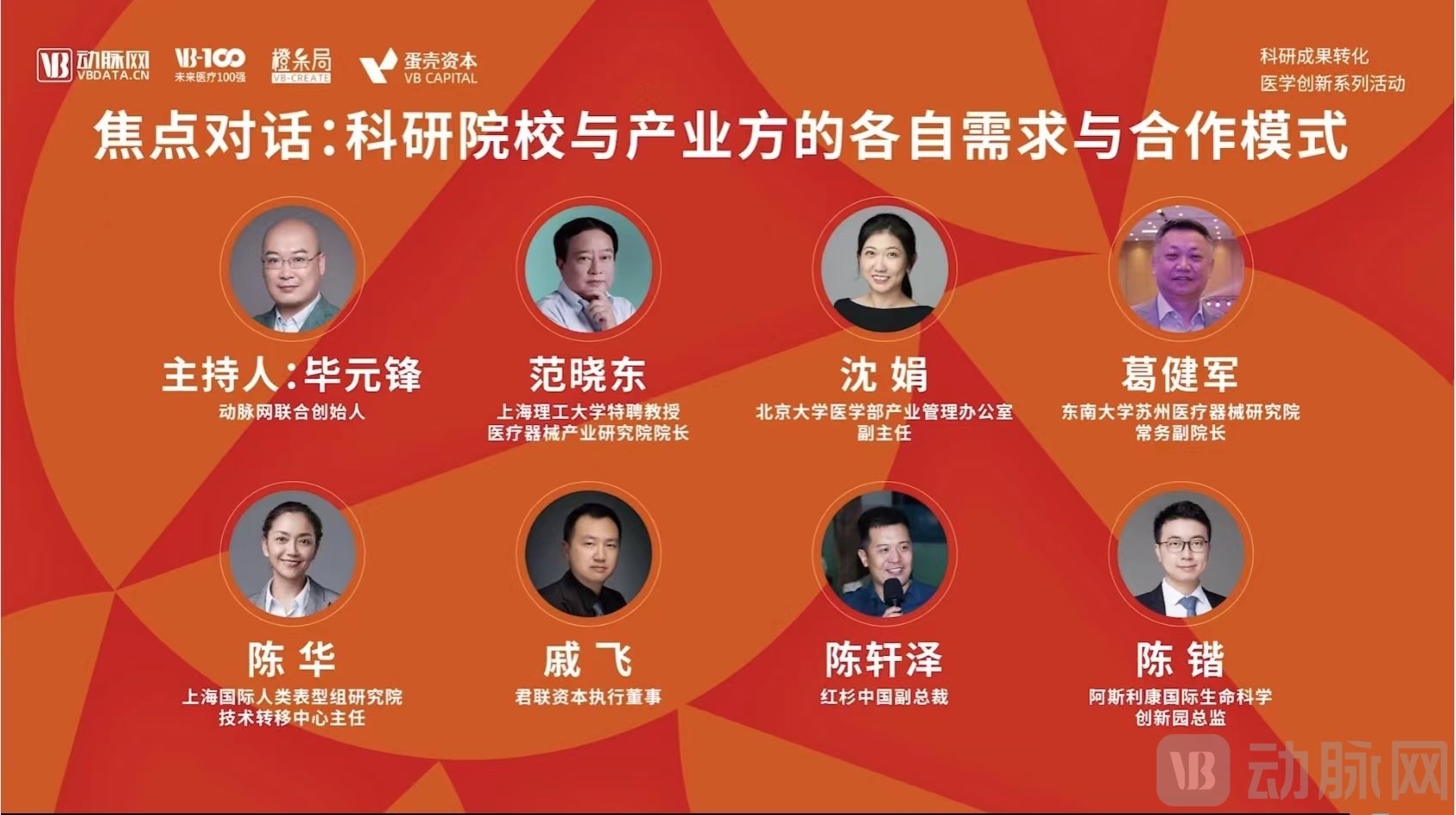
As a “veteran” deeply rooted in the field of technology transfer for many years,Professor Fan XiaodongHe advocates for a greater focus on the formulation and implementation of policies governing the commercialization of scientific and technological achievements. He hopes that China’s policies in this area will be closely aligned with real-world needs, such as by streamlining approval processes, thereby enhancing the efficiency of technology transfer.
As representatives of research institutions, guests Shen Juan, Ge Jianjun, and Chen Hua unanimously agreed that scientists lack commercial acumen in the process of translating scientific achievements into practical applications. There is an urgent need for professional technology managers to facilitate this translation or to guide scientists in launching startups.
Ge JianjunVCBeat,Researchers should establish strong collaborative relationships with technology transfer professionals., and truly understand what kind of technology the industry needs.Shen JuanIt is believed that for scientists, effectively bridging the gap between research and industry during the technology transfer process is an inevitable challenge, requiring collaborative efforts from multiple stakeholders across the industrial chain.
Chen HuaShe emphasized that research institutions and universities are particularly lacking in industry professionals with business acumen. She stated that industry experts are needed to drive progress from projects to startups, including product design and corporate development planning, thereby helping scientists secure more financing opportunities.
As representatives of investment institutions, guests Qi Fei, Chen Xuanze, and Chen Kai clearly laid out the pain points and underlying logic of the current early-stage healthcare investment market through an industrialized mindset.
Qi FeiIt is believed that, in the process of translating scientific and technological achievements into practical applications,There is a significant gap between scientists and industry.. On the one hand, it isDifferences in Thinking Patterns Between the Two, scientists primarily focus on the latest global technological advancements and are often unfamiliar with market dynamics and application scenarios; in contrast, industry operations are managed according to specific market principles and demands, requiring a high level of execution capability.
On the other hand,China's industrial and capital sectors are not yet mature.. Taking investors as an example, China’s biomedical investment sector has been developing for only about a decade. It is challenging for investors to assimilate original innovative technologies, which not only requires substantial time for learning but also demands higher professional expertise, particularly in terms of understanding and evaluating the technology and determining its market positioning.
Chen KaiThis indicates that China’s mechanisms, systems, and cultural environment for scientific research outcomes are still evolving and in a growth phase. From the perspective of research institutions, Chen Kai recommends learning from each other’s strengths and weaknesses in the model of achievement transformation, while shortening the distance with industry partners to achieve flexible alignment.
Additionally, in terms of field,Chen XuanzeParticular emphasis was placed on the medical device sector. In his view, during this era of intense domestic competition (“involution”) in China’s medical device industry, product quality control within the supply chain and the reduction of material costs will become the core factors driving industry-wide competition. Furthermore, barriers to collaboration among physicians, scientists, and industry practitioners urgently need to be dismantled. The Sequoia China Brain Science Incubation Center, located in Zhangjiang, Shanghai, serves as a prime example; it is dedicated to bridging the gap by connecting physicians, scientists, and entrepreneurs.
“Orange Growth Initiative” Sets Sail
"Accumulating soil to form a mountain, gathering water to create an ocean; even breakthroughs at individual points require diligent effort."
Although China has undergone a long period of development in the commercialization of scientific and technological achievements, the translation process remains relatively slow, with various unresolved challenges persisting. Currently, it is worthwhile to strive to unite the fragmented innovative capabilities across research institutes, institutions, and industries under a shared mission.
Thus, the “Orange Growth Initiative” was born.
“Orange Growth Initiative” gathers wisdom and fosters the rooting and sprouting of new projects within a warm orange ambiance. In collaboration with enterprises, institutions, and research institutes, it aggregates and showcases projects through a combination of project calls, themed sharing sessions, roundtable discussions, specialized exchanges, project pitch events, knowledge training, and targeted incubation services. The initiative aims to facilitate the translation of scientific achievements from papers and patents into industrial applications, thereby accelerating the commercialization of more research outcomes.
“With favorable winds at our backs, it is the perfect time to set sail. We look forward to growing and creating together with everyone through the ‘Orange Growth Initiative.’”