

Professor Liao Zhengyin, Chief Physician of the Oncology Center at West China Hospital: Empowering Patients Through Medical Science Communication in the New Media Era
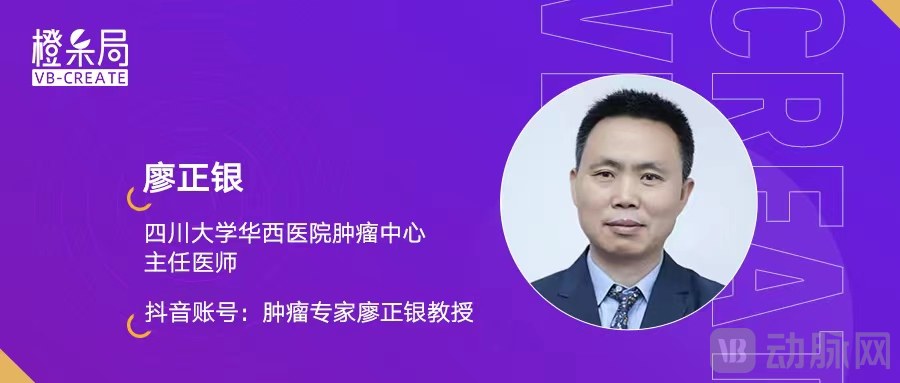
Liao Zhengyin, M.D., West China Hospital of Sichuan University; Postdoctoral Fellow in Interventional Therapy at the Chinese PLA General Hospital (301 Hospital). In 1998, he studied interventional therapy as a visiting scholar at the University of Washington Medical Center in the United States. He operates the Douyin account “Professor Liao Zhengyin, Oncology Expert,” which has attracted 120,000 followers within six months.
If short-video styles were likened to cuisine, some would resemble classic Cantonese dishes, meticulously crafted; others, Anhui cuisine, appealing to both refined and popular tastes; and still others, vibrant hole-in-the-wall eateries. The content of “Professor Liao Zhengyin, Oncology Expert” is more akin to simple, heartwarming home-cooked meals—unpretentious, genuine, and reflective of the myriad facets of life.
“Oncology Expert Professor Liao Zhengyin” did not opt for more attention-grabbing health education content, nor did he adopt a distinctly serious or humorous style; instead, he presented viewers with authentic clinical consultation processes.
In the comment section of the video, patients frequently remark that Professor Liao Zhengyin is the most patient doctor they have ever encountered. In the videos, Professor Liao strives to explain in plain language the nature of the disease, available treatment options, and which diagnostic tests are necessary versus unnecessary. He comforts patients by reminding them that birth, aging, and death are natural parts of life, encouraging them to maintain an optimistic and positive attitude toward their illness. He also candidly informs patients in the terminal stage that further treatment amounts to a gamble, asking them whether they wish to take that risk.
Perhaps “authenticity is key.” Unscripted and unedited content has helped Professor Liao Zhengyin, an oncology expert, gain a following. Within just six months of operation, his total number of followers exceeded 120,000.
At the “Cross-Boundary Exchange for Joyful Interaction” event hosted by the Boston Scientific Innovation Training Academy, VCBeat had the privilege of meeting Professor Liao Zhengyin from West China Hospital. He shared with VCBeat that his original motivation for operating a Douyin (TikTok) self-media account was to raise broader awareness of interventional oncology techniques.
Compared with traditional treatment methods, tumor interventional therapy has obvious advantages. It can achieve high local drug concentrations and directly kill cancer cells. Compared with systemic therapy, interventional therapy causes less damage to the human body. As an expert in tumor interventional therapy in China, Professor Liao Zhengyin hopes to let more doctors and patients know about this technology, thereby benefiting more patients.
After launching his social media accounts, he also began seeing patients who found him through Douyin. This further convinced him that information dissemination via new media can genuinely help patients.
Despite their strong professional expertise, most doctors remain unfamiliar with operating self-media platforms. What content to create and how to produce it? Many physicians engaged in science communication via self-media are still exploring these questions. Despite meeting for the first time, Professor Liao Zhengyin generously shared his experiences and reflections from the past six months.
1. Does not affect job performance
“Popular science content on self-media platforms must not interfere with doctors’ primary professional duties,” he emphasized first.
Professor Liao Zhengyin believes that the primary responsibility of clinical practitioners is to consult with patients. In the team behind “Oncology Expert Professor Liao Zhengyin,” Professor Liao appears only on camera, and all filmed content consists of genuine clinical consultations, while filming, editing, and publication are handled by dedicated staff.
Anyone with experience in self-media knows that the work involved is far from as simple as it may seem. For instance, producing popular science articles in text format requires time for topic planning and writing; creating short- or long-form video content demands time and/or foundational skills in topic selection, filming, and editing.
These tasks are burdensome and complex for healthcare professionals who have only rest periods and fragmented spare time. Therefore, a prerequisite for the long-term sustainability of self-media science popularization is that it must not conflict with or negatively impact their primary professional duties.
2. Ensure that patients can “understand what they hear and see”
Secondly, Professor Liao Zhengyin believes that since the content is targeted at patients and the general public, it is also crucial that it be “easy to understand and comprehend.”
Behind the doctor-patient conflict lies, on one hand, patients’ lack of basic health knowledge; on the other, anxiety and skepticism stemming from information asymmetry. When confronted with illness, most members of the general public lack fundamental health and hygiene knowledge. They often turn to online searches, a practice commonly referred to as “self-diagnosis and self-treatment via internet search.” However, the internet is rife with misinformation and pseudoscience, making this approach an unreliable path.
This lack of knowledge has, to some extent, exacerbated doctor-patient conflicts. Due to physicians’ heavy workloads and patients’ insufficient basic medical knowledge, effective and accurate communication during consultations is often difficult to achieve. Furthermore, patients are prone to anxiety stemming from their illness as well as from queuing and waiting, which frequently leads to tensions between doctors and patients.
To alleviate this tension, it is necessary for physicians to communicate more patiently and explain diseases in more accessible terms during consultations; meanwhile, improving health literacy among patients is equally important.
Whether it involves interpreting medical reports, sharing common clinical cases, providing science-based education on disease prevention, or debunking health-related myths, the target audience for such content consists primarily of the general public and patients. These individuals may not have backgrounds in medicine, biology, or related fields, and may not be familiar with specialized terminology and abbreviations. If the content fails to effectively reach and resonate with them, health education initiatives will struggle to deliver meaningful value.
Therefore, Professor Liao Zhengyin believes that medical science popularization should be sufficiently down-to-earth while ensuring the accuracy of the content conveyed, making it appealing and understandable to the general public. “Authentic, positive, and easy to understand,” he summarized.
3. Benefit Patients
In the era of new media, the participation of professional physicians in science popularization has provided patients with more reliable channels for accessing health information. The content produced by physician-run self-media platforms has also become increasingly diverse, encompassing literature and report interpretations, sharing of common clinical cases, documentaries of diagnosis and treatment processes, insights into the daily professional lives of healthcare workers, disease prevention education, and debunking of medical myths.
“Content created by physicians on self-media platforms should also be guided by the principle of patient benefit.” This is how Professor Liao Zhengyin described the operational and strategic logic behind doctors’ self-media endeavors.
Taking “Professor Liao Zhengyin, an Oncology Expert” as an example, the original intention behind his video content was to educate patients about interventional oncology techniques. Since engaging in clinical practice, Professor Liao has visited numerous countries and regions. He believes that, specifically in terms of minimally invasive techniques, the proficiency of Chinese clinicians is on par with that of their counterparts in other countries; however, this technique remains little known among the patient population. Consequently, he launched self-media accounts to disseminate popular science information on interventional oncology through channels commonly accessed by the general public, aiming to help more patients achieve better prognoses and improved quality of life.
During this process, many patients sought care based on the physician’s reputation, having discovered him through Douyin. Through a series of simple and unpretentious videos, the public gained an understanding of interventional oncology and came to recognize a clinician with robust professional expertise—a compassionate practitioner who truly considers patients’ needs. In parallel with the dissemination of information, a foundation of trust was established between the physician and patients.
Of course, Professor Liao Zhengyin also frankly acknowledged that this process would not have been possible without the endorsement of West China Hospital. Behind patients’ trust in doctors and short-video content lies their affirmation of and confidence in the hospital’s strength.
Certainly, in addition to the treatment of diseases, disease prevention is equally important. Therefore, Professor Liao Zhengyin is also considering multi-dimensional short-video science popularization content.
In addition to documenting clinical cases, Dr. Liao Zhengyin also aims to expand his efforts in popularizing medical technology. Beyond targeting patients, he intends for this information to reach primary care physicians, leveraging the grassroots healthcare network to disseminate knowledge to a broader patient population and ultimately benefit more individuals.
Whether on Weibo, Douyin, or WeChat Official Accounts, it is not difficult to find that there are quite a few doctors like Dr. Liao Zhengyin who engage in popular science communication through self-media. In the era of new media, what lies behind doctors’ self-media popular science efforts? In addition to the call of the new media era and the impetus from doctor-patient issues mentioned earlier, there has long been policy guidance in this regard.
In 2016, the Publicity Department of the Communist Party of China Central Committee, the Ministry of Education, and other departments issued the “Guiding Opinions on Strengthening Health Promotion and Education,” placing the improvement of national health literacy among residents on the agenda. Subsequently, local governments across China intensified efforts to encourage medical institutions and healthcare professionals to engage in science popularization and health education. Notably, regions such as Suzhou, Shanghai, Nanjing, and Henan Province have successively incorporated science popularization activities into the criteria for physician professional title evaluation.
In June 2022, during the series of press conferences titled “All for the People’s Health—Our Past Decade” held by the National Health Commission (NHC), the active response and contributions of healthcare institutions and professionals to health education initiatives were highlighted. The NHC, together with the Publicity Department of the Central Committee of the Communist Party of China, the Office of the Central Cyberspace Affairs Commission, the Ministry of Science and Technology, the Ministry of Industry and Information Technology, the National Radio and Television Administration, the National Administration of Traditional Chinese Medicine, the China Association for Science and Technology, and the Office of the Steering Committee for the Healthy China Initiative, jointly issued the Guiding Opinions on Establishing and Improving Mechanisms for the Publication and Dissemination of Health Science Popularization Knowledge Across All Media Platforms, which also set forth standards and requirements for such mechanisms.
Subsequently, Douyin E-commerce released the “Announcement on Adjusting Product Sharing Features for Certified Creators in the Medical and Health Sector,” announcing that the platform would disable the product sharing feature for accounts of certified creators in the medical and health sector as of June 30, 2022, and prohibit newly certified medical and health creators from enabling this feature.
From a policy perspective, the approach to health science popularization by physicians on self-media platforms has evolved from mere encouragement to one that combines encouragement with regulation. Douyin E-commerce’s closure of new product-sharing functionalities for creators with medical and health certifications is part of the rectification of medical content mandated by the “Key Points for 2022 in Correcting Unhealthy Practices in Pharmaceutical Procurement, Sales, and Medical Services.” However, from another perspective, standardization also fosters development.