

Southeast University Suzhou Institute of Medical Devices: How a Novel R&D Institution Leverages Industrial Advantages to Build an Innovation Benchmark
The development of a new type of R&D institution must be closely integrated with the local industry. This is the fundamental reason why the Suzhou Medical Device Research Institute of Southeast University (hereinafter referred to as the “Institute”) was established in Suzhou High-Tech Zone.
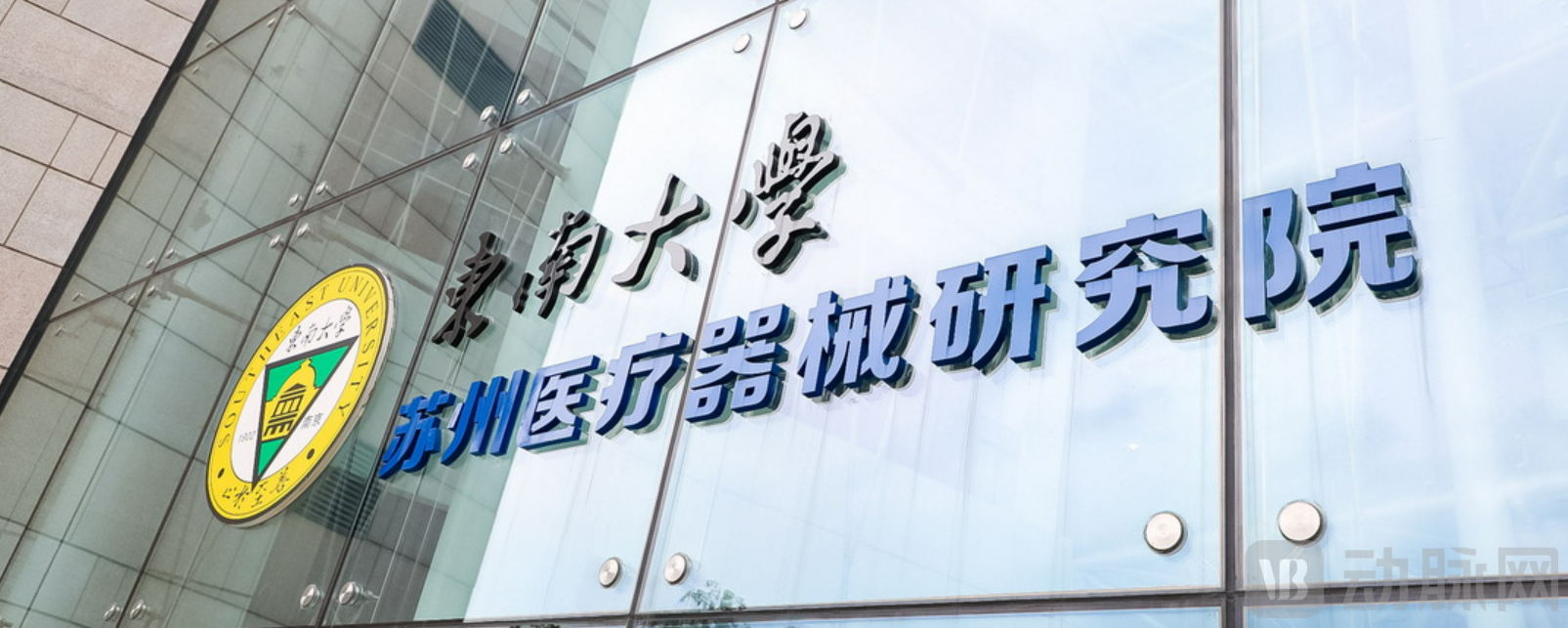
Image from the official website of the Suzhou Medical Device Research Institute of Southeast University
Southeast University’s biomedical engineering program has ranked first in China’s national discipline assessments for consecutive years. The university is home to the State Key Laboratory of Bioelectronics, which provides significant support to industrial development regardless of its location. Suzhou New District is the only area in Jiangsu Province’s “One Zone, One Industry” strategic layout that receives focused support for the medical device industry, and it serves as one of the “Two Cores” of Suzhou’s landmark biomedical industry cluster.
Established in Suzhou New District, this initiative reflects the district government’s ambition to leverage technology to foster an innovative cluster for the local medical device industry, while Southeast University aims to capitalize on the district’s industrial strengths to build a benchmark platform for translating high-end medical device innovations into commercial outcomes.
Since its introduction, the Suzhou New District has made significant investments and provided substantial support for the development of the research institute, including funding and facility resources. Nevertheless, Ge Jianjun, Executive Vice President of the institute, maintains that for a research organization to remain vibrant in the long term, it must ultimately develop self-sustaining capabilities.
To establish an innovation hub with nationwide and even global influence, it is essential to possess the capability for industrializing original research and innovations, requiring synergistic support from ecosystems encompassing scientific research, technology, industry, policy, talent, and capital. Since commencing official operations in August 2017, the Institute has gradually forged a path of independent innovation through continuous exploration and experimentation.
The establishment of the research institute aims to lead technological development, accelerate the commercialization of scientific achievements, support corporate innovation, incubate and cultivate high-tech enterprises, and foster high-level talent. From the current distribution of China’s technological innovation capabilities, the cradles of frontier and disruptive innovations are mostly found in universities and research institutions.
Therefore, the first task for the Institute is to facilitate the commercialization of research outcomes from university research teams.
The Research Institute has built a bridge between university research teams and local governments. On one hand, it helps research teams establish themselves locally, build their teams, and successfully navigate the final stage of translating scientific achievements into practical applications; on the other hand, it assists Suzhou High-Tech Zone in attracting leading talents for innovation and entrepreneurship.
The university research teams involved are not limited to Southeast University; they are open to universities and research institutes across China. For these projects, the institute provides comprehensive incubation services.
In the early stages of a project, the Research Institute assigns startup mentors to each team, providing diagnostic assessments and guidance across technical, product, and market dimensions. Meanwhile, talent subsidy policies from the High-Tech Zone offer additional support for team building. Beyond comprehensive services, the Research Institute also provides physical infrastructure for these teams, ranging from shared workstations for small groups to relatively independent office spaces, catering to diverse needs.
Of course, as a new R&D institution in the medical device field, the Institute’s standout feature is its specialized services. The R&D and industrialization of medical devices rely on critical stages such as compliant design, prototype development, testing and inspection, registration and certification, and small-batch production. The Institute provides one-stop professional engineering translation services to support these processes. Additionally, the Institute has entered into a strategic partnership with the Nanjing Institute of Measurement Science to offer discounted equipment calibration services to enterprises and teams within the industrial park. It has also collaborated with universities and peer research institutes to establish an instrument-sharing platform, facilitating analytical testing and biotechnology services for park-based enterprises and teams. Furthermore, the Institute has established friendly cooperative relationships with multiple hospitals to set up joint research centers or clinical translation bases, thereby supporting enterprises and teams within the park in conducting clinical application research and services.
“Our specialized medical device services encompass technological innovation, instrument sharing, engineering translation, regulatory registration, clinical application, and professional training, which are distinctive features of our incubation and cultivation efforts,” stated Ge Jianjun.
Leading technological development and establishing itself as a hub for technological innovation, the Research Institute also positions itself as the birthplace of disruptive innovation.
Human Organ-on-a-Chip is an emerging transformative biochip technology. Led by Professor Gu Zhongze, one of the pioneers in the field of organ-on-a-chip R&D in China, the Institute has established a comprehensive end-to-end framework for human organ-on-a-chip systems. It has developed more than ten types of tissue and organ chips, achieved batch production of certain products, and overcome multiple core technological barriers, including organoid generation and culture, functional extracellular scaffold materials, and three-dimensional imaging and precise measurement of tissue micro-organs.
Among these, tumor organ-on-a-chip platforms and kits enable highly efficient and high-fidelity primary in vitro expansion and culture of human tumors. They facilitate the construction of organoids and organ chips with immune microenvironments for more than ten types of cancer, including lung cancer, liver cancer, pancreatic cancer, gastric cancer, and colorectal cancer, thereby supporting precision medicine for patients and new drug development by pharmaceutical companies.
Organ-on-a-Chip High-Content Fully Automated Imaging Analysis SystemThis system pioneers the integration of deep learning and artificial intelligence into biological tissue imaging systems, enabling automatic image recognition, classification, computation, and analysis. The fully automated intelligent detection system for SARS-CoV-2 neutralizing antibodies, developed and adapted from this platform, has been successfully deployed in the Biosafety Level 3 (P3) laboratory of the Jiangsu Provincial Center for Disease Control and Prevention. It has completed the evaluation of over 10,000 samples covering more than ten types of vaccines. Compared with conventional products, this system not only improves efficiency by dozens of times but also minimizes close contact between laboratory personnel and samples, significantly reducing the risk of infection. It has received high acclaim from the industry.
Since 2019, various organ-on-a-chip platforms and systems have been piloted by leading domestic pharmaceutical companies such as Hengrui Medicine, Chia Tai Tianqing, and Simcere Pharmaceutical, as well as by multiple Grade A tertiary hospitals.
Not long ago, the project “Construction of Human Organ-on-a-Chip and Precision Meso-scale Measurement,” led by Professor Gu Zhongze, won the Grand Prize at the finals of the inaugural National Disruptive Technology Innovation Competition hosted by the Ministry of Science and Technology.
It is reported that the project has successfully entered the industrialization stage, with the establishment of Jiangsu Aiweide Biotechnology Co., Ltd. This major translational initiative is jointly developed by the R&D team, Suzhou High-Tech Zone, and the Jiangsu Industrial Technology Research Institute, effectively translating original “zero-to-one” achievements into practical applications. The project has secured social capital financing led by Fosun Pharma.
Meanwhile, the Research Institute has also established self-initiated projects in areas such as biomedical materials and big data for medical imaging, with strong momentum in R&D and incubation.
Of course, in addition to market-oriented operations, the Institute itself is a provincial-level public research institution. Beyond scientific and technological innovation and incubation, it also undertakes vertical research projects at the national, provincial, and municipal levels. It has been reported that over the four years since its establishment, the Institute has undertaken 3 national-level projects, 13 provincial-level projects, and 5 municipal-level projects.
Sowing in spring and reaping in autumn, the Research Institute has achieved remarkable results through three strategic pathways: incubation, self-initiated innovation, and undertaking special projects. Since its establishment, the institute has recruited more than 40 high-level talents, including academicians, Changjiang Scholars, national-level engineering experts, and professionals at provincial, municipal, and district levels. It has incubated and nurtured 44 technology-based enterprises, five of which have been recognized as National High-Tech Enterprises. The institute has filed 172 intellectual property rights applications, provided services to over 100 organizations such as Lepu Medical and Simcere Pharmaceutical, and generated more than RMB 50 million in research revenue. The institute has been honored with titles including “Top 100 Distinctive Carriers in China,” “Jiangsu Province Major New-Type R&D Institution,” “Jiangsu Province Specialized Mass Innovation Space,” “Top 100 Institutions in Jiangsu Science and Technology Service Industry,” “Suzhou New-Type R&D Institution,” and “Advanced Collective in Technology Transfer in Suzhou.”
To support project incubation, self-initiated innovation, and the undertaking of special projects, the Research Institute has established four R&D centers and one Engineering Translation Center, providing support for project growth and development at the levels of industrialization and applied research.
The Bionic Organ and Organ R&D Center is dedicated to advancing the scientific translation and practical application of organ-on-a-chip technologies, serving as an incubator for startups commercializing organoid-on-a-chip solutions. The Center focuses on the fabrication and application of tissue and organ chips, the development of multi-organ human body-on-a-chip systems, and organ chip-based testing devices. By integrating cutting-edge technologies such as stem cells, tissue engineering, biomaterials, microfluidics, microfabrication, and artificial intelligence, the Center enables the application of organ-on-a-chip technology in drug discovery and screening, personalized medicine, environmental assessment, and aerospace medicine.
The center has established comprehensive capabilities in organ-on-a-chip R&D, with core technologies developed in functional extracellular scaffold materials, 3D imaging of tissue micro-organs, chip design and fabrication, and AI-driven organ-on-a-chip analysis. It has developed organ chips for more than ten major human organs, including the heart, skin, blood vessels, lungs, and liver.
The Biomedical Materials R&D Center is established based on multiple research platforms, including the School of Materials Science and Engineering at Southeast University, the Jiangsu Key Laboratory for Advanced Metallic Materials, the Jiangsu Key Laboratory for Light Metal Alloy Research, the Jiangsu Engineering Technology Research Center for Magnesium Alloy Materials, and the Analytical and Testing Center of Southeast University. Led by Professor Xue Feng, Director of the Jiangsu Key Laboratory for Advanced Metallic Materials, the center’s team focuses on strategic materials for the future biomedical industry, with an emphasis on biodegradable metallic micro-materials for medical applications and surface-antibacterial and antifungal metallic materials.
The Imaging and Big Data R&D Center focuses on the application of cutting-edge technologies such as artificial intelligence, neural networks, and big data. Leveraging research platforms including the International Laboratory for Intelligent Imaging Science and the Jiangsu Provincial Key Laboratory of Molecular and Functional Imaging, the Center integrates medical imaging data from modalities such as optics and ultrasound with intelligent analytical methods. It is dedicated to the development and application of technologies in endoscopic imaging, magnetic resonance imaging (MRI), computer-aided medical diagnosis, neurophysiological big data, and AI-enabled ultrasound medicine, striving to establish a strategic hub for intelligent medical imaging and healthcare.
The IVD and Diagnostic Technology R&D Center primarily focuses on high-barrier, cutting-edge diagnostic fields such as immunodiagnostics, molecular diagnostics, and point-of-care testing (POCT), conducting research and development of in vitro diagnostic reagents and instruments. Its research activities include the design and manufacturing of micro- and nanofluidic biochips, translational medicine applications of biochips, and semiconductor laser-based detection technologies. The center is committed to breaking foreign technological monopolies, developing sophisticated automated in vitro diagnostic products, and providing effective instrumental support for personalized medicine.
The Four Centers serve as the technological R&D pillars of the Institute. In addition to commercializing innovative achievements, these centers have achieved multiple breakthroughs in basic research. It is reported that, leveraging these four R&D centers, the Institute has undertaken dozens of national and provincial/ministerial-level scientific research projects, including National Key Special Projects, National Science and Technology Support Programs, National Key R&D Programs, key and general projects funded by the National Natural Science Foundation of China, key projects of the Ministry of Industry and Information Technology, and Jiangsu Province’s Scientific and Technological Achievements Transformation and Key R&D Programs. The Institute has also published numerous SCI-indexed papers in international journals.
With the rise and maturation of mobile internet, the digital industry is improving our lives in every aspect, and the healthcare sector is no exception. Thanks to advancements in digital technology, scenarios once confined to future visions—such as internet-based healthcare and smart hospitals—are becoming reality one by one. Moreover, what was once considered a futuristic vision is gradually turning into reality. Whether in pharmaceuticals, medical services, or medical devices, all stakeholders are focused on the same theme: “digitalization.”
Ge Jianjun has also clearly noticed this trend. “I am quite optimistic about the direction of digital healthcare,” he stated.
In the era of big data in healthcare, many have recognized the application value of massive medical datasets. However, the industry has spent considerable time exploring how to achieve compliant monetization and realize commercial value. The establishment of the Imaging and Big Data R&D Center is also part of this exploration into the value that big data and artificial intelligence can deliver, with the aim of making strategic preparations in advance.
“Since the market is not yet fully mature, we can attempt to make forward-looking strategic arrangements,” he stated.
In this direction, Ge Jianjun has not imposed many restrictions on areas such as wearables, sports rehabilitation, rehabilitative training for neurodegenerative diseases, and sensors. Their prior experience has already provided them with a foundational accumulation of expertise. Against the backdrop of the research institute’s forward-looking and original mission, they are likely to continue pursuing proactive value innovation.