

Exclusive Interview with Zhang Xiaoyu, China's First RTTP: "The Main Artery of Tech Transfer Is Open, But Capillaries Remain Blocked"
"Hello, I work in outcome incubation."
“Sorry, our company does not invest in the poultry farming industry.”
The above conversation took place in 2006, when Zhang Xiaoyu first engaged with Chinese enterprises.
Sixteen years have flown by; today is a far cry from the past.
In the "Occupational Classification Code of the People's Republic of China" (hereinafter referred to as the "Code") published on July 11,Technology Managers Have Been Included as a New Profession in the Second Category of "Professional and Technical Personnel"。
"The Great Compendium" defines technology managers as professionals who engage in the discovery, cultivation, incubation, maturation, evaluation, promotion, and trading of scientific and technological achievements during the process of their transfer, transformation, and industrialization, while providing related services such as finance, legal affairs, and intellectual property rights.
It is evident that technology transfer plays an increasingly vital role in the commercialization of scientific and technological achievements, with growing attention being paid to this field.
AsChina’s First ATTP-Certified Registered International Technology Transfer Manager,China's First Batch of Senior Engineers in the Technology Transfer Series,Senior Economist, Zhang Xiaoyu not only has over ten years of experience in technology transfer but also participated in the revision of relevant industry regulations, authored books on achievement transformation, and taught MBA/MPA courses focused on university technology transfer at four universities.
As of now, the projects he has handledBreaking Through 1,500, accumulation160+ itemsTechnology Transfer Cases, Including64 timesExperience in university-industry collaborative R&D and enterprise incubation,41 timesExperience in university-industry collaboration for licensing/transfer of academic achievements by domestic and international universities, incubation6 NEEQ-listed companies, cultivate1 Main Board Listed Company。
Undoubtedly, he has a significant voice in the commercialization of research outcomes at scientific and academic institutions.
Entry into the Industry: A Deviation from Career Planning, Purely by Chance
“My grandfather specialized in hydraulic engineering, and my father worked on missile research. I had originally planned to pursue a Ph.D. in medicine and then move into R&D, but halfway through, I lost my way and ended up becoming a facilitator of medical innovation.”
Zhang Xiaoyu was born into a family of researchers, yet he transitioned into the field of technology transfer. His so-called “detour” stemmed from a chance opportunity.
During college, my supervisor needed to draft patents for R&D purposes. The senior graduate students in our research group were preoccupied with their romantic relationships and had no time to write them, so the task of drafting patents fell on the undergraduate students, who served as unpaid “manual labor.”
A senior colleague handed Zhang Xiaoyu an experimental report, signaling him to simply “copy it.” In this way, Zhang Xiaoyu, then a novice, “copied” his first patent.
Driven by his innate spirit of inquiry and curiosity, Zhang Xiaoyu felt that the matter was not as simple as he had initially thought. “I wondered, ‘Is patent application really that easy? If it were just a matter of copying laboratory notebooks, intellectual property wouldn’t require a doctoral degree. It certainly can’t be that straightforward!’” To get to the bottom of it, he went to the United Kingdom for further studies in intellectual property law.
It was only after that he realized that what his senior colleague had given him was not an experimental report at all, but a technical disclosure document.
After completing his master’s degree, Zhang Xiaoyu seized the opportunity presented by the collaboration between Queen Mary University of London and China. Boasting the best medical materials science program in the UK, Queen Mary University sought to recruit a Chinese professional with expertise in both medicine and intellectual property to facilitate Sino-British cooperation, and Zhang Xiaoyu was selected for this role.

Image from 123rf
Thus, on a path that deviated from his original plan but proved to be the right one, Zhang Xiaoyu gradually found his stride.
Since entering the field of technology transfer, Zhang Xiaoyu has never “coasted.” He has always maintained a “beginner’s mind.” “I continually discover significant limitations in my own understanding. The more I learn, the more acutely I become aware of the constraints of my knowledge. It is possible that"Lifelong learning is my destiny."。”
When communicating with university inventors, Zhang Xiaoyu also emphasized the need for continuous cross-disciplinary learning and the integration of knowledge across multiple specialized medical fields, as only in this way can one “withstand the professor’s three-pronged attack.”
Transformation: First-in-Class + Resource Integration + Patent Licensing
Zhang Xiaoyu shared three key points on technology transfer with Chengguo Bureau.
The first is to seek out first-in-class technologies.
Taking the selection of medical device projects as an example, Zhang Xiaoyu pointed out that when screening projects, it is necessary to break away from traditional thinking patterns andMeeting Clinical Needsas a starting point, select those that canSignificantly Improve the Original Surgical Experience, including surgical techniques and alternative technologies for patient experience.
Take liver biopsy, a procedure performed in the diagnosis of liver cirrhosis and hepatic fibrosis. The traditional approach focuses on improving existing surgical techniques: How can puncture accuracy be enhanced? How can the incision be minimized to accelerate patient recovery? In contrast, technology transfer professionals are concerned with whether non-invasive alternatives to biopsy are feasible.
It was precisely this focus on original innovation and forward-looking judgment that enabled Zhang Xiaoyu’s team, in 2008, to help Inner Mongolia Furui Pharmaceutical (now known as Furui Shares) successfully introduce FiberScan (transient elastography imaging technology) from Echosens, a company incubated by École Centrale Paris, with an investment of only RMB 1 million.
This technology enabled Furui Medical to serve as the sole supplier in China’s non-invasive diagnostic market for liver cirrhosis and fibrosis for eight years (2008–2016), until the emergence of Tsinghua Hiskyler.
Second, emphasis is placed on resource coordination and integration.
As a bridge connecting universities and industry players, technology transfer institutions not only ensure the uniqueness of technologies but, more importantly, coordinate and integrate resources, primarily encompassing the following two aspects:
On one hand, communicate with researchers to help them refine product proposals.Zhang Xiaoyu pointed out that, in many cases, researchers merely observe certain phenomena or validate hypotheses in the laboratory, yet they lack clarity on how to uncover their commercial and investment value and are not adept at analyzing such non-natural science issues.
This necessitates that technology managers communicate with inventors, encouraging them to refine their R&D plans and develop products in directions with the greatest investment and commercial value. This process severely tests a technology manager’s patience and cross-disciplinary communication skills.
On the other hand, it supports researchers in building patent barriers and integrating resources from industry partners.Technology transfer institutions are responsible not only for intellectual property services, but also for marketing strategy, the establishment of communication channels, and fundraising for early-stage projects.
On the critical issue of resource coordination, Zhang Xiaoyu uses the ubiquitous magnetic resonance imaging (MRI) scanner to illustrate the importance of technology transfer managers.
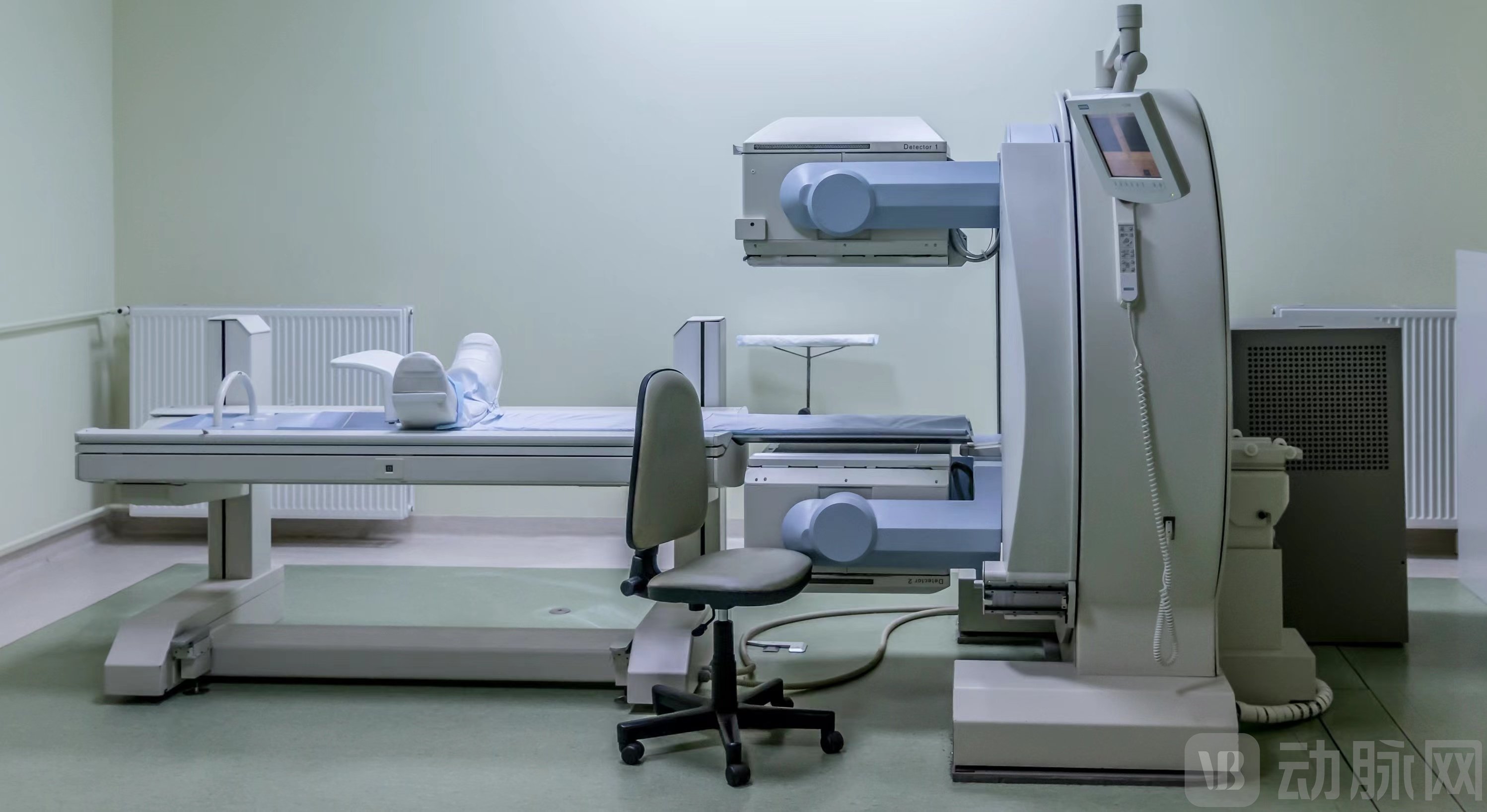
Image from We Heart It
As early as 1979, Peter Mansfield had completed his MRI-related research, but the findings were once considered to have little commercial value.
Ian Harvey, then President of the British Technology Group (BTG), discovered and mentored Peter Mansfield, helping to refine the original technical solution and design its commercialization strategy. He also engaged experts to strengthen Mansfield’s patent portfolio and drafting requirements, thereby establishing a robust patent barrier. This effort culminated in the productization of the technology in 1983. To this day, the global market for this industry remains monopolized by the “GPS” companies—GE, Philips, and Siemens.
“It can be said that without technology transfer managers, humanity would have had to wait another 10 to 20 years to access magnetic resonance imaging (MRI) technology.”
In addition to the classic case of MRI, the world’s first hovercraft, antibiotics, cephalosporins, interferon, pyrethrin acetate, and other innovations were all successfully productized and commercialized under the guidance of technology transfer managers.
Third, design a translational pathway that addresses the needs of both researchers and enterprises.
In the pathway for translating scientific research achievements into practical applications, the ownership of patent rights is an unavoidable topic.
Benchmarking against the pioneering examples of countries such as the United Kingdom and the United States, Zhang Xiaoyu encouraged"Through patent licensing"Proceed with the transformation.
“Technology should be in the hands of those with the most extensive knowledge and deepest R&D expertise, as well as their respective R&D institutions.” Zhang Xiaoyu’s remarks reflect his consistent adherence to the principle of fully respecting technology and R&D.
Why is patent licensing considered more conducive to the commercialization of academic research outcomes? Zhang Xiaoyu further highlights two reasons.
First, when conducting application-layer R&D, the use of underlying patented technologies is inevitable, soMastering Patent Rights Is the Foundation for Advancing R&D; second, there is significant risk in the translation of research findings into practical applications, with a high likelihood of failure during the industrialization process.If the form of patent ownership transfer is adopted, in the event that the commercialization of the research outcome fails, researchers seeking to improve upon the original technical solution will inevitably encounter resistance from commercial interests.。
Unlike the UK and the US, where patent licensing agreements are permitted for equity valuation, China currently still predominantly favors the outright buyout of patents.
Zhang Xiaoyu believes that one of the reasons for this trend is,In the recognition of intangible assets for high-tech enterprises,Only recognizes assignment contracts, not licensing contracts.. In addition,The listing rules of the Beijing Stock Exchange also explicitly require companies to hold ownership of patents.。
Dilemma: The aorta is open, but the capillaries are not.
In discussions with insiders from Fortune 500 companies such as Merck, AstraZeneca, and GlaxoSmithKline, Zhang Xiaoyu discovered that many multinational corporations seek out scientific research achievements at Chinese universities, commercialize them abroad, and then sell the resulting products back to Chinese enterprises.
At this point, Zhang Xiaoyu expressed deep regret, saying, “Professor Shi Yigong once said,China has a large number of excellent, world-class scientific researchers., and many researchers have even obtained tenured professorships abroad, yet they resolutely chose to return to serve their country. However, due to certain issues, we are squandering our own talents and wisdom, serving as unpaid labor for the rest of the world, which is truly regrettable.”

Image from 123rf
As is well known, China’s university research capabilities are now on par with, and in some cases even surpass, those of foreign institutions. So why does the domestic translation of Chinese scientific achievements still face numerous challenges?
In response to this situation, Zhang Xiaoyu offered a vivid analogy: “"The aorta is patent, but the capillaries are not."”。
Zhang Xiaoyu pointed out that, in terms of the translation of scientific and technological achievements, laws and regulations are already quite perfect, forming a clear path, but the details have not been implemented, and there are still limitations in specific implementation, which is specifically manifested in the following three aspects.
(1) "Congestion" within the system
From the perspective of patent applications, on one hand,Whether at universities, research institutes, state-owned enterprises, or central state-owned enterprises, the approval of most scientific research projects and their final acceptance are tied to patent applications and the number of patents granted. According to the “2021 China Patent Survey Report” released by the China National Intellectual Property Administration (CNIPA), “patent applications themselves are not aimed at technology transfer and commercialization,” which is a significant factor constraining the translation of research outcomes from scientific research institutes.
On the other hand, in terms of patent maintenance,Zhang Xiaoyu revealed that universities and scientists have a weak willingness to pay for patent maintenance, resulting in an average patent lifespan of only two to three years. After this period, the patents become public knowledge, causing missed opportunities for commercialization.
It is evident that the interplay between insufficient budgetary allocations for achievement commercialization and rigid patent metrics has diluted the proportion of high-value patents generated.
(2) The “Congestion” of Investment Institutions
On the one hand, it is influenced by "inertial thinking,"When dealing with early-stage projects, venture capital firms still adhere to traditional VC/PE practices: negotiating return on investment, downside protection clauses, repurchase agreements, and even valuation adjustment mechanisms (VAMs). In reality, “incubating ventures from the product line is what venture capital firms should be doing.”
On the other hand, there is a reluctance to assume risks.Especially in the case of early-stage projects in the medical field, their lengthy R&D cycles and specialized technical barriers have deterred many investment institutions.
However, Zhang Xiaoyu believes that the greater the risk undertaken, the greater the reward—this is precisely the hallmark of early-stage commercialization of scientific achievements. “Early-stage projects carry high risks, but the equity stakes held by investment institutions and their subsequent returns are also relatively high, which is fair.”
Capital is the vital force driving the translation of scientific research achievements into practical applications. However, under current circumstances, not only are private institutions reluctant to invest in early-stage research projects, but state-owned enterprises also face their own “unspoken difficulties” when supporting “hard-tech” innovations—Facing the risk of being held liable for the loss of state-owned assets.
Although the Law on Promoting Scientific and Technological Progress clarifies decision-making liability exemptions for universities and research institutes,However, it does not specify whether leaders of central state-owned enterprises and state-owned enterprises are exempt from liability for decisions made in accordance with the law., which is also one of the reasons why they are hesitant to make decisions readily in their daily work.
In response to the concerns and apprehensions of investment institutions, Zhang Xiaoyu suggested fostering greater inclusivity by introducing supportive policies or providing appropriate subsidies for investment and financial institutions.
(3) The “Bottleneck” of Third-Party Service Providers
Zhang Xiaoyu believes that intellectual property service agencies possess inherent advantages in facilitating the commercialization of scientific and technological achievements. By handling patent applications for research institutions and enterprises, they have developed a clear ability to assess the commercial value of projects. Furthermore, by assisting R&D personnel in preparing technical disclosure documents, these agencies have earned the trust of researchers while also accumulating resources to connect with industry partners.
By leveraging these advantages, it would be highly beneficial for technology transfer if third-party service providers could facilitate matchmaking between research institutions and enterprises, attract investment, and mitigate legal risks.
Unfortunately, the performance in this area has been less than satisfactory.
Zhang Xiaoyu candidly stated, “Most agencies still tend to prioritize quick profits.”, focusing on short-term returns such as the monetary value of obtaining a patent or registering a trademark, even relatively large institutions within the intellectual property industry still lack long-term vision and investment.
Over time, the insufficient critical support from service institutions for outcome incubation, coupled with enterprises’ risk aversion in decision-making regarding early-stage deep-tech projects, has made it difficult for scientists to contribute to national technological advancement despite their strong passion.
Co-Creation: Incubation Should Not “Take the Whole Fish”
Benefits Should Not Be Monopolized.
"Throughout the entire chain of translating scientific research achievements from universities into industrial applications, Zhang Xiaoyu believes that diligently focusing on one's own segment without being greedy actually makes success more attainable."
“Mergers and acquisitions, marketing, and production are not the strengths of technology transfer agencies, so it is necessary toDare to Pass the Baton“, handing the baton to those engaged in private equity (PE) and initial public offerings (IPOs),” said Zhang Xiaoyu, when asked about the timing for technology transfer institutions to exit.
Indeed, an individual can move quickly, but only a group can go further. The principle that “many hands make light work” is the indispensable key for any industry seeking profound impact and broad reach.
As one of the first practitioners in technology transfer in China, Zhang Xiaoyu has witnessed the evolution of this field, from its earlier days of being “largely ignored” to the current state of “eagerly seeking talent.”
In conversations with Zhang Xiaoyu, it is not difficult to detect the pervasive sense of patriotism and devotion to his country that he expresses. The phrase “revitalizing China” may sound distant from our daily lives, butTransform high-quality scientific research achievements into market-ready products, thereby driving the high-quality development of China's economy., indeed making efforts for China’s growing strength.
He stated that he wished to serve as a stepping stone, calling on everyone to translate more scientific research achievements into societal productive forces.
When discussing the future of translating scientific research achievements into practical applications, Zhang Xiaoyu said, “Everyone is now focusing on the incubation of research outcomes, so I am luckier than my predecessors. But I believe that those born in the 1990s, 2000s, and even the next generation will have better opportunities and environments for translation. I hope you can stand on my shoulders and go higher and farther.”