

Another Medical AI Earns CE Certification: How AI Companies Are Tapping into the Assisted Reproductive Technology Market

Mojo
Developer of Men's Health Service Platform

AiVF
Fertility Medical Technology Researcher

Fairtility
Provider of Artificial Intelligence and Big Data Solutions

Diagens
Medical Imaging AI and High-End Medical Equipment Developer

Life Whisperer
Medical Technology Developer
Medical AI Is Penetrating the Assisted Reproductive Industry.
In early July, CHLOE, an AI-powered decision support tool for assisted reproduction, received CE marking in the European Union. IVF clinics across Europe can now deploy this tool to enhance clinical success rates in assisted reproductive treatments. The product was developed by Fairtility, an Israeli artificial intelligence company.
CHLOE: The Application of AI Medical Imaging Technology in Assisted Reproduction. CHLOE utilizes computer algorithms to process, analyze, and interpret embryo images, enabling automated prediction of blastocyst formation, implantation, and cleavage, while providing quality ranking of embryos.
Previously, Life Whisperer Viability, an AI-based decision support tool developed by the U.S. artificial intelligence company Presagen, also obtained CE certification, similarly enabling real-time, non-invasive assessment of embryo viability through embryo imaging.
In addition to Fairtility and Presagen, current international AI companies in the field of assisted reproduction include Alife Health, AiVF, IVF 2.0, Future Fertility, and Kai Health.In China, innovative AI-assisted reproductive technology companies such as Hua Ai Boyue have also emerged in recent years.。
In a similar vein, Merck China Innovation Center also announced last year a partnership with “Huichuang United,” a provider of comprehensive intelligent solutions for assisted reproduction, to jointly advance the development and application of artificial intelligence in embryo monitoring systems within the field of assisted reproduction.
What Changes Will the Accelerated Integration of AI and Assisted Reproductive Technology Bring to the Industry?
7 Dimensions of the Intersection Between AI and Assisted Reproductive Technology
Success and Failure in Assisted Reproduction Remain a “Black Box,” with AI Striving to Control Variables.
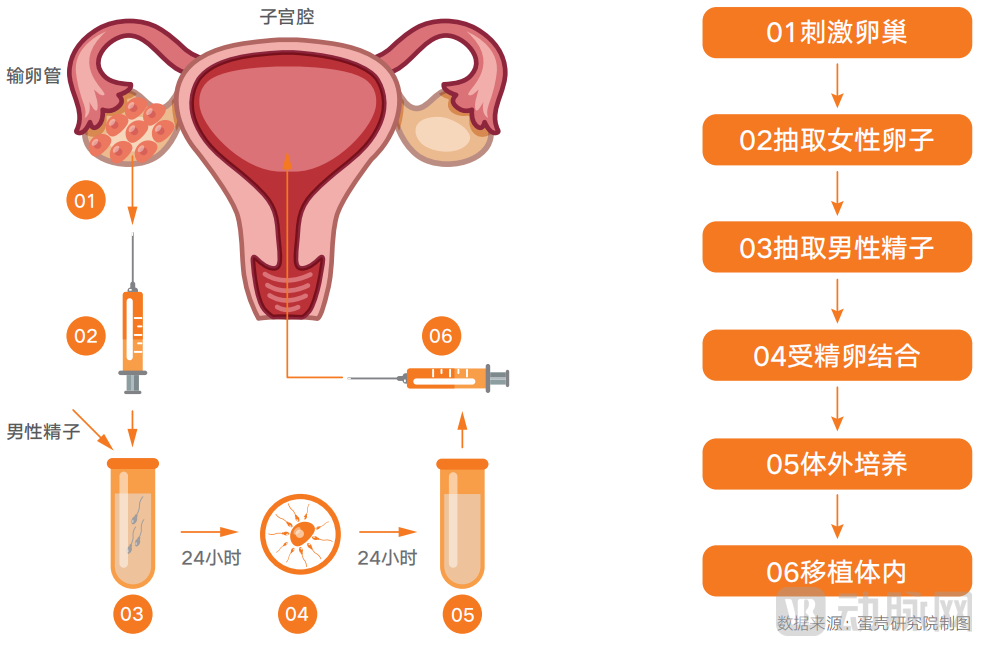
Multiple stages of assisted reproductive technology (ART) can be empowered by AI. Based on existing studies currently available in the market, AI can play a significant role in various ART processes, including oocyte quality assessment, sperm quality assessment, gamete matching evaluation, zygote/embryo quality assessment, and endometrial receptivity evaluation.
1AI-Managed Ovarian Stimulation and Full-Cycle Care in Assisted Reproduction
Replacing Physicians with AI in Clinical Decision-Making and Recommendations for Assisted Reproduction.Machine learning simulates simplified and standardized protocols for various in vitro fertilization (IVF) procedures, facilitating the digitalization and intelligent automation of assisted reproductive technology (ART) workflows. After users upload diverse physiological data to the intelligent platform, AI automatically generates clinical reproductive health reports to guide subsequent clinical steps, thereby enhancing the overall cycle efficiency of ART.
2AI-Based Assessment of Oocyte Quality
AI Image Learning for Automated Assessment of Oocyte Quality. In addition to manual observation, oocyte quality assessment can also leverage AI technology to evaluate the developmental potential of oocytes by differentially identifying features in oocyte images. Specifically, these differential image features include those of the oocyte'sTexture features, oocyte elasticity features, oocytemovement characteristics, to train AI to learn and recognize oocyte status, reduce variability in manual detection, and improve result consistency.
However,No AI-based oocyte quality assessment products have yet been approved for market launch in China.. Compared with sperm quality assessment, research on oocytes is more costly due to their lower availability. Therefore, current oocyte quality assessment in China primarily relies on physicians’ microscopic evaluation of oocyte morphology and size.
3AI Assessment of Sperm Quality
Computer-Aided Sperm Analysis (CASA) is currently the mainstream method for sperm quality assessment.. Since the 1980s, Computer-Assisted Sperm Analysis (CASA) systems have been continuously developed and iterated both domestically and internationally. This method is primarily based on computer image processing technology and provides clinical data on various sperm quality indicators.
Currently, the main foreign Computer-Aided Sperm Analysis (CASA) systems include the HTM-IVOS system, the SIA system, the Hoben Sperm Tracker system, and the Mika system. In China, domestic systems include Zhongke Hengye’s ZKPACS-E system and Weili’s WLJY-9000 system. However, these products vary in functionality and analytical parameters, making it difficult for any single system to cover all indicators required for comprehensive semen quality assessment.
Computer Vision (CV) is a highly promising technology for assessing sperm quality in recent years.Computer vision (CV) enables real-time observation of sperm, tracking their movement and status under natural conditions. Augmented by artificial intelligence algorithms, it analyzes sperm concentration, motility, and morphology to assess semen quality, demonstrating broad application value.
In clinical practice, sperm quality assessment can also be achieved through detection techniques such as flow cytometry (FCM). Flow cytometers assess mitochondrial membrane potential (MMP) to reflect sperm motility levels. However, this method requires fluorescent staining of sperm, which may alter sperm morphology.
Overall, the application and development of AI in sperm quality assessment are the most rapid.
It is worth mentioning that Guangdong also launched last yearChina's First AI-Driven Humanized Donor Sperm Matching System, patients can intelligently match physical appearance traits such as body shape, skin tone, hair characteristics, face shape, nose bridge, single or double eyelids, iris color, and lips, based on the principle of mutual anonymity.
4Automated Insemination and Sperm-Egg Fusion
Automate the process of fertilizing eggs.
AI Robots Replace Manual Operations in In Vitro Fertilization. By integrating AI algorithms with automated hardware, technologies such as micrometer-scale robotic needles and microfluidics are used to inject sperm into eggs. This transforms in vitro fertilization, which previously required physicians with extensive operational experience, into a process automatically performed by AI robots.
5Embryo Culture and AI-Based Quality Assessment
Embryo selection is the essence of in vitro fertilization (IVF).
Although preimplantation genetic testing (PGT) in third-generation IVF is currently recognized as the optimal method for embryo selection, its clinical application is limited by high costs and strict eligibility criteria imposed in China. Consequently, for the majority of infertility patients undergoing first- or second-generation IVF, embryonic development is still assessed through manual morphological evaluation by physicians.
Therefore,AI-Based Embryo Quality Assessment Using Morphology Still Holds Promise for Clinical ApplicationThis is precisely why many overseas artificial intelligence companies are focusing on the niche sector of AI-based embryo quality assessment. For instance, CHLOE and Life Whisperer Viability, both of which have received regulatory approval, leverage embryonic morphology to train AI algorithms in capturing subtle morphological features that are difficult to detect with the naked eye, thereby assessing embryo quality.
Time-lapse imaging systems (TLS) make AI-based embryo quality assessment more feasible. TLS is a time-lapse photography technology that continuously captures images with instantaneous exposure to monitor the entire in vitro development process of embryos. Its high-resolution imaging device can be integrated with embryo culture equipment to ensure a stable developmental environment. TLS records the entire process of fertilization, cleavage, and development, enabling real-time tracking of dynamic embryonic changes. When combined with AI algorithms, it can automatically identify the highest-quality embryos.
6AI Analysis of the Endometrium at the Time of Embryo Transfer
AI analysis of endometrial status is performed prior to embryo transfer.
Big Data Modeling: AI Analysis of the Intrinsic Correlation Between Multiple Endometrial Factors and Embryonic Growth and Development to Identify the Optimal Implantation Window. Typically, it is necessary to first assess associated factors such as endometrial receptivity and microbial status; AI then analyzes the test results to provide precise guidance for personalized embryo transfer.
7AI Prediction of Assisted Reproductive Technology Outcomes
Development of an AI Prediction Model for Assisted Reproductive Treatment Outcomes. Inputs include multimodal data such as sperm morphological characteristics, oocyte quality grading information, and clinical data from male and female patients to predict clinical pregnancy outcomes.
Two Types of Players Striking Gold in Cross-Sector Tracks
“AI’s penetration into the field of assisted reproduction is largely a case of ‘dimensionality reduction.’”
The integration of assisted reproductive technology (ART) and artificial intelligence (AI) takes two forms: first, an “endogenous” development originating from ART companies; second, an “exogenous” expansion driven by AI companies seeking new application scenarios. According to the founder of an ART-focused AI company who requested anonymity, most AI applications currently in the ART field stem from the outward expansion of AI enterprises. This shift in technological application scenarios represents a “dimension-reducing” impact on the ART industry.
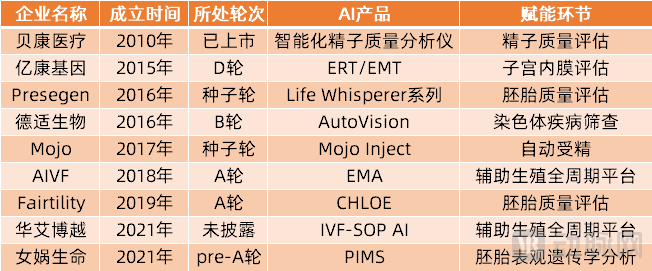

Israeli AI company AIVF has built EMA, a SaaS platform for assisted reproductive technology that leverages AI to assist in embryo assessment and enhance the operational efficiency of IVF clinics.
According to AIVF’s clinical study results, the EMA platform operates 50 times faster than clinic embryologists and achieves a 48% higher accuracy rate. The product has obtained CE certification, and the company completed its $25 million Series A financing round this June.

Life Whisperer, the assisted reproductive technology R&D division of the U.S. artificial intelligence company Presegen, has developed two non-invasive AI-based tools for embryo quality assessment: Life Whisperer Viability and Life Whisperer Genetics. Life Whisperer Viability evaluates embryo viability and the likelihood of clinical pregnancy following implantation, while Life Whisperer Genetics determines whether embryos are euploid based on their genetic information.
That is to say,Life Whisperer Genetics: A Potential Alternative to Third-Generation IVF PGT-A TestingFor instance, in countries such as Germany where invasive genetic testing is prohibited, Life Whisperer Genetics serves as a superior alternative to third-generation IVF with PGT-A, saving patients both time and money. Reportedly, this product has obtained CE certification and has been implemented in more than 40 countries worldwide. When used in conjunction with Life Whisperer Viability, developed by the same company, it provides a more comprehensive assessment of embryo quality.
Comparing it with invasive PGT-A, Dr. Sonya Diakiw, Chief Medical and Scientific Officer at Presegen, stated: “Because the Life Whisperer Genetics assessment is based solely on images, its inherent detection accuracy may be lower than that of PGT-A. However, we have also found that PGT-A results can vary, as they depend on the specific embryonic sample tested. PGT-A analyzes only five cells out of approximately 200 in total, meaning it does not always represent the entire embryo. Life Whisperer Genetics provides a whole-embryo assessment of genetic integrity without requiring any invasive procedures, making it preferable for in vitro embryo screening.”

CHLOE, an embryo quality assessment tool developed by the Israeli artificial intelligence company Fairtility, utilizes a TLS system to increase the number of data points from five in traditional embryo culture observation methods to 4.2 million.
In terms of data volume, between 2017 and 2020, CHLOE “learned” from 6,748 time-lapse videos, specifically comprising 5,392 cleavage-stage embryos, 3,763 blastocysts, 877 single embryo transfers (SETs) with known ongoing pregnancy outcomes, 306 euploid SETs, and 25 mosaic chromosomal embryos with known ongoing pregnancy outcomes. This was done to quantify quantitative and qualitative morphokinetics, CHLOE Implantation Scores, CHLOE Blastocyst Scores, and overall clinical outcomes post-SET, using the Area Under the Curve (AUC) metric to predict the efficacy of blastocyst and implantation scores in forecasting clinical outcomes.
The primary outcomes included blastocyst formation scores of split embryos, preimplantation embryo euploidy prediction scores, clinical pregnancy rates, and sustained pregnancy rates.

Diagens has developed AutoVision, an AI-based system for human chromosome analysis, which has completed product registration with the National Medical Products Administration (NMPA) and obtained CE certification in the European Union.
Diagens’ independently developed AutoVision AI-based Human Chromosome Analysis System is a fully automated, intelligent, integrated workstation for chromosome analysis. It can be applied to chromosomal disease testing in couples undergoing assisted reproduction, patients with hematologic malignancies, individuals undergoing occupational health examinations, and those preparing for pregnancy.
The AutoVision system “learns” from millions of chromosome data points to identify chromosomes, assisting physicians in diagnosing thousands of genetic disorders. Compared with traditional chromosome analysis, AutoVision replaces tedious manual procedures, reducing the time required for karyotype analysis per patient by approximately 20-fold. It achieves a single-chromosome recognition accuracy of 99.6%, delivering more reliable results and a more intuitive analytical workflow.

Hua Aiboyue, benchmarking against AiVF, has also built an intelligent management platform covering the entire cycle of assisted reproduction. The company integrates China’s latest clinical protocols for assisted reproduction with AI and medical devices to achieve intelligent management throughout the full assisted reproduction lifecycle.
The IVF-SOP AI Intelligent Decision Support System, developed by Hua Ai Boyue, is designed to comprehensively assist reproductive specialists in achieving intelligent and standardized management of the down-regulation and controlled ovarian stimulation processes. Primarily leveraging machine learning to simulate various simplified and standardized in vitro fertilization (IVF) protocols, the system enables users to upload diverse physiological data via a mobile application, after which the AI automatically generates clinical advisory reports for assisted reproduction.

BASECARE’s “Intelligent Sperm Quality Analyzer” incorporates AI-based non-destructive sperm quality analysis technology, enabling fully automated, high-throughput, non-destructive, real-time, and highly accurate assessment of sperm quality.
This sperm quality analyzer utilizes an auto-focusing high-speed dynamic imaging system to comprehensively capture the motility and morphology of sperm in their natural state. By employing a multi-sperm synchronous tracking algorithm, it dynamically tracks each individual sperm within live video footage, thereby fully acquiring multi-angle morphological images. Integrated with AI algorithms, the system identifies and selects sperm with superior motility and optimal morphology.

Yikon GENOMICS’ Endometrial Receptivity Test (ERT) and Endometrial Microbiome Test (EMT) are both based on big data modeling, applying AI to analyze endometrial receptivity and microbial flora status, thereby identifying the optimal implantation window for embryos.
First, machine learning is employed to simulate the intrinsic correlation between changes in the gene expression profile of endometrial epithelial cells and the cyclical variations in endometrial receptivity. Next, next-generation sequencing (NGS) is used to obtain endometrial genetic test results. Finally, AI-driven analysis generates a report to guide clinical embryo implantation. Similarly, microbiological testing assesses endometrial microbial diversity and the relative abundance of various microorganisms to evaluate the balance of the endometrial microbiome, thereby guiding probiotic therapy to optimize the endometrial microbial state.

Guangzhou Nuwa Life Technology Co., Ltd.’s PIMS, an embryonic DNA methylation screening technology, also incorporates AI.
Guangzhou Nuwa Life Technology Co., Ltd. has accumulated methylation data from millions of specific key regions across thousands of embryos to screen for genome-wide epigenetic diseases and employs AI algorithms to precisely predict embryonic developmental potential, thereby enabling the selection of the highest-quality embryos. In addition to reflecting DNA methylation levels, its testing results can simultaneously detect chromosomal copy number variations (PGT-A) in embryos. By integrating these findings with intelligent AI algorithms for precise screening and comprehensive optimization of embryonic development quality, this approach introduces new technological theories and solutions to the field of assisted reproductive medicine.

Mojo, a French fertility technology company, specializes in at-home sperm quality testing products. However, according to disclosed reports, the company is also developing a robotic system called Mojo Inject to automate sperm injection.
Key Issues to Address for the Implementation of AI in Assisted Reproduction
AI Still Has Several Years to Go Before Deeply Empowering Assisted Reproduction.
Overall, compared to the mature AI applications in fields such as pulmonary nodules, fundus imaging, pharmaceuticals, and hospital informatics, the penetration rate of artificial intelligence focused on “embryos” remains relatively low. Currently, no next-generation AI products for assisted reproduction have been approved in China, with many innovative explorations still remaining at the research stage.
Taking CHLOE as an example, domestic research efforts with similar origins have long been underway. At the 21st Chongqing Conference on Assisted Reproductive Medicine in 2019, Dr. Huang Guoning, Chief Physician at Chongqing Health Center for Women and Children, stated that “Chongqing Health Center for Women and Children has deployed more than 40 time-lapse microscopes to continuously capture images of embryos in incubators around the clock. By recording and monitoring dynamic imagery through time-lapse microscopy, we have obtained ‘embryo’ big data, which serves as a ‘learning database’ for AI-based detection of embryonic chromosomal abnormalities.” In terms of data volume, this study far exceeds the dataset size of “CHLOE.”
As early as 2018, Ms. Zhang Jinxia, Chairwoman of Jinqi Medical, was invited to deliver a lecture on “Applications of Artificial Intelligence” at CEIBS (China Europe International Business School), where she discussed the prospects of AI in assisted reproductive technology, including AI-based embryo selection using time-lapse imaging.
I.Most assisted reproductive technology centers in China lack the hardware infrastructure required to deploy AI programs such as “CHLOE.”. The application of CHLOE is predicated on the reproductive center being equipped with a Time-Lapse System (TLS). Existing TLS devices on the market, such as Miri from Esco (Singapore), EmbryoScope from Vitrolife (Sweden), and Geri from Genea (Australia), are each priced in the millions. Furthermore, the capacity for embryos per device is limited, constraining the procurement capabilities of reproductive centers.
II.Time-Lapse Imaging Systems (TLS) in China Lack Clear Billing CodesTLS is more of a research tool and a marketing highlight. How exactly do hospitals charge for and price TLS+AI applications? At present, China has not yet developed the ecosystem necessary for the adoption of AI products like “CHLOE.”
Therefore,In China, the development of AI for assisted reproduction must consider not only technological innovation but also its practical application.. Even if AI products such as “CHLOE” are successfully developed in China, it will be difficult for them to be applied in the assisted reproductive technology market in the short term.
On the other hand, assisted reproductive technology (ART) is an industry characterized by rapid technological iteration. As a company founder illustrated: when assessing sperm quality, should clinical evaluation focus on sperm motility or morphology? Subsequently, it was recognized that sperm quality assessment must also consider chromosomal status and DNA fragmentation, among other factors. The pace of technological advancement is exceptionally fast; if AI companies continue to base their research and evaluations solely on sperm motility and morphology, their products will become obsolete and be eliminated from the market.
In short, it isHow AI Companies in Assisted Reproduction Ensure Algorithm Iteration Keeps Pace with the Frequency of Technological Updates? If an artificial intelligence company merely applies AI technology to the field of assisted reproduction, it will remain nothing more than a service tool in the future and will never be able to encroach on the “endogenous” core business.
This perspective has been validated by multiple companies engaged in molecular diagnostics for embryos in assisted reproduction. “Although morphological assessment remains the mainstream method for embryo evaluation, it does not comprehensively assess embryo quality; some embryos with irregular appearances may ultimately yield favorable screening results. In recent years, driven by educational efforts from third-generation IVF providers such as BASECARE, an increasing number of patients with recurrent miscarriages or of advanced maternal age have begun to adopt chromosomal screening. Furthermore, more advanced tests based on embryonic epigenetics, such as those offered by Guangzhou Nuwa Life Technology Co., Ltd., have also emerged. These approaches transcend the levels of morphology and imaging, representing deeper molecular diagnostics. Nevertheless, molecular diagnostics still require significant refinement and accumulation of evidence, with greater precision being the overarching goal of life sciences.”
Assisted reproduction is a relatively new industry, with only 40 years of development to date. Many emerging technologies are still under research, and the sector’s reliance on AI remains naturally low. Before AI enters the field, greater attention should be paid to advancements in assisted reproductive technologies themselves, such as the development of new ovulation induction drugs, novel embryo cryopreservation techniques, improved thawing protocols for frozen embryos, advanced embryo screening methods, and even emerging technologies like artificial wombs. Rather than relying on “exogenous” AI technologies, we look forward to seeing innovative AI applications developed by “endogenous” companies that possess deep expertise and foundational knowledge in assisted reproduction.
Special Thanks: Jinqi Medical, Nuwa Life, BASECARE, Yikon GENOMICS