

Clinical Mass Spectrometry in China: A High-Potential Yet Challenging Frontier Attracting Top-Tier Investors
1 billion? 10 billion? 100 billion? Never before has the market size data for any single sector varied so widely.
According to a report by VCBeat, the market size of clinical mass spectrometry in China exceeded RMB 10 billion in 2021, calculated based on the annual number of tests performed and their pricing. As the penetration rate of routine clinical applications of mass spectrometry increases, and more emerging testing items and technological platforms—such as endocrine hormones, catecholamines, pediatric medication monitoring, trace elements, pharmacogenomics, and toxicology analysis—are introduced into clinical practice, the market size is expected to grow exponentially.
The industry also circulates the notion of a “RMB 100 billion blue ocean.” Relevant data indicate that testing for endocrine hormones, pharmacogenomics, Alzheimer’s disease, cardiovascular diseases, and tumors represents a significant incremental market for clinical mass spectrometry, with the market size expected to reach tens of billions of RMB by 2025 and a potential market space exceeding RMB 100 billion.
An industry insider told VCBeat, “The market size of clinical mass spectrometry in China is generally overestimated. The commercialization of the industry is currently in its early stages. Based on our internal calculations, the actual market size at this stage is approximately RMB 1 billion. Referring to the mature U.S. market and applying the logic that ‘clinical mass spectrometry testing accounts for 15% of the U.S. in vitro diagnostics (IVD) market,’ given that China’s IVD market size is roughly RMB 100 billion, even in a mature state, the market size would only be around RMB 15 billion.”
An investor who had earlier positioned themselves in China’s clinical mass spectrometry sector also remarked that, after several years, the development of this sector has not met their expectations.
Although industry experts hold varying views on market size and growth potential, the investment community has demonstrated fervent enthusiasm for the clinical mass spectrometry market.
In the first half of 2022, the investment market was generally sluggish. The “Briefing on Data of China’s Equity Investment Market in Q1 2022,” released by Zero2IPO Research in April, showed that in the first quarter of 2022, the number of equity investment deals and the total investment amount in China decreased by 27.5% and 47.1% year-on-year, respectively.
Clinical mass spectrometry was one of the few sectors to buck the trend in 2022. Within a five-month period, the clinical mass spectrometry sector saw a total of 13 financing deals, with the total amount raised exceeding RMB 540 million.
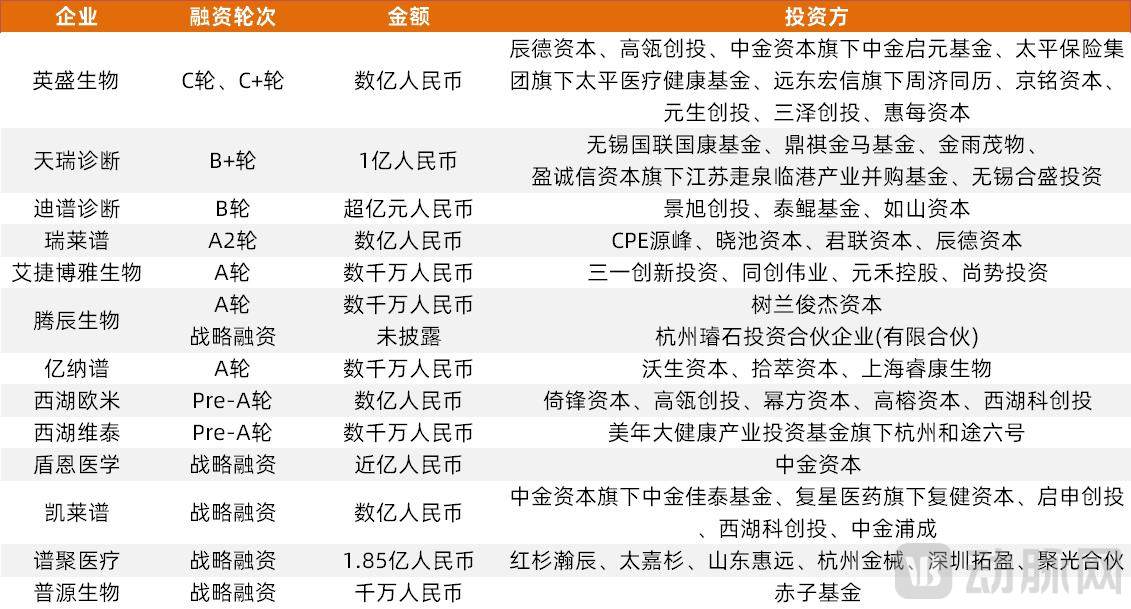
Financing Landscape of China’s Clinical Mass Spectrometry Sector in 2022
Furthermore, VCBeat has observed that in the clinical mass spectrometry industry, it is quite common for a single investor to make multiple investments in one company or to adopt a broad strategy by investing in multiple companies. Wosheng Investment has invested in Haosi Biotechnology, Nuomi Metabolomics, Ruikang Biotechnology, and Yina Pu; IDG Capital has made consecutive investments in Pinsheng Medical; and Hillhouse Ventures and Yuansheng Venture Capital have both made consecutive investments in InnoCare Biosciences.
From a financing perspective, China’s clinical mass spectrometry industry is undoubtedly experiencing a surge in momentum. Recently, VCBeat conducted interviews with investment firms active in the clinical mass spectrometry sector, including Chen Zhixing, Partner at Chengwei Capital; Lu Xu, Partner at SAIF Partners; and Li Xin, Partner at Fengyu Capital, aiming to clarify the evolution of the underlying logic of the clinical mass spectrometry market and its future development opportunities.
SAIF Partners was among the first investment firms in China to strategically invest in clinical mass spectrometry. In August 2013, the U.S. FDA approved the first time-of-flight mass spectrometer for microbial identification, and in June 2014, the FDA approved time-of-flight mass spectrometers for genetic testing. Mass spectrometry is becoming a key technology in clinical laboratory testing in the United States.
At that time, the application of mass spectrometry in China’s medical field was also in its infancy. In 2014, Bioyong Technologies Inc. obtained the registration certificate for China’s first time-of-flight mass spectrometer, and its trial models were deployed at Peking Union Medical College Hospital and the 301 Hospital (PLA General Hospital).
Lu Xu, Partner at SAIF Partners, stated, “We believe that clinical mass spectrometry is a platform technology with explosive potential.” In 2015, SAIF Partners invested in Bioyong Technologies.
In the years following 2015, early investors in clinical mass spectrometry generally felt that the industry’s development deviated somewhat from expectations, with mass spectrometry applications confined largely to research markets and niche scenarios such as urine testing for athletes. In 2017, Fengyu Capital invested in Beijing Haosi Biotechnology Co., Ltd. “At that time, most mass spectrometry companies reported annual revenues between RMB 1 million and RMB 2 million, and the clinical market was virtually untapped. We led Haosi Biotechnology’s Series A financing round based on our strong conviction in the potential of clinical applications for mass spectrometry and our recognition of the comprehensive capabilities of the Haosi team,” said Li Xin, Partner at Fengyu Capital.
The industry truly heated up in 2020.Around 2020, imported equipment manufacturers and domestic clinical mass spectrometry companies began to collaborate on instrument registration one after another, such as AB SCIEX and Kaluipu, Agilent and Pinsheng Medical, etc. Liquid chromatography-tandem mass spectrometry equipment has initially achieved localization, and clinical awareness has also significantly increased.
Although investors in in vitro diagnostics have generally been monitoring trends in clinical mass spectrometry since 2015, with occasional investments from a small number of venture capital firms, substantial investment activity did not concentrate until after 2020, reaching a new peak in 2021.
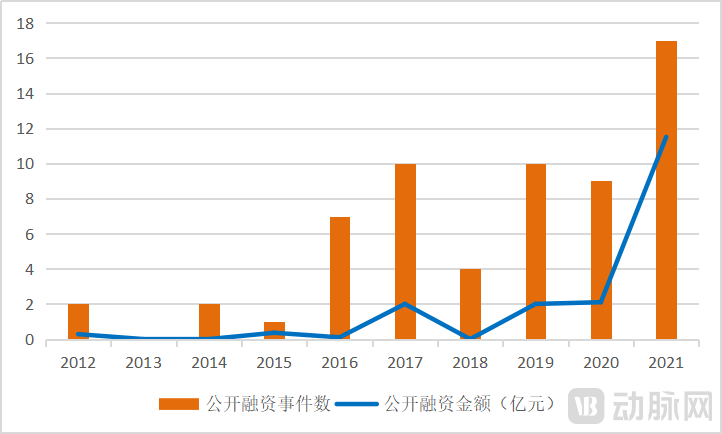
Clinical Mass Spectrometry Investment and Financing Trends, 2012–2021
According to statistics from VCBeat, both the financing amounts and the number of financing events in the clinical mass spectrometry sector have shown an overall upward trend. In 2015, there was only one publicly disclosed financing event. A significant increase began in 2016, with the number of financing events reaching 17 in 2021, and the total annual financing amount exceeding RMB 1.15 billion—the highest in the past decade. In the first half of 2022 alone, there were already 10 financing events, indicating that the industry continues to maintain a rapid growth momentum.
The rising clinical acceptance of mass spectrometry technology and the heightened regulatory attention are key reasons why clinical mass spectrometry is highly favored by the capital market.Previously, mass spectrometry technology was utilized at the research level only by a select few leading hospitals and prominent medical experts. With a substantial increase in the number of approved instruments and reagents, numerous tertiary and secondary hospitals are now procuring mass spectrometry products through tendering processes, and a large number of clinicians are employing mass spectrometry-based testing. Consequently, the clinical adoption rate and coverage of mass spectrometry technology have significantly improved.
Li Xin stated, “To some extent, mass spectrometry equipment is not clinically friendly, characterized by complex operation, long turnaround times, and high costs. However, many hospitals have already deployed mass spectrometers in their clinical laboratories, and sample volumes are gradually increasing. This counterintuitive trend indicates that the clinical community has gained significant confidence in mass spectrometry technology.”
Another key reason is that leading companies have emerged, initially validating the commercial potential of clinical mass spectrometry.Products from tier-one enterprises have become well-established, with strategic layouts in the R&D of domestically produced equipment, routine testing applications, and innovative omics applications. These companies have achieved notable progress, rapidly scaled up product volumes, and consequently reduced the cost of mass spectrometry testing.
Chen Zhixing, a partner at Grand Zhen Capital, revealed: “According to our understanding, the annual revenue of leading companies in the sector is poised to surpass RMB 100 million in recent years, having previously been generally at the tens of millions level. From the perspectives of revenue scale and capital enthusiasm, clinical mass spectrometry has ushered in a period of significant opportunity.”
In particular, as support from the capital market intensifies, clinical mass spectrometry companies are able to invest more in R&D, regulatory approvals, and sales, driving continuous growth in the market size of clinical mass spectrometry.
According to data provided by Centurium Capital, the market size of clinical mass spectrometry in China exceeded RMB 10 billion in 2021 based on end-user testing revenue, with a mid-term potential market reaching RMB 30 billion. On the equipment side, annual installations currently stand at approximately 200 units, with the market size also surpassing RMB 10 billion; the mid-term hardware market is projected to reach RMB 20–30 billion. Furthermore, considering the significant growth potential of specialized precision omics testing, the overall market size for clinical mass spectrometry in China is expected to reach the trillion-yuan level in the future.
Lu Xu stated, “Based on estimates derived from the annual sales volume of instruments and reagents, the current market size for clinical mass spectrometry in China is in the billions, with expectations to surpass ten billion in the coming years. In a market valued at ten billion, if leading enterprises can capture a 30% market share, they will achieve substantial financial performance.”
“Even though investors hold differing views on market size data, there is a widespread and high expectation for the future prospects of clinical mass spectrometry. ‘Clinical mass spectrometry is widely recognized in the investment community as one of the few promising sectors characterized by certainty, technological barriers, and high-growth opportunities. It is currently in a strategic layout phase, and its future growth rate is highly likely to outpace that of other methodologies and platforms,’ said Li Xin.”
In clinical testing, mass spectrometry enables elemental analysis of trace elements and heavy metals; detects endogenous small molecules such as amino acids and steroid hormones; analyzes biological macromolecules including nucleic acids and proteins; and performs therapeutic drug monitoring for exogenous drugs. By analyzing the molecular weights, molecular weight combinations, and abundances of biomarkers, it identifies the types and concentrations of these markers, thereby facilitating the determination of disease types and progression. Compared with traditional biochemical and immunological assays, mass spectrometry demonstrates significant advantages in sensitivity, specificity, and multiplexed detection capabilities.
The clinical mass spectrometry industry chain encompasses instruments, reagents, and testing services. The instrument segment is currently dominated by imported OEM products, while domestically manufactured equipment is in its early stages of development. Testing applications have become the primary arena for companies to establish differentiated competitive advantages, categorized into routine testing applications and innovative omics applications.
Routine testing applications focus on upgrading existing methodologies., including vitamin D testing, newborn screening, therapeutic drug monitoring, and microbial identification. The product application scenarios are well-defined, with limited differentiation among offerings and a certain degree of homogenization. Companies are adopting strategies similar to those used in the in vitro diagnostics (IVD) sector, focusing on sales channels and services. In routine testing applications, leading-tier companies have obtained approval for more than 10 assay kits, which have been implemented in over 100 hospitals.
Innovative omics applications target the incremental market for clinical mass spectrometry.Leveraging the dual advantages of mass spectrometry in both research and clinical settings, we develop biomarkers from scratch for major diseases to facilitate clinical translation and launch innovative omics applications. These solutions address challenges that existing methodologies cannot or have not yet effectively resolved, such as chronic disease diagnosis and treatment monitoring, tumor marker discovery, early screening for neurological disorders, detection of refractory hypertension, and precise prediction of preterm birth. For instance, Beijing Haosi Biotechnology Co., Ltd. has developed various applications for ceramide measurement, early screening and monitoring of Alzheimer’s disease, and detection of urological diseases.
Currently, there are certain differences in the strategic focus and progress of various companies in innovative omics applications, and it will take some time for omics products to be launched and achieve significant market adoption. Among them, Pinsheng Medical’s qULTRA Precision Omics Platform focuses on clinical proteomics and metabolomics research. It has been validated by 11 laboratories worldwide and can support the entire process from biomarker discovery and validation to translation into clinical applications.
Chen Zhixing stated: “In the short term, market forces will be the primary driver; entering the market through the relatively mature segment of routine testing is an ideal strategy."Clinical mass spectrometry manufacturers are very similar to those in biochemistry and chemiluminescence, competing on regulatory approvals, sales, distribution channels, and services. Success primarily hinges on execution capabilities, following the logic of traditional IVD products with a limited growth ceiling. This is a phase of rapid market consolidation, during which a number of companies will be eliminated within two to three years."
In the long run, it is technology-driven, testing R&D capabilities.“Mass spectrometry is a detection tool for proteomics and metabolomics. As proteins and metabolites are the end products of biological activities, they directly reflect the onset and progression of diseases, offering significant potential for expansion. The potential application space for proteomics and metabolomics is larger than that of genomics, making them worthy of long-term optimism. In the future, differentiation among enterprises will be reflected in their R&D capabilities and innovative omics applications.”
Under this logic, investors have also shifted their selection of target companies.
"In the past, investors placed significant emphasis on the speed of volume growth, which aligns with the traditional IVD logic. Currently, investors not only focus on the pace of commercialization but also increasingly value a team's R&D capabilities and its strategic layout in innovative omics. With broader areas of interest, their expectations for companies have correspondingly risen. Li Xin stated, 'We assess whether entrepreneurs possess three key capabilities: scientific research proficiency, clinical expertise, and the ability to build an excellent commercial organization. These are also important factors that attract us to Haosi Biotechnology. Dr. Li Lin is precisely such an outstanding entrepreneur.'"
“Overall, clinical mass spectrometry companies need to pursue comprehensive development, balancing routine testing applications, innovative omics applications, and the R&D of domestically produced instruments. On one hand, they should adopt an IVD-like strategy to strengthen distribution channels and services; on the other hand, they must prioritize technological development, focusing on innovative omics applications and the development of domestically manufactured instruments. ‘Although the products currently available on the market are quite similar, sustained R&D investment will eventually differentiate competitors,’ summarized Chen Zhixing.”
Mass spectrometry acts like a magnifying glass, revealing details that other methodologies cannot detect, leading to new discoveries, generating additional clinical data, and creating a substantial incremental market. However, Lu Xu candidly admitted, “Although clinical mass spectrometry is at a favorable juncture, it has not yet truly taken off—at least not reaching the height expected by investors within the anticipated timeframe.”
First is the challenge commonly faced by emerging technologies—regulation, test kits require regulatory certification, and hospital admission necessitates pricing approval; these are existing challenges. In particular, the validation process for innovative omics applications is lengthy, requiring companies to maintain ongoing communication with regulatory authorities.
Furthermore, clinical mass spectrometry still lacks a “killer app” and has limited application scenarios in end-user clinical practice.Lu Xu stated, “Routine tests such as vitamin D assays and microbial identification have a certain volume of applications, but none are ‘killer’ applications that have generated sufficient impact.”
A killer application must possess characteristics such as a broad user base, a high market ceiling, and the capacity for a single project to support a substantial market. Generally, such projects do not emerge in routine testing; future opportunities lie in innovative applications, such as the discovery of novel disease biomarkers and nucleic acid mass spectrometry. Only by leveraging killer applications to create blockbuster products can mass spectrometry technology be rapidly deployed in clinical settings.
Finally, there are still many contradictions in the company's business model.For instance, whether to sell or place equipment, how the in-hospital model addresses cost and pricing issues, and how the outsourced testing model can scale up while adhering as closely as possible to domestic IPO compliance standards. Different models require different internal organizational resource coordination; companies must avoid indecision and make decisive judgments on which business model to pursue. By reverse-engineering the product roadmap from the ultimate goal, they can achieve success rapidly.
Clinical mass spectrometry is now at a critical juncture in its transition from research to large-scale clinical application. Moving forward, investment institutions are focusing on two key aspects of clinical mass spectrometry. The first is commercialization capability, with investors most concerned about when mass spectrometry technology will achieve breakthrough applications in clinical settings. The second is innovation capability, which involves expanding the scope of clinical mass spectrometry applications through innovative omics technologies, and realizing the domestic production, automation, and intelligentization of mass spectrometry systems.
Chen Zhixing believes that industry leaders will be platform-based companies covering instruments, reagents, and technical services, encompassing both routine and specialized testing. These companies must establish high barriers in R&D and sales capabilities, posing significant challenges in terms of team building and capital requirements. Furthermore, while clinical mass spectrometry is experiencing rapid growth, it will not see an explosive surge within the next two to three years; rather, it is a long-term, high-potential sector, and companies should prepare for a protracted competitive marathon.
“To be frank, there are no shortcuts in the clinical mass spectrometry industry. Companies must pay their dues by diligently focusing on market development and R&D, which inevitably requires long-term capital support,” said Lu Xu.
Special Acknowledgments: Chen Zhixing, Partner at Centurium Capital; Lu Xu, Partner at SAIF Partners; Li Xin, Partner at Fengyu Capital; and numerous other unnamed industry veterans.