

Shandong Internet Traditional Chinese Medicine (TCM) Trading Center Releases Herbal Quality Standards Ahead of Nation's First TCM Decoction Pieces Joint Procurement
On July 22, the official website of the Shandong Internet Traditional Chinese Medicine (TCM) Materials Trading Center formally released the “Standards for Commodity Specifications and Grades of TCM Materials” and announced the guiding principles for the construction of “Origin Storage Quality Assurance Warehouses for TCM Materials.” As the centralized procurement of TCM decoction pieces under the Sanming Procurement Alliance (National) Inter-provincial TCM (Materials) Procurement Alliance, which it undertakes, has entered a critical phase, this move is regarded as a comprehensive upgrade to the quality control system for the centralized procurement of TCM decoction pieces.
Promote Cross-Regional Mutual Recognition of Standards, with “Origin Warehouses” Ensuring Quality at the Source
The "Standards for Commodity Specifications and Grades of Chinese Crude Drugs" released by the Shandong Internet Traditional Chinese Medicine (Materials) Trading Center cover 21 varieties, including Astragali Radix, Lonicerae Japonicae Flos, and Ophiopogonis Radix, which is consistent with the scope of varieties included in the joint procurement of TCM decoction pieces. According to the introduction, the standards are based on the Pharmacopoeia of the People's Republic of China (2020 Edition), reference the group standard "Commodity Specifications and Grades of Chinese Crude Drugs" issued by the China Association of Chinese Medicine, and incorporate market trading rules and current circulation conditions. They were formulated after multiple rounds of deliberation by an expert panel comprising experts in TCM resource research, TCM pharmacology, drug quality inspection, and quality control from TCM decoction piece manufacturing enterprises.
Concurrently with the launch of the *Standards for Commodity Specifications and Grading of Chinese Crude Drugs*, the Shandong Internet Traditional Chinese Medicine (TCM) Materials Trading Center also released the construction principles for the “Origin-Based Quality-Assured Warehouses for Chinese Crude Drugs” (hereinafter referred to as “Origin Warehouses”). These Origin Warehouses are jointly developed by the Shandong Internet TCM Materials Trading Center and major production regions of authentic (Daodi) herbs. By establishing an integrated “production, processing, and sales” direct-supply system in these Daodi herb-producing areas—encompassing standardized cultivation, on-site harvesting, on-site processing, on-site warehousing, and direct shipment from the origin—the initiative aims to build a stable supply chain for medicinal materials while significantly promoting the industrialization of characteristic agriculture.
A close examination of the standards and the origin-warehouse model reveals that the development of specification and grade standards for traditional Chinese medicinal (TCM) materials by the Shandong Internet TCM (Materials) Trading Center is inextricably linked to its origin-warehouse model. These two elements complement each other, thereby strengthening the quality control and traceability system. Taking Chuan Maidong (Ophiopogon japonicus from Sichuan) as an example, the use of paclobutrazol during cultivation can reduce the content of active ingredients; therefore, safety indicators for paclobutrazol have been incorporated into the standards for Chuan Maidong. Meanwhile, the Shandong Internet TCM (Materials) Trading Center has established an origin warehouse for Chuan Maidong in Santai County, Mianyang, Sichuan Province, known as the “Home of Chinese Ophiopogon.” By implementing standardized management of ecological planting at the cultivation bases, the center has further enhanced the product quality of Chuan Maidong.
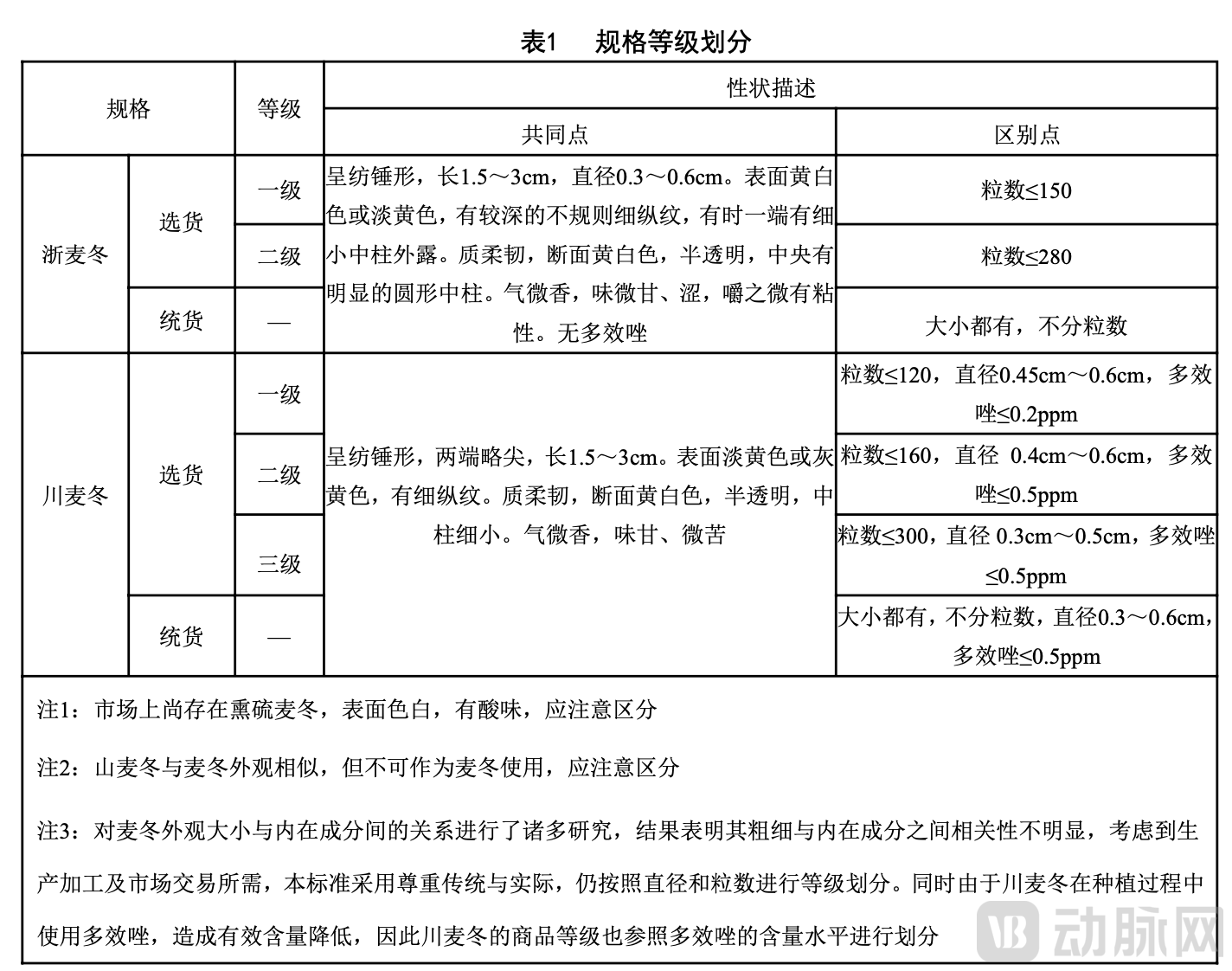
The "Standards for Commodity Specifications and Grades of Chinese Herbal Medicines" issued by the Shandong Internet Traditional Chinese Medicine (Materials) Trading Center includes safety index requirements for paclobutrazol in Chuan Maidong (Ophiopogon japonicus from Sichuan).
“In recent years, the state has continuously strengthened regulatory oversight, yet numerous quality issues persist in Chinese crude drugs and decoction pieces. The quality of Chinese crude drugs forms the foundation for the quality of decoction pieces; particularly for those without specialized processing methods, the primary factor influencing quality lies in the raw crude drug materials. Strengthening quality control of Chinese crude drugs is key to addressing problems at the source,” stated Fan Jiping, former Vice President of the China Academy of Chinese Medical Sciences and an expert on the Expert Committee for Quality Assurance of Chinese Herbal Decoction Pieces at the Shandong Internet Traditional Chinese Medicine (Crude Drug) Trading Center. He explained that the standards aim to guide the healthy and orderly development of the traditional Chinese medicine (TCM) industry by adhering to the fundamental principles of premium pricing for high-quality products, promoting the cultivation of authentic regional herbs (Daodi herbs), and implementing standardized planting practices. By integrating the origin-warehouse model, these standards ensure that quality control measures are implemented at the source, thereby establishing a comprehensive quality control and traceability system spanning from cultivation to transaction, which effectively addresses the current challenges in quality control of TCM (crude drugs).
Pioneering Reforms: Demonstration Zone Charts a Path for the Sound Development of the Traditional Chinese Medicine Industry
Recently, the commendation conference for the fourth cohort of National Masters of Traditional Chinese Medicine (TCM) and the second cohort of National Renowned TCM Practitioners was held in Beijing. The conference emphasized the need to encourage pilot initiatives within the National Comprehensive Reform Demonstration Zones for TCM, deepen reforms in TCM service pricing, health insurance payment methods, and integrated TCM-Western medicine models, and explore new pathways for TCM development. As one of the first provinces approved as a National Comprehensive Reform Demonstration Zone for TCM, Shandong has been continuously exploring and innovating in areas such as TCM service models, industrial development, and quality supervision. The Shandong Internet Traditional Chinese Medicine (Materials) Trading Center is a key project in Shandong’s strategic layout for TCM industry development and accelerating the transition from old to new growth drivers.
Shandong Internet Traditional Chinese Medicine (Herbal Materials) Trading Center originated as a supporting platform for the National Inter-Provincial Traditional Chinese Medicine (Herbal Materials) Procurement Alliance. On July 7, 2020, the Shandong Provincial Healthcare Security Administration, in collaboration with the healthcare security administrations of 11 other provinces, autonomous regions, and municipalities, established China’s first inter-provincial TCM (herbal materials) procurement alliance. In December 2021, it was upgraded to the Sanming Procurement Alliance (National) Inter-Provincial Traditional Chinese Medicine (Herbal Materials) Procurement Alliance. Since its operation, the Shandong Internet Traditional Chinese Medicine (Herbal Materials) Trading Center has successfully built five core systems: “quality control and traceability, quality insurance, volume-based price negotiation, transaction settlement, and quality-assured warehousing,” thereby promoting “quality assurance, grade improvement, and stable supply” in the herbal materials supply chain.
On June 24 this year, Shandong Province issued the “Shandong Province National Comprehensive Reform Demonstration Zone for Traditional Chinese Medicine Construction Plan.” The plan clarifies the key tasks for building the demonstration zone, among which six tasks—including reforming TCM pricing and medical insurance policies, and strengthening whole-process supervision of TCM quality—are designated as “mandatory requirements.” These requirements include: advancing inter-provincial alliance-based procurement of TCM decoction pieces, leveraging the market advantages and strategic purchasing power of the alliance regions, conducting centralized volume-based procurement of TCM decoction pieces on behalf of medical institutions in the alliance areas, and completing the first round of joint procurement and implementation of results by 2022; exploring the establishment of a full-process traceability system for the production and distribution of TCM decoction pieces; and accelerating the creation of a batch of landmark reform and innovation achievements to serve as a national model.
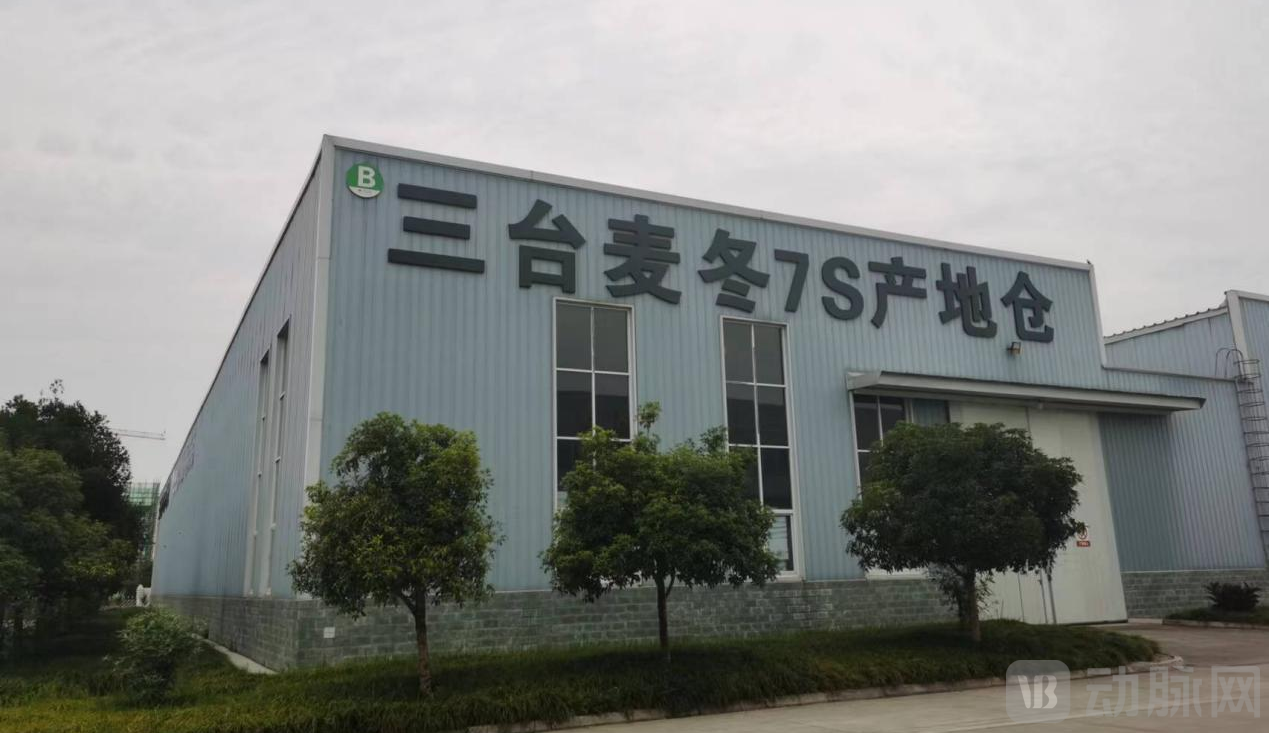
"Origin Warehouse" Built by Shandong Internet Traditional Chinese Medicine (Materials) Trading Center in Santai County, the Hometown of Ophiopogon Japonicus
With the establishment of standards for commodity specifications and grades of traditional Chinese medicinal materials, and the introduction of the origin-based warehouse model, the Shandong Internet Traditional Chinese Medicine (Herbal Materials) Trading Center has not only built a more comprehensive five-core system to effectively support cross-regional procurement by the alliance, but also marked the full launch of its market-oriented trading services nationwide, which will significantly promote the healthy development of the traditional Chinese medicine industry.