

Breath Medical Completes Clinical Trials for China's First ENT-Specific Degradable Expanding Hemostatic Sponge
China’s First “Biodegradable Expandable Hemostatic Sponge” Is Here!
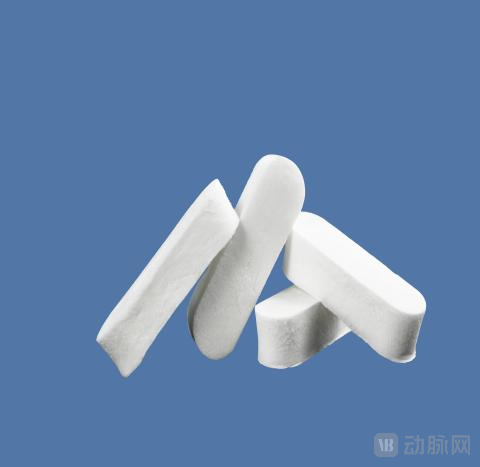
Recently, Breath Medical Co., Ltd. announced that it has completed a 144-patient clinical trial for its “Biodegradable Expandable Hemostatic Sponge.” The clinical results demonstrated that the hemostatic sponge matches imported brands in key technical indicators such as hemostatic efficacy and degradation time, and outperforms “Nasopore,” a commonly used clinical product.
It is worth mentioning that this isChina's first domestically developed hemostatic material specifically for otorhinolaryngology, classified as a Class III medical device (the highest category), is expected to launch in the first quarter of 2023.“Biodegradable Expandable Hemostatic Sponge” has broken the global technological monopoly held by imported brands of synthetic polyurethane hemostatic materials. Moreover, its superior hemostatic properties better meet the requirements of otolaryngological surgeries.
It is reported that this is Breath Medical's third product to undergo human clinical trials.
Postoperative Packing Materials in Otorhinolaryngology: Four Major Categories, with Biodegradable and Expandable Materials Demonstrating the Best Efficacy
Over the past decade, nasal surgery techniques and instruments have advanced rapidly, yet postoperative packing materials have seen little change. Currently, most otolaryngology hospitals in China still use non-degradable wound dressings, which have numerous drawbacks. Based on product performance, industry experts classify clinically used postoperative packing dressings into four categories, as follows:
First-generation products, represented by petroleum gauze strips, are simple to manufacture and allow for flexible packing techniques. They enable varying degrees of packing pressure tailored to different levels of oozing hemorrhage, ensuring uniform pressure distribution to reduce bleeding. These products offer advantages such as cost-effectiveness and reliable efficacy.
However, petroleum jelly gauze strips are inelastic and non-absorbent, failing to effectively control oozing or allow for long-term packing. They exhibit suboptimal biocompatibility, causing post-packing irritation and discomfort such as difficulty sleeping. Upon removal, they tend to adhere to blood crusts, leading to their dislodgement. Patients often experience significant complications, including nasal distension pain, headache, lacrimation, aural fullness, and severe reactive inflammation of the nasal mucosa after extraction.
The second-generation products are represented by PVA-based materials. This expandable sponge offers advantages such as rapid and convenient application, relatively soft texture, excellent expansibility, high hydrophilicity, and superior blood absorption performance.
However, the disadvantage of PVA material is that it requires postoperative removal and is prone to adhesion and secondary bleeding, causing significant pain to patients; additionally, to prevent drying, the cotton plug must be moistened one to multiple times a day, which reduces its elasticity and results in insufficient pressure to control microarterial bleeding.
Third-generation common products can be divided into three categories based on different synthetic materials:
1、Calcium Alginate: It exhibits good conformability, adapting well to and adhering closely to the wound surface; it is effective in controlling oozing blood and is non-adherent. However, calcium alginate dressings are overly soft, liquefy rapidly, and lack toughness and elasticity, providing insufficient compression for microarterial bleeding. In cases involving deep packing sites and prolonged indwelling periods, the material is not absorbed, making removal difficult and potentially causing lamina papyracea injury.
2、Collagen: Effective in controlling oozing hemorrhage; derived from animal sources. However, it has disadvantages such as scar formation, adhesion, and difficulty in postoperative cleanup. The gel material cannot be appropriately trimmed. Improper use may still lead to complications such as septal hematoma and adhesions.
3、Hyaluronic Acid: Absorbable and non-adhesive; however, it has a low molecular weight, low elasticity, and is non-expandable. The material completely loses its elasticity upon exposure to moisture, resulting in insufficient compressive hemostasis. Due to its prolonged liquefaction time and gel-like consistency, it exhibits poor blood absorption. Removal of unabsorbed packing material is difficult, and it is not suitable for cases with significant bleeding or extensive surgical fields.
The fourth generation is represented by poly(ε-caprolactone-co-lactide) urethane. This expandable porous polymer material exhibits strong elasticity and flexibility, providing effective compression hemostasis. It degrades rapidly (without causing severe headaches, with complete degradation within approximately one week), requires no removal, and does not create new wounds. Its water-soluble degradation products promote epithelial tissue growth, resulting in minimal scarring after healing. It does not adhere to the nasal cavity, leaving the surgical cavity clean without gel-like residue, thus eliminating the need for cleanup.
Fourth-generation biodegradable hemostatic materials, represented by the imported product "Nasopore," feature rapid expansion for hemostasis and begin degrading within 12 hours, while exhibiting excellent tissue compatibility. After degradation, the material becomes fluid and is expelled through the nasal cavity, thereby avoiding the pain and adverse reactions associated with manual removal. However, this synthetic polyurethane-based product presents high technical barriers and poses significant challenges in synthesis.Prior to this, no company had been able to independently develop and manufacture similar products for nearly 20 years.。
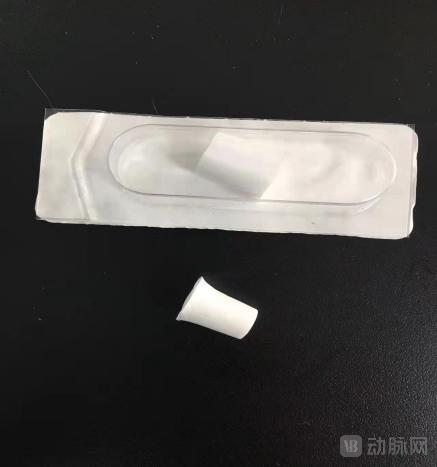
After more than three years of dedicated R&D, overcoming various challenges, and starting from basic raw materials with repeated testing and validation, Breath Medical finally broke through technical barriers in late 2020 and established the prototype of its domestically produced fourth-generation postoperative packing dressing.
Following the hemostatic sponge, Breath Medical’s two other ENT products have also completed R&D
VCBeat conducted an exclusive interview with Pang Yonggang, Founder and Chairman of Breath Medical Co., Ltd. He responded, “I extend my heartfelt gratitude to the R&D team at Breath Medical, particularly our Chief Technology Officer, Dr. Zhang. Under her leadership, the entire R&D team carried out countless experiments, explored multiple technical pathways, and pursued continuous innovation. After more than three years of dedicated effort, we have successfully developed this groundbreaking product.”
We also extend our gratitude to the Anhui Provincial Medical Products Administration for its approval, which allowed the first domestically developed fourth-generation hemostatic sponge specifically designed for otolaryngology to apply for innovative review and approval from the NMPA. Finally, we thank the five hospital institutions and physicians involved in the clinical trials. As the most commonly used material for hemostasis in otorhinolaryngology, our productMarket sales are expected to exceed 3 million units in 2024., thereby benefiting a broad patient population.”
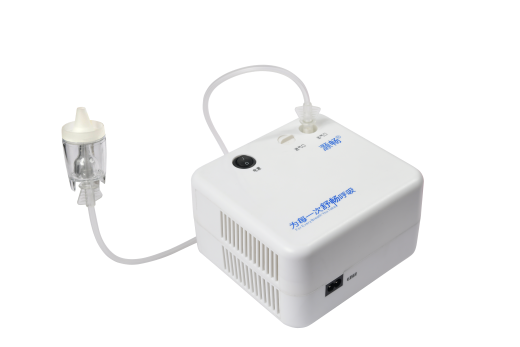
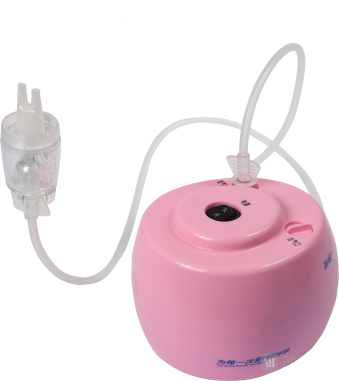
Double Celebration: Breath Medical’s Self-Developed Nasal-Specific Nebulizer Has Obtained the Class II Medical Device Registration Certificate from the Anhui Provincial Medical Products Administration. This is currentlyChina's First Dedicated Nasal Drug Delivery Device, enabling over 80% of the nebulized liquid particles to be retained in the human nasal cavity and sinuses. The product is available in pediatric and adult versions, addressing the clinical challenge of local drug administration to the nasal cavity and pharynx, achieving precise drug therapy, while also providing nasal humidification and irrigation functions.
It is reported that in February 2022, Breath MedicalThe second Class III certified product, "Fully Bioresorbable Sinus Drug-Eluting Stent," has completed patient enrollment for its clinical trial.;The fourth Class III certified product, “Fully Degradable Nasal Septum Pin,” is also scheduled to enter human clinical trials by the end of 2022., this is another innovative product recently developed and finalized by Breath Medical. It is the first domestic fixation device designed for post-septoplasty use, offering advantages such as ease of operation, no interference with breathing or aesthetics, stable and secure support, and complete biodegradability, thereby disrupting several traditional fixation methods currently used in clinical practice. Meanwhile, the "Fully Biodegradable Septal Pin" has also applied for the Innovative Medical Device Approval pathway with the National Medical Products Administration (NMPA).
Since its founding in 2017, Breath Medical Co., Ltd. has remained focused on the otolaryngology sector, with continuous innovation in new products and an R&D team that never rests. The company has initiated the development of new, domestically exclusive innovative ENT products, with two new models expected to be finalized next year. We look forward to more innovative offerings from Breath Medical that better serve healthcare professionals and benefit patients.