

National Center of Technology Innovation for Biopharmaceuticals Launches Nucleic Acid Therapeutics 'Challenge-Based' Technical Project Defense Kickoff
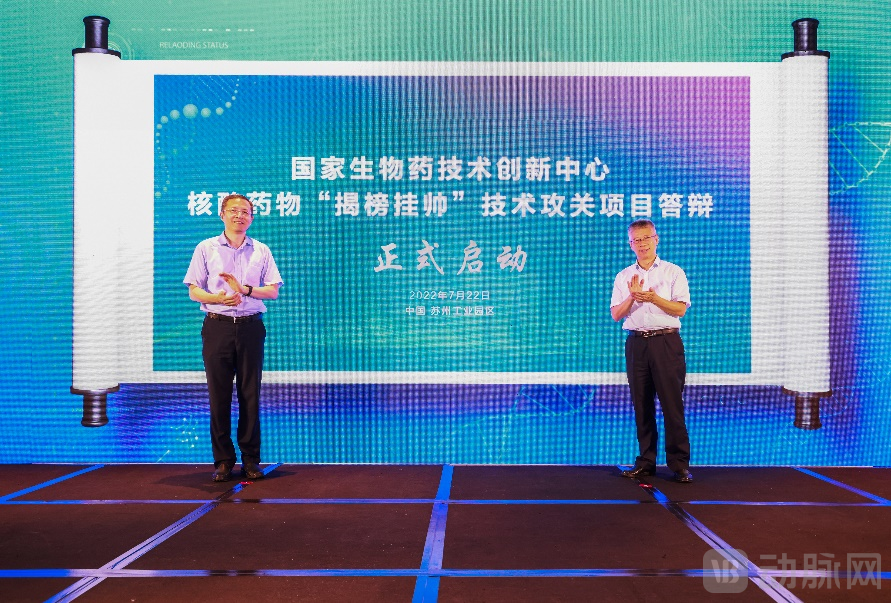
On July 22, the launch ceremony for the project defense of the “Open Competition Mechanism” technical breakthrough initiatives in nucleic acid drugs, organized by the National Biopharmaceutical Technology Innovation Center (hereinafter referred to as the “National Innovation Center”), was held by Jinji Lake. Nearly one hundred project leaders from renowned domestic universities, research institutes, general hospitals, and innovative enterprises gathered to discuss the future development of nucleic acid therapeutics. Tan Weihong, Academician of the Chinese Academy of Sciences and Director of the Institute of Basic Medicine and Cancer at the Chinese Academy of Sciences, along with relevant officials from the Jiangsu Provincial Department of Science and Technology and the Administrative Committee of Suzhou Industrial Park, attended the event and delivered remarks.
The “Open Competition” project for nucleic acid therapeutics is the first technical breakthrough direction released by the National Innovation Center. Led by Academician Tan Weihong, expert consultations were conducted to identify three key technical challenges: the development of novel and efficient delivery systems, the discovery of nucleic acid therapeutics targeting new sites and mechanisms, and the development of key raw materials and equipment for the bulk production of nucleic acid therapeutics. Since the launch of the project application process, a total of 169 proposals have been received, including 65 from Jiangsu Province, 25 from Shanghai, 17 from Zhejiang Province, and 62 from other regions across China such as Beijing-Tianjin-Hebei, Guangdong-Hong Kong-Macao Greater Bay Area, and Chengdu-Chongqing. In accordance with project management procedures, following formal review and preliminary expert evaluation, 122 projects have advanced to the on-site defense stage. Expert reviews for all defending projects will be completed on July 23 and 24.
The launch ceremony of the defense initiative aims to gather “elite leaders” from domestic universities, research institutes, comprehensive hospitals, and innovative enterprises, build a communication platform in the specialized field of nucleic acid research, link resources and advantages from all sectors, pool efforts to jointly address “chokehold” challenges, and strengthen national strategic scientific and technological capabilities.
At the launch ceremony, Yin Jianguo from the National Center for Technology Innovation for Biopharmaceuticals shared analytical data on 169 submitted projects. In terms of submission focus, the number of projects addressing three key technological challenges—novel high-efficiency delivery systems, discovery research on nucleic acid drugs with new targets and mechanisms, and development of raw materials and equipment for bulk drug substance production of nucleic acid therapeutics—were 78, 60, and 31, respectively. Regarding the types of submitting institutions, enterprises accounted for 63%, universities 21%, research institutes 11%, and hospitals 5%. In terms of research directions by nucleic acid classification, mRNA (messenger RNA) therapeutic development was the most concentrated, with 20 projects, followed by siRNA (small interfering RNA) therapeutics with 15 projects. Additionally, R&D on other novel nucleic acid therapeutics—including circRNA (circular RNA), ASO (antisense oligonucleotides), saRNA (self-amplifying RNA/small activating RNA), tRNA (transfer RNA), and aptamers—showed a “blossoming across the board” trend, with project distribution relatively even, ranging from 4 to 7 projects each. Regarding delivery methods, LNP (lipid nanoparticle) delivery research held an absolute advantage with 26 projects, followed by EV (extracellular vesicle) delivery research with 10 projects. Other delivery approaches, such as PNP (peptide nanoparticles), LPP (lipid-polymer particles), GalNAc (N-acetylgalactosamine), and red blood cell-based delivery, ranged from 2 to 5 projects each. In terms of therapeutic areas, oncology research was the most concentrated, with 29 projects, followed by genetic diseases with 10 projects. Research targeting viral infections, neurological disorders, fibrosis, immune-related conditions, and metabolic diseases ranged from 3 to 8 projects each.
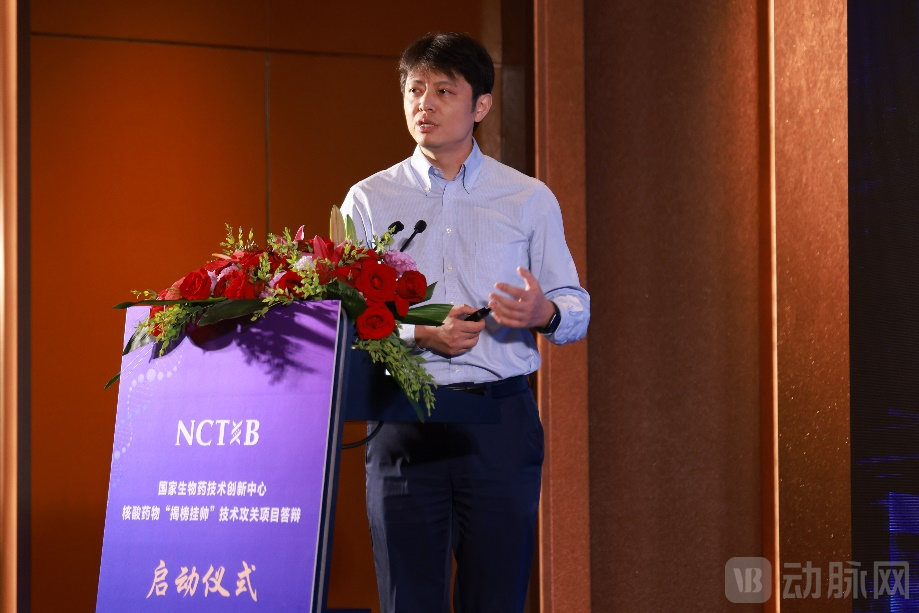
Yin Jianguo, National Biopharmaceutical Technology Innovation Center
Academician Zhan Qimin, Chairman of the Expert Committee of the National Innovation Center for Biotechnology (NIBC), delivered a video address at the launch ceremony. In his remarks, Academician Zhan outlined the deliberation process behind the development of the guideline directions for nucleic acid drug projects and highlighted the historical mission underpinning the selection of these strategic priorities. He expressed his gratification at the enthusiastic response to the current project applications and affirmed that NIBC is committed to collaborating with research institutions in the nucleic acid field to overcome challenges and jointly lead and drive the advancement of China’s nucleic acid drug industry.
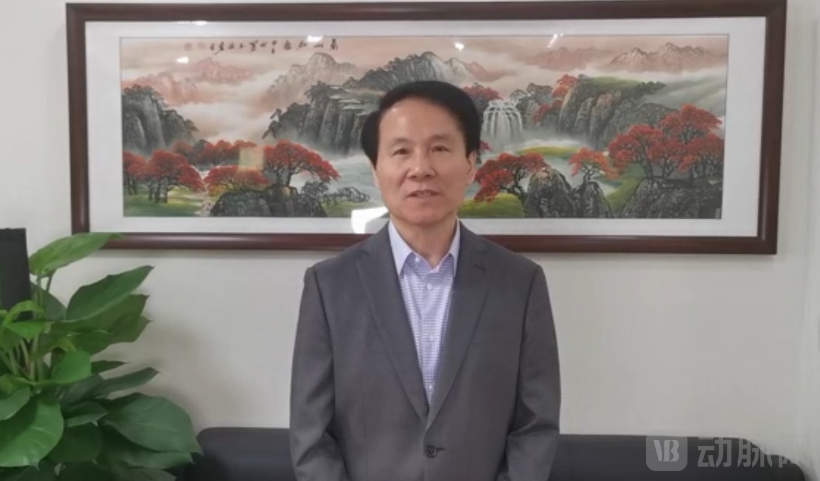
Academician Jian Qimin
Xia Qing, Founder of Beijing Qixia Decoding Biotechnology Co., Ltd., and Academician Tan Weihong delivered remarks as the representative of the project defense team and the representative of the review experts, respectively.
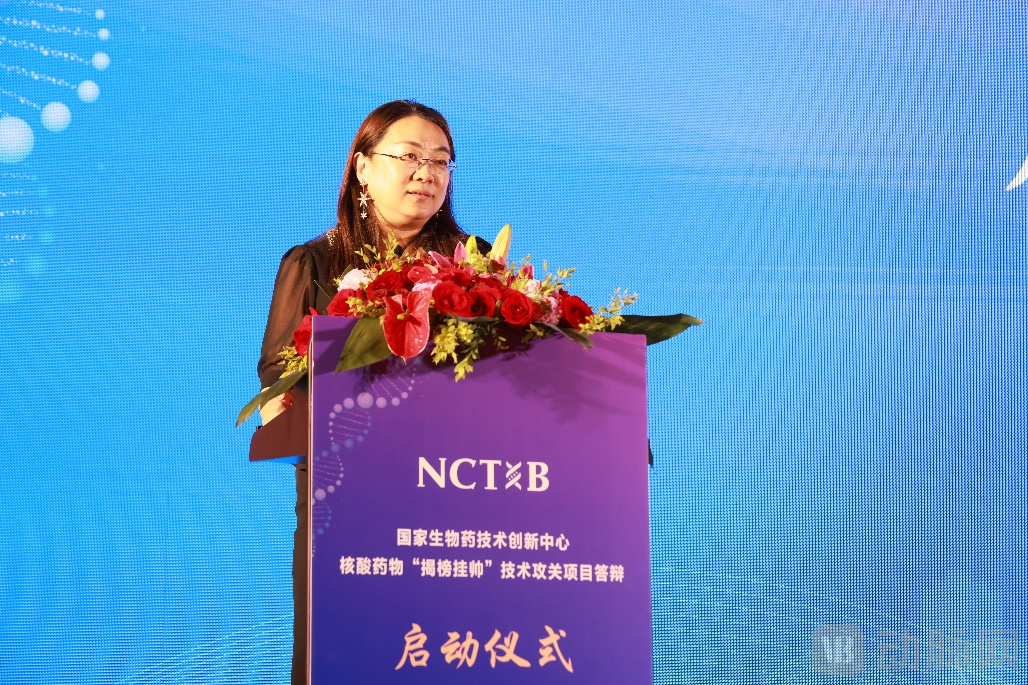
Xia Qing, Founder of Beijing Qixia Decoding Biotechnology Co., Ltd.
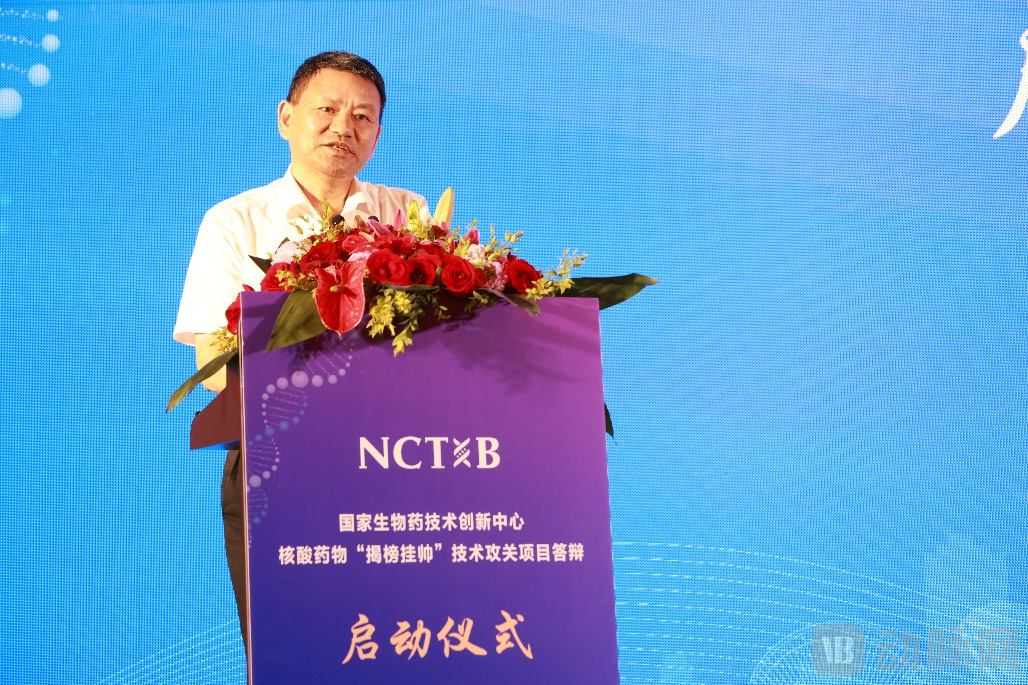
Academician Tan Weihong
Multiple project leads expressed high appreciation for the networking platform established by this event and looked forward to participating in more seminars and exchange meetings focused on niche areas of nucleic acid technology in Suzhou Industrial Park in the future.
The National Innovation Center will continue to unite and synergize with top-tier global innovation resources, actively build a global innovation network, and strive to become a world-class comprehensive technological innovation platform for biopharmaceuticals.