

Eye-tracking as a Digital Biomarker for Alzheimer's Disease: Enabling a Novel Diagnostic Paradigm for Neurological Disorders
Editor’s Note: As a frontier in today’s healthcare sector, digital biomarkers face the greatest challenge of establishing quantifiable, clinically interpretable objective standards and applying them to detect, interpret, or predict disease trajectories. We are pleased to find that Shanghai Zhisheng Technology Co., Ltd. (Zhisheng Tech), as an emerging medical technology enterprise in China focusing on “digital biomarkers,” has allowed us to share its innovative technological solutions.
Alzheimer’s Disease (AD) is classified as a neurodegenerative disorder of the central nervous system. To date, there are nearly 10 million diagnosed patients in China. If the prodromal stage of AD—Mild Cognitive Impairment (MCI)—is also included, the number of individuals at high risk for cognitive impairment or affected by the condition in China approaches 50 million.[1]. Furthermore, with population aging and increasing life expectancy, the number of individuals at risk continues to rise rapidly.
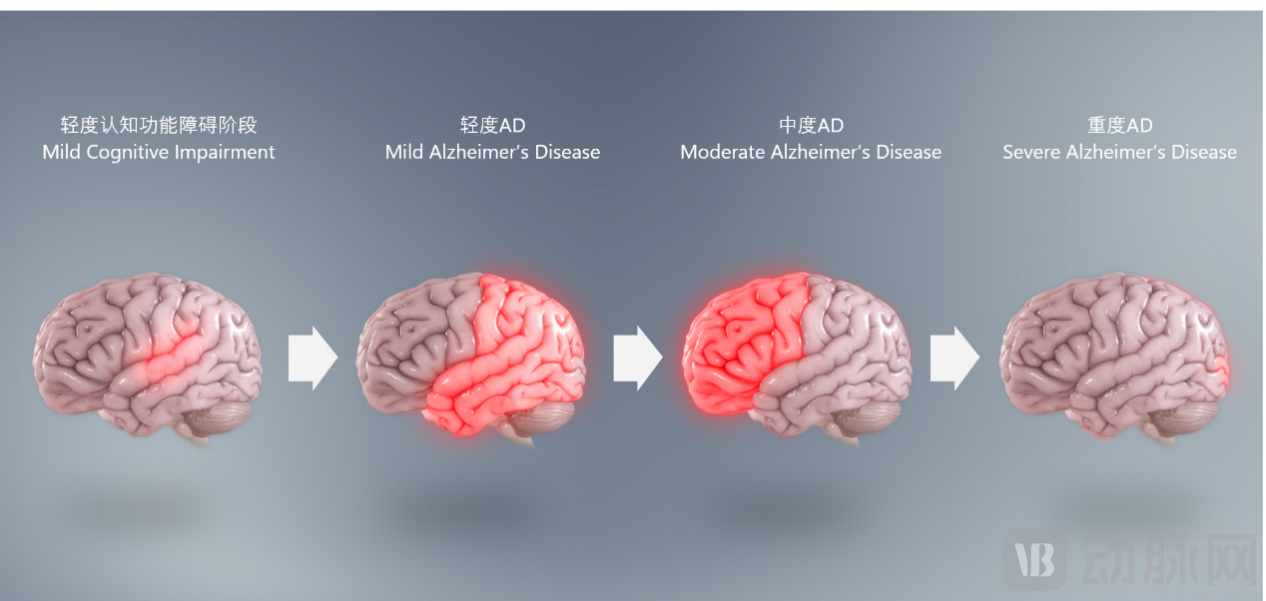 Schematic Diagram of the Most Affected Brain Regions at Different Stages of AD[2]
As the fifth leading cause of death among the Chinese population[2]Alzheimer's disease progresses gradually, spreading from specific brain regions to the entire brain. Symptoms worsen from mild to severe, and the disease course is relatively long, with a typical prognosis of 5–10 years after diagnosis.
● Mild Cognitive Impairment (MCI) Stage
Core symptoms include situational declines in memory and executive function, such as forgetting conversations and recent events, and being unable to perform previously mastered tasks or make decisions.
● Mild AD Stage (Mild Alzheimer’s Disease)
At this stage, patients are likely to repeatedly ask the same questions, misplace their belongings, experience difficulties with planning and decision-making, and exhibit either emotional apathy or unusual irritability.
● Moderate Alzheimer’s Disease Stage
Severe problems with memory or thinking significantly impair work and social life, making tasks such as managing finances, verbal expression, and organizing thoughts difficult. The pathology begins to spread to areas responsible for language comprehension and visuospatial processing, leading to difficulties in verbal expression and disorientation in time and space.
● Severe Alzheimer’s Disease Stage
Most of the cerebral cortex is severely damaged. In addition to global cognitive impairment, patients exhibit abnormal mental status, and the impact on physical functions and motor abilities becomes increasingly significant. Patients require comprehensive assistance with eating, dressing, toileting, and all other activities of daily living. Ultimately, they may even lose the ability to swallow and control bladder and bowel functions.
Regarding the etiology of Alzheimer's disease, the current prevailing view holds that amyloid-β (Aβ) and hyperphosphorylated tau protein (p-tau) are the primary pathogenic culprits.[3]. Most new drugs currently in the research and development stage also target the aforementioned pathways. However, the aggregation of these abnormally denatured proteins does not necessarily lead to cognitive impairment. Moreover, clearing these denatured proteins after the onset of cognitive dysfunction yields very limited improvement in symptoms. For example, aducanumab, a monoclonal antibody targeting Aβ launched in 2021, was ultimately restricted in its use due to poor efficacy and side effects such as brain edema, and it has even failed to gain marketing approval in some regions.
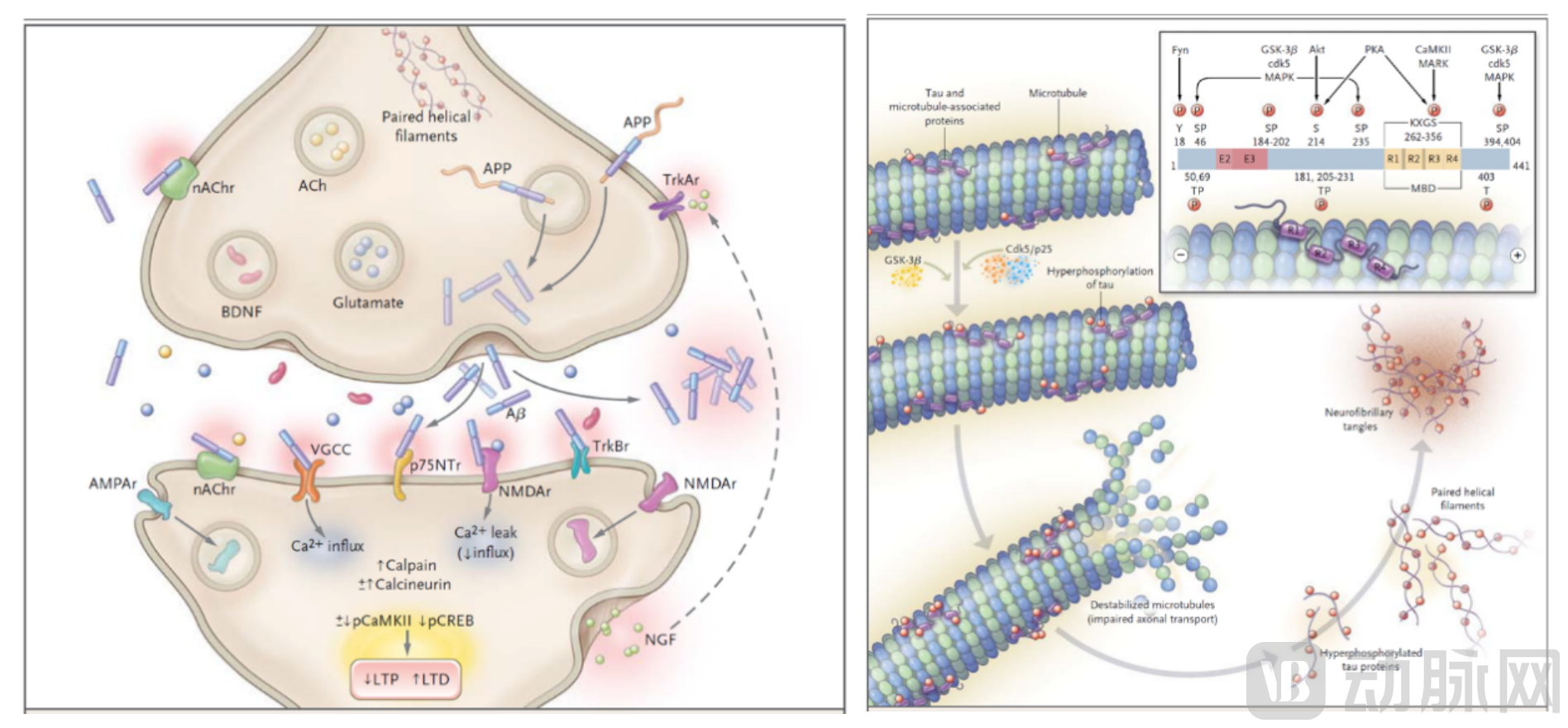 Pathogenic Mechanisms of β-Amyloid (Left) and Hyperphosphorylated Tau Protein (Right)[4]
It appears that the amyloid-beta (Aβ) and tau protein hypotheses are not the definitive answer. Meanwhile, various other pathogenic hypotheses continue to emerge, such as the neuroinflammation hypothesis and the gut-brain axis hypothesis. To date, the pathogenesis of Alzheimer’s disease has not been conclusively proven, posing significant challenges from the diagnostic stage onward.
Because the pathogenesis of Alzheimer's disease (AD) remains unclear, clinical diagnosis of AD requires a comprehensive assessment combining biochemical imaging studies and behavioral scale evaluations.[5]. Existing biochemical imaging tests (biomarker assays) for Alzheimer’s disease (AD) are either invasive, such as lumbar puncture for cerebrospinal fluid sampling, where patient discomfort and numerous concerns from family members pose significant barriers to diagnosis; or prohibitively expensive, such as functional magnetic resonance imaging (fMRI) and positron emission tomography–computed tomography (PET-CT), with costs often reaching tens of thousands of yuan, thereby creating a substantial threshold that discourages patients from undergoing testing. Blood-based biomarker assays are also under investigation; they are less invasive than cerebrospinal fluid analysis and more cost-effective than brain imaging. However, the mechanisms of action of blood biomarkers remain unclear, and testing costs exceeding one thousand yuan limit their adoption as a universal screening tool. Furthermore, lower-threshold behavioral assessment scales are subject to both subjective factors (e.g., variations in participants’ comprehension of questions) and objective factors (e.g., education level, age, and medical history), casting doubt on the accuracy and objectivity of assessments, particularly in primary care settings lacking professionally trained staff.
Under the combined influence of a series of factors, up to 93.98% of patients in China have not received a clinical diagnosis. Among the remaining approximately 6% of patients, only 36.79% were successfully diagnosed after a single medical visit.[6]
Due to the various limitations of current assessment and diagnostic technologies, there is a significant gap between the concept of early screening and diagnosis for Alzheimer’s disease (AD) and its practical implementation. There is an urgent need for a diagnostic assessment tool that combines objectivity with convenience. After extensive and long-term research, Zhisheng Technology has focused its attention on the “eye-brain” model.
The eyes are the most important sensory organs in the human body, with 90% of the external information received by the brain originating from visual input. Information acquired by the eyes is transmitted to the brain, thereby governing outward behavioral responses; conversely, information processed by the brain also influences ocular movements and status. This bidirectional connection between the eyes and the brain provides a pathway for exploring brain function through ocular assessment. Previous studies have demonstrated that emotional states and neurological conditions can be evaluated by analyzing eye movements and pupillary status.
In terms of the physiological relationship between the eyes and the brain, studies have found a strong correlation between lesions in brain regions, levels of neurotransmitters within the brain, and ocular movements and status. The primary types of eye movements include gaze, saccades, optokinetic nystagmus, and vestibulo-ocular reflexes. Control of eye movements is mainly mediated by the cerebral cortex, superior colliculus, and basal ganglia; brainstem nuclei are involved in the generation of eye movements; and the cerebellum participates in the modulation of eye movements.
In the behavioral relationship between the eyes and the brain, studies have found that changes in the locus of human attention are highly consistent with changes in eye movements. Within the structure of the human retina, the fovea is the region with the highest visual acuity. The brain adjusts the angle of the eyes to project visual signals onto the fovea, thereby enabling precise processing of these signals. Consequently, when the brain needs to attend to a specific object, it adjusts the angle of the eyes (or the head) to map the image of the target area onto the fovea of the retina. Among various eye movement parameters, saccades are one of the most critical. Research indicates that the brain regions activated during saccades and attentional shifts overlap significantly. This demonstrates that attention and eye movement processes are highly correlated not only in terms of overt behavior but also in their neurophysiological mechanisms. In short, we can track changes in the locus of attention by monitoring eye movements.
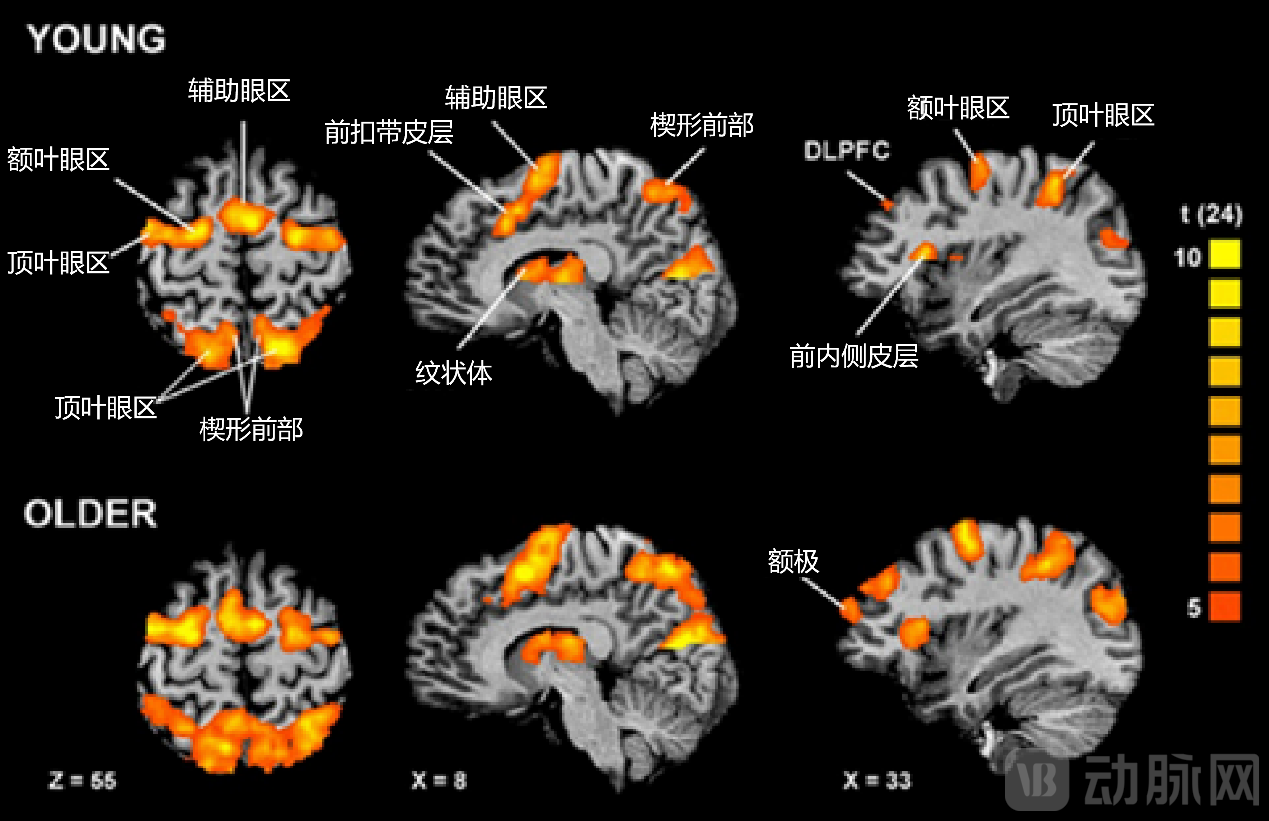 Brain Regions Activated During Saccade and Anti-Saccade Tasks[7]
Brain functional imaging studies have demonstrated that the generation of saccades requires the involvement of multiple brain regions. The superior colliculus is considered the command center for initiating saccades, which simultaneously activate multiple cortical areas, including the cingulate gyrus and insula, as well as subcortical structures such as the globus pallidus, striatum, and thalamus. Research has found that during the execution of anti-saccades, two key regions within the fronto-striato-thalamo-cortical circuits are involved.[8]
Studies have shown that the brain circuits involved in performing specific saccadic tasks overlap with those affected in the early stages of Alzheimer’s disease. Therefore, these tasks can serve as an indicator for differentiating subtypes of early-stage Alzheimer’s disease and assessing their severity. For example, a study published in the journal Aging in 2019 investigated the ability of antisaccade tasks to distinguish between patients with amnestic mild cognitive impairment (aMCI) and non-amnestic mild cognitive impairment (naMCI). The results demonstrated that performance on antisaccade tasks could significantly differentiate between the two MCI subtypes. This work provides further support for eye-tracking as a useful diagnostic biomarker in dementia assessment.[9]By relying solely on eye-tracking responses, without the need for complex task comprehension or manipulation, this approach opens a new window for more objective and accurate diagnosis of Alzheimer’s disease and even mild cognitive impairment.
ZhiSheng Technology is China’s first innovative R&D company driven by AI-based eye-tracking technology to develop digital biomarkers for neurological disorders. It has established novel diagnostic methods and technical solutions for cognitive impairment, with Alzheimer’s disease as its initial focus. The company’s team comprises experts from top-tier institutions such as leading European neuroscience research institutes, MIT, the University of Cambridge, and Shanghai Jiao Tong University. Leveraging years of accumulated expertise in brain science and artificial intelligence, along with an interdisciplinary background, ZhiSheng Technology has developed its “Eye-Tracking Algorithm Model.” This innovation enables any smart device equipped with recording capabilities to perform eye-tracking functions that previously required specialized instruments, achieving clinical-grade accuracy.Compared to traditional near-infrared eye trackers used in psychology and neurophysiology research, which often cost hundreds of thousands of yuan, ZhiSheng Technology’s solution offers significant advantages. First, it eliminates the need for specialized external hardware and dedicated analysis software, substantially lowering the barriers to operation and application. Second, during testing, there is no need to restrict the subject’s head movement, and wearing glasses does not compromise recognition accuracy. Most importantly, the process does not require a series of complex preliminary calibration procedures.
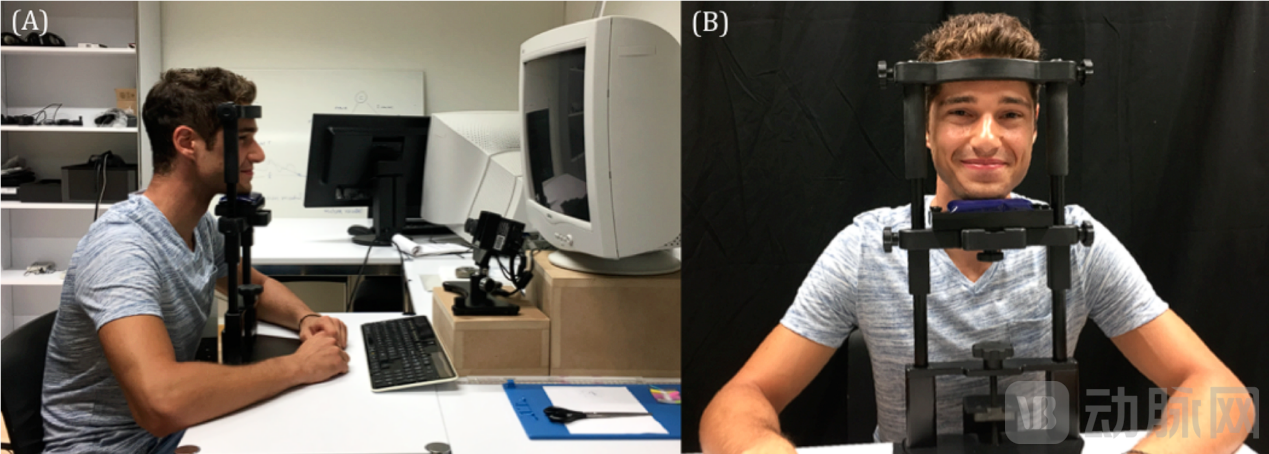
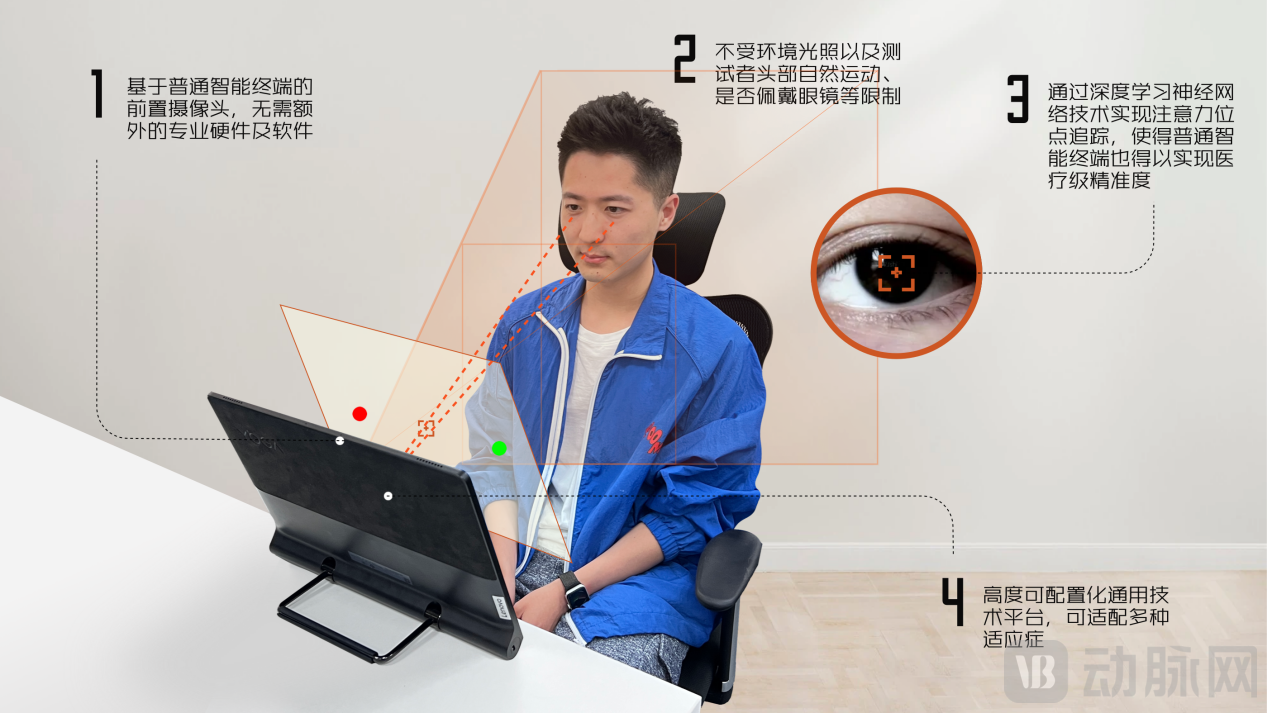
Traditional Eye Tracker (Top) VS AI Camera-Based Eye Tracking Technology Demo (Bottom)
By observing and analyzing eye-tracking parameters of subjects during task performance, Zhisheng Technology has begun to identify “digital biomarkers” for Alzheimer’s disease. Imagine that within just a few minutes of watching a video, our “gaze-tracking algorithmic model,” combined with relevant “digital biomarker” parameters, enables us to assess the subject’s cognitive function and evaluate their risk of developing cognitive impairment.
The advancement of this approach lies in the fact that Zhisheng Technology’s solution can be applied not only to the early diagnosis of Alzheimer’s disease (AD) but also to the diagnosis of prodromal symptoms of AD, including Subjective Cognitive Decline (SCD) and Mild Cognitive Impairment (MCI). Through a series of subsequent clinical trials, we aim to promote expert consensus on eye-tracking “digital biomarkers” for the detection of cognitive impairment, with the goal of incorporating them into clinical diagnostic criteria. Ultimately, this objective, accurate, and convenient solution will become as commonplace as blood pressure monitoring.
Thanks to the innovative “eye-tracking algorithm model,” early assessment and diagnosis of Alzheimer’s disease (AD) that combine accuracy with convenience will become achievable. In Zhisheng Technology’s future roadmap, there are both professional medical-device-grade products intended for healthcare institutions and assistive assessment products designed for individual users. Establishing “digital biomarkers” for AD is merely the first step in our journey; as research on the “eye-tracking algorithm model” deepens, sequences of “digital biomarkers” for conditions such as Parkinson’s disease (PD), attention-deficit/hyperactivity disorder (ADHD), and autism spectrum disorder (ASD) will ultimately be established.
Zhisheng Technology has completed the preliminary R&D of its diagnostic product for the prodromal symptoms of Alzheimer’s disease (AD) and is now capable of large-scale clinical data collection. Establishing a series of “digital biomarkers” for central nervous system diseases and neurodevelopmental disorders will be Zhisheng Technology’s primary focus over the foreseeable future. The technological R&D and application targeting neurological diseases mark Zhisheng Technology’s first step in exploring the vast frontier of the brain.
References
[1] Jia, L, et al., (2020). Prevalence, risk factors, and management of dementia and mild cognitive impairment in adults aged 60 years or older in China: a cross-sectional study. The Lancet. Public health, 5(12), e661–e671.
[2] Dan, Siddhartha & Sharma, Deeksha & Rastogi, Kartikey & Ojha, Himanshu & Pathak, Mallika & Singhal, Rahul & shaloo,. (2021). Therapeutic and Diagnostic Applications of Nanocomposites in the Treatment Alzheimer's Disease Studies. Biointerface Research in Applied Chemistry. 12. 940-960. 10.33263/BRIAC121.940960.
[3] Zhou, M., Wang, H., Zeng, X., Yin, P., Zhu, J., Chen, W., ... & Liang, X. (2019). Mortality, morbidity, and risk factors in China and its provinces, 1990–2017: a systematic analysis for the Global Burden of Disease Study 2017. The Lancet, 394(10204), 1145-1158.
[4] Masters, C., Bateman, R., Blennow, K. et al. Alzheimer's disease. Nat Rev Dis Primers 1, 15056 (2015).
[45] Dubois, B., Villain, N., Frisoni, G. B., Rabinovici, G. D., Sabbagh, M., Cappa, S., ... & Feldman, H. H. (2021). Clinical diagnosis of Alzheimer's disease: recommendations of the International Working Group. The Lancet Neurology, 20(6), 484-496.
[6] Alzheimer’s Disease Branch of the China Health Care Association for the Elderly, 2020 Survey Report on the Current Status of Diagnosis and Treatment of Alzheimer’s Disease Patients in China
[7] Fernandez-Ruiz, J., Peltsch, A., Alahyane, N., Brien, D. C., Coe, B. C., Garcia, A., & Munoz, D. P. (2018). Age related prefrontal compensatory mechanisms for inhibitory control in the antisaccade task. Neuroimage, 165, 92-101.
[8] Zhu DANG. Antisaccades and Its Experimental Paradigm, Mechanisms and Influence Factors[J]. Psychological Science, 2012, 35(1): 16-23.
[9] Wilcockson, T., Mardanbegi, D., Xia, B., Taylor, S., Sawyer, P., Gellersen, H. W., Leroi, I., Killick, R., & Crawford, T. J. (2019). Abnormalities of saccadic eye movements in dementia due to Alzheimer's disease and mild cognitive impairment. Aging, 11(15), 5389–5398.