

How National Regional Medical Centers Build Smart Hospitals: Insights and Product Details from the CIO of Huashan Hospital Fujian Branch
Upon entering the National Regional Medical Center—Huashan Hospital of Fudan University (Fujian Branch) and the First Affiliated Hospital of Fujian Medical University (Binhai Campus) (hereinafter referred to as “Huashan Hospital Fujian Branch”)—visitors proceed through serene, ultra-quiet surroundings embraced by lush greenery into the outpatient lobby. Sunlight gently filters down through the fully transparent glass roof, creating an immediate impression of spaciousness, eco-friendliness, orderliness, and modernity. Natural light floods the nearly 2,000-square-meter atrium and the medical technology building, making the entire campus bright and immaculate. With strategically arranged vegetation of varying heights, the hospital cultivates a garden-like healthcare environment for medical staff, patients, and visitors alike.
On May 1, 2021, Huashan Hospital Fujian Branch commenced clinical operations. Established in accordance with the work deployments of the CPC Central Committee and the State Council, the hospital is a key livelihood project aimed at deeply implementing the Healthy China Strategy, advancing supply-side structural reform in the health sector, and carrying out the national development strategy for Fuzhou’s “eastward expansion and southward growth, along the river and toward the sea.” It was spearheaded by the Fujian Provincial Party Committee and Provincial People’s Government, constructed by the Fuzhou Municipal Party Committee and Municipal People’s Government, and jointly developed by Huashan Hospital Affiliated to Fudan University and the First Affiliated Hospital of Fujian Medical University.
It is reported that Huashan Hospital Fujian Branch has a planned total investment of over RMB 4.8 billion, covering a land area of 230 mu, with a constructed floor area of approximately 330,000 square meters upon completion. The facility features a greenery rate of nearly 35% and an approved capacity of 1,700 beds. Adhering to the principles of unified planning and phased construction, the project is being developed in two phases, with the goal of establishing it as a nationally leading benchmark “Smart Hospital.” Particularly in the realm of information intelligence, the hospital has collaborated with a group of leading domestic enterprises specializing in the Internet of Things (IoT), big data, and artificial intelligence. Together, they have pioneered a new smart hospital model based on an intelligent platform, which has gradually become a reference case widely visited, studied, and emulated by numerous hospitals across the industry.
More than a year after its opening, VCBeat conducted an on-site visit to Huashan Hospital Fujian Branch. What are the distinctive features of this hospital, jointly established by two leading Grade A tertiary hospitals? Where does its “smart” healthcare manifest? And what stories lie behind its development? This article provides answers to all these questions.
As a vital maritime gateway for China and a key window and base for global exchange, Fujian Province achieved a gross domestic product (GDP) of RMB 4.881 trillion in 2021, ranking eighth nationwide. Its provincial capital, Fuzhou, surged to the top position within the province with a GDP of RMB 1.132448 trillion. However, there remains significant room for improvement in healthcare service capacity. For instance, while Fujian’s permanent resident population was approximately 41.87 million in 2021, the total number of hospitals stood at only 708. This falls short of the service requirement that “each county with a population exceeding 100,000 should have at least one public hospital capable of providing secondary-level or higher hospital services.”
To alleviate the strain on medical resources, promote their optimized allocation, and address the difficulties faced by grassroots populations in accessing medical care, the need for new hospital construction has been placed on the agenda. After extensive discussions, it was ultimately decidedLed by the Fujian Provincial Committee of the Communist Party of China and the Fujian Provincial People's Government, and constructed by the Fuzhou Municipal Committee of the Communist Party of China and the Fuzhou Municipal People's Government,Huashan Hospital, Fudan University, and the First Affiliated Hospital of Fujian Medical University (hereinafter referred to as “the First Affiliated Hospital of Fujian Medical University”), two renowned hospitals ranked among China’s top 100, have joined forces. Leveraging their collaboration in establishing the Huashan Hospital Fujian Branch, Fudan University—a National Regional Medical Center currently under construction at the Binhai New City Hospital—they will extend their medical technical services to cover the southeastern coastal regions and surrounding areas.
The history of the strategic alliance between Huashan Hospital and the First Affiliated Hospital of Fujian Medical University can be traced back to the late 1980s and early 1990s, when the two institutions initiated close academic exchanges. Over the subsequent three decades, this cross-regional collaboration, spanning a thousand miles, has harmoniously advanced their shared mission of healing and saving lives, culminating in the signing of a cooperative co-construction agreement that established a “one-on-one” partnership. In 2017, the Academician and Expert Workstation was unveiled at the First Affiliated Hospital of Fujian Medical University, with Academician Zhou Liangfu from the Department of Neurosurgery at Huashan Hospital being the first academicien recruited. That same year, the two hospitals jointly hosted the “First Huafu Hospital Management Forum,” which helped drive an overall improvement in medical standards across Fujian Province.
Therefore, the jointly established Huashan Hospital Fujian Branch will be led by Huashan Hospital in terms of hospital management, operations, and technical support, while the First Affiliated Hospital of Fujian Medical University will be responsible for concrete implementation. This division of labor not only preserves Huashan Hospital’s advanced management philosophy and introduces its cutting-edge technologies, but also leverages the local influence of the First Affiliated Hospital of Fujian Medical University, ensuring that specific tasks are assigned to individual personnel.
High-Quality Development of Public Hospitals: Discipline Construction as the Engine.In terms of discipline development, Huashan Hospital Fujian Branch has formulated a “3+1+X” strategic development plan by integrating the medical strengths of both parties and benchmarking against the most advanced international models.Prioritize the development of three major disciplinary clusters: Neurology, Orthopedics and Hand Surgery, and Infectious Diseases., establishing a number of distinctive and influential high-level specialized disease diagnosis and treatment centers, integrating 36 clinical support disciplines, and enhancing medical service capabilities, particularly in the diagnosis and treatment of complex and critical conditions.
In terms of hardware devices,Huashan Hospital Fujian Branch adheres to the strategy of “cutting-edge equipment + rescue system.” It has introduced China’s first 7.0T clinical MRI scanner, Fujian Province’s first PET/MR system, and a three-chamber hyperbaric oxygen chamber. The hospital has established a hybrid operating room integrating MRI, DSA, and CT systems, and is equipped with independent CT and DSA suites, an Emergency Intensive Care Unit (EICU), and negative-pressure isolation wards. Capable of coordinating with helicopter emergency services, it has formed a comprehensive sea-land-air tripartite rescue system.
Looking ahead to the next 5–10 years, Huashan Hospital Fujian Branch aims to become a modern, high-level, large-scale comprehensive National Regional Medical Center that integrates clinical care, teaching and training, scientific research, disease prevention and control, and health management.
As the application of big data heats up in areas such as clinical diagnosis and treatment, hospital management, and health management, it has become an inevitable trend for modern hospitals to establish big data centers. In addition to its numerous advantages in hospital development, Huashan Hospital Fujian Branch has carved out a unique and highly innovative path in the construction and practice of smart hospitals.
Huashan Hospital Fujian Branch, The First Affiliated Hospital of Fujian Medical University (Binhai Campus)
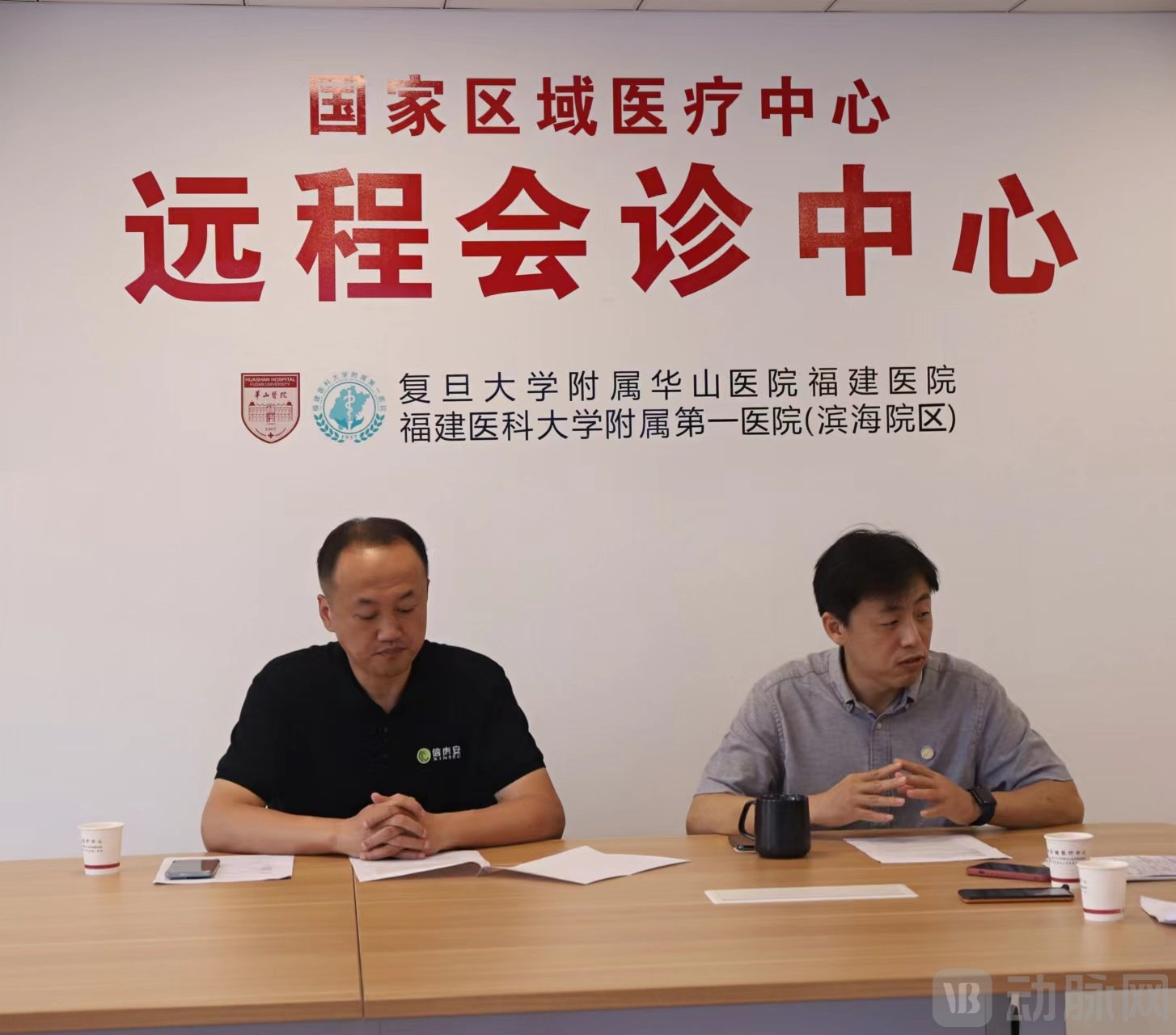
Lin Zhigang, Director of the Information Center (right), Discusses the Hospital’s Journey in Information Technology Development
withLin Zhigang, Director of the Information Center at Huashan Hospital Fujian BranchIn the conversation, he repeatedly highlighted the hospital’s various exploratory practices in researching and planning how to implement the national “Trinity” framework for smart hospital development. By leveraging next-generation technologies such as the Internet of Things (IoT), mobile internet, and cloud computing, the hospital aims to build an IT support platform and a big data platform, thereby achieving standardization, integration, mobility, intelligence, regional connectivity, and comprehensive interoperability of business systems across the hospital.
“We built our smart hospital primarily to comply with the top-level design requirements set by the National Health Commission, and secondly to optimize patients’ diagnostic and treatment experiences, healthcare workers’ working environments, and service workflows, thereby meeting the demands of both patients and staff for human-centered infrastructure.” According to Director Lin Zhigang, Huashan Hospital Fujian Branch invested nearly RMB 200 million in information technology construction during its first phase. So, where exactly was this funding allocated?
First is Intelligent Building Systems, in preparation for the deployment of information systems in hospital buildings, such as mechanical and electrical conduit installation, interior decoration construction, intelligent network cabling, and basic fit-out of server rooms, laying the groundwork for the implementation of the hospital’s informatization feasibility study and preliminary design plans.
Next is intelligent information processing., by leveraging information technologies such as the Internet of Things (IoT) and the internet, to construct an integrated smart service innovation model that combines online and offline services across pre-consultation, during-consultation, and post-consultation phases, including integrated outpatient services, one-stop admission and discharge services for patients, paperless medical records, and fully electronic billing.
Then, intelligent logisticsHuashan Hospital Fujian Branch has deployed an automated track-based logistics system across its entire campus to handle the transportation of most small and medium-sized items within the hospital. A pneumatic tube logistics system has been installed to enable rapid delivery of pathological specimens and outpatient/emergency specimens. Additionally, a vertical lift storage system connecting the operating rooms and the sterile supply department has been established to ensure efficient operating room workflows. This integrated approach addresses the hospital’s needs in transportation, warehousing, and management, achieving goals of intensification, automation, intelligence, informatization, and standardization. It also marks the first fully integrated smart logistics system in Fujian Province that covers the entire medical care process.
Currently, the software and hardware infrastructure at Huashan Hospital’s Fujian Branch is fully in place. How, then, can patients and hospital administrators perceive the hospital’s “smart” capabilities?
On the patient side,Pre-consultation, patients can access a suite of services including online profile creation, intelligent navigation and triage, appointment scheduling with specialists, booking for medical technology examinations, appointment reminders, triage notifications, and in-hospital navigation. During consultation, leveraging multiple valid forms of identification, patients benefit from an online payment system covering deposits, payments, and refunds for both outpatient and inpatient care, as well as proactive push notifications of medical information, with full-process facial recognition support throughout the care journey. Post-consultation, patients are provided with online access to their health records, medication delivery services, inpatient bed reservations, and hospitalization notification services.
On the Medical Provider Side, establish a ward data interaction center. Based on comprehensive ward scenarios, it supports medical and nursing operations such as nurse handovers, ward management, ward monitoring, surgical process management, and medication and equipment management. Data is displayed in real time on various terminal screens, enabling healthcare professionals to stay promptly informed of patients’ conditions, thereby making clinical work more convenient and efficient, and facilitating timelier communication among healthcare providers and patients.
Taking inpatient wards as an example, hospitals leverage a smart ward interaction platform as the core, supported by advanced technologies such as the Internet of Things (IoT), big data, and artificial intelligence. By integrating devices including bedside and foot-of-bed information screens, infusion monitoring equipment, mobile round carts, nursing PDAs, and comprehensive nursing information dashboards, hospitals break down information silos within ward areas. This enables timely alerts for warning information, real-time risk monitoring, and on-demand data queries, thereby ensuring medical safety, improving the work efficiency of healthcare professionals, and enhancing the patient care experience.
On the hospital management side,Establish a large-scale hospital group management model characterized by "homogeneous medical care and integrated management" to achieve cross-institutional business collaboration and resource sharing. Build a group-level data middle platform empowered by unified user management, unified permission management, unified dictionary management, and the construction of Master Patient Index (MPI), Master Employee Index (MEI), and Master Department Index (MDI). This initiative unifies multi-campus data, provides a homogeneous operation and management platform serving both internal and external stakeholders, realizes "multi-hospital coordination and planning," and enhances the operational management of hospital groups.
Meanwhile, Huashan Hospital Fujian Branch is continuously updating and introducing emerging technologies, promoting 5G applications such as edge cloud and panoramic hospital solutions. Centered on “5G + Panoramic Imaging + AI,” the hospital has upgraded the planning of its internal monitoring scenarios, highlighting the 5G-enabled 720-degree panoramic display. Integrated with AI, this system achieves functions including personnel early-warning management, panoramic stitching, security surveillance, route inspection, and trajectory tracking. Additionally, a BIM-based 3D visualization management platform has been constructed to organically integrate operational information with spatial management, thereby achieving efficient and convenient administration.
As a National Regional Medical Center, Huashan Hospital Fujian Branch will aim to build a smart hospital in the future by conducting top-level design of its information systems. It seeks to achieve standardization, integration, mobility, intelligence, regional connectivity, and comprehensive interoperability of business operations within its hospital information systems. With a focus on the Internet of Things (IoT), big data, and artificial intelligence (AI) applications as its distinguishing features, the hospital will establish a unified big data platform across the entire institution to develop high-value, highly available data assets.
In interviews about the hospital’s process of building its information system, Director Lin Zhigang glossed over those days when hundreds of people worked day and night at the hospital. Yet we can still trace the marks of their struggle through scattered remarks.
On January 30, 2021, the Information Center finally received the directive to launch the informatization project. Due to objective factors such as administrative approval processes, the Information Center was left with less than 100 days to build the system. However, according to traditional experience, it typically takes at least six months to implement a Hospital Information System (HIS) and complete integration with various other systems.
To ensure a smooth opening, Huashan Hospital Fujian Branch made a bold decision:All information systems are deployed in the hospital simultaneously, with all data interfaces integrated at once!Simultaneous go-live of multiple systems requires an extremely high level of synchronization between the hospital and vendors, as well as among various business system providers. The seemingly risky decision made at that moment reflects the hospital’s confidence and capability in efficient coordination, meticulous planning, and rigorous execution.
The Information Center shouldered the heavy responsibility, engaging in detailed communications with all system construction units and user departments. The concept of top-level architectural design based on the hospital as a whole was fully implemented. Planning was conducted from the perspective of optimizing the hospital’s overall business operations and processes. Taking into account the security, stability, scalability, and maintainability of the information systems, it was decided to adopt unified planning, unified construction, unified standards, and unified management systems. The needs of the hospital and each department were clearly defined, and implementation was carried out in phases.
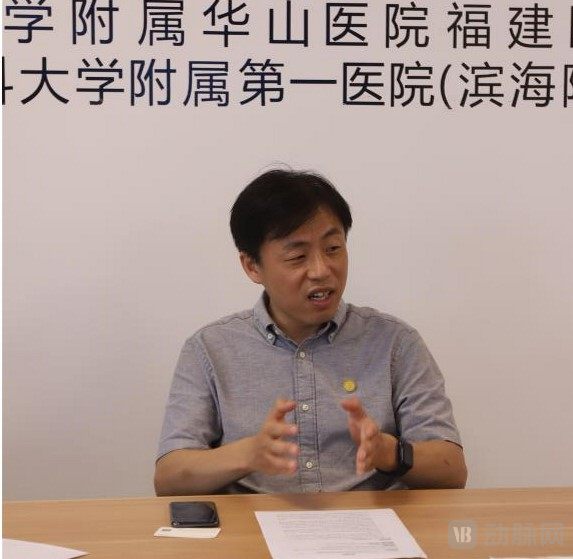
Director Lin Zhigang, Information Center, Huashan Hospital Fujian Branch
Taking the construction of the Internet of Things (IoT) as an example. As a key component in the development of smart hospitals, medical IoT is distinct in its extensive coverage and broad scope of involvement, spanning from sensor endpoints in business scenarios (smart edge), through IoT networks, to actual application subsystems. Inadequate planning can have far-reaching consequences, leading to the emergence of new “silos” or even “isolated islands.”
After extensive research and comparative evaluation, Huashan Hospital Fujian Branch decided to adopt international standard protocols to build an integrated and open medical Internet of Things (IoT) platform. Leveraging this integrated and open IoT platform, the hospital has established a hospital-wide positioning network and sensor network. On this foundation, it has planned and implemented more than ten application scenarios, including in-hospital navigation and triage services, smart emergency department IoT, smart operating rooms, and smart ward IoT.
The most distinctive top-level design approach involves establishing a platform-based IoT architecture, comprising: a hospital-wide Bluetooth positioning data network for electronic geofencing infrastructure, a hospital-wide standardized LoRaWAN sensor network, and an open, converged IoT platform accessible to multiple third-party IoT application developers.
The hospital-wide Bluetooth positioning electronic fence provides an information technology guarantee for the strict, process-driven management of all personnel and assets. This fully standardized infrastructure can be reused across various positioning scenarios, including patient location monitoring, medical staff safety alerts, medical equipment location and allocation, and real-time tracking and trajectory monitoring of medical waste. The hospital-wide LoRaWAN sensor network offers support from an ecosystem of tens of thousands of sensors, recognized by the international LoRa Alliance and the International Telecommunication Union (ITU). Furthermore, the integrated and open IoT application platform demonstrates significant advantages in this construction project; a series of the hospital’s IoT business scenario applications can integrate with this platform, enabling efficient, rapid, and low-cost access for third-party application systems in the future.
With strong policy support from the state, the overall level of healthcare informatization in China continues to improve, and the informatization market has become highly competitive. Over decades of development, new technologies, concepts, and models have continually emerged, resulting in a mixed-quality marketplace. While hospitals now have more choices, they also face more complex challenges. Regarding product selection, Director Lin Zhigang believes, “There is no single best product, only the most suitable system. Differences in hospital scale, nature, needs, and regional characteristics lead to varying requirements for construction plans, system architectures, and software. Therefore, hospitals should conduct specific analyses based on their actual circumstances when pursuing informatization initiatives, benchmarking against top-tier advanced standards while remaining grounded in their own realities and capabilities.”Product maturity is the primary consideration for Huashan Hospital Fujian Branch in selecting partners,“Whether the product has been validated by the market and aligns with future technological trends are key points of focus for us.”
Next, assess the vendor's sustained service capability.Hospital informatization is not achieved overnight. Regarding vendor selection, Director Lin Zhigang stated, “Vendor services and the capacity for sustained service are key.” Therefore, beyond product capabilities, service capability is a critical indicator of a vendor’s core delivery strength. In the actual process of informatization construction, it is difficult to advance subsequent work if the vendor and the hospital fail to reach a consensus on understanding and objectives. To ensure smooth implementation, Huashan Hospital Fujian Branch and the vendor spent nearly six months conducting an in-depth analysis of the hospital’s strategic understanding, development goals, departmental characteristics, and the practical needs of medical staff. It was precisely because both parties reached an agreement on the construction planning and practical solutions in the early stages that the project was able to be implemented rapidly.
As is well known,The construction of smart hospitals is a “top leader” project; without the attention of senior leadership and top-down coordination, it would be difficult for the information center to carry out its work or fully leverage its potential.。
Director Lin Zhigang recalled that during the smart construction process of the newly built hospital, Huashan Hospital Fujian Branch demonstrated a top-down willingness—from leadership and management to frontline medical staff—to proactively embrace new information technology tools and provide constructive feedback on their usage. “For instance, features such as appointment scheduling and one-stop services were gradually developed through collaborative discussions and iterative refinement.” This provided the Information Center with strong motivation and confidence. Despite the tight construction schedule—with the 100-day construction kickoff rally still vivid in memory—Director Lin emphasized, “Without robust support from the leadership, along with the understanding and cooperation of various departments, we could not have achieved such remarkable results.”
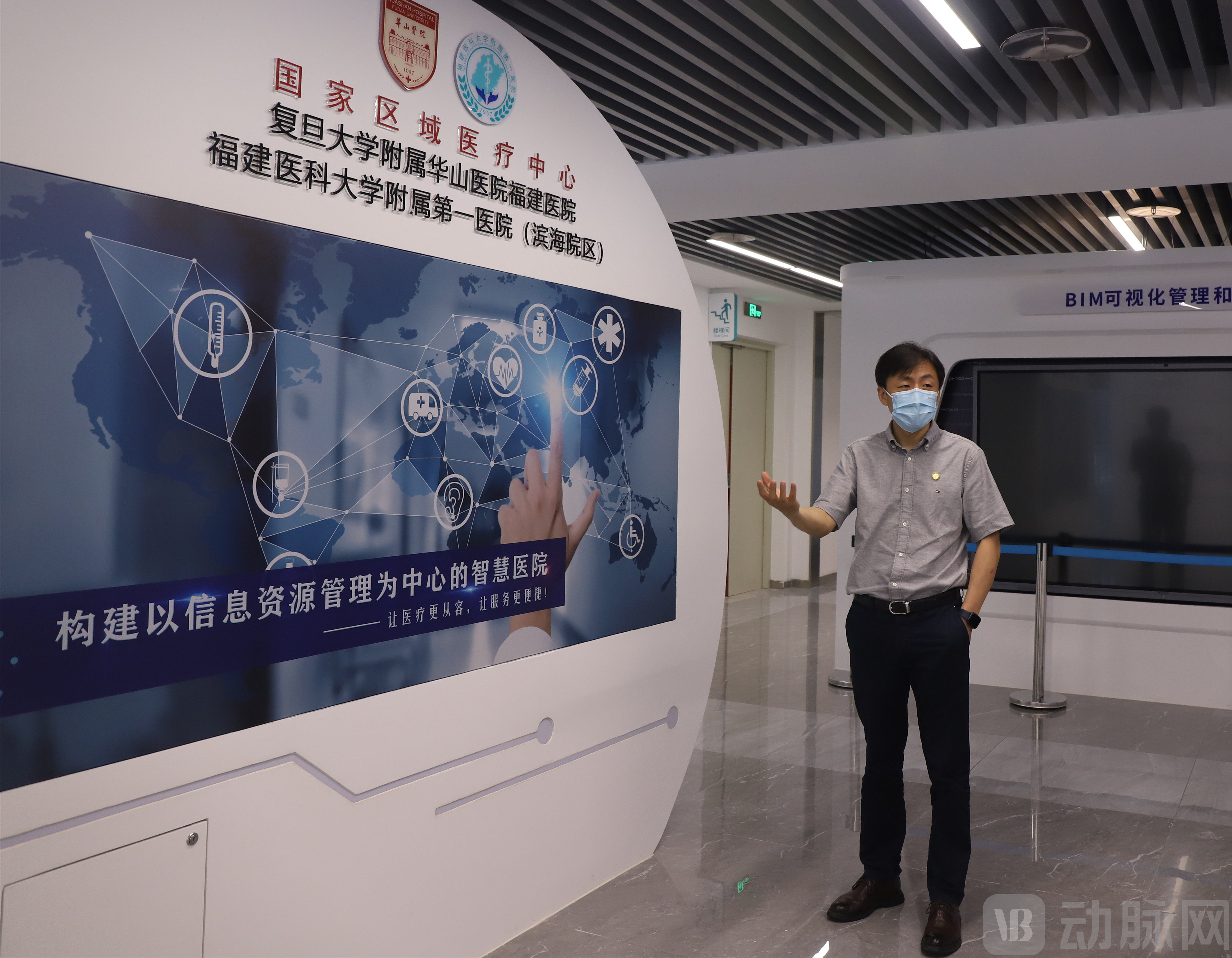
Director Lin Zhigang of the Information Center at Huashan Hospital Fujian Branch Leads VCBeat on a Tour of the Hospital’s Informatization Construction
Throughout the interview with Director Lin Zhigang, I came to realize that “people-centered care” is far more than mere rhetoric. Putting it into practice demands immense effort, along with the day-in, day-out patience and conviction of a craftsman. By attending meticulously to every important detail, one can reap satisfying rewards.
The Information Center of Huashan Hospital Fujian Branch has consistently articulated its development objective as follows: people-oriented, serving hospital administrators, medical staff, and patients, and delivering compassionate healthcare services, with the aim of achieving “greater ease for medical professionals and more convenient services for patients.” This requires planners and builders of smart hospitals to fully consider people’s pursuit of health and a better life, and to carry out functional optimization and process reengineering. The Information Center of Huashan Hospital Fujian Branch has not only adhered to this philosophy but also put it into practice. Moving forward, it is exploring how to further integrate online and offline as well as internal and external medical resources, so as to provide patients with comprehensive care throughout the entire disease course and across the full life cycle.
"The Way is beyond words; all must strive with full effort."