

Yue'an Health Files IPO Prospectus: A B2B-Focused SaaS Platform Leading Digital Therapeutics for Chronic Disease Management
Unlike the B2C business logic of most chronic disease management companies, Y-AnKang has targeted the B-end market from the very beginning.
“Our positioning is to serve B-end clients, helping institutions that aim to implement or excel in chronic disease management improve efficiency and reduce costs. While everyone else is rushing to ‘dig for gold,’ we are content to quietly ‘sell water,’” said Xie Jian, founder of Y-AnKang.
In fact, “selling water” was not an impulsive idea, but the result of business evolution during Xie Jian’s entrepreneurial journey.
From WoYun to WoTong and then to Y-AnKang, Xie Jian has gradually achieved a cross-industry transition and integration from the insurance sector to the healthcare field.
In 1999, Xie Jian began selling hardware at Guangzhou Computer City. He later joined a foreign-invested enterprise as the head of its computer department, where he led the development of several industry-specific ERP systems. In 2001, he founded a software company. In May 2007, Xie Jian joined China’s largest insurance intermediary, CNinsure (Nasdaq: FANH).
Over three years, he rose from an ordinary staff member at the headquarters to a department supervisor, playing a key role in Fanhua’s information technology infrastructure development. Fanhua later became one of the first insurance intermediary firms in China to establish API data interfaces with insurance companies.

Xie Jian, Founder and CEO of Y-AnKang
In 2010, Xie Jian was assigned to Liaoning Province, where he oversaw the management of several companies under Panhua Insurance Services in Liaoning for nearly seven years. During this period, he expanded his team from just over ten members to more than one hundred, and grew annual business volume from over RMB 20 million to nearly RMB 1 billion. In 2016, leveraging Panhua’s entrepreneurial mechanisms, Xie Jian embarked on a new entrepreneurial journey.
“The informatization of the insurance industry has remained unsatisfactory to date. Currently, more than 95% of insurance intermediaries in China, regardless of size, lack their own information systems. Therefore, after leaving Fanhua, I established”The First Company—Guangdong Woyun Technology“Woyunbao is a SaaS system for the insurance industry, with a significant portion dedicated to UBI auto insurance,” recalled Xie Jian.
According to him, the company’s revenue had already reached 50 million yuan in 2020, and insurance companies are still paying him bonuses to this day.
In 2018, the surge in popularity of smart wearable devices such as the Xiaomi Band and Huawei Band drew Xie Jian’s attention to the healthcare sector. Xie Jian believes that with rising public health awareness, the health insurance market is theoretically larger than the auto insurance market. However, within the health and life insurance sectors, many insurers lack the tools to collect personalized risk data. The combination of smart wristbands and supporting software can help address part of this challenge.
Therefore, in 2019, Xie Jian establishedAnother company—Guangdong Wotong Technology, engaging in the health insurance SaaS business. However, standalone smart wearable devices have limited accuracy and dimensionality in data collection, and without professional interpretation and services, the data cannot generate significant value.
In January 2021, Xie Jian observed that miniaturized medical devices, such as blood pressure monitors and glucose meters, had become standard fixtures in many households. Despite the large population base in China suffering from chronic diseases like hypertension and diabetes, the data generated from these measurements was not being effectively interpreted or utilized.
Xie Jian realized that, beyond simply knowing their own health data, patients more critically need assistance and guidance from individuals or institutions to address the underlying issues when abnormalities arise. This insight allowed Xie Jian to identify a new market opportunity—Y-AnKang: A Digital Therapeutics Empowerment Platform for Chronic Diseases。
First, the population with chronic diseases is sufficiently large, while chronic disease management is somewhat counterintuitive to human nature. Although it only requires controlling one’s diet and increasing physical activity, such efforts actually need attention, rewards, and supervision. “What we have in mind isHelping the post-80s and post-90s generations manage their parents' health issues.“As an only child born in the 1980s, I do not live with my parents; therefore, their health and well-being are my responsibility,” said Xie Jian.
In terms of solution design, Y-AnKang adopts the PDCA model—Plan, Do, Check, and Action. When applied to the field of digital chronic disease management, this management framework corresponds to physician orders, service fulfillment, data monitoring and feedback, physician intervention, clinical decision support, and system iteration.
According to Xie Jian, Y-AnKang has established a digital therapeutics system for common chronic diseases. Taking diabetes as an example, the digital therapeutics solution for diabetes leverages applications and smart devices to achieve continuous blood glucose monitoring, abnormal value alerts, automated insulin infusion, physician alerts, and timely intervention for diabetic patients.
Furthermore, through the mobile app, PC platform, mini-program, and WeChat official account, patients can engage in online diabetes education, view dynamic glucose monitoring reports, receive medication guidance from online physicians, purchase consumer healthcare products, and participate in online community interactions with other diabetes patients, thereby establishing a closed-loop system for blood glucose control that spans monitoring, management, and intervention.
Compared to first-time founders, serial entrepreneurs are most notably characterized by their deeper market understanding and greater pragmatism.Xie Jian’s positioning of Y-AnKang as an empowerment platform for medical institutions is also driven by pragmatic considerations.
Xie Jian explained that more than one-third of individuals aged 60 and above have needs for disease management, making market demand highly evident. “However, out-of-hospital home health management for patients is a weak point for many hospitals. While healthcare institutions may possess abundant patient resources and professional medical teams, they often lack the time and energy to effectively address this area. What these institutions have in abundance is clinical capability, but what they lack is technical development expertise and specialized out-of-hospital patient service capabilities. The emergence of third-party providers is therefore inevitable, which is why we began developing such a system.”
In terms of its business model, Y-AnKang aims to empower primary healthcare institutions and community organizations by building a SaaS platform for chronic disease management, helping them better serve patients, and then charging reasonable fees.
Xie Jian stated that Y-AnKang will continue to deepen its engagement in this field. Currently, tertiary hospitals are not the company’s preferred partners. In reality, tertiary hospitals find it difficult to implement robust, in-depth, and thorough out-of-hospital chronic disease management, as they lack the time and resources to do so. However, many private hospitals, community organizations, professional health management companies, and even chain pharmacies are genuinely willing and better suited to deliver high-quality out-of-hospital chronic disease management.
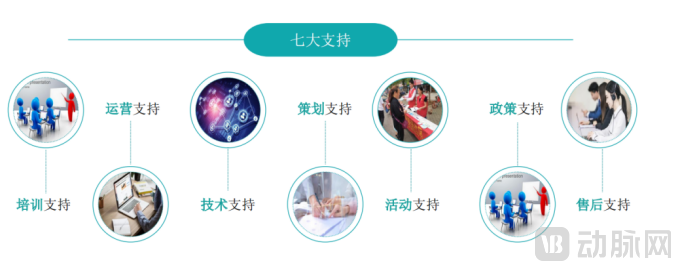 Cooperation Support Provided by Y-AnKang’s SaaS Services
Currently, Y-AnKang's SaaS-based, modular system architecture and its partnered professional health management service team canRapidly empower medical institutions, health management companies, physical examination centers, elderly care facilities, and chain pharmacies aspiring to enter the chronic disease management services industry.
This enables users and patients to prevent and manage diseases at an earlier stage, providing truly effective and real-time health management services, and establishing a co-management mechanism based on the patient, their family, health service institutions, and medical service institutions. The overall system architecture supports both standalone private deployment and cloud-based deployment, offering customized deployment options to meet diverse needs and achieve mutually beneficial partnerships.
“China now has 970,000 primary healthcare institutions, representing a vast market in itself. Building on our empowerment of healthcare institutions, our next strategic goal is to further reach and integrate the entire supply chain underlying chronic disease management, including hardware products, consumables, meal replacements, and even insurance, thereby serving B2B enterprises across the supply chain,” added Xie Jian.
Among them, the insurance sector is a key focus area for Y-AnKang.The company aims to leverage the “Yue An Kang” platform to achieve robust risk control, address challenges in risk identification, and even establish incentive and penalty mechanisms. It is reported that the first non-standard insurance product tailored for diabetic patients, co-developed by Y-AnKang and an insurance company, is expected to launch within the year.
Furthermore, Y-AnKang’s development path is to grow together with its clients.While B-side institutions are using the product, continuously iterate the product's customer acquisition logic, medical order execution system, early warning and intervention logic, and clinical logic to assist clients in establishing their business models.
Currently, Y-AnKang has launched a series of project collaborations with professional health management companies, community health organizations, and the Guangzhou Center for Disease Control and Prevention in Guangdong Province. The company will conduct market validation in core regions of Guangdong Province before expanding its reach nationwide.
“Our mission is to ‘help people around the world live healthy lives.’ Healthy living encompasses three key dimensions: physical health, mental health, and financial health. For Y-AnKang, physical and mental health can be monitored and intervened upon through IoT devices, while financial health can be managed through insurance solutions. We remain committed to”Building a Valuable Hub for Health Management Services.“Xie Jian said.”