

How Haodf Online Tackles Slow and Superficial Doctor Responses in Online Consultations
In recent years, the internet healthcare industry has developed rapidly, with an increasing number of people choosing to consult doctors on online healthcare platforms. The internet has broken down temporal and spatial barriers, enabling patients to receive medical assistance without leaving their homes, thereby bringing convenience to people’s lives. However, there have also been voices of skepticism, including concerns that doctors’ responses to online consultations are too slow and fail to address practical issues effectively.
At VCBeat’s “6th Future Healthcare 100 Conference” held this June, Wang Hang, Founder and CEO of Haodf.com, also stated that both third-party internet healthcare platforms and public hospitals’ internet hospitals face “two ultimate complaints”: untimely responses from doctors and overly brief replies.
“The root cause of these two major complaints lies in the allocation of physicians’ time and energy: a good physician always has insufficient time and energy, and under the premise of limited medical resources, improving physicians’ work efficiency is the key to addressing the issue,” analyzed Wang Hang. So, what efforts and attempts has Haodafu made in response to these two “ultimate complaints”? How effective have they been? Through in-depth research and observation, some answers can be found.
Multiple public reports indicate that Haodf Online began implementing a physician team model in 2018. A review of consultation records for numerous specialists and patients on the Haodf Online app revealed that many specialists have established their own teams, with each physician team exhibiting distinct characteristics.
For example, this chief physician from Beijing Tiantan Hospital has two assistants on his team. The assistants help collect and organize patients’ medical information; when the expert is offline, they reassure patients and remind the expert to respond promptly in the conversation; meanwhile, when patients require hospitalization for surgery, the assistants can also help them register and join the waiting list. In this way, many trivial tasks outside of clinical diagnosis and treatment are handled by the assistants, allowing doctors to focus more on diagnostic and therapeutic decision-making. For patients, having someone attend to them while waiting for the expert’s reply significantly alleviates their anxiety.

For another example, consider a chief physician at the Obstetrics and Gynecology Hospital of Fudan University, whose team includes a nurse. Prior to the patient’s visit, the nurse informs them of the specialist clinic schedule, registration and appointment procedures, and pre-visit preparations. After the consultation, she provides guidance on home care precautions and follow-up arrangements. By clearly delineating their respective responsibilities, this collaborative approach significantly enhances consultation efficiency.

In addition, some physician teams include multiple expert-level doctors. For instance, the team led by a Chief Physician at Peking University First Hospital comprises three Associate Chief Physicians.

In routine consultations, an associate chief physician first conducts the initial assessment with the patient, analyzing their condition and providing preliminary recommendations. Once the chief physician becomes available, they review the associate chief physician’s analysis and deliver the final consultation advice to the patient. This approach not only significantly reduces patients’ waiting time but also enables them to benefit from the expertise of multiple physicians. Meanwhile, it allows specialists to dedicate more time to patients with more complex conditions, thereby extending their reach and helping a greater number of patients.
Observations indicate that under this team-based model, members assume distinct roles and collaborate through a clear division of labor. Experts no longer operate in isolation online, enabling rapid responses to patient inquiries and significantly enhancing patient satisfaction and sense of benefit.
On the Haodf Online app, in addition to the team consultation model, there is another “interesting” finding: in some departments, physicians from primary care hospitals assist specialists in organizing and documenting medical records in advance, enabling most specialists to provide diagnosis and treatment recommendations directly based on these records.
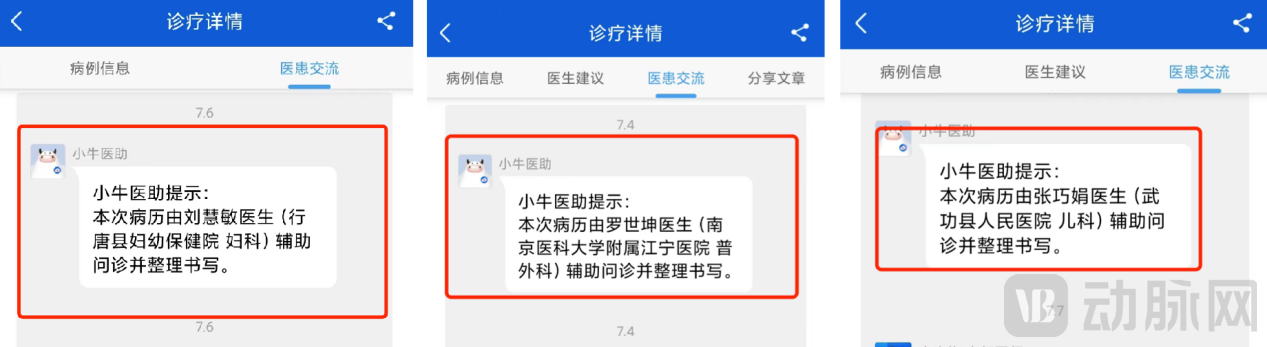
According to Haodf’s online customer service, this feature is called “Pre-consultation.” The basic process is as follows: After a patient submits a consultation request, the Haodf platform assigns the order to a pre-consultation physician with matching specialty based on the disease. Available physicians then “claim” the order, ensuring real-time online communication of medical history between the patient and the physician. The pre-consultation physician will compile a professional medical record within the specified timeframe. Once the patient confirms its accuracy, the record is submitted to the attending physician.
This approach represents a highly innovative practice within the industry, achieving a “triple win”: For patients, describing their medical conditions in online consultations can be challenging without professional background; having a specialist help them prepare a complete medical record in advance makes subsequent consultations significantly more efficient and accurate. For specialists, this eliminates the need to spend excessive time understanding patients’ conditions, substantially improving work efficiency and unlocking their “productivity.” For primary care physicians, it provides a valuable opportunity to learn diagnostic and treatment methodologies from senior experts, thereby enhancing their own clinical capabilities.
Based on the aforementioned usage and observations, it is evident that Haodf Online has made significant efforts to enhance consultation efficiency and improve user experience. However, certain issues persist. For instance, within the team-based model, although some experts have established teams, they remain personally responsible for many trivial tasks during the consultation process, with limited participation from other team members. How can experts be better supported in utilizing and managing their teams effectively? Furthermore, regarding pre-consultations, since the physicians conducting them are sourced from across China, is there a unified standard for the quality of medical records, and how is this quality controlled?
We hope that Haodf Online will pay attention to these issues and, in the process of addressing the two “ultimate complaints”—slow responses and overly simplistic replies from doctors during online consultations—continuously introduce more effective and improved solutions, so as to find a “fundamental solution” at an early date.