

Kolo Medical Secures Nearly RMB 100 Million in Series B2 Funding to Accelerate Commercialization of Proprietary Semiconductor-Based CMUT Ultrasound Technology
VCBeat (WeChat: vcbeat) has learned at the earliest opportunity that, recently,Kena Medical Technology (Suzhou) Co., Ltd.(hereinafter referred to as"Cona Medical") Announces CompletionSeries B2 Financing, Financing AmountNearly 100 million yuan. This round of financing was led byQianrong CapitalLead Investor,Walden InternationalContinued follow-on investment. Kena Medical will utilize the funds from this financing round to rapidly launch its independently developed high-frequency ultrasound imaging system in the global market, while also leveraging core patents for semiconductor-based CMUT (Capacitive Micromachined Ultrasonic Transducer) chips to develop next-generation CMUT chips and innovative ultrasound imaging products.
Kena Medical is a global leader in next-generation semiconductor-based CMUT chip technology for ultrasound, with its innovatively designed ultrasound transducers setting new performance standards for medical ultrasound imaging. The company possesses a robust intellectual property portfolio in this field and isThe only company in the global industry that does not require third-party IP licensing。
Medical ultrasound has been widely used in the market for many years. By transmitting and receiving acoustic wave signals reflected by human tissues, it generates cross-sectional images of these tissues, allowing physicians to observe internal anatomical structures as if they had X-ray vision. For patients, this examination is real-time, painless, non-invasive, applicable to a wide range of body regions, and offers a favorable experience. With the advancement of ultrasound technology and its applications, an increasing number of clinicians expect ultrasound equipment to provide clearer and more convenient visualization of target lesions. Achieving this requires higher frequencies and mature real-time three-dimensional (3D) imaging capabilities. Compared with traditional piezoelectric ceramic technology, which has been used for many years but has struggled to make breakthroughs in high-frequency and 3D imaging, semiconductor-based CMUT (Capacitive Micromachined Ultrasonic Transducer) technology possesses inherent advantages in these areas.
As a national-level high-tech enterprise, Kena Medical has pioneered the integration of 38 MHz ultra-high-frequency multi-element transducers into ultrasound systems in China, achieving an image resolution as fine as 75 micrometers—comparable to the diameter of a human hair. Its first-generation medical ultrasound product, Paragon XHD, has made a strong market entry, expanding ultrasound diagnostics into emerging superficial application fields such as dermatology and medical aesthetics, where it has received widespread acclaim. The second-generation product is equipped with array probes operating above 70 MHz, further enhancing image resolution to 30 micrometers. This advancement holds significant value for clinical ophthalmic diagnosis, small-animal clinical studies, and biomedical research, and is poised to break the long-standing monopoly held by foreign companies in the ultra-high-frequency ultrasound system sector.
Meanwhile, the company is developing two-dimensional array ultrasound probes and three-dimensional volumetric ultrasound imaging systems. By fully leveraging the technological advantages of CMUT and focusing on the rapidly growing market for ultrasound visualization applications, it not only expands clinical application areas but also significantly lowers the operational barrier for users, delivering revolutionary ultrasound solutions for surgical guidance, interventional procedures, puncture, and small animal research.
Unlike other global companies leveraging CMUT technology to develop low-cost, simplified ultrasound systems, Kena Medical adheres to a core strategy focused on enhancing ultrasound image quality. The company entered the market from the ultra-high-frequency segment and continues to improve image clarity and resolution.
The Kena Medical team brings together professionals with expertise in semiconductor MEMS technology, R&D of ultrasound transducers and systems, ultrasound product marketing, and supply chain management. The core R&D team possesses extensive experience in developing ultrasound systems and transducers from renowned companies such as GE and Siemens, and its members are graduates of prestigious universities worldwide, including Stanford University, Duke University, the University of California, Berkeley, Tsinghua University, and Shanghai Jiao Tong University.Dr. Huang Yongli, Founder of Kena MedicalGraduated from the Department of Electrical Engineering at Stanford University in the United States, and is one of the principal inventors of Stanford’s original CMUT technology,Mr. Zhao Weidong, CEO of the CompanyPreviously held long-term positions at leading global medical device companies, serving as Chairman of GE Healthcare Wuxi and General Manager of its Ultrasound Business Unit, as well as Vice President of the Value Product Line at Beckman Diagnostics, a Danaher company. Successfully transformed China-based R&D and manufacturing hubs into globally serving enterprises with world-class capabilities.
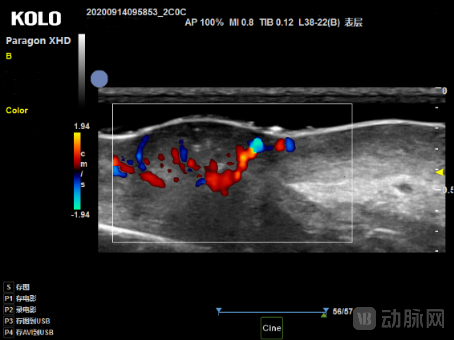
Figure 1 - Cutaneous Basal Cell Carcinoma
Capable of observing subcutaneous tissues1To3 mmUltrasound images of blood flow status and internal calcification points in dermal skin tumors;
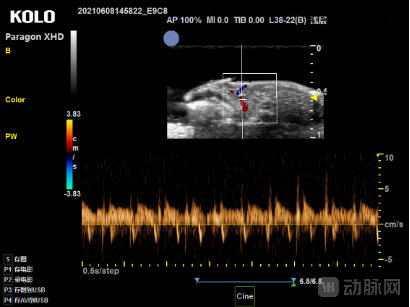
Figure 2- Zebrafish Heart
Zebrafish are among the smallest animals used in ultrasound experiments, with a total body length of only 2–3 cm. Echocardiography in zebrafish is commonly employed in research on cardiovascular disease models. Kena’s Paragon is currently the only domestically produced ultrasound system capable of performing zebrafish ultrasound imaging.
Ms. Ye Xiaoming, Chairman of Qianrong Holdings“It is indicated that medical ultrasound equipment, constrained by traditional piezoelectric ceramic materials that have nearly reached the limits of manufacturing processes, has seen no substantial product innovations for many years. Konamed applies its globally leading, original CMUT technology to the field of medical ultrasound, leveraging MEMS fabrication processes to break through the material ceiling of ultrasound probes, thereby bringing a disruptive revolution to the medical ultrasound sector. Under the leadership of Dr. Huang Yongli, the Konamed team has assembled world-class top talents from the semiconductor and medical imaging equipment fields. Its first-generation product, Paragon XHD, has received high acclaim from leading experts across various clinical departments both domestically and internationally upon its launch. With a rich pipeline of reserve products, Konamed aligns with Qianrong Holdings’ strategy to accelerate its layout in the innovative medical device sector. We remain optimistic about the company’s future development.””
Mr. Huang Qing, Managing Director of Walden International Capital Investmentstated: “Walden International remains committed to focusing on the hard technology sector. While the growth of hard technology requires time, its inherent momentum determines a superior growth trajectory, making it a definitive trend. Kena Medical has long been dedicated to CMUT chip technology and applications. The commercialization of a series of high-frequency ultrasound probes and the rapid market adoption of high-frequency ultrasound systems both demonstrate the technological advantages of CMUT. Walden International has consistently maintained a positive outlook on Kena’s strong development trajectory.””
Mr. Huang Yongli, Founder of Kena Medical“He stated: ‘Transforming original high-tech innovations from laboratory research into industrialized products is an arduous journey. Through years of dedicated effort, Kena Medical has successfully developed a novel, commercially viable semiconductor CMUT ultrasound sensor technology, establishing itself as an international leader in this field. Starting with medical ultrasound, Kena’s products address the growing demand for ultra-high-resolution ultrasound imaging. The company continues to develop next-generation CMUT ultrasound imaging systems featuring superior spatial imaging performance and higher levels of integration. In the future, Kena will sustain its investment in the upgrading and R&D of core CMUT technologies, extending their application to broader sectors including healthcare, consumer electronics, industry, and bioengineering, thereby securing a global leading position for Chinese CMUT ultrasound technology across multiple markets. At this critical juncture in the commercialization of CMUT technology, Kena is honored to receive recognition and investment from Qianrong Capital, as well as the continued support from Walden International. This round of financing will accelerate the company’s R&D of next-generation products and facilitate aggressive market expansion.’””
Mr. Zhao Weidong, CEO of Kena Medicalstated: “As a diagnostic tool, ultrasound equipment has been rapidly expanding into new application areas and the market continues to grow, driven by its safety profile and continuous advancements in imaging technology. Its applications have extended from traditional abdominal, cardiovascular, and obstetrics/gynecology ultrasound to specialized fields such as urology, musculoskeletal, and interventional ultrasound, as well as diverse scenarios including ambulances and field settings. Image quality is the primary concern in ultrasound diagnostics, particularly the ever-increasing demand for higher image resolution. The development of ultrasound over the past many years has been a process of technological breakthroughs that continuously enhance image quality. The industry advocates for maximizing the visualization of tissue anatomical structures and revealing intricate anatomical details. Kena Medical’s world-leading semiconductor-based CMUT (Capacitive Micromachined Ultrasonic Transducer) technology and customized ultra-high-frequency imaging systems have further broken through imaging bottlenecks, enabling users to visualize finer anatomical structures and boosting diagnostic confidence. We are committed to continuously launching CMUT-based ultrasound products to provide our customers with more precise diagnostic tools.””