

Xinyi Health and Shanxing Medical Forge Strategic Partnership to Accelerate Multi-Scenario Applications of Smart Healthcare IoT
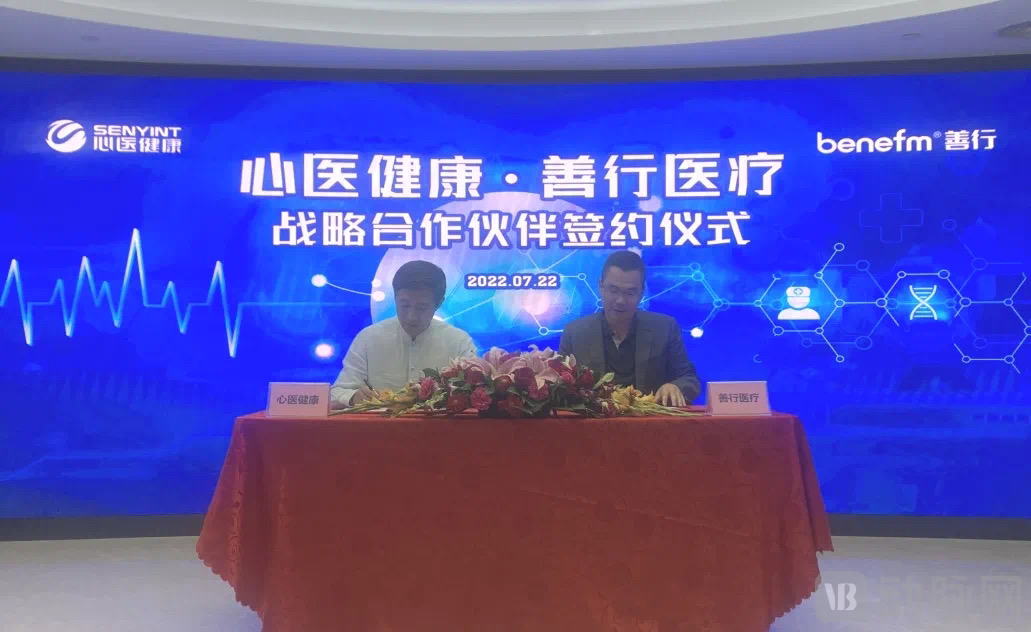
Driven by the maturation of technologies such as 5G, the Internet of Things (IoT), artificial intelligence (AI), and big data, digital health technologies have advanced significantly and seen increasingly widespread application, making them an effective entry point for transforming the current landscape of the healthcare industry. On July 22, Xinyi Health held a strategic cooperation signing ceremony with Shenzhen Shanxing Medical Technology Co., Ltd. (hereinafter referred to as “Shanxing Medical”).
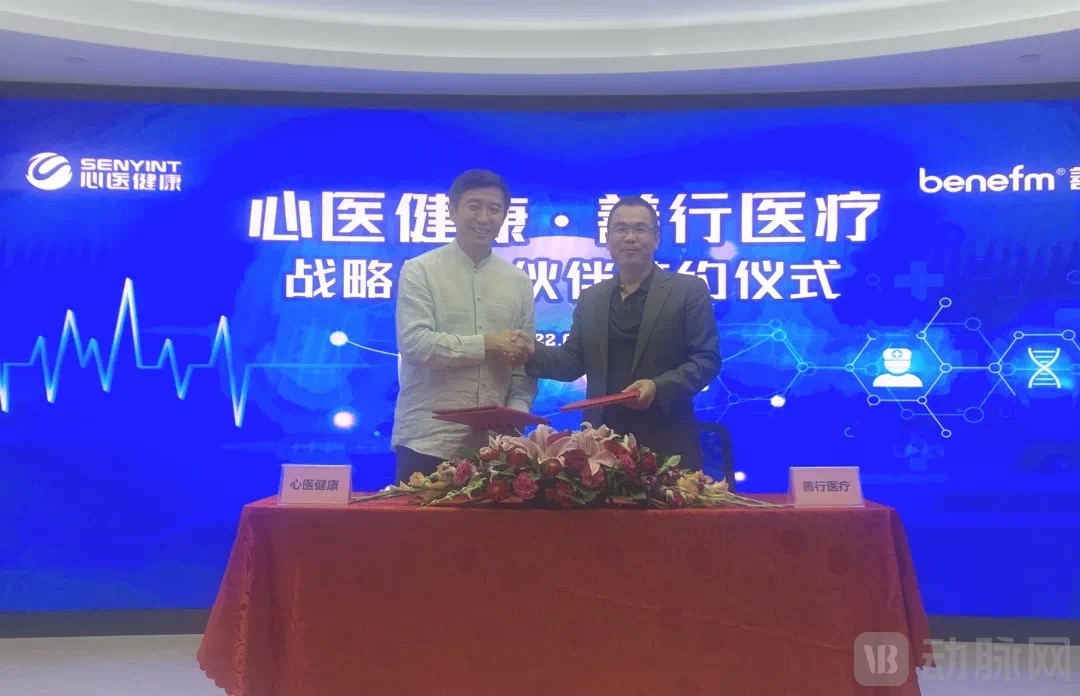
Wang Xingwei, Chairman of XinYi and CEO of XinYi Health, signed a strategic agreement with Bao Lei, Chairman of Shanxing Medical. Leveraging their respective strengths in their fields, the two parties will deeply serve the cardiovascular disease sector through remote healthcare and digital technologies for wearable medical devices, based on the deep integration of products and solutions, thereby accelerating the multi-scenario application of the intelligent medical Internet of Things (IoT).
According to the annual report of the U.S. National Institutes of Health, the global population aged 65 and above is projected to reach 1.6 billion by 2050, accounting for nearly 17% of the world's total population. China's elderly population is expected to reach 487 million, representing approximately 35% of its total population. With increasing life expectancy and population aging, public healthcare services are facing immense pressure. Consequently, the application scenarios of digital technologies, such as the Internet of Things (IoT), in the medical and health industry have increased dramatically.
Meanwhile, China is currently facing the dual pressures of population aging and the persistent prevalence of metabolic risk factors, leading to a continued increase in the burden of cardiovascular disease (CVD). According to the Report on Cardiovascular Health and Diseases in China 2021, the incidence and mortality rates of CVD in China remain the highest among all diseases. In 2019, CVD accounted for 46.74% of deaths in rural areas and 44.26% in urban areas, meaning that two out of every five deaths were attributed to cardiovascular disease.
Xinyi and Shanxing Technology have entered into an in-depth collaboration, leveraging technologies such as medical wearable devices, big data, and medical cloud services to create a one-stop intelligent health management solution for individuals at risk of cardiovascular diseases, encompassing "screening, diagnosis, and management." The two parties plan to deploy 2 million sets of Shanxing’s smart ECG vests across more than 20,000 medical institutions covered by Xinyi. This initiative aims to conduct comprehensive screening for high-risk populations, enabling dynamic ECG monitoring, recording, and diagnosis anytime and anywhere, thereby providing data support for initial and follow-up consultations. Following large-scale screening, the partnership will precisely connect identified cardiovascular disease patients with top-tier domestic and international medical resources and expert specialists, meeting patients’ personalized healthcare needs. Furthermore, the collaboration will provide long-term postoperative health monitoring and follow-up tracking for key post-surgical patients, offering rigorously vetted services and sustained, scientific health management to fulfill users’ demand for a one-stop, closed-loop health service experience.
Leveraging Xinyi’s nationally leading intelligent medical cloud platform, Xinyi Health comprehensively empowers governments, medical institutions, physicians, and patients. Through its intelligent medical cloud platform covering more than 20,000 medical institutions across 31 provinces in China, Xinyi Health has fully applied its efficiently coordinated online-offline medical and health service systems to 11 provincial-level telemedicine platforms, reaching 80% of Grade A tertiary hospitals nationwide. As a “manufacturer” of medical and health service products, Xinyi Health precisely matches medical resources according to hospital needs. Its core business—remote consultation services—covers multiple specialty areas, including oncology, cardiovascular diseases, neurology, respiratory disorders, and obstetrics/gynecology and pediatrics. Meanwhile, it provides standardized, professional, personalized, and differentiated health services, offering multi-tiered service content that includes telephone physician consultations, remote consultations, medication purchase and delivery, green-channel services for critical illnesses, rehabilitation guidance, premium health check-ups, and high-end health management, thereby meeting the diverse healthcare needs of various membership tiers.
Shanxing Medical, established in 2016, has been dedicated to the research and development of human Internet of Things (IoT) devices based on smart sensors, as well as the construction of human digital models (“digital humans”) by integrating multi-omics data. To date, the company has filed 683 patent applications (including 544 invention patents) and 110 PCT applications. Its flagship product, the 12-lead Smart ECG Shirt, was ranked first among Guangdong Province’s “Specialized, Refined, Differential, and Innovative” products in 2021. As a globally exclusive product, it significantly outperforms international competitors in its niche sector. The flexible dry sensors employed in the device (including ECG, EEG, and EMG electrodes) exhibit performance metrics that exceed national standards by 5,000 times.
Going forward, the two parties will create more development opportunities to help governments, medical institutions, enterprises, and other stakeholders establish a full-process health management service system encompassing screening, diagnosis, treatment, and follow-up. This will enable intelligent, human-centric, and convenient health management, facilitate the transition from “separation of medical care and prevention” to “integration of medical care and prevention,” jointly promote the healthy, steady, and rapid development of the industry, and contribute to building a social health security system that prioritizes prevention while integrating disease prevention and treatment.