

Bionic Gait, Empowering Lives: DA Robot's Decade-Long Journey in Exoskeleton Rehabilitation and Its Spotlight at the 2022 Winter Paralympics

AI-robotics
Exoskeleton Robot Therapy Solution Provider
The path of scientific research is arduous and long; only passion can withstand its length. By mapping concepts, we externalize our thinking, make the process visible, and bring it into reality. These brief words encapsulate a prolonged journey—whether a chapter or a lifetime—that defies definition.
It is reported that in China, research institutions gradually began to explore the principles of exoskeletons after around 2010. In fact, as early as 2008, Beihang University had already initiated research on lower-limb exoskeleton robots, allocating relevant scientific research funding and personnel.
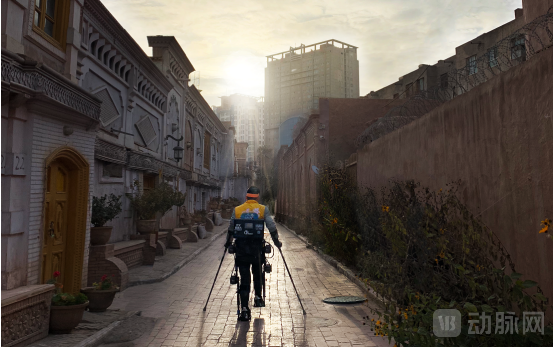
The field of lower-limb exoskeleton robots entered a phase of intense competition around 2015. China ushered in a surge of research and development related to lower-limb exoskeleton robots, and driven by this prevailing trend, lower-limb exoskeleton robots in the rehabilitation sector officially entered a stage of rapid development.
Given the specialized nature of lower-limb exoskeleton robots, many people have either never heard of them or are only familiar with their names. For patients requiring lower-limb rehabilitation, while they may recognize the term, they often lack a clear understanding of the underlying principles. This has led to a tendency to overestimate short-term changes (within one year) while underestimating long-term developments (over multiple years). If we look back six years and compare it with the present, the significant advancements in lower-limb exoskeleton robots become evident—so much so that it is nearly impossible to predict what the next six years will bring.
At the 2022 Beijing Winter Paralympics, torchbearer Yang Shuting walked upright and passed the torch while wearing an Ai-ROBOTICS exoskeleton robot, while Sha Haipeng easily and naturally completed the nine-day sacred flame convergence ceremony wearing the next-generation Ai-ROBOTICS AI exoskeleton robot.
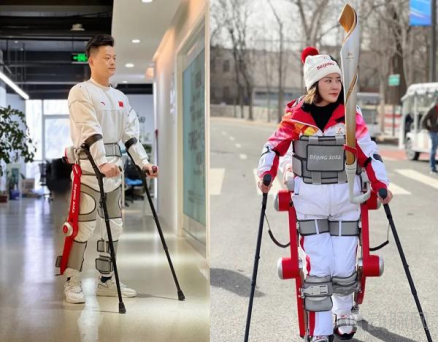
Exoskeleton Robots Power the Winter Paralympics
From a macro perspective, this marks the first time that lower-limb exoskeleton robots in China have appeared extensively and widely in the public eye.
Meanwhile, AI-ROBOTICS officially unveiled its human-computer interaction technology, AI-based gait intention perception technology, feasibility and adaptability training methods, and a new model for balance adjustment. These technologies and applications represent the culmination of AI-ROBOTICS’ six-year journey and over a decade of R&D efforts, marking the beginning of a new chapter in the industry for the company.
Turn back the hands of time to many years ago.
By chance, Professor Shuai Mei and his team at Beihang University encountered a patient with spinal cord injury. After being transferred from the orthopedics department to the rehabilitation department following surgery, it took her one week to learn how to sit up in bed, and a full month of using a wheelchair and assistive devices to achieve transfers and mobility. Her arduous rehabilitation journey was heart-wrenching.
“I hope to stand up; I don’t want to view the world from a seated position.” These brief words carried profound meaning. Her statement deeply moved Professor Shuai Mei, giving rise to the vision of “enabling individuals with severe physical disabilities to walk again from their wheelchairs.” This vision has continued to inspire Professor Shuai Mei’s team in developing exoskeleton products within the field of motor rehabilitation.
2012 marked a significant turning point when Professor Shuai Mei’s team, in collaboration with Beijing Jishuitan Hospital, jointly experimented with and developed the first generation of exoskeleton robots. After no fewer than five iterative versions, by the end of 2015, Professor Shuai Mei and his team successfully developed a lower-limb rehabilitation robot, signaling that the domestic and international exoskeleton robot industry was poised to reach new heights.
In April 2016, AI-ROBOTICS was officially established, marking the beginning of its six-year journey. During this period, AI-ROBOTICS received numerous accolades, including being named one of China’s Top 25 “Mass Entrepreneurship and Innovation” Enterprises in 2016, winning the Grand Prize in the China Division and the Global Runner-Up title at the Ping An Pioneers competition, as well as the Special Gold Award at the inaugural China University Technology Achievements Fair.
Meanwhile, AI-ROBOTICS’ exoskeleton robots, AiKang and AiDong, obtained CFDA registration certificates in Beijing, becoming the first lower-limb exoskeleton robots in China to receive CFDA certification. This represents a breakthrough achievement in the field of AI-driven sports rehabilitation in China. As the company expands its product portfolio and rolls out comprehensively across the domestic market, DaAi’s rehabilitation training programs have been included in Category A of Beijing’s medical insurance coverage.
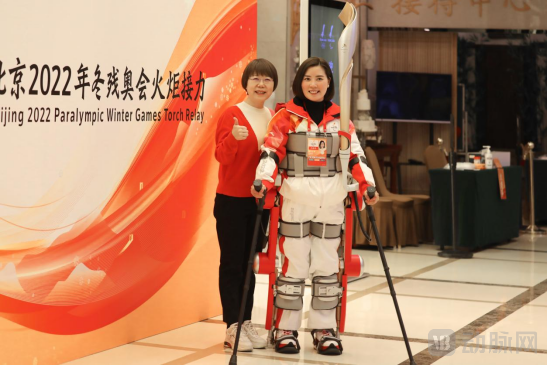
Photo of Winter Paralympics Torchbearer Yang Shuting with Professor Shuai Mei
This year, AI-ROBOTICS was further selected as the representative for the torch relay and torch collection of the 2022 Beijing Winter Paralympics, demonstrating to the world the transformative impact of Chinese technology on the lives of people with disabilities and highlighting the significant contribution of China’s robotics technology to social development.
To date, AI-ROBOTICS has established a professional R&D team for medical rehabilitation robots that integrates medical and engineering expertise. Composed of high-tech talents specializing in computer science, automation, and mechatronics from prestigious institutions such as Tsinghua University and Beihang University, the team demonstrates exceptional innovation and scalability.
Over the past six years, AI-ROBOTICS has remained true to its original aspiration, pursuing its dreams with determination. From a mere dream in its early days, it has grown into a global leader or co-leader in the field of exoskeleton robotics. Driven by an innovative spirit of bold exploration and pioneering initiative, AI-ROBOTICS has carved out a new path for innovative development in exoskeleton robotics, pioneered the domestic and international exoskeleton rehabilitation robotics industry and its innovative clinical applications, and transformed the once nearly insurmountable challenge of rehabilitating patients with severe conditions such as paraplegia, hemiplegia, and cerebral palsy, thereby emerging as a novel therapeutic approach for these "three types of paralysis."
The exoskeleton robotics industry is currently in a growth phase, driven by scientific research, innovation, and experimentation. AI-ROBOTICS is grounded in technological innovation, empowering advancement through technology. Within its compact form, it integrates the professional craftsmanship of the AI-ROBOTICS team with unique and leading-edge scientific technologies.
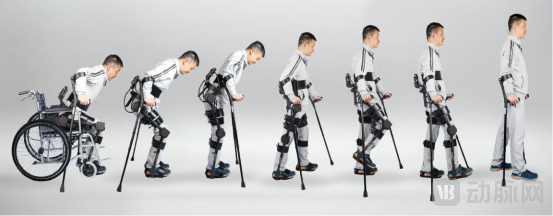
Theoretically, the fundamental cause of disability resulting from stroke or spinal cord injury is the impairment of the central nervous system, which leads to a loss of limb control. Rehabilitation training assisted by exoskeleton robots can重塑 the connection between the limbs and the central nervous system, thereby restoring motor function.
The advantages of lower-limb rehabilitation exoskeleton robots mainly include three aspects: movement repeatability and consistency, diverse training modes, and excellent training feedback.
Lower-limb exoskeleton rehabilitation robots represent a class of robots with high technical barriers and advanced intelligence within the field of rehabilitation robotics. They involve numerous interdisciplinary fields, with product development encompassing sensing, control, mechanical power, human-computer interaction, and industrial design, while drawing upon disciplines such as human biomechanics, clinical medicine, ergonomics, and neuroelectrophysiology.
Leveraging R&D efforts built upon optimized sensor distribution and multi-sensor information fusion technologies, the AI-ROBOTICS team has developed novel AI algorithms and sensing network technologies. These innovations enable real-time interpretation of movement intentions in individuals with limited mobility, precisely identifying subtle changes in multiple body regions, including the waist and legs. By responding with adaptive gait adjustments, the system assists users in moving “at will,” allowing seamless transitions between fast and slow walking speeds.
Furthermore, this technology can provide movement assistance tailored to its own capabilities based on ground characteristics and changes in the surrounding terrain, helping users adjust muscle exertion and control gait posture, while also enabling more complex actions such as ascending and descending stairs and navigating slopes.
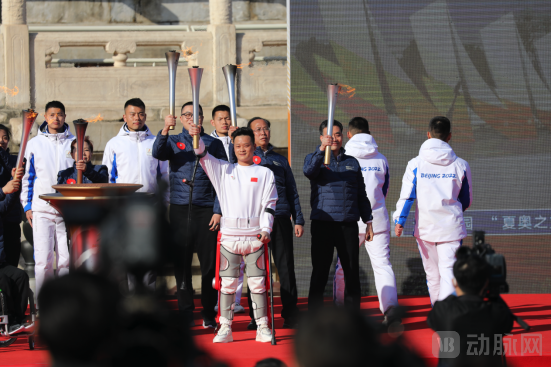
Shao Haipeng Wears the All-New Generation of Ai-ROBOTICS Exoskeleton Robot — A Gathering of the Jiu Tian Sheng Huo Torchbearers
AI-ROBOTICS has also developed a novel humanoid lower-limb exoskeleton mechanism that aligns with human biomechanics, along with an optimized design for rapid and precise multi-user adaptation based on human geometry, thereby maximizing the fit of the exoskeleton device to each patient.
Furthermore, by establishing a dynamic model of a lower-limb musculoskeletal bionic robot, stable walking control for lower-limb exoskeleton robots is achieved based on hybrid force/position compliant control.
AI-ROBOTICS remains committed to innovation-driven development, striving to deliver smarter, high-end solutions while pioneering more practical and accessible products. The company is dedicated to building a comprehensive ecosystem in the field of lower-limb rehabilitation, closely integrating it with digitalization and specialized care, thereby providing readily accessible rehabilitation solutions for individuals with lower-limb impairments and contributing to the realization of the "Healthy China 2030" initiative.
Shuai Mei, Chairman of AI-ROBOTICS & Professor at Beihang University, was born into a family of traditional Chinese medicine practitioners. Having immersed himself in medical literature and classics since childhood, this upbringing instilled in Professor Shuai Mei a "patient-centric mindset."
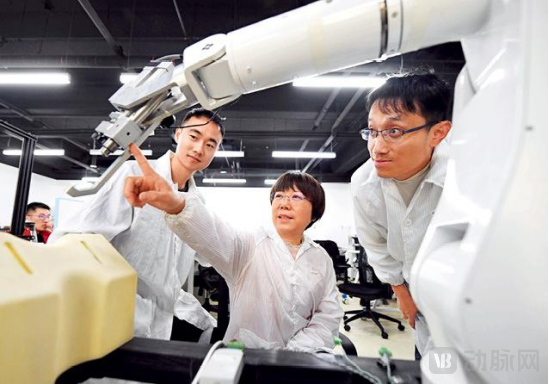
To this day, Professor Shuai Mei’s “seed of a dream” at Beihang University has finally taken root and blossomed in the field of rehabilitation, propelling the enterprise to become a leading provider of exoskeleton robot-based therapeutic solutions in China and a top-tier pioneer in continuous original innovation for rehabilitation robotics. From concept to implementation and ultimately to its current achievements, its unique mindset has played an indispensable role.
Reflecting on her professional journey, Professor Shuai Mei emphasized that science and technology should serve humanity and bring benefits to people, and that scientific research requires a spirit of selflessness and dedication. She will actively leverage her strengths to create platforms that draw deeper societal attention to persons with disabilities, engage in practical efforts to support them, help restore their confidence in reintegration into society, and contribute to the high-quality development of rehabilitation services.
As one of the few female researchers in the field of lower-limb exoskeleton robotics, Professor Shuai Mei adheres to the philosophy that quality is achieved through attention to detail and gains new insights by adopting a patient-centric perspective. Under her leadership, AI-ROBOTICS has comprehensively built and refined its product supply system from the patient’s standpoint, establishing a tiered adaptation framework categorized by scenario and age group. This approach has pioneered and strategically positioned innovative clinical applications of skeletal rehabilitation robots both domestically and internationally, significantly enhancing the awareness and acceptance of exoskeleton robots among medical professionals and patients alike.
Excellence Revealed in the Details. Guided by a “patient-centric” mindset, Professor Shuai Mei dedicates time each day to reviewing patients’ rehabilitation training videos and documenting their progress over time. This steady accumulation of small steps leads to great distances; as a result, AI-ROBOTICS has built an extensive library of clinical rehabilitation cases that records the treatment journey of every patient, providing robust support for future scientific research.
“Enabling every patient with lower-limb impairments to enjoy a unique technological experience is Professor Shuai Mei’s vision for the industry. Given the variability in symptoms among patients with lower-limb impairments, optimal rehabilitation training methods differ from individual to individual. In light of this, the AI-ROBOTICS team has assembled a professional group of rehabilitation therapists to conduct diagnostic assessments and tailor the most suitable rehabilitation training programs. By leveraging technologies such as AI and gait optimization, the company aims to create distinctive rehabilitation experiences, set an industry benchmark, and empower individuals affected by impairment (“Ai”) to walk again with confidence and care (“Xin”).”
This is an encounter between technological innovation and comfort control. As a researcher specializing in cutting-edge medical products, Professor Shuai Mei is well aware of the strong demand for comfort among patients with conditions such as triple paralysis. To ensure that the equipment delivers precise and stable rehabilitation training to the legs while preventing any significant sensation of compression across various body parts, it is essential to achieve an optimal fit at different anatomical locations. To this end, engineers at AI-ROBOTICS have comprehensively optimized several key areas, including the shoulders, hip joints, knee joints, lateral thighs, and lateral lower legs.
Meanwhile, the R&D team at AI-ROBOTICS has incorporated subjective assessments of comfort during training sessions. By inviting individuals of varying ages and physical conditions to participate in comfort testing during rehabilitation training and collecting their feedback, the team aims to achieve optimal comfort levels adaptable to patients of diverse body types. This approach ensures that patients can enjoy a comfortable rehabilitation experience while minimizing the risk of accidental injury.
Establishing a rich and high-quality system for China’s lower-limb exoskeleton robot industry is the development mission of AI-ROBOTICS, which is technology-, efficacy-, and service-oriented, committed to “bringing a happy life to people with disabilities through the power of technology.”
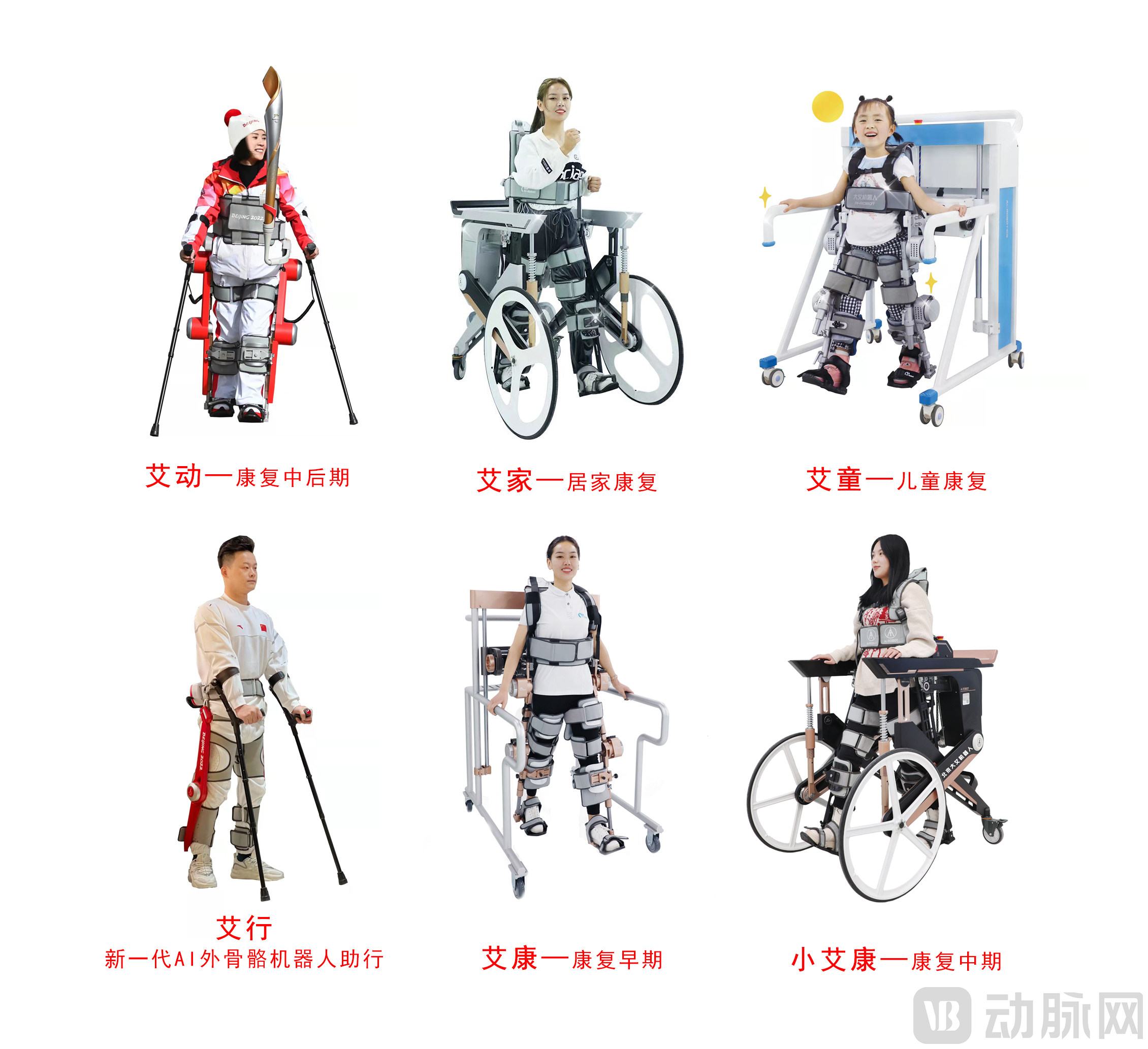
AI-ROBOTICS Product Series
The exoskeleton robot successfully developed by Professor Shuai Mei and his team not only fills a technological gap in China’s domestic industry but also stands at the forefront of the global sector. Currently, AI-ROBOTICS offers nine exoskeleton robot models across six series, achieving comprehensive product coverage for multiple conditions, all age groups, full care cycles, and diverse scenarios. This portfolio meets the therapeutic, fitness, and mobility-assistance needs of patients, the elderly, and healthy individuals alike, providing holistic solutions for life and health.
Currently, AI-ROBOTICS has cumulatively treated over 10,000 patients, provided training to more than one million individuals, and enabled hundreds of paraplegic patients to stand and walk again across China, benefiting millions of families in returning to a better life.
Looking ahead, AI-ROBOTICS will continue to dedicate itself to scientific research, driven by technological innovation to write a new chapter in the industry.
The next six years are both promising and worth awaiting.