VC Frenzy Over Scientist-Led Startups as IPO Wave Begins
CDH Investments.
Alternative Asset Management Investment Institutions

BioTrack Capital
Healthcare Investment Institutions

NuProbe
Molecular Diagnostics Technology Service Provider

Qiming Venture Partners
Healthcare Investment Institutions
HongShan
Business Consulting, Enterprise Management Consulting Investment Institutions
YuanBio Venture Capital
Venture Capital Institution

Therorna
Developer of Novel Vaccines and Innovative Therapies
Sinovation Ventures
Technology-Focused Venture Capital Firm
Green Pine Capital
Venture Capital Management Institution

BOHE Angel Fund
Pharmaceutical and Healthcare Angel Investment Fund
BlueRun Ventures China
Venture Capital Institution
MPCi
Venture Capital Institutions in High-Tech Startup Fields
Only after the scientist-entrepreneur sitting across from her signed the TS (Term Sheet) did Li Linlin’s suspended heart finally settle: this was a project she had to secure.
“Several deals we had been leading were snatched away by other investment firms offering higher prices, even while they were still undergoing due diligence.” Li Linlin, an investor based in Beijing with six years of experience in the industry, candidly admitted that he had never felt so anxious before. “The boss has issued a strict mandate: this case must succeed, with no room for failure.”
Li Linlin’s venture capital firm shifted its focus from the TMT sector to healthcare and life sciences several years ago, successfully investing in numerous high-growth projects founded by scientists. As such, it was among the early institutions to reap the benefits of this trend. However, since the surge in scientist-led startups in the healthcare sector intensified last year, Li has faced mounting pressure. She frequently encounters situations where other investment firms double their offer prices in a bid to secure deals.
“Valuations of scientist-led startups have surged, intensifying competition to an extraordinary degree.“, the pressure on investment institutions has naturally surged. People are even joking that there aren’t enough professors and leading experts to go around,” said Li Linlin. She mentioned that an investment manager from a top-tier VC firm, who is a close friend of hers, spent more than half a year traveling across China to meet with prominent experts at various research institutes, aiming to secure early-stage equity stakes smoothly when these experts decide to launch startups.
As market enthusiasm continues to surge, a growing number of scientists and professors are stepping out of the ivory tower—whether voluntarily or involuntarily—to launch startups.
“From our firm’s observations, an increasing number of scientists are entering the fray in the biotechnology sector,” Yu Zhiyun, Partner at MPCi, told VCBeat.
Yang Yunxia, a partner at HongShan, has also felt this trend acutely; the number of scientist and professor entrepreneurs she has engaged with during this period has increased several-fold compared to previous years.
The rush of investment institutions and the growing trend of scientists and professors moving into industry all point to one conclusion: a new era of scientist-led entrepreneurship in healthcare is dawning.
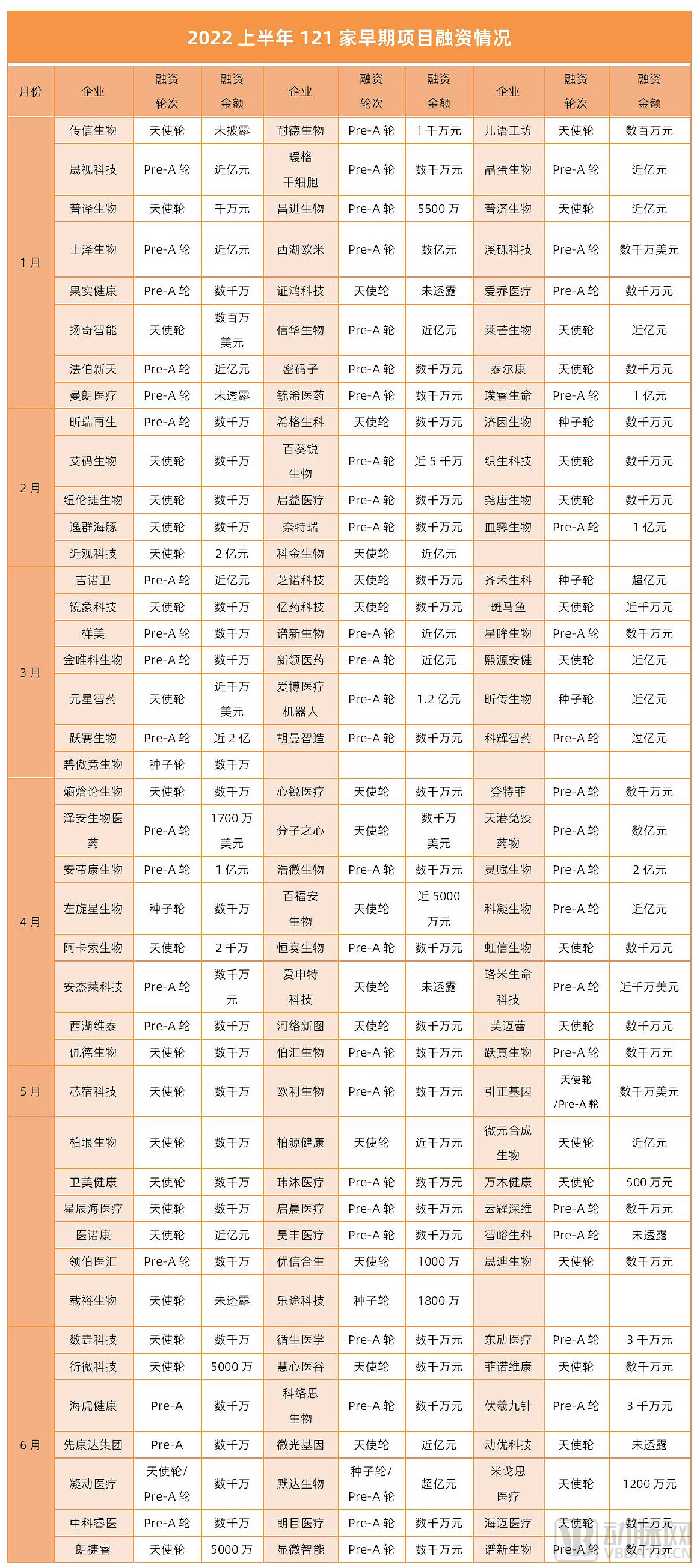
The surge in interest is evident from the data. According to statistics from VCBeat’s Orange Fruit Bureau, there were a total of 121 early-stage investment and financing deals in China’s healthcare sector during the first half of this year.(The full list is attached at the end of the article.), far exceeding the 59 early-stage investment and financing events recorded during the same period last year.Among the 121 startups that secured financing in the first half of the year, 76% of the founders had a scientific background.
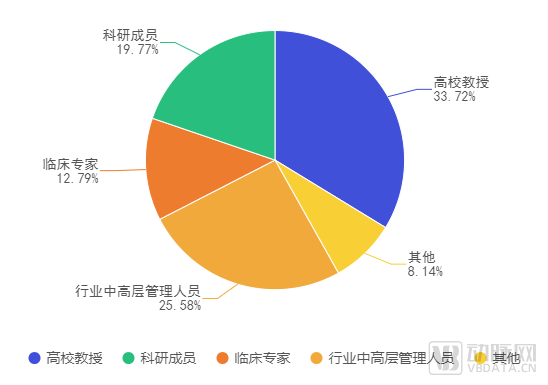
(Profile of Founders of Early-Stage Healthcare Startups | Graphic by VCBeat)
Yet, amidst the intense hype, many industry professionals remain skeptical of scientists’ entrepreneurial ventures.
“There is a saying circulating among scientists: ‘PI–IP–IPO.’ What does this mean? It means that as a Principal Investigator (PI), one should have an intellectual property (IP) project for entrepreneurship, and ultimately establish a company that goes public through an Initial Public Offering (IPO). A culture of comparison has taken hold,” said Yang Feng, a senior investor. “This has led to a mixed bag of scientist-led projects with varying quality, some of which are designed specifically to cater to venture capital firms.”
In addition, many industry insiders have stated that scientists are not entrepreneurs, and the vast majority of scientists struggle to become effective managers. Furthermore, some scientists are unwilling to commit to full-time entrepreneurship yet still demand a controlling equity stake in the company, resulting in poor corporate governance structures for scientist-led ventures.
Amidst the Hype and Skepticism, How Can Scientist-Founded Startups Drive Major Industry Growth? What Issues Remain to Be Clarified, and What Support Is Needed from All Stakeholders?
To this end,VCBeat conducted research on ten leading investment firms—Peppermint Angel Fund, BioTrack Capital, Innovation Works, CDH Investments, HongShan, MPCi, BlueRun Ventures China, Qiming Venture Partners, Green Pine Capital, and YuanBio Venture Capital (listed in alphabetical order by Pinyin)—and interviewed multiple scientist-founders., offering a glimpse into current challenges and future trends.
Scientists Are Being Snapped Up
Since the beginning of last year, a large number of investment institutions have begun seeking out projects led or participated in by professors and scientists. At the peak of this trend, it was not uncommon to see dozens of firms fiercely competing for a single professor-led project.
“Why is everyone turning to scientists? The reason lies in the fact that low-hanging fruits and source innovations are now insufficient.“Senior investor Yang Feng stated, ‘For instance, current R&D efforts in China are heavily concentrated on popular targets, with the number of clinical trials for the PD-1 target alone reaching nearly 100, indicating severe homogenization. Similarly, in terms of indications, companies are crowding into fields such as oncology and anti-infectives. These issues stem from a lack of source innovation.’”
Against this backdrop, identifying more outstanding scientists and guiding them from the laboratory to entrepreneurship and ultimately to public listings has become a current hot topic.
“Early-stage investment is often technology-driven, with R&D capability serving as the core competitive advantage. Scientists represent the core technology and possess inherent capabilities for original innovation.“Gao Jieliang, Senior Partner of Innovation and Growth Investment at CDH Investments, stated.”
However, whether scientists are well-suited to launch startups remains a contentious issue within the industry. In a speech delivered several years ago, Shi Yigong, then Vice President of Tsinghua University, stated, “It is impossible for one to simultaneously serve as a university professor, a corporate executive, and a financial manager.”
Shi Yigong’s remarks are not without merit.In reality, the entrepreneurial journey for scientists or professors is extremely arduous, with numerous cases of failure.This can be seen from the data of these two indicators.
· First, the conversion rate is low. Although China has ranked first globally in the number of patents for three consecutive years since 2019, the key conversion rate stands at only 5%, representing a significant gap compared to European and American countries;
· Second is the high failure rate. According to data from the U.S.-based technology transfer firm Bastille, the failure rate for university professor-led startups in the United States is as high as 96–97%. If this is the case in the United States, which has a well-established system for innovation commercialization, the figure in China, where such efforts are still in their infancy, is likely to be even higher.
Chen Kan, Partner at Qiming Venture Partners, analyzed that scientists excel at continuously generating breakthrough scientific achievements in the laboratory, whereas translating these breakthroughs into products capable of treating patients requires an entirely different skill set. Therefore, it is not necessary for scientists to abandon their areas of expertise to pursue entrepreneurship on a full-time basis.
“Currently, there are two distinct models for scientist entrepreneurship: one is to launch a startup on a full-time basis, and the other is to serve as a scientific advisor to support entrepreneurial ventures.“Luo Fei, Founding Partner of Green Pine Capital, told VCBeat that unlike traditional entrepreneurial logic, scientist entrepreneurs must not only address cutting-edge scientific challenges but also identify viable pathways for commercialization.”
Multiple industry insiders have stated that, based on their observations, not every scientist is suited for entrepreneurship, and there are few successful cases of scientists transitioning to full-time entrepreneurial roles.
Therefore, for the vast majority of scientists, finding a compatible entrepreneurial co-founder is the superior strategic choice.
“Scientists focus their thinking on innovation and are primarily engaged in creative work, whereas entrepreneurial partners place greater emphasis on the practicality of translating innovative technologies,” stated Dr. Tang Xiaodong, CEO of Yuanyin Biotechnology. “Entrepreneurial partners can help scientists analyze market demands, address clinical challenges, and integrate resources, while also maintaining the company’s standard management and operations to guide the team from inception to initial success.”
However, the current situation is that there is still a relative shortage of entrepreneurial co-founders in China.
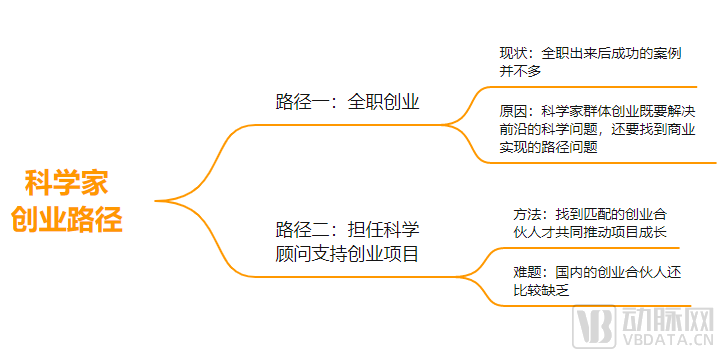 (The Entrepreneurial Path for Scientists, Chart by VCBeat)
“Industry veterans with successful entrepreneurial experience or professional CEOs are extremely scarce,” said Chen Penghui, Founding Partner of BioTrack Capital. “For scientists and professors starting businesses, technology is not the biggest challenge; talent is. Talent can transform technology into products and products into sales. Therefore, for investment institutions, the ability to help companies find co-founders has become a critical capability.”
In VCBeat’s survey, most investment firms shared the same view:Finding an excellent co-founder for a startup is extremely difficult, as the vast majority of such individuals already hold prestigious positions and command competitive salaries in the industry, making it highly challenging to persuade them to join early-stage ventures.This involves a series of challenges, including project attractiveness, equity allocation, and team structure.
Based on this, a quest to find entrepreneurial co-founders has gradually unfolded within the scientist-led projects.
“Finding a co-founder is harder than finding a wife!"Some scientists have lamented thus."
This lies in the fact that, although entrepreneurial partners and professional managers share functional similarities, there is a fundamental distinction between them. Professional managers are, ultimately, employees of the enterprise, whereas entrepreneurial partners are close comrades and allies of scientists on their entrepreneurial journey.
In simple terms, professional managers can move freely between companies, whereas founding partners form a community of shared interests with their startup ventures—they are building their own businesses alongside scientists.
“Entrepreneurial co-founders come in all shapes and sizes, and the dynamics vary from project to project; sometimes it simply depends on who you happen to meet at a given point in time. The person who can drive the project forward is the most suitable fit,” said Hou Jian, Partner at Peppermint Angel Fund.
Therefore, how to find the right co-founders at the right time is one of the most pressing concerns for scientists and investment institutions.Chen Penghui, Founding Partner of BioTrack Capital, deeply resonates with this.
In 2016, Chen Penghui, then a partner at HongShan, participated in the angel round investment in NuProbe, a genetic testing platform company. As a typical scientist-led startup, NuProbe’s two founders were university professors in the United States who had no intention of resigning from their positions when the company was just getting started.
“During the investment process, the two professors assigned me a task: to help find a CEO for the project to facilitate the commercialization of the technology,” recalled Chen Penghui. “Later, I introduced Dr. Shi Chenyang, then President of Qiagen’s Asia-Pacific region, to them. With his extensive commercialization experience and strong endorsement of NuProbe, he agreed to join as a co-founder, serve as an interim CEO, and co-invest in the company. This partnership propelled the company steadily toward industrialization and resolved the challenges faced during its early development stage.”
However, for any company to operate at full speed, the CEO must be full-time.
Thus, after experiencing rapid growth over two years, NuProbe urgently needed a full-time CEO. The two professor-founders and Dr. Chen Shenyang once again approached Chen Penghui, who had by then established BioTrack Capital, hoping he could help identify suitable talent for the company.
At this point, Chen Penghui thought of Chai Yingshuang, the founder of NuProbe Global. As the former Sales Director for Life Technologies in China and the former Clinical Market Strategy Director for Thermo Fisher Scientific in China, Chai has nearly two decades of industry experience and extensive expertise in market operations within the genomics sector. While NuProbe Global is operating smoothly overall, NuProbe’s technological advantages can strengthen its market barriers and propel the company to new heights.
Introduced through matchmaking, two professors from NuProbe flew in from the United States for an in-person meeting with Chai Yingshuang. In Chen Penghui’s recollection, the initial communication resembled a romantic courtship: it was love at first sight, with mutual recognition and strong rapport. The subsequent discussions were equally harmonious, allowing both parties to readily reach consensus on numerous detailed issues, ultimately leading to the decision to merge the two companies into one. The combination of NuProbe and Yueer Technology offered complementary strengths in technology and marketing, forming an ideal partnership for rapidly translating technological innovations into market applications.
Determining the valuations of the two companies and allocating equity among the core management team became thorny issues facing Chen Penghui during the merger process.
“Whether it was the three co-founders of NuProbe or Lao Chai (Ying Shuang), they were all very generous regarding equity issues and highly aligned on the company’s future development and their respective roles, which directly facilitated the smooth merger of the two companies,” said Chen Penghui. He noted that Yuange Genomics has grown rapidly since the merger, achieving an annual growth rate of 100%. “That’s how investors are: they not only help you get on the horse but also accompany you for a stretch, and then for another.”
Helping scientists find co-founders for their startups is also part of the job for Yang Yunxia, a partner at HongShan. She recently engaged with a renowned scientist deeply rooted in the field of brain science.
“After our discussions, both sides reached a strong mutual agreement. However, he also made it clear that he would not leave his current position to start the venture full-time. In response, HongShan took two actions: first, it convened meetings across various departments—including business development, legal, and human resources—to discuss how to support the scientist in building the project from the ground up; second, it helped identify a suitable CEO candidate within its extensive network,” Yang Yunxia told VCBeat. The CEO ultimately selected was widely regarded as an ideal fit.
At MPCi, Yu Zhiyun revealed that the firm has established dedicated post-investment recruitment teams organized by industry. With team members averaging over 10 years of human resources management experience, these groups support portfolio companies in building their HR capabilities and provide assistance to founders with scientific backgrounds.
Beyond investor introductions, it is also extremely common for classmates and teacher-student pairs to form entrepreneurial teams in scientist-led projects.
Taking Singlera GENOMICS as an example, its founders, Professor Kun Zhang and Professor Yuan Gao, were postdoctoral fellows together at Harvard Medical School. Dr. Rui Liu, Co-founder and Chief Technology Officer, was a postdoctoral fellow under Professor Kun Zhang. Zhang Jiangli, Co-founder and CEO, was Professor Kun Zhang’s undergraduate classmate at Fudan University.
“Professor Zhang Kun made it clear from the outset that he would serve as a scientific advisor to the project, rather than as an operator,” said Luo Fei, Founding Partner of Green Pine Capital, an investor in Singlera GENOMICS. “CEO Zhang Jiangli brings extensive commercialization experience from the industry, having served as General Manager of Healthcare for Greater China at Thermo Fisher Scientific and receiving the 2012 Global CEO Award. This team combination is a key factor supporting Singlera GENOMICS’ rapid development.”
It is evident that finding suitable co-founders can help scientists avoid many pitfalls, significantly increase the success rate of their startups, and shorten the time to achieve success.
At the same time, many scientist-entrepreneurs in China do not fully trust or delegate authority to their co-founders; they hold significant equity stakes and exert considerable influence over the company without working full-time.These are the common challenges currently faced in the development of scientists' projects.
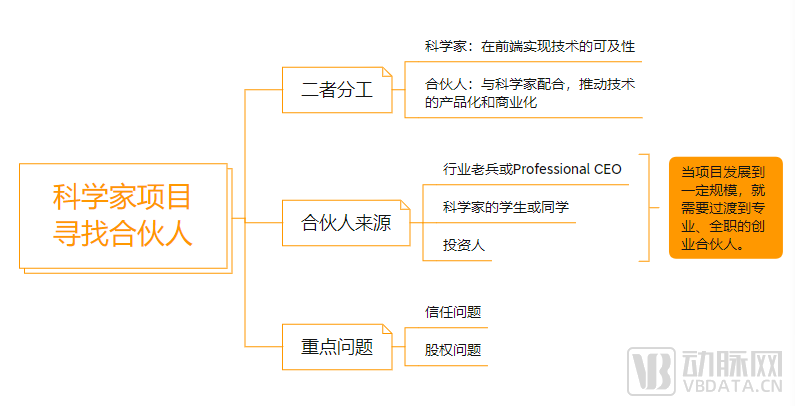 (Scientists Seek Partners for Projects; Graphic by VCBeat)
Equity allocation is often a critical issue faced by scientists launching startups.
In 2019, Professor Zhang Mingyao, the academic leader at a renowned university-affiliated hospital in western China, decided to launch a startup. When assembling the initial team, Professor Zhang recruited three of his former students to serve as CEO and members of the management team. In terms of equity structure, Professor Zhang held a 70% stake, an equity pool accounting for 22% was established for other stakeholders, and the remaining 8% was allocated to the university.
At the project’s inception, Professor Zhang Mingyao primarily provided technical expertise and resources, while three students worked full-time to manage the company’s daily operations.
Leveraging its technological leadership, high-quality academic and institutional resources, and the vast potential for market application, the project quickly made significant progress:In its second year of development (2020), the project gained such significant traction that dozens of institutions came to visit., At peak times, Professor Zhang Mingyao would meet with 15 investment institutions in a single day, some online and others in person.
However, as the project attracted an increasing number of visiting investment firms, its valuation soared, leading to internal disputes over equity allocation. The three students responsible for daily operations argued that their contributions were disproportionate to their current holdings and sought a larger share, but their request was rejected by Professor Zhang Mingyao.
As for the investment institutions, they did not achieve their desired outcomes after meeting with Professor Zhang Mingyao. Professor Zhang appeared overly “assertive,” particularly regarding the specific transaction amount; he remained completely inflexible, insisting on a single valuation figure. Even when some investors offered a valuation of RMB 100 million, Professor Zhang remained unmoved. Ultimately, the fundraising effort failed, and Professor Zhang’s project experienced a period of cash flow crisis.
In this regard, many industry experts believe thatIn building teams for scientist-led projects, part-time scientists must have a clear understanding of their roles and allocate equity to partners who dedicate more time to the project, thereby achieving a synergistic effect where 1+1>2.
“The equity structure allocation for projects led by Chinese scientists is still immature,” said Yang Feng, a senior investor. In China, many university scientists serve as the actual controllers of their projects, retaining shareholdings of 30%–40% even at the Series A or B financing stages, whereas the corresponding proportion for professors at foreign universities is mostly below 10%.
Therefore, it is particularly important to design a sound equity structure, which often involves multiple aspects such as organizational architecture and talent density.
Specifically, at the organizational structure level, the primary issue to address is how equity should be allocated among founding partners. “There is no fixed formula for equity distribution, but we recommend that scientists maintain an open mindset and allow those who contribute most to the company’s long-term development to hold a larger equity stake,” said Ren Bobing, Executive Director of Sinovation Ventures and General Manager of its Frontier Technology Fund.
In terms of talent density, scientist-led projects should focus on expanding the company’s talent density by designing appropriate equity incentive plans, thereby enabling the company to achieve greater long-term success. For instance, in the early stages of a project, scientists typically hold a controlling stake or serve as the largest shareholder, while their co-founders hold shares ranging from a few percentage points to over ten percent. Additionally, an equity pool should be established to allocate shares for other stakeholders, thereby incentivizing management teams who join later and ensuring sustained, fair incentives through dynamic mechanisms.
The establishment of mechanisms for equity entry, exit, and adjustment can effectively incentivize talent and address extreme scenarios.
In terms of implementation, mechanisms such as rolling vesting, clawback provisions, and share repurchase clauses are effective tools. As enterprises evolve, they undergo significant changes; various contingencies may arise, including shifts in internal and external objective environments, imbalances between early-stage co-founders’ development capabilities and those of newer or senior members, and misalignments in vision among the founding team.
“The essence of equity issues lies in human nature. Poorly structured equity allocation can become a ticking time bomb, prone to sudden explosions along the growth path of scientist-led startups.“said senior investor Yang Feng.
As more scientists and professors join the entrepreneurial wave, investment institutions are seeing an expanding pool of project options.
ButHow to select projects and teams with genuine industrialization capabilities remains a mandatory course for investment institutions.
“There are actually very few projects that can go the distance,” senior investor Yang Feng told VCBeat.For a scientific research project to be commercialized, it must meet at least two conditions: first, the technology must be scalable to achieve mass production; second, cost considerations must be addressed.“These two criteria can filter out many scientific research translation projects.”
Moreover, as scientific research projects are in their early stages, they entail significant uncertainty and high risk.
“The more cutting-edge the technology, the greater the investment risk. Abroad, early-stage funds are backed by family offices or university endowments; they have no fixed term and maintain low expectations for project commercialization. In contrast, institutional investors have relatively high expectations for early-stage projects,” said Li Kechun, Partner at YuanBio Venture Capital.
So, how do investment institutions reach scientists when it comes to project collaboration?
In response to this, Cao Wei, a partner at BlueRun Ventures China, believes that referrals from friends are an important source of deal flow. “Throughout the industry, we have accumulated extensive networks and circles of contacts. Another factor is platform engagement, including empowerment initiatives and industry events; the third involves industry research, such as actively participating in trade shows; and the fourth is expansion through proactively building relationships with key individuals.”
Each institution has its own focus in terms of project selection and empowerment.
For instance, BlueRun Ventures China generally places greater emphasis on interdisciplinary startup teams with cross-domain expertise, and expects these teams to be sufficiently open-minded and willing to embrace new collisions of ideas. Furthermore, startup teams must possess strong foundational capabilities, as quality, efficiency, and accessibility are key criteria for evaluating technology in the medical sector and healthcare services innovation field.
“Quality represents the high standards required from the clinical perspective, meaning close alignment with clinical needs to achieve excellent therapeutic outcomes. Efficiency refers to high interaction efficiency of products or services, ensuring they are not delivered to patients through complex operational or interactive processes. Inclusiveness is primarily related to pricing; in China, the national health insurance system possesses strong bargaining power. If a product can collaborate with the health insurance scheme in the future, it will have sufficient profit margins,” stated Cao Wei, Partner at BlueRun Ventures China.
Yu Zhiyun, a partner at MPCi, places greater emphasis on the comprehensiveness of founders and the complementarity of their teams. Founders must not only possess technical expertise but also transform into qualified entrepreneurs by mastering the pace of company development, making sound business decisions, and attaching sufficient importance to organizational structure design. “Many members of our healthcare investment team are also scientists by training who have spent years transitioning into the business world. Coupled with MPCi’s comprehensive post-investment value-added services, we are well-positioned to draw on our experience to help scientist-founders and their teams become more well-rounded.”
Furthermore, MPCi places significant emphasis on its “Three-izations” strategy: ecosystem-oriented investment, scenario-based post-investment management, and strategic branding. In the post-investment phase, it provides portfolio companies with support across six key modules, including proactive diagnostics, industry chain synergy, emergency medical assistance, front-end empowerment by due diligence teams, and operation of an entrepreneurial ecosystem community. Additionally, MPCi continuously hosts the “MPCi Sci-Tech Innovation Hub,” which offers scenario-based guidance to founders on challenges encountered during their entrepreneurial journey, covering areas such as equity and options, financing, business models, talent development, organizational structure, and macroeconomic trends.
“To better empower scientists’ entrepreneurial ventures, Qiming Venture Partners Partner Chen Kan stated that the firm has established a comprehensive post-investment support system, including assistance with project management, recruitment, branding, and government relations.”
Specifically, the project management team provides scientists with framework-level recommendations to advance internal projects; the post-investment recruitment team assists in hiring executives and core team members; and the government relations team offers a range of advisory services, such as genetic resource filing, market access, government program applications, and local implementation. Meanwhile, the project team provides support in strategy, finance, and fundraising. “This assistance helps companies navigate their initial challenging period. In the later stages, as the management team is gradually put in place, the company’s operational system naturally becomes fully established.”
Luo Fei, Founding Partner of Green Pine Capital, stated that the firm is increasingly inclined to invest in platform-type companies. “On the basis of a technological platform, we also hope to see that the team is relatively multidisciplinary.”
Chen Penghui, Founding Partner of BioTrack Capital, first examines whether scientist-founders possess the correct mindset and secondly assesses whether they have allocated a sufficiently large equity pool. “I believe these two aspects are quite important. As for how equity is distributed later on, it is best to approach the matter with a fair, reasonable, and open mindset.”
Ren Bobing, Executive Director of Sinovation Ventures and General Manager of the Frontier Technology Fund, stated that when Sinovation Ventures incubates or invests in scientist-led enterprises, it often helps teams increase the proportion of industry professionals, thereby balancing the scientists’ academic roles while supplementing them with industry experience.
“At the same time, enterprises are not necessarily led by a single scientist; we strive to increase the proportion of multi-scientist collaboration and cross-disciplinary technological integration. Furthermore, compared to the Chinese market, most of the companies we incubate or invest in adopt a globalized team structure, leveraging talent and technological advantages from various regions from day one. Moreover, project implementation often emphasizes deep collaboration at earlier stages. We also organize annual competitions and training camps to empower early-stage projects with fresh talent and exploratory technologies.”
In the face of early-stage projects, while investment institutions are frequently making moves, scientist-entrepreneurs also harbor concerns about accepting funding.
Professor Zheng Qing, founder of an innovative pharmaceutical company focused on orphan drugs, stated that the most difficult decision he made during his entrepreneurial journey was not conducting any external financing for eight years after the company’s establishment. As an industry veteran, Professor Zheng had previously spent seven years successfully growing a biotechnology company from scratch to a public listing in Canada. This experience taught him about both the positive and negative pressures that capital can exert on the development of a biopharmaceutical company.
Therefore, in the view of Professor Zheng Qing,If investors with aligned philosophies cannot be found, the R&D pace originally controlled by scientists may be pushed in a different direction by the force of capital as it seeks returns.Therefore, finding the balance between capital and R&D progress is particularly critical.
Entrepreneurship is a perilous journey with slim odds of survival, and for scientist-led ventures, it is an even more arduous ordeal. Yet in the current era that prioritizes innovation-driven development, this has become an irreversible trend.
From a macro perspective, innovation has been placed at the core of China’s modernization drive in recent years.According to data from the Ministry of Science and Technology of China, in 2021, China’s total R&D expenditure reached RMB 2.79 trillion, a year-on-year increase of 14.2%. The R&D intensity (i.e., the ratio of R&D expenditure to gross domestic product) reached 2.44%, and the country’s composite ranking in national innovation capacity rose to 12th worldwide. This demonstrates that China is placing increasing emphasis on basic research.
There are three reasons behind this. First, regarding the trajectory of economic development, global historical experience indicates that all countries with a per capita GDP approaching or reaching $10,000 inevitably embark on a path of technological innovation. Second, given the current international landscape, competition in technological prowess has become a critical factor in great-power rivalry. Third, advancements in foundational technologies will drive transformations across various industries, thereby fostering more sustainable long-term economic growth.
“Innovation in biomedicine relies on robust basic research. It is essential to increase investment in biomedicine, reform the scientific research management system, respect scientists’ pioneering spirit, allow scientists to retain partial rights and interests in their work, and incentivize their enthusiasm for invention and creation.“At a forum held at the end of last year, Bi Jingquan, former head of the China Food and Drug Administration, made this remark.”
In addition to policy support and calls from industry leaders, established internet tycoons have also begun betting on scientist-focused initiatives. For example, in 2015, Robin Li, founder of Baidu; Yuanqing Yang, CEO of Lenovo Group; Bob Xu, founder of ZhenFund; and Yi Rao, a professor at Peking University, along with several other scientists and entrepreneurs, co-founded the Future Forum. At this forum, they planned to establish a privately funded science award. Consequently, in 2016, the Future Science Prize was officially announced. The prize features three categories: “Life Science,” “Physical Science,” and “Mathematics & Computer Science,” with each award carrying a cash prize of USD 1 million.
Academician Yang Zhenning remarked that the Future Science Prize is the first award established in China by a non-governmental public welfare organization and initiated by entrepreneurs, filling the void for authoritative civilian science and technology awards in the country. “While Sweden has the Nobel Prize and Hong Kong has the Shaw Prize, the Future Science Prize, as an emerging contender, will exert a more profound influence.”
Driven by the dual forces of favorable policies and market conditions, the healthcare sector is entering an “Era of Scientist Entrepreneurship,” with a growing number of scientists stepping out of their laboratories and into the entrepreneurial arena.
The fervor surrounding the commercialization of scientific and technological achievements offers a glimpse into this trend. According to data from the recently released "2021 Annual Report on the Commercialization of Scientific and Technological Achievements in China (Higher Education Institutions and Research Institutes)," in 2020, 3,554 universities and research institutes across China signed 466,882 contracts, representing a year-on-year increase of 7.85%; the total contract value amounted to RMB 125.61 billion, a year-on-year increase of 15.67%.
However, it is also important to recognize that the similarity between entrepreneurship and scientific research lies in the fact that entrepreneurship values “quality” over “quantity.” Only frontier technologies with genuine original innovation that can meet clinical needs can successfully transition from the laboratory to practical application and gain market “recognition.” Therefore, for every participant, this will inevitably be a long and arduous journey.
In any case, a new wave of opportunity has arrived in the healthcare industry. These scientist-entrepreneurs, venturing into uncharted territory, are destined to shine brightly in the annals of history marked by the great surge of medical innovation.
Special Thanks:
Hou Jian, Partner at Peppermint Angel Fund
Chen Penghui, Founding Partner of BioTrack Capital
Ren Bobing, Executive Director of Innovation Works and General Manager of Frontier Technology Fund
Gao Jieliang, Senior Partner of Innovation and Growth Investment at CDH Investments
HongShan Partner Yang Yunxia
MPCi Partner, Yu Zhiyun
Cao Wei, Partner at BlueRun Ventures China
Partner at Qiming Venture Partners, Chen Kan
Luo Fei, Founding Partner of Green Pine Capital
Li Kechun, Partner at YuanBio Venture Capital
Yuanyin Biotech CEO Tang Xiaodong
(The above list is arranged in alphabetical order by pinyin. At the request of the interviewees, Li Linlin, Yang Feng, Zhang Mingyao, and Zheng Qing are pseudonyms.)