

AI-Powered Real-World Evidence Drug Development Paradigm Revolutionizes Optimal Hepatitis Management
Viral hepatitis represents a major global public health challenge. Currently, there are no medications capable of achieving a complete functional cure for hepatitis B, forcing a large number of patients to endure the adverse impact of the disease on their quality of life.
In recent years, with the continuous integration and development of big data, 5G, cloud computing, artificial intelligence, and other scientific technologies with healthcare, the diagnosis, treatment, and management of viral hepatitis have seen new advances and practices empowered by next-generation information technologies.
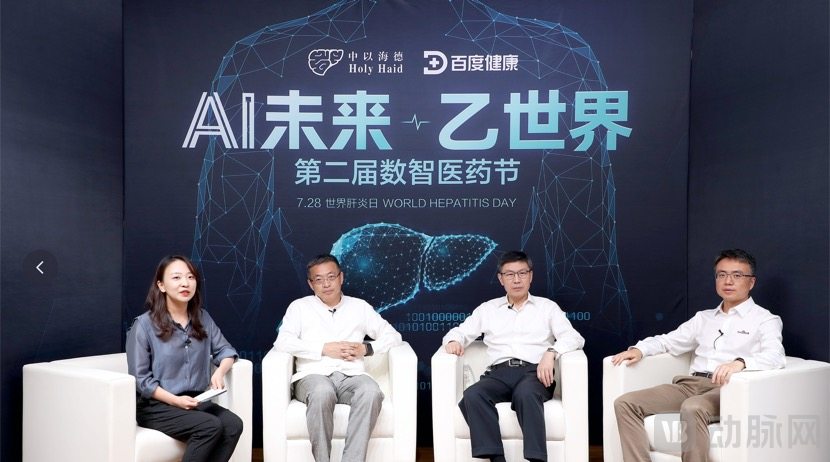
July 28 marked the 12th annual World Hepatitis Day, with the World Health Organization advocating for “bringing hepatitis care closer to patients.” During the online roundtable discussion titled “AI Future, Hep B World – The 2nd Digital Intelligence Pharmaceutical Festival,” jointly hosted by China-Israel Haidi and Baidu Health, Professor Wei Lai, former Chairman of the Hepatology Branch of the Chinese Medical Association and Vice President of Beijing Tsinghua Changgung Hospital; He Mingke, Senior Vice President of Baidu Group; and Chen Mingjian, angel investor at China-Israel Haidi, discussed how scientific and technological advancements can make hepatitis treatment and services more accessible to patients, improve their quality of life, and support global efforts to eliminate viral hepatitis.
AI technology has long demonstrated significant advantages in the pharmaceutical sector. By leveraging machine learning to autonomously process and mine data, it identifies patterns in drug discovery that extend beyond traditional expert experience, thereby optimizing the entire R&D workflow, enhancing efficiency, and reducing both development expenses and trial-and-error costs.
“For AI technology companies with a strong internet foundation like Baidu, it feels like a once-in-a-millennium opportunity: we have finally reached the point where pharmaceutical companies can utilize our tools,” said He Mingke. Baidu advocates for “AI empowering the growth of all things.” In the pharmaceutical sector, its capabilities in massive data processing, stable server infrastructure, and advanced algorithms serve as powerful tools and support to help pharmaceutical enterprises identify new targets and effectively design molecules.
Chen Mingjian believes that the outbreak and persistence of the COVID-19 pandemic have, to some extent, driven revolutionary development in the global field of digital intelligence healthcare. In 2020, investment in the digital intelligence healthcare sector in the United States exceeded $14.7 billion; in 2021, this figure doubled to $29 billion. This indicates that the application of AI technology in the medical and health sector has reached a stage worthy of attention.
Beyond the iterative advancement of technology, new approaches have emerged in drug development. To circumvent the uncertainties in clinical and commercial value associated with traditional AI-driven drug discovery models, Zhongyi Haide has pioneered an end-to-end drug development model based on the concept of “drug repurposing.” This unique approach integrates “AI-powered big data screening, retrospective data analysis, and clinical big data validation.” By leveraging its “Leiting AI System,” the company combines intelligent and precise disease target identification, pathway elucidation, and drug screening into a unified platform. “This represents a completely novel methodology beyond existing drug research approaches. In the field of hepatitis B, and indeed across the entire spectrum of viral hepatitis, it is undoubtedly the first of its kind,” stated Professor Wei Lai.
In 2016, the U.S. Congress published the 21st Century Cures Act on its official website, proposing the use of “Real-World Evidence (RWE)” to support label expansions as an alternative to “traditional randomized controlled trials (RCTs),” thereby popularizing the concept of real-world studies. In 2020, China’s National Medical Products Administration (NMPA) issued the Guiding Principles for Using Real-World Evidence to Support Drug Development and Evaluation (Trial), marking a milestone in China’s exploration of drug development based on real-world studies. Real-world studies have overcome the limitations of traditional randomized controlled trial methodologies, gradually emerging as a novel approach for generating clinical evidence and becoming an indispensable component of the lifecycle management of pharmaceutical and medical device products.
Professor Wei Lai introduced that the application of Real-World Evidence (RWE) in the pharmaceutical industry initially focused on safety, aiming to break the limitations of Randomized Controlled Trials (RCTs) and reduce selection bias. Furthermore, outcome measures and data collection are more extensive, offering greater clinical value. HDM-8421034, a hepatitis B drug independently developed by Zhongyi Haide, has currently entered Phase II clinical trials. In this process, Zhongyi Haide utilized “AI + big data” technology to identify patients who achieved hepatitis B surface antigen seroclearance, analyzed their medication regimens and the therapeutic benefits of the drug, and validated these findings with data, thereby significantly enhancing the clinical safety profile of the drug.
Regarding real-world study technologies and tools, Professor Wei Lai believes that real-world evidence (RWE) is inherently compatible with the internet. Baidu’s “four-step approach” in the field of real-world studies serves as a notable model for technology companies: Step 1 involves establishing an entry point and collaborating with authoritative medical experts to widely disseminate basic health education and address simple medical inquiries among users; Step 2 entails building and continuously expanding a team of cooperating physicians to provide online consultation services; Step 3 focuses on directing users to the most authoritative and relevant departments at public hospitals within a reasonable proximity for treatment, thereby integrating online services with offline care; Step 4 leverages Clinical Decision Support Systems (CDSS) or integrated hardware-software solutions to empower smart hospitals, enhancing the efficiency, accuracy, academic capabilities, and clinical practice competencies of both hospitals and physicians.
Establish an entry point to build a complete closed loop that spans from online content and services, through offline O2O (Online-to-Offline) interactions, to in-person offline services. Through its “Four-Step Approach,” Baidu can provide comprehensive support for real-world studies.
“With AI technology, the transition from basic laboratory research to clinical application of drugs can occur with zero time lag,” said Chen Mingjian.
Beyond drug development and clinical research, AI technology also holds immense potential in the full-course management of liver diseases. As a chronic condition, the primary goal of full-course liver disease management for patients with hepatitis B or C is prevention; the intermediate goal for patients with concurrent hepatitis is to prevent and treat cirrhosis; and for populations at high risk of hepatocellular carcinoma, early screening and diagnosis are essential. By leveraging AI technology to integrate online and offline services, we can truly adopt a patient-centered approach, seamlessly merging real-world clinical settings with digital health platforms. This integration facilitates diagnosis, treatment, and follow-up care, bringing medical services closer to patients and ultimately improving their quality of life.
“First and foremost, we must shift traditional mindsets by leveraging AI technology to popularize knowledge about hepatitis and eliminate discrimination.” Professor Wei Lai believes that, in addition to innovating treatment methods and models, the integration of AI technology can empower hospitals and physicians—particularly those at the primary care level—to help patients access adequate medical resources and high-quality healthcare services.
“The internet is an extension of the real world. As a technology and AI company, we primarily provide these esteemed healthcare professionals with tools that extend the reach of their scalpels, helping more patients manage chronic diseases,” said He Mingke. Baidu leverages technological means—including software, hardware, and algorithms—to extend medical services into home settings, assisting patients with condition prediction, medication reminders, online consultations, and early warnings, thereby enabling health management during the pre-disease stage.
“Healthy China 2030” has set a target to reduce hepatitis B-related mortality by 65%. After years of effort, the reported incidence of hepatitis A in China has dropped to its lowest level in history. Hepatitis B vaccination coverage and the timely administration rate of the first dose have already met the World Health Organization’s 2030 targets. With curative drugs for hepatitis C now included in the national medical insurance scheme, prevention and treatment efforts are advancing rapidly. The comprehensive application and control of AI-enabled drug development, clinical research, and whole-course disease management may represent the optimal solution for liver disease management.