The Next Frontier of AI in Drug Discovery: Breaking Through in Clinical Applications and Emerging AI-Driven Therapies
Whenever an emerging phenomenon arises, it tends to evoke two contrasting attitudes: one is optimistic and bold, while the other is cautious and restrained. The former, driven by passion, is more likely to seize early opportunities for success; the latter, grounded in rationality, strives to minimize the risk of failure to the greatest extent. The divergence and interplay between these two stances enable us to adopt a balanced approach, viewing the growth and development of new forces from a relatively objective perspective. The same holds true for the AI-driven new drug R&D industry.
Here, there are optimistic and bold voices—
“AI is a potential savior for the pharmaceutical industry, poised to rewrite the entire sector.”
“The allure of ‘AI + new drug development’ lies not only in its potential to significantly reduce the time, labor, and financial costs of drug R&D, but also in its ability to uncover targets and druggable mechanisms that were previously difficult or even impossible to identify, thereby turning the impossible into the possible and creating new drug assets and incremental market opportunities.”
“Today’s biopharmaceutical industry is like the internet in 2000; AI will build a new revolution in the healthcare sector.”
Here, too, there are voices of caution and restraint—
“Much like the cooling enthusiasm for artificial intelligence in other sectors, AI has yet to achieve significant breakthroughs in the pharmaceutical industry; instead, its limitations in this field are becoming increasingly apparent.”
“It is not merely a matter of interfacing IT and BT technologies, or pitting machine learning against expert experience; rather, it reflects the collision between the internet’s pursuit of short-term high returns and the long-cycle, high-uncertainty nature of drug R&D. These two fundamentally distinct mindsets and logics clash within the AI-driven new drug industry, yet remain difficult to reconcile.”
“The pharmaceutical industry remains one of the least efficient sectors and is also the last stronghold resisting technological disruption.”
The binary perspective is relatively absolute, yet these narratives lead us to believe that the true trajectory of the AI-driven new drug R&D industry largely lies somewhere in between. Only by piercing through the superficial fog can we discern the essence. To this end, VCBeat has conducted a meticulous study of the AI-driven new drug R&D sector, carrying out in-depth interviews with nearly 20 senior industry experts, and produced the “2022 Industry Research Report on AI-Driven New Drug R&D,” aiming to more accurately depict the real development of this field.
The following are the main conclusions of the report:
(1) The AI-driven new drug industry has entered a phase of rapid development during proof-of-concept.Over the next 1–2 years, a larger number of AI-designed drugs will enter clinical trials in batches, and AI-discovered candidates reaching the proof-of-concept (POC) stage for efficacy will no longer be isolated cases. In the following 3–5 years, the first AI-driven drug is expected to reach the market, with a substantial pipeline advancing to the POC stage.
(2)Over the next decade, algorithms at AI-driven new drug development companies will become increasingly business-driven, with specialized AI algorithmic solutions tailored to address specific problems.As a critical foundational technical tool for the industry, AlphaFold will continue to undergo iterations, further enhancing AI capabilities in protein structure prediction and protein function prediction, thereby enabling more substantial and widespread applications in the field of new drug development.
(3) The target discovery scenario holds immense market potential in the future, but currently faces significant technical challenges.Novel drug delivery systems, compound synthesis, stratified recruitment of clinical trial patients, prediction of clinical outcomes, optimization of clinical trial design, virtual clinical trials, and real-world studies will emerge as seven high-potential application scenarios beyond the current broad strategic focus of AI-driven new drug development companies.Furthermore, the field of novel drug modalities is evolving rapidly, harboring greater growth opportunities for the pharmaceutical industry. AI has begun to intervene at an early stage in the development of these novel drug modalities, indicating broad prospects for future advancement.
(4)The current hybrid business model is a transitional product of the AI-driven new drug industry. In the future, the development of the AI-driven new drug industry will resemble that of the biopharmaceutical sector, with the dual roles of CRO and Biotech no longer coexisting within a single enterprise.Furthermore, standalone business models such as SaaS software services will gradually disappear, as these enterprises transition toward two primary business models: AI CRO and AI Biotech. The AI CRO sector, akin to the traditional biopharmaceutical CRO industry, will ultimately evolve into an oligopolistic market structure dominated by a few major players. In contrast, AI Biotech, characterized by its significant growth potential and virtually unlimited total addressable market, will become the preferred commercial strategy for most AI-driven new drug development companies. An ecosystem centered on joint pipeline development, featuring shared risks and rewards, will emerge as the mainstream paradigm in the AI-enabled novel drug industry.
1From the Exploratory Phase to the Developmental Phase, AI Has Gradually Become a Routine Tool for Pharmaceutical Companies
Using the timeline of AI-driven new drug development as an axis, its evolution can be broadly divided into three stages:
From 2014 to 2017, the industry was in an exploratory phase of technological accumulation: most of the first wave of AI-driven new drug development companies, including Exscientia, Atomwise, Recursion, Insilico Medicine, and XtalPi, were established during this period. This stage primarily focused on preliminary technological accumulation and the exploration of early business models, investigating how AI could be specifically implemented across various stages of new drug R&D.The company’s service model primarily involves providing technical services for specific stages of new drug development.
From 2018 to 2019, the industry entered the early stage of proof-of-concept: the first batch of AI-driven new drug companies basically completed their preliminary technological accumulation and successively began to achieve validation milestones such as pre-clinical candidates (PCC).Some AI-driven new drug companies provide pharmaceutical firms or drug R&D CROs with more comprehensive and in-depth end-to-end AI technology services.
Since 2020, the industry has entered a period of rapid development: accompanied by the continuous maturation of technology,The frequency, scope, and depth of collaboration between AI-driven drug discovery companies and pharmaceutical firms are continuously expanding and deepening. The first generation of AI-driven drug discovery companies to emerge are further strengthening their end-to-end solution capabilities while sequentially initiating clinical validation of their AI-discovered drug pipelines.Furthermore, a number of tech and internet giants, including Google, Tencent, Baidu, Huawei, Alibaba, and ByteDance, have successively entered the field of AI-driven drug discovery. The two generations of AlphaFold algorithms developed by Google’s DeepMind team have resolved the 50-year-old challenge in biology of predicting protein spatial structures, thereby attracting greater attention as well as additional resources and talent to the AI-enabled new drug development sector.
Currently, multiple AI-driven new drug companies have successfully entered the secondary market, driving a surge in enthusiasm for the AI-plus-new-drug sector. According to incomplete statistics from VBInsight,In 2021, global financing in the AI-driven new drug development sector reached a record high, with 83 deals totaling $4.613 billion.From 2014 to the first half of 2022, a total of 383 financing events occurred in the global AI-driven new drug development sector, with cumulative funding reaching $13.365 billion.
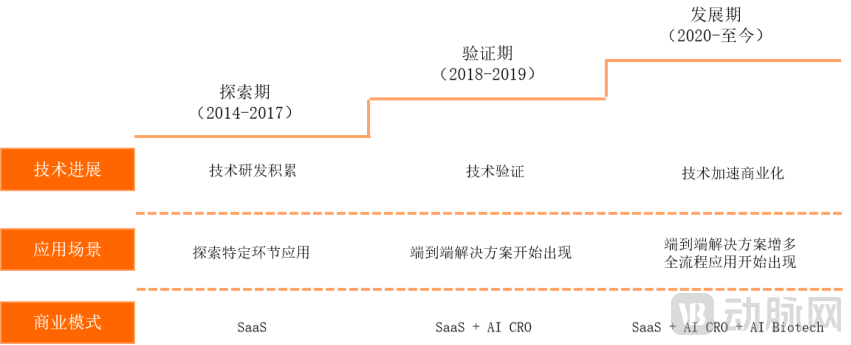
The Development History of the AI-Driven New Drug Industry
((Data source: VCBeat; prepared by VCBeat.)
To date, biopharmaceutical companies have widely adopted AI as a routine tool, regardless of whether it has been applied to drug development.Although no AI-developed new drug has yet reached the market, the AI-driven new drug industry has moved beyond the “conceptual” phase and entered a period of rapid growth. According to incomplete statistics from VCBeat Research Institute,Currently, nearly 40 AI-driven drug candidates have entered clinical development, among which two have received FDA emergency use authorization, 11 are in Phase II clinical trials, and 24 are in Phase I clinical trials.
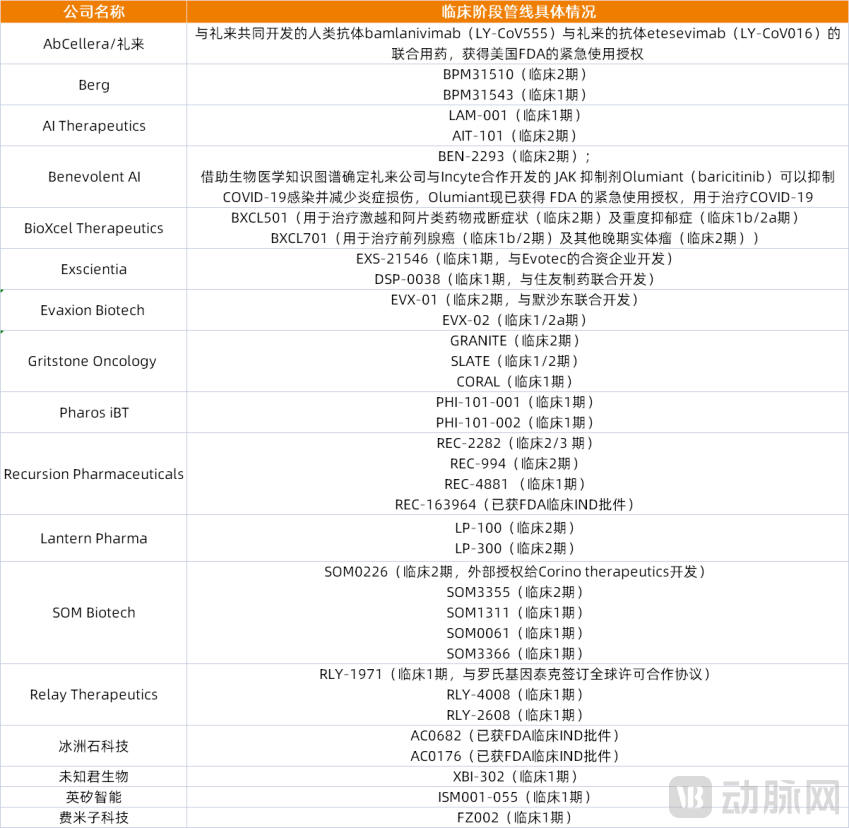
AI+ Novel Drug R&D: Pipeline Progress
(Data source: Official websites of respective companies and research interviews; compiled by VCBeat)
We hypothesize that,Over the next 1–2 years, more AI-designed drugs will enter clinical development, and AI-driven drug candidates reaching the proof of concept (POC) stage will no longer be isolated cases. Within the next 3–5 years, the first AI-designed drug is expected to reach the market, with a substantial pipeline advancing into the proof of concept stage.By then, the technical value of AI in new drug development will have been validated at scale, and the industry will gradually enter a mature stage of development. In the short term, both successes and failures in AI-driven new drug pipelines are normal phenomena and will not alter the long-term trend of robust industry growth.
2Technological Evolution: From CADD to AIDD, Enhanced Model Accuracy
From random screening to rational design, from empiricism to data-driven approaches, and from fully manual processes to assistance with traditional Computer-Aided Drug Design (CADD), the field has ultimately transitioned from traditional CADD methods to an integration of AI and traditional CADD. Today, AI technologies are increasingly involved in various stages of drug development, with both academia and industry exploring the use of AI to assist in drug research and development, thereby seeking new impetus for the discovery and development of novel drugs.
From machine learning (ML) to deep learning (DL), algorithms in the AI-driven new drug domain are continuously expanding, rapidly accelerating the drug discovery process.In the future, as more referenceable algorithmic models become available, the industry will have diverse approaches to address pain points across various stages of drug development. There will be a growing number of algorithms specifically designed for AI-driven new drug discovery, and algorithms employed by AI-focused pharmaceutical companies will become increasingly business-driven, offering tailored AI solutions for specific problems.
From AlphaFold to AlphaFold2, the technological breakthroughs brought by the two generations of AlphaFold algorithms have solved the 50-year-old challenge in the biology community of predicting protein spatial structures.This breakthrough has transformed the previous status quo, in which protein structures could be determined almost exclusively through experimental techniques such as X-ray crystallography and cryo-electron microscopy, profoundly influencing the future development of AI-driven drug discovery. Recently, a collaborative team from DeepMind and the European Bioinformatics Institute (EMBL-EBI) announced that AlphaFold2 had predicted the structures of 214 million proteins across more than one million species, covering nearly all known proteins on Earth. Among these over 200 million protein structure predictions generated by AlphaFold2, approximately 35% achieved high accuracy, comparable to the precision of experimentally determined structures, while around 80% were deemed sufficiently reliable for various downstream analyses.
Leveraging AlphaFold2’s accurate predictions of protein structures, researchers can conduct structure-based drug design more efficiently. Furthermore, as a foundational technical tool, AlphaFold2 has lowered the technical barriers to entry in the field of protein prediction and design, attracting talent from other disciplines to join research in AI-driven novel drug development and bringing in additional resources. Meanwhile, by serving as a foundational technical tool, AlphaFold2 has leveled the competitive playing field among enterprises engaged in protein prediction research. However, structural prediction is merely the starting point; the true application of AlphaFold2 in drug R&D still faces numerous challenges.
3Evolution of Application Scenarios: From Early-Stage Drug Discovery to Comprehensive Coverage of the Entire New Drug R&D Process
In recent years, the service chain of AI-driven new drug companies has been vertically extended: from providing technical services for specific segments to offering end-to-end solutions, and gradually covering the entire drug discovery process.According to incomplete statistics from VCBeat, among the 52 AI-driven new drug companies currently developing chemical drugs, 39 have end-to-end service capabilities (from target identification to lead compound delivery), accounting for 75%.
Currently, the strategic focus of AI-driven new drug companies in China is primarily concentrated on the drug discovery phase, with virtual screening, molecular generation, target identification, and ADMET prediction emerging as the four most heavily pursued application scenarios.
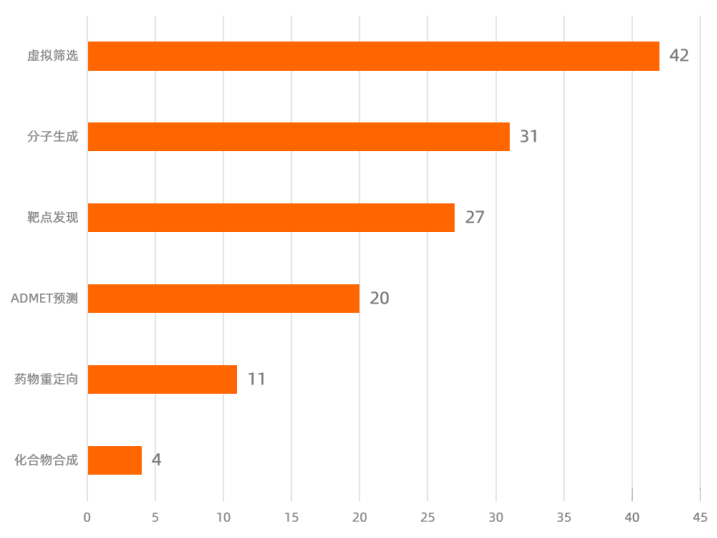
Application Layout of Domestic AI+New Drug Companies in the Drug Discovery Stage
((Source: Public information and survey interviews; produced by VCBeat.)
Currently, although AI-driven new drug companies both in China and abroad mainly focus on traditional chemical drug R&D, the proportion of enterprises expanding into emerging therapeutic modalities—such as antibody drugs, nucleic acid drugs, peptide drugs, and gene and cell therapies—has been increasing in recent years.According to research data from Boston Consulting Group, the proportion of companies globally deploying innovative therapies rose from 6% in 2015 to 30% in 2021.
In terms of the types of AI-driven new drug companies in China, according to incomplete statistics from VCBeat Institute, there are currently 19 companies focusing on novel drug modalities, accounting for 27% of the total number of AI-driven new drug companies. Among them, six companies are focused on macromolecular drugs (without specifying the exact type of novel drug modality), four on nucleic acid drugs, three on cell and gene therapy drugs, three on antibodies, two on peptides, and one on microbial drugs.
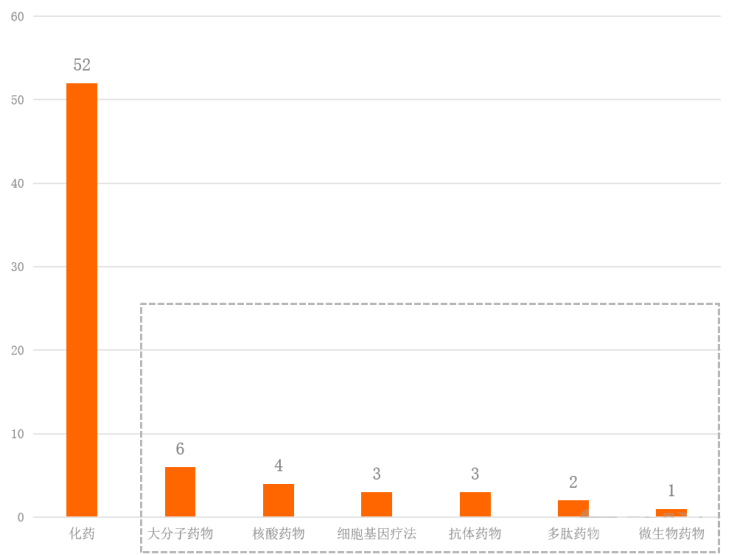
Domestic AI Companies' Layout in the Field of New Therapies
(Data source: VBInsight, produced by VCBeat))
Based on the current status of AI applications in various scenarios of new drug development, virtual screening, molecule generation, target discovery, and ADMET prediction have become the preferred strategic focuses for most AI-driven new drug enterprises in the small-molecule chemical drug sector. Among these, target discovery holds immense market potential in the future, but it still faces significant technical challenges at present.
Novel drug delivery systems, compound synthesis, stratified clinical patient recruitment, clinical outcome prediction, optimization of clinical trial design, virtual clinical trials, and real-world studies will emerge as seven high-potential scenarios beyond the areas currently widely pursued by AI-driven new drug development companies.
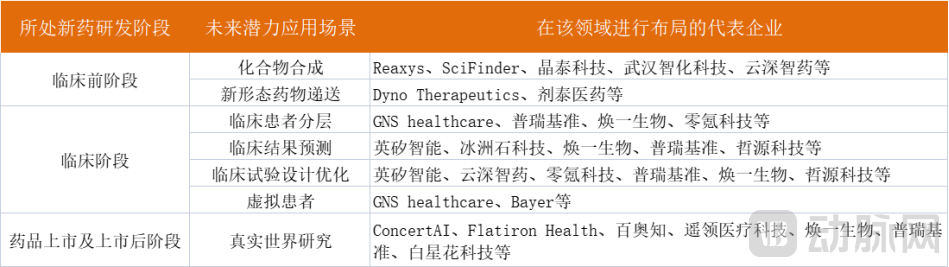
Forecast of Seven Major Future Application Scenarios and Corporate Strategic Layouts
Data Source: Research interviews, prepared by VCBeat.
Emerging therapeutic modalities, such as gene and cell therapies, have introduced novel concepts and approaches for the treatment of cancer, rare diseases, chronic conditions, and other refractory disorders, offering the potential for curative outcomes. Consequently, the field of new drug modalities is experiencing rapid growth, presenting significant opportunities for the pharmaceutical industry. Artificial intelligence (AI) has already begun to play a role in this nascent stage, holding broad prospects for future development.
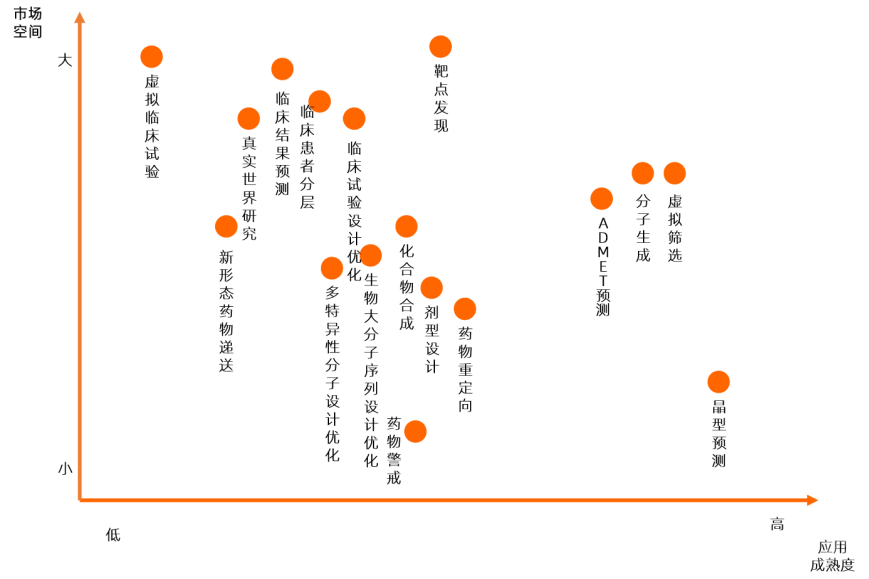
Distribution of Development Capabilities Across Various Application Scenarios in AI-Driven New Drug R&D
(Source: Survey interviews, prepared by VCBeat))
4Evolution of Business Models: Transitioning from a Single Business Model to a Hybrid Business Model
New business models are constantly emerging, ranging from single to hybrid; the business models in the AI + new drug sector remain in the early stages of exploration.
From 2014 to 2015, the commercialization of AI-driven new drug companies was primarily based on providing software technology services.
From 2016 to 2017, some AI-driven new drug companies began to vertically extend their service chains—no longer just improving efficiency at a specific point or stage of new drug development, but pursuing end-to-end solutions and expanding into more stages of the drug development process. Some companies even started offering one-stop services covering the entire drug discovery process, gradually forming an AI CRO model that provides AI-powered outsourced technical services for new drug development.
From 2018 to 2020, as AI-driven new drug companies successively achieved validation milestones such as the identification of clinical candidate molecules, some enterprises expanded the breadth and depth of their AI technical services while actively advancing further validation of AI-enabled drug discovery outcomes through collaborations or in-house R&D. Certain AI-driven new drug companies with substantial prior technological accumulation and relatively ample funding chose to transition into AI Biotechs.
Since 2020, numerous AI-driven drug discovery companies, including Exscientia, Relay Therapeutics, Recursion Pharmaceuticals, BenevolentAI, Insilico Medicine, and Calcite Biosciences, have disclosed that their AI-developed drug candidates have entered clinical trials, with many such companies subsequently listing on secondary markets. As the industry has evolved, several business models have taken shape. Among publicly listed AI-driven drug discovery firms, the three most typical business models are SaaS, AI CRO (Contract Research Organization), and AI Biotech.

The Evolution of AI-Driven Business Models in New Drug Development
(Data source: Survey interviews, prepared by VCBeat))
Our research reveals that, both domestically and internationally, the majority of AI-driven new drug companies engage in two or three of the aforementioned business models.
From an international perspective, Schrödinger, a representative enterprise of the AI-driven new drug SaaS business model with software service revenue as its mainstay, began building its internal pipeline around 2018. Exscientia, a representative enterprise of the AI CRO business model, not only provides external technical R&D CRO services but also advances the development of some of its own valuable pipelines through joint ventures—pipeline projects developed in collaboration with EQRx, BlueOak, and Rallybio fall into this category.
In China, adopting multiple business models has become the choice for most AI-driven new drug companies. VCBeat has conducted an incomplete statistical analysis and review of the business models of 71 AI-driven new drug companies in China.
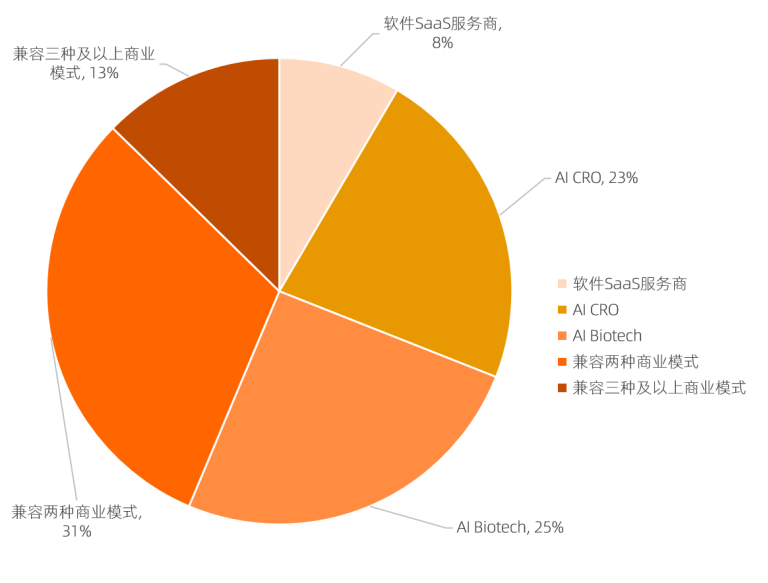
Statistical Overview of Business Models for AI-Driven New Drug Development Enterprises in China
Source: Public information and research interviews; produced by VCBeat.
Statistics show that,Nearly half of China's AI-driven new drug companies have adopted a hybrid approach, pursuing multiple business models simultaneously.Among them, 22 AI-driven new drug companies adopted two business models simultaneously, accounting for 31%; 9 companies adopted three business models simultaneously, accounting for 13%.
Based on the survey results, we believe that,Hybrid business models are a transitional product of the early development stage in the AI-driven new drug industry. The ultimate trajectory of the AI-driven new drug sector will mirror that of the broader biopharmaceutical field, where the dual roles of CRO and Biotech will not be embodied within a single enterprise.
Furthermore, by integrating the current market environment for AI-driven new drug development with the characteristics of various business models, we assess that:
1) The SaaS (Software-as-a-Service) business model will gradually disappear in the future, as these companies transition toward two primary models: AI CRO and AI Biotech; 2) Similar to the evolution of traditional contract research organizations (CROs) in the biopharmaceutical sector, the AI CRO market will ultimately consolidate into an oligopoly dominated by a few major players controlling most market resources; 3) Due to its significant growth potential and virtually unlimited total addressable market, the AI Biotech model will become the preferred choice for most AI-driven novel drug development companies.
We believe that AI, as a tool, will gradually permeate every stage of new drug development, delivering value by reducing costs, improving efficiency, and even increasing the success rate of new drug development. In the future, pharmaceutical companies will adopt AI technology as their foundational infrastructure, and AI will no longer serve merely as a badge of technological advancement.
The AI-driven new drug industry is still in its early stages, with no AI-designed novel drug having successfully reached the market to date, making the advancement of AI-based drug pipelines highly risky. Through collaborative pipeline development, AI-driven new drug companies and pharmaceutical firms can share both risks and rewards. Consequently, many AI-driven new drug companies and pharmaceutical firms engaged in drug pipeline development have adopted this collaborative model. We anticipate that this approach will remain the mainstream paradigm for a considerable period ahead.
5Data and Talent Become Major Challenges for the AI-Driven New Drug Industry
Data issues represent the most significant barrier constraining the current development of the AI-driven new drug discovery industry, which faces dual challenges in both data quality and quantity. To address these data-related challenges, the AI-driven new drug discovery industry has proposed several solutions.
Among them,Integrate and clean public database datais the mainstream approach currently adopted by AI-driven new drug development companies for data acquisition; however, this method is unlikely to foster differentiated competitive advantages among such companies in the long run. ThroughCollaboration with Pharmaceutical CompaniesThe partial data obtained often pertains only to a specific pipeline, is relatively limited in scope, and pharmaceutical companies may not provide core data.Establishing an AI Drug Discovery AllianceIt is also one of the solutions to address data issues. However, the extensive involvement of federated learning poses certain practical challenges, including concerns about the authenticity and quality of data sources, while the willingness of pharmaceutical companies to provide data remains to be improved.Integrated Wet and Dry Laboratory / Intelligent Robotics Laboratorythe establishment ofIt is driving the transformation of new drug discovery from the traditional “labor-intensive” experimental trial-and-error model to a “computationally intensive” automated, intelligent R&D model, enabling more new drug development work to be completed with the same resources and time. Therefore, building in-house integrated wet-dry laboratories or intelligent robotics laboratories is not only an important solution for current AI-driven new drug companies to address data challenges, but also an inevitable trend for the future development of the AI-enabled new drug industry.Development of Few-Shot Learning AlgorithmsIt is possible to obtain more valuable information and conduct analytical assessments even with limited data volumes, thereby addressing the issue of data scarcity to a certain extent...
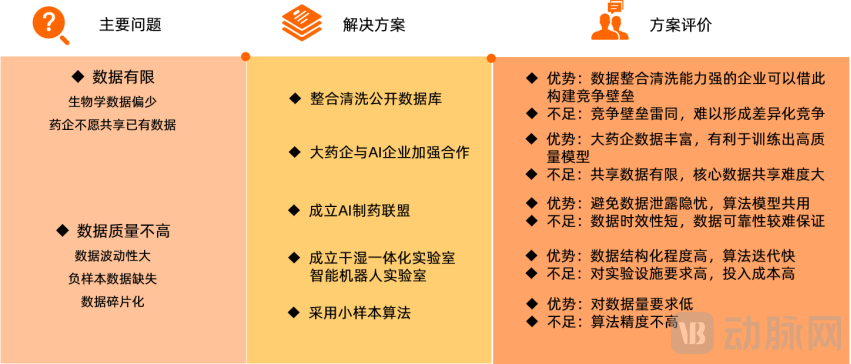
Data Challenges and Solutions for AI-Driven New Drug Development Companies
(Data source: survey interviews, prepared by VCBeat))
Given that the AI-driven new drug development sector has only been emerging for a few years, there is a severe shortage of interdisciplinary talent. The high professional barriers between artificial intelligence and pharmaceutical R&D make it difficult to cultivate such hybrid expertise. Although universities both in China and abroad are gradually strengthening their programs to train interdisciplinary professionals for the AI-enabled drug discovery industry, talent development is inherently a long-term process. Consequently, in the short term, the bottleneck of scarce interdisciplinary talent in the AI-driven new drug sector cannot be readily alleviated through university graduate pipelines.As a multidisciplinary, cross-disciplinary field, AI-driven new drug development has seen its growth constrained to some extent by talent bottlenecks.
To Address the Talent Bottleneck, the AI-Driven New Drug Industry Is Developing Multiple Solutions.
In the industry,AI-driven new drug companies are exploring various internal solutions, such as regularly organizing small-scale activities, hosting mini-classes or sharing sessions, and inviting university professors specializing in AI-enabled drug discovery to provide targeted training for their teams. Some teams are also experimenting with a model where partners from different business units participate in project initiation voting through investment-based mechanisms, thereby achieving risk-sharing and benefit-sharing for approved projects and aligning the goals and interests of cross-functional teams.
In the scientific research community,Universities are also intensifying their efforts to cultivate interdisciplinary talent in AI-driven new drug development. Notably, some universities have successfully achieved the commercialization of research outcomes, with numerous scholars and professors bringing their scientific achievements into the industry. Based on industry interviews and desk research, VCBeat has compiled data on the research activities and technology transfer outcomes of 47 research groups across 16 domestic universities and research institutions (see Appendix 1 of the report: “AI-Driven New Drug Talent Development and Research Outcome Commercialization at Chinese Universities”).
We have observed that some experts are actively pursuing the commercialization of their research outcomes, either by launching their own startups or by licensing relevant intellectual property to AI-driven new drug development companies, thereby facilitating the industrial application of their scientific achievements. Most research teams venturing into the AI-enabled new drug discovery space originate from disciplines closely related to pharmaceutical R&D, such as pharmacy, chemistry, biology, and life sciences, whereas relatively few artificial intelligence-focused research teams have currently entered this field.
Additionally,The industry and academia are also working in close collaboration., for instance, some organizations have addressed the talent pain points in the AI-driven new drug industry by partnering with academic institutions to establish training programs; meanwhile, certain enterprises have set up talent development hubs aimed at fundamentally alleviating the current talent bottleneck in the AI-driven new drug sector through joint talent cultivation with academia.
Since 2020, numerous domestic and internationalInternet GiantsIntervention in the AI-driven new drug development sector has not only injected massive resources and capital into the industry, but also introduced cutting-edge AI technologies and algorithms, facilitating the establishment of platform tools akin to cloud computing and AlphaFold 2.On one hand, it has attracted more talent in AI algorithms and development to the relatively closed, specialized, and high-barrier field of pharmaceutical R&D; on the other hand, it has lowered the threshold and costs for AI-driven new drug development, thereby serving to channel talent into the AI-plus-new-drug sector.

In today’s rapidly evolving landscape of AI-driven new drug development, every industry professional is grappling with key questions: To what extent can AI truly accelerate the birth of a new drug? Can AI genuinely create novel drug assets and unlock incremental market opportunities? And can it overcome the pharmaceutical industry’s “Eroom’s Law” (the reverse Moore’s Law)? While definitive answers to these questions remain elusive today, we are confident that they will emerge in the future.
Life systems are inherently complex. Any new technology aiming to revolutionize the pharmaceutical industry cannot rely on short-termism but requires long-term dedication. Although the road is arduous and long, perseverance will lead to success. We encourage greater practical support and less theoretical skepticism toward AI-driven drug discovery, along with more visionary thinking and less impulsive reaction. Let us view the development of the AI-plus-new-drug sector objectively, with patience and equanimity.
The following is the table of contents:
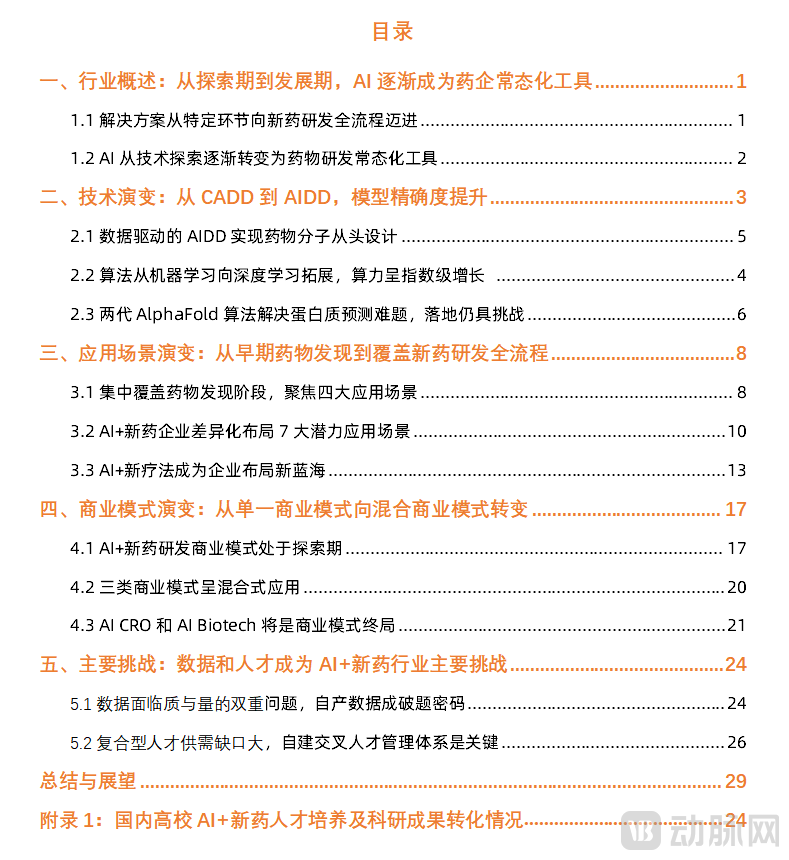
Scan the QR code below to download the full version of the “2022 AI+ New Drug R&D Industry Research Report” published by VCBeat.