

Sequoia China: Venturing into the Uncharted Territory of Medical Innovation with an Early-Stage Focus

SHUKUN
Provider of Intelligent Products and Innovative Solutions
BGI
Scientific and Technological Service Provider and Precision Medical Service Operator
Snibe
In Vitro Diagnostics (IVD) Product Developer, Manufacturer, and Supplier
HongShan
Business Consulting, Enterprise Management Consulting Investment Institutions
Betta Pharmaceuticals
Innovative Drug Developer

Burning Rock
Genetic Sequencing Product Provider
In China's healthcare venture capital sector, HongShan is undoubtedly the bellwether.
Whether measured by the number of invested companies (300+ healthcare and wellness enterprises), the total investment amount (over RMB 20 billion), or investment returns (45+ portfolio healthcare and wellness companies successfully completing IPOs), HongShan ranks among the top-tier institutions.
Not only that, HongShan has also demonstrated strong capabilities in fundraising. Documents released by the U.S. Securities and Exchange Commission (SEC) this July show that HongShan’s latest U.S. dollar fund has completed its filing and registration, with the total size of the four funds amounting to approximately $9 billion, setting a new record for fundraising by Chinese venture capital funds.
Behind these impressive achievements lies the result of HongShan’s heavy investment and continuous betting on the healthcare sector over the 16 years since its entry into the market.In terms of the sectors in which its portfolio companies are rooted, HongShan has achieved full coverage across numerous healthcare sub-sectors, including innovative drugs, innovative medical devices and diagnostic products, healthcare-related services, and digital health.
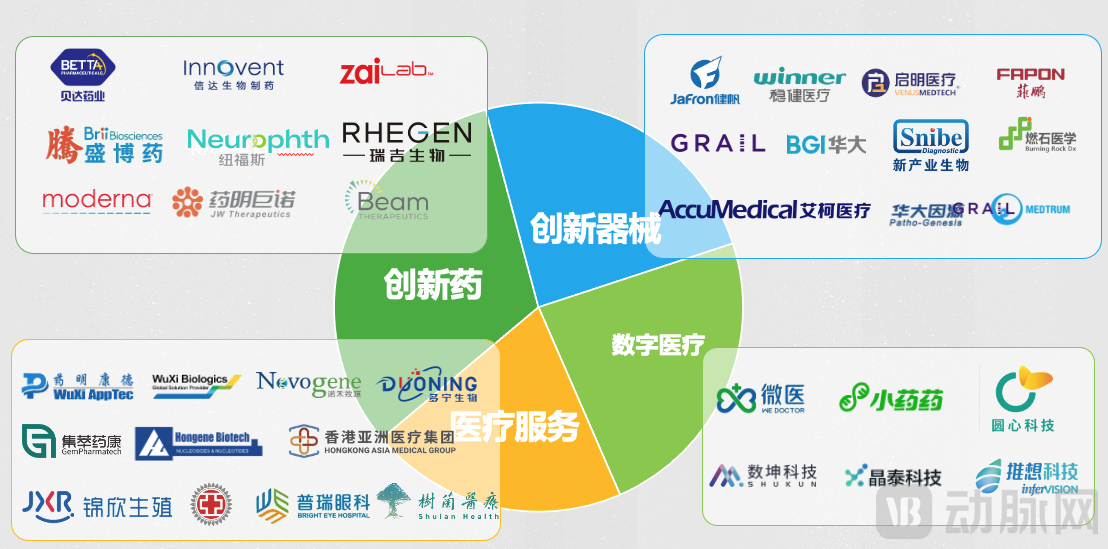
▲ HongShan’s Investment Projects in Various Healthcare Sub-sectors (Partial)
It is worth noting that in HongShan’s healthcare investment strategy, there has been a growing trend of increasing bets on earlier-stage ventures. Data supports this: over 60% of all healthcare investments made by HongShan are early-stage deals, with the firm participating during the seed stage or the first one to two funding rounds, accompanying companies throughout their growth journey.
This affirms what Neil Shen, Founding and Managing Partner of HongShan, previously stated: HongShan’s goal is to be the earliest and most significant investor in top-tier high-growth companies. “Investing early, investing small, and investing in technology” have become distinctive hallmarks of HongShan, while “earlier, more substantive, and more innovative” has remained its consistent guiding principle in healthcare and life sciences investing.
According to VCBeat's observations,HongShan is continuously deepening its engagement at the upstream end of the industry, beginning to identify potential founders within industrial sectors, university laboratories, and research institutes., assist them in better translating scientific and technological achievements into practical applications, and grow into outstanding future entrepreneurs.
It is important to recognize that the earlier the investment stage, the less mature the technology and business models are, the higher the risks involved, and the greater the test of an investment institution’s comprehensive capabilities; thus, the path ahead is fraught with even more challenges.
Why Is HongShan Doubling Down on Earlier-Stage Investments? What Is the Rationale Behind Betting Early and Small? What New Opportunities Are Emerging in the Industry? VCBeat Held an In-Depth Discussion with HongShan to Address These Questions.
Adhering to the strategy of investing early, investing in small businesses, and investing in technology has always been a core philosophy upheld by HongShan. This is especially true in the field of healthcare investment.
For instance, as the inaugural project in its strategic layout for healthcare and wellness, HongShan China invested in Chinese Green Line (later renamed “WeDoctor”) in 2006 when the company was still at the angel round. The latter has since become one of the most prominent star enterprises in the internet healthcare sector.
Over the subsequent 16 years,A host of well-known industry players, including Burning Rock Biotech, Brii Biosciences, iRay Technology, Snibe, Echosens, XtalPi, Jafron Biomedical, and Venus Medtech, were all invested in by HongShan during their Series A financing rounds.
However, HongShan is currently an investment institution managing ultra-large funds. It could opt for a more stable strategy that yields quicker returns by going all-in on mid-to-late-stage projects. So why does it continue to venture into the early-stage sector, which is more time-consuming, labor-intensive, and carries higher investment risks?
“HongShan positions itself as a “technology-driven enterprise,” which is why we place great emphasis on technology-first strategies. In sectors with significant technological leadership, we make early-stage, substantial investments.“HongShan has been among the first to strategically position itself in emerging fields of technological breakthroughs, such as genetic testing, nucleic acid-based therapeutics, gene therapy, and cell therapy,” Yang Yunxia, Partner at HongShan, told VCBeat. She noted that pioneering spirit and partnering with bold innovators are ingrained in HongShan’s organizational DNA.
More importantly, HongShan has extended its research-driven investment methodology to early-stage investing.
Taking the currently booming nucleic acid therapeutics sector as an example, HongShan had already set its sights on this field in 2016. At that time, few people in China were familiar with nucleic acid therapeutics.
“To be perfectly candid, there were not many viable investment targets in China at that time, so we invested in Moderna, a typical overseas company. This deepened our understanding of the nucleic acid therapeutics sector,” said Yang Yunxia, Partner at HongShan.
As the industry matured, HongShan began systematically scanning the nucleic acid therapeutics sector to identify core value chains on a global scale. Following this industry research, it made a series of investments in the field, including companies such as Zhaowei Biotechnology and RHGEN.
“Unlike some funds that have adopted a catch-up investment strategy in the nucleic acid drug sector over the past year or two, HongShan China began its layout at least one to one and a half years earlier,” said Yang Yunxia, Partner at HongShan China.
In the continuous process of advancing deeper into early-stage development,HongShan has always adhered to a core investment logic: following the evolving disease profile of the Chinese population, prioritizing major diseases while also accounting for the development of new technologies in the field of rare diseases.
Taking brain science as an example, it represents a frontier technological direction aimed at addressing major brain-related diseases. In response, HongShan has actively invested in the brain science industry chain, securing stakes in leading companies such as Echo Medical, Jingyu Medical, and NeuroXess.
Moreover, to gain deeper access to the upstream segments of the industry chain, HongShan launched its first specialized accelerator in the intelligent healthcare sector in Zhangjiang, Shanghai. This accelerator comprises two major platforms: the “HongShan Brain Science Incubation Center” and the “HongShan Intelligent Healthcare Genomics Incubator (Illumina Technology-Driven),” which focus respectively on the vertical niches of brain science and genomics.
It is reported that the Brain Science Incubation Center has assembled a robust mentorship team. The inaugural cohort of mentors includes Mu-Ming Poo, Academician of the Chinese Academy of Sciences; Ying Mao, Dean of Huashan Hospital, Fudan University; Bo Hong, Secretary of the Party Committee of the School of Medicine, Tsinghua University; Bai Lu, Editor-in-Chief of *The Intellectual*, recipient of the NIH Director’s Award and the Ray Wu Prize; and Chengyu Li, Director of the Major Projects and Technology Transfer Office at the Center for Excellence in Brain Science and Intelligence Technology, Chinese Academy of Sciences.
Notably, as investment institutions move further into the early-stage domain, they often engage with university professors and scientists. The ability to effectively communicate with these stakeholders serves as a test of the institutions’ comprehensive capabilities.
In this regard, Gu Cuiping, Managing Director at HongShan, told VCBeat that maintaining a high level of professionalism and sincerity is essential when communicating with scientists.
Take NewFusion Biotech as an example. In 2019, HongShan was focusing on the gene therapy sector, but at that time, there were still doubts within the industry about whether domestic companies had the capability to develop gene therapy products.
Through a friend’s introduction, Gu Cuiping, Managing Director at HongShan China, met Professor Li Bin, who has been engaged in the treatment of ophthalmic diseases and scientific research for over 20 years at the Zhongshan Ophthalmic Center of Sun Yat-sen University and Tongji Hospital affiliated with Tongji Medical College of Huazhong University of Science and Technology. Professor Li began researching gene therapy for Leber’s Hereditary Optic Neuropathy (LHON) in 2008. By 2011, his team completed the world’s first clinical study on gene therapy for LHON.
Prior to her discussions with Professor Li Bin, Gu Cuiping, who holds a Ph.D. in Biochemistry and Molecular Biology and has a background in large pharmaceutical companies, conducted extensive preparatory work and research, followed by multiple rounds of communication with Professor Li Bin and his management team.
Following extensive due diligence, including in-person visits with multiple LHON patients, HongShan decisively participated in Nuofusi Biopharma’s Series A financing round. The investment thesis was based on several factors: first, gene therapy is a sector that HongShan strongly favors; ophthalmology represents an excellent niche entry point; and the local injection administration method offers relatively controllable safety risks. Additionally, the company’s preliminary clinical trials demonstrated strong efficacy.
“Furthermore, Professor Li Bin is highly admirable. He resigned from his positions as a professor and a physician to devote himself full-time to this company, which demonstrates remarkable entrepreneurial courage,” said Gu Cuiping, Managing Director at HongShan.
As can be seen above, HongShan has consistently focused on frontier trends in the healthcare sector and continues to deepen its engagement at earlier stages.Given that early-stage projects are more nascent and carry higher risks, beyond having a keen sense of opportunity, how to grow alongside entrepreneurs has become a critical question that HongShan must address.
“As an investor in the primary market, the most important characteristic is having the patience to accompany companies through their long-term growth,” Yang Yunxia, a partner at HongShan, told VCBeat.Early-stage betting, end-to-end support, and multi-round capital injections are hallmarks of HongShan’s investment strategy.
For instance, HongShan participated in Nuofus Biotech’s Series A financing in 2020 and subsequently joined its Series B and Series C rounds.
Take Burning Rock Biotech, a star company in genetic testing and precision medicine, as another example. After HongShan entered its Series A financing round in 2015, it participated in every subsequent funding round until the company’s successful IPO on the NASDAQ in 2020.
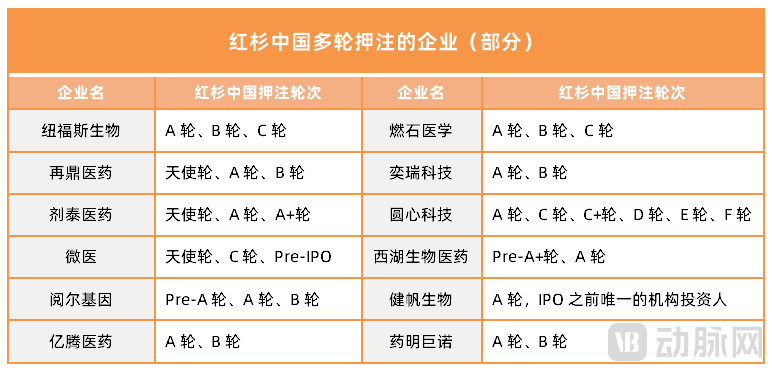
▲ Companies Backed by HongShan in Multiple Rounds (Partial List)|VCBeat Graphics
Of course, behind the long-term support, many projects have also brought considerable returns to HongShan. Taking Snibe as an example, after nine years of companionship from investment to listing, the project delivered a remarkable 70-fold return for HongShan.
In addition to continuously increasing investments, building an appropriate post-investment value-creation system is also a top priority for HongShan’s strategic layout.“50% of investment success lies in post-investment support,” said Neil Shen, Founding and Managing Partner of HongShan, adding that HongShan does more than just invest—it aims to assist portfolio companies at critical junctures.
To this end, HongShan has internally established six major modules, including startup empowerment, brand marketing and event support, human capital enablement, and technology empowerment. These modules cover all stages of corporate development, offering a suite of solutions that range from universal to deep, personalized services—spanning foundational areas such as human resources, marketing, and organizational management, to advanced functions like financing management, industry matchmaking, and digital transformation.
“Within HongShan China’s team of nearly 300 members, more than 200 are dedicated to providing services for portfolio companies,” said Yang Yunxia, Partner at HongShan China. She noted that this structure enables a clear and precise assessment of what resources a company requires and what resources HongShan can provide when investors engage with the company. “In many cases, we facilitate these resource connections for companies even before investment deals are closed. From this perspective, our value-added services also help us earn the trust of enterprises.”
Take a neuroscience project recently approached by HongShan as an example. After gaining a thorough understanding of and confidence in the project, HongShan found that its scientist founder, a core R&D member at a national-level research institution, was highly motivated to translate his years of scientific achievements into commercial products. However, he stated that he would not leave his position to start a business full-time, as scientific research remained his true passion and area of expertise. In response, HongShan took two key actions: First, it convened a cross-functional meeting involving its business development, legal, and human resources departments to discuss how to support the scientist in building the project from the ground up. Second, it leveraged its extensive network to identify a suitable CEO candidate for the scientist, thereby facilitating faster and more effective implementation of the project.
Furthermore, HongShan is also actively organizing numerous industry events and sharing sessions.For example, the “Yale–HongShan Leadership Center” program invites opinion leaders and renowned entrepreneurs from various industries both in China and abroad to bring portfolio companies greater knowledge, experience, and a broader perspective.
These initiatives often create opportunities for portfolio companies to collaborate with leading experts and major corporations. For instance, at the Healthcare Industry Summit hosted by HongShan in March 2021, an AI-driven drug discovery company backed by HongShan Seed Fund successfully connected with executives from multiple top-tier pharmaceutical firms, paving the way for future collaborations.
It is worth noting that in the current biopharmaceutical sector, cross-disciplinary collaboration has become a significant trend, and how to help portfolio companies improve resource matching has emerged as a critical industry pain point.HongShan has established a relatively comprehensive system, thanks to its multi-sector investments over the past decade.
Taking the currently booming AI-driven drug discovery sector as an example, HongShan possesses both TMT and healthcare “DNA,” with abundant ecosystem resources in both fields, thereby enabling efficient and precise resource matching for its portfolio companies.
“Whether it involves strategy formulation, team strengthening, patent layout, business development, or even navigating setbacks, investment institutions must take responsibility in post-investment services and truly become trusted, behind-the-scenes partners for entrepreneurs,” said Han Jiang, Managing Director at HongShan.
China's Medical Innovation Is Entering a New Period of Opportunity.
From a national perspective, innovation has been placed at the core of China’s modernization drive. Relevant data show that China’s basic research expenditure has long accounted for approximately 5% of total R&D investment. It surged by 22.5% in 2019, surpassing 6% for the first time, reached 8% in 2020, and is targeted to hit 15% by 2025. By then, China’s total R&D spending is also expected to exceed that of the United States.Against this backdrop, the industrialization of China’s cutting-edge technologies is poised to enter a window of opportunity for reaping dividends.
From this perspective, HongShan’s strategy of investing early, investing in small ventures, and focusing on technology aligns closely with national policy directions: China’s tech entrepreneurship sector, represented by healthcare, is still in its early stages and requires long-term, patient capital as well as critical post-investment support from institutional investors. Therefore, HongShan’s continuous shift toward early-stage investments has laid the foundation for providing sustained support to high-tech, high-growth companies, fostering mutual success for both parties.
So, in the face of the great opportunities of the era, what should innovative enterprises do to go further? In this regard, Han Jiang, Managing Director at HongShan, believes that four key points should be noted.
· First, the team must continuously attract top-tier talent. “We observe that companies capable of weathering economic cycles typically not only start with an excellent core team but also continually bring in highly capable individuals as they grow. This enables them to strengthen and deepen their business operations, achieving true sustainability in talent development.”
· Second, one must be able to endure solitude and prioritize pragmatism and efficiency. “This is because one of the inherent characteristics of the pharmaceutical industry is its long development cycles and high demand for specialization. Therefore, for startup teams, only by dedicating themselves wholeheartedly and focusing on the timely advancement of their products can they hope to face intense competition.”
· Third, a global perspective is essential. In the pharmaceutical industry, companies must pay close attention to technological advancements and the competitive landscape of products on a global scale. It is crucial to optimize or differentiate product positioning and design, as well as corporate strategic direction, to maximize competitiveness. All of this requires the team to possess a strong global vision.
“What entrepreneurs do is akin to trekking through uncharted territory; they must constantly feel their way forward, risking a misstep—either too deep or too shallow—that could land them in a pit.“Therefore, they generally face high levels of stress and sometimes experience loneliness, making it extremely important for entrepreneurs to maintain their childlike innocence and optimism,” said Yang Yunxia, Partner at HongShan.
It is reported that HongShan is currently focusing on and strategically investing in cutting-edge technological fields, including nucleic acid therapeutics, protein degraders, immunotherapy, bispecific/multispecific antibodies and antibody-drug conjugates (ADCs), third- and fourth-generation sequencers, brain science, heart valve technology, artificial hearts, and surgical robots.
Since entering the healthcare investment arena sixteen years ago, HongShan has accompanied a growing number of medical innovation enterprises into the forefront of this era’s wave through long-term capital commitment, comprehensive value-chain layout, and a strategy of deepening its presence in early-stage ventures.
Of course, investment is more like a marathon that requires ample endurance, with each half presenting unique challenges and every step forward bringing excitement. As the entrepreneur behind entrepreneurs, HongShan continues to press on in its relentless run.