

Linkong Network Launches Smart Healthcare Space 2.0 to Address Service Supply Challenges in Large Hospitals
Currently, the supply of medical resources in China remains characterized by unequal distribution and unbalanced regional development. This has led to overcrowding in large hospitals, causing significant distress for both doctors and patients.
Amid the convergence of technologies such as the internet and artificial intelligence, numerous enterprises are attempting to address the supply-demand imbalance facing the current healthcare system by improving the efficiency of medical services.
Founded in 2015, Liankong Network has been committed to the digital transformation of healthcare. In 2020, when internet hospitals gained broader societal recognition due to the pandemic, Liankong Network further upgraded hospitals’ online and offline service spaces, andIn 2021, the Smart Healthcare Space 1.0 solution was proposed, aiming to break through the physical boundaries of hospitals by upgrading both physical and virtual healthcare spaces, and integrating online and offline medical service resources to provide patients with a one-stop, convenient healthcare experience.
In the exploration of how to effectively supply medical services, Kuang Hua, founder and CEO of Liankong Network, also realized that the digital tools currently provided by most enterprises merely empower hospitals, failing to fundamentally address the imbalance in the current supply of medical services.

At the 2022 Liankong Medical New Product Launch and the 7th Anniversary Celebration of Liankong Network, Kuang Hua, who as usual wore a black shirt to attend,This report summarizes the achievements of Liankong Network’s Digital-Intelligent Medical Care Space 1.0 solution over the past year. In response to the persistent pain points in current healthcare resource supply, it proposes a new Digital-Intelligent Medical Care Space 2.0 solution, shifting the focus from enhancing spatial efficiency to improving service effectiveness.
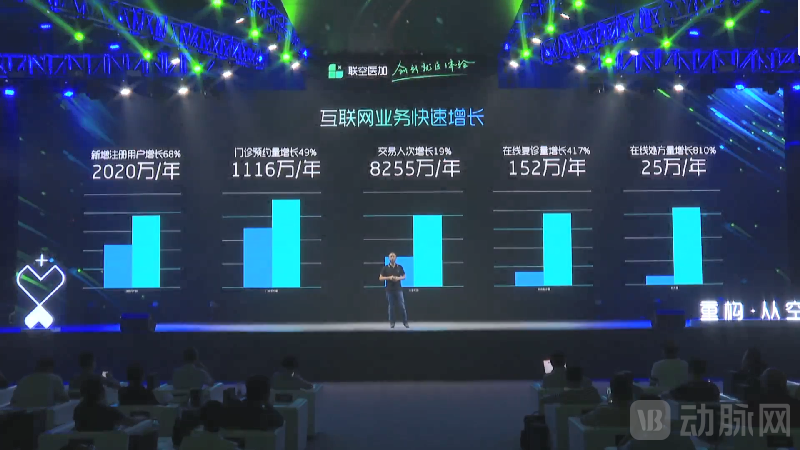
Added 137 tertiary hospitals to the service network, with rapid growth in online follow-up consultations and prescription volumes.
The achievements of Liankong Network are evident.
Amid the urgent epidemic situation in Shanghai this year, under the guidance of relevant competent authorities, Liankong Network has been rapidly advancing the construction of “Internet-based Epidemic Prevention and Control” systems for hospitals in Shanghai. During the May Day free clinic period,Nearly 47% of the technical support for online free clinic services in Shanghai is provided by Liankong Network.
In the development of internet hospitals, a quantifiable metric for reference isThe online follow-up consultation rate of Liankong Network has reached 14%.This data is critically important because “only when the online follow-up consultation rate reaches 10% of outpatient visits can we expect to bring about a transformation in the entire online and offline healthcare delivery system.”
In 2021, Liankong Network gradually expanded from Shanghai to the rest of China, establishing multiple new offices nationwide and increasing the number of hospitals it serves—last year,Liankong Network has added 137 new Grade A tertiary hospitals to its services across China.
In addition to the aforementioned outcomes,Liankong Network is also leading industry standards. For instance, as a drafting entity, it participated in the formulation of Beijing’s Internet Hospital standards, among other initiatives.
The pandemic has further accelerated the development of online internet healthcare, and Shanghai Liankong Network Technology Co., Ltd.’s online business is no exception. Of particular note is the growth in the volume of online follow-up consultations and online prescriptions. Although the current absolute figures are not substantial, the underlying fourfold and eightfold increases signal robust opportunities for future expansion.
Digital-Intelligent Medical Care Space 1.0: Focusing on Spatial Upgrades to Meet Existing Patient Demand
The achievement of the aforementioned results is attributed to the implementation of Liankong Network’s Digital-Intelligent Medical Care Space 1.0 Solution.
In 2021, Liankong Network upgraded its focus from developing unattended solutions to creating digital-intelligent healthcare spaces. This shift was driven by Liankong Network’s deep insights into the needs of the large tertiary hospitals it serves. Compared with primary care facilities, large tertiary hospitals handle a vast patient volume and face substantial unmet demands. Given the limited supply of medical resources, these hospitals are compelled to enhance service efficiency to drive high-quality business development. Liankong Network’s Digital-Intelligent Healthcare Space 1.0 solution integrates offline and online environments, helping hospitals improve both patient experience and physicians’ service efficiency.
Liankong Network’s Digital-Intelligent Healthcare Space 1.0 Solution primarily focuses on “liberating physical healthcare spaces” and “amplifying medical service capabilities.”
In terms of "freeing up physical medical care space," Liankong Network primarily reduces patients' occupancy of physical space by ensuring smooth medical care processes and decreasing the number of hospital visits required.For example, Liankong Network has fully liberated window and equipment space by digitizing and automating unattended offline medical visits. Furthermore, by sequencing hospital consultation workflows, Liankong Network achieves efficient service delivery through cloud-based triage; it helps patients reasonably schedule their examinations via cloud queuing. For adults accompanying elderly individuals or visiting infants, Liankong Network provides services such as cloud-based companionship for medical visits and cloud-based visitation. To address the complexity of hospitals’ physical layouts, Liankong Network offers immersive navigation services. Through rational digital planning, Liankong Network is realizing the liberation of offline physical medical spaces.
In terms of “expanding healthcare service capacity,” Liankong Network aims to address the issue of how to increase the supply of high-quality medical resources.First, by establishing an internet hospital, Liankong Network has expanded its online medical service capabilities, further enhancing the efficiency of healthcare delivery. Second, to address the mismatch between patient and physician needs previously caused by information asymmetry, Liankong Network has made the matching process more transparent through intelligent online appointment scheduling. Third, recognizing that hospitals often require cross-level, cross-disciplinary, and cross-regional resource coordination to resolve patient issues, Liankong Network facilitates the scheduling and utilization of medical resources through platforms such as “Ju Yi Ta” and “Yi Yi Tong.” To further reach patients, it also offers services tailored to enterprises, communities, nursing homes, and households through “Yi Qi Tong” and partnerships with smart TV providers. For physicians, Liankong Network helps them build personal operational hubs and open cloud consultation rooms, thereby further increasing their rates of online patient consultations.
From Space to Service: Digital-Intelligent Healthcare Space 2.0 Reconstructs the Medical Service Supply System
The Digital-Intelligent Healthcare Space 2.0 solution, launched today, can be viewed as an upgrade to the original 1.0 version. However, we prefer to regard it as a “reconstruction,” as mentioned by Liankong Network.
At the press conference, Kuang Hua, CEO of Liankong Network, stated, “Over the past year, through our communications with major hospitals, we have found that enhancing efficiency through spatial empowerment is only one of their needs. The ultimate goal of improving spatial efficiency is to enhance service benefits.” It is on this basis thatLiankong Network has rethought and adjusted its focus, shifting from an initial emphasis on medical spaces to a broader concern with the entire service process and the construction of service systems.
The newly launched Smart Healthcare Space 2.0 focuses on enhancing service effectiveness alongside spatial efficiency, planning for the entire patient care journey rather than single visits, and driving innovation in new medical organizations through organizational empowerment.
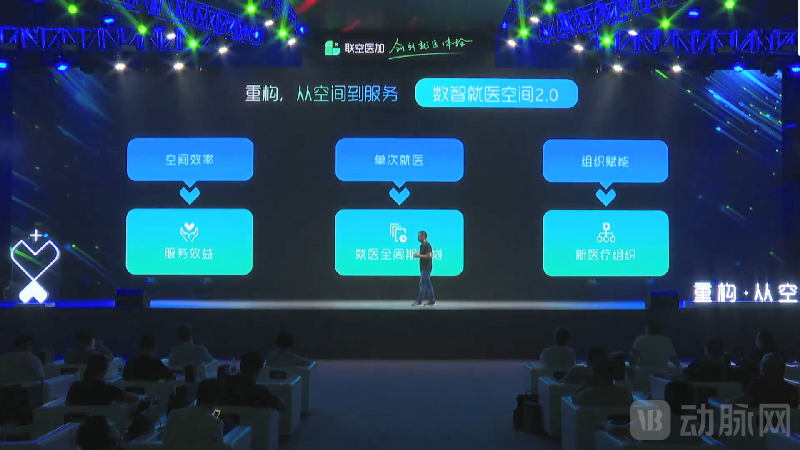
Kuang Hua further explained that enhancing service efficacy essentially means adopting a results-oriented approach to better serve patients from an outcome-based perspective. The shift toward planning for the patient’s entire healthcare lifecycle enables hospitals to develop new, efficient solutions tailored to patient needs by leveraging their own teams and available medical resources. New management methods and implementation pathways are expected to further improve patient adherence, thereby increasing the efficiency of medical resource utilization. Meanwhile, the expansion and transformation of virtual healthcare spaces driven by technological advances require healthcare institutions to undergo organizational innovation to better utilize new technologies and tools, thus further promoting efficiency gains. Kuang Hua cited day surgery as a typical example of restructuring medical organizations to achieve maximum service efficiency.
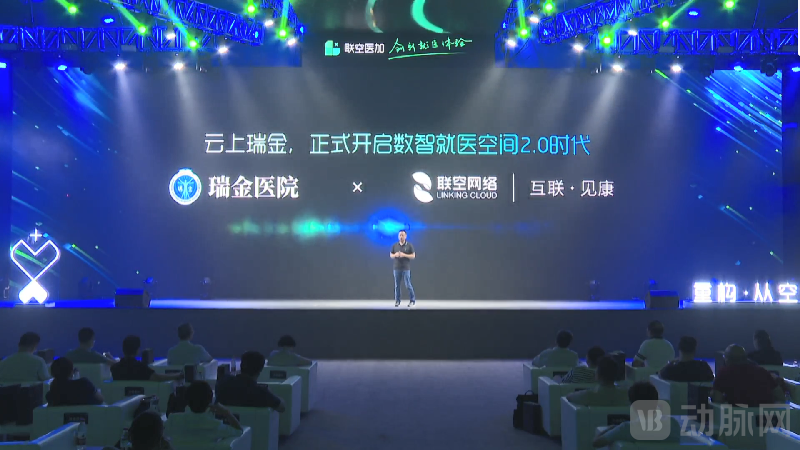
In reality, fundamental transformation cannot be achieved solely by companies such as Shanghai Liankong Network Technology Co., Ltd. To accomplish this goal and transform the mode of healthcare service delivery, hospitals and enterprises must work hand in hand.Among Liankong Network’s current partners, 17 Grade A tertiary hospitals ranked within the top 100 nationwide are engaging in deep collaboration to further implement cooperative initiatives. At the event, Liankong Network unveiled its ongoing exploration of the “Digital-Intelligent Healthcare Space 2.0” solution in partnership with Ruijin Hospital, Shanghai Jiao Tong University School of Medicine, and other medical institutions.
Middle-Platform Strategy + Operations-Driven: Liankong Network Accelerates the Digital Transformation of Healthcare
The evolution from Digital-Intelligent Healthcare Space 1.0 to the current launch of the Digital-Intelligent Healthcare Space 2.0 solution is attributable to the innovative business team behind Shanghai Liankong Network Technology Co., Ltd.
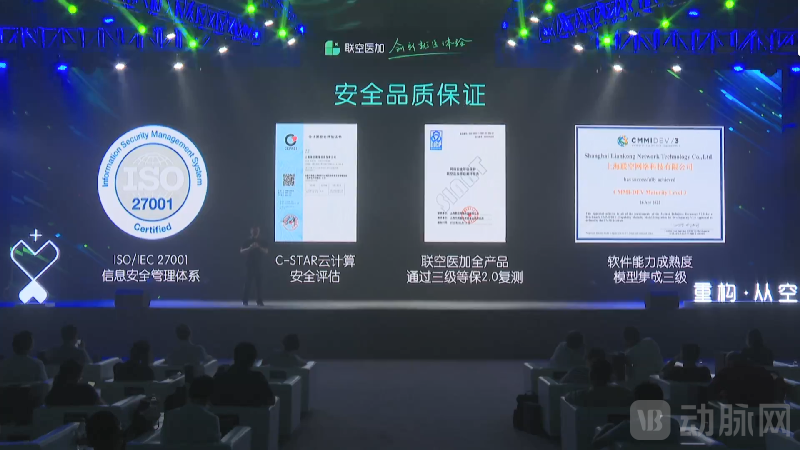
Overall, Liankong Network has launched its middle-platform strategy,We have made certain explorations across three dimensions: digital organization, security and quality assurance, and technology-driven capabilities. In terms of digital organization, we decompose overall strategic goals into actionable objectives, leveraging strong employee self-motivation, empowerment through digital business processes, and rapid execution to ensure the swift achievement of team targets. Currently, our product delivery efficiency has increased by 40%. Regarding security and quality assurance, Shanghai Liankong Network Technology Co., Ltd. has further validated its capabilities through relevant certifications. Last year, the company established a Digital Twin Laboratory team, building an open API technology platform based on technologies such as digital twins, AI, data analytics algorithms, and cloud-native architecture to empower front-end applications.
From a team perspective, the technical team ensures the smooth operation of business activities, while the operations team facilitates the achievement of hospital goals through effective implementation.In terms of operations, Liankong Network identifies opportunities for hospital expansion through data analysis and other methods, based on initial communications regarding hospital needs. By formulating strategies and executing them, Liankong Network ultimately helps hospitals improve operational efficiency. For instance, when a hospital set a target of achieving a 10% online follow-up consultation rate for its internet hospital, Liankong Network gained insights into a specific medication by analyzing the hospital’s data. Through product restructuring, process reengineering, and promotional operations, the target was successfully achieved. Another example is the rapid development and deployment of the “One-Day Follow-Up” product, which was created in direct response to the specific demands of relevant hospitals.
In fact, while providing business support, the operations team of Liankong Network is alsoFurther expand the ecosystem network, which in turn empowers related businesses.Currently, Liankong Network has established partnerships with over 30 channel partners, including internet platforms, insurance platforms, banks, and pharmaceutical supply platforms.
Leveraging the strength of Liankong Network, the company added 195 hospital partners in the past year, including 137 tertiary hospitals. Currently, Liankong Network collaborates with more than 500 hospitals. The presence of over 200 prospective partner hospitals further underscores Liankong Network’s capabilities. With the launch of Intelligent Healthcare Space 2.0, how will Liankong Network break through the challenges of medical resource supply and what outcomes will it deliver? Only time will tell.