

Ailekang Bridges Vital Signs Data with Real-World Applications, Enters Final Mile of Smart Health Monitoring Devices
In 2017, the General Office of the National Health and Family Planning Commission issued the "Key Tasks for the 13th Five-Year Plan on Healthy Aging," emphasizing: Based on network technology platforms such as the Internet, the Internet of Things, big data, and multimedia imaging technologies, and utilizing mobile information collection terminals such as wearable devices, dynamic monitoring of health status information among the elderly should be achieved to build an informatized, smart health and elderly care service system integrating "health management + elderly care services."
With the improvement of living standards and changes in lifestyle among the Chinese population, health has become a prominent social issue, and chronic disease management is no longer limited to the elderly. Focusing on pregnant women, the elderly, and high-risk occupational groups, many provinces and cities encourage the use of smart monitoring devices to collect vital signs data, thereby meeting diverse and personalized health management needs.The rapid development of internet and Internet of Things (IoT) technologies has helped make health monitoring one of the key directions in the growth of the health management industry. The accelerated construction of new infrastructure, represented by artificial intelligence, 5G, and data centers, is also bringing new development opportunities to the market for smart diagnostic equipment.
Currently, smart monitoring devices are widely active in the product sales market. However, due to a lack of data standardization and utilization, the vital signs data they collect have yet to demonstrate scientific, effective, and continuous applications in health management.How to Bridge the “Last Mile” of Health Management with Smart Monitoring Devices: Information Technology Service Providers for Internet Hospitals, Patient Management Service Providers, and High-Tech Solution Providers Have Been Actively Exploring and Practicing.
In 2019, Shaanxi Qinqin Anlan Pharmaceutical Management Co., Ltd. (hereinafter referred to as "Anlan Pharmaceutical")By adoptingRadar-Based Vital Signs Sensing TechnologyandAI and Big Data Technology, began to build itsMedical-Grade Vital Signs Monitoring Information Platform: Ailekang Smart IoT Vital Signs Monitoring Platform(hereinafter referred to as "Ailekang"). The platform assesses physiological status and identifies patients with abnormalities by analyzing trends in users’ vital sign data, thereby enabling interconnectivity among patients, medical devices, healthcare professionals, and medical institutions, and facilitating full-industry-chain operations within the healthcare ecosystem.The platform has been in use since the first half of 2021.。In the same year, Anlan Medicine simultaneously launched its Anlan Rehabilitation Hospital project.The hospital covers an area of 6,400 square meters, with a planned capacity of 96 beds. It offers departments in internal medicine, surgery, pediatrics, dermatology, traditional Chinese medicine, pain management, inspection and quarantine, and medical imaging. With a total investment of RMB 60 million, the facility is currently in the preparatory stage for its opening.
Behind Ailekang and Anlan Rehabilitation Hospital is a management team with extensive experience in nutrition, economics, supply chain, hospital management, corporate management, CRM, and other fields. ItsFounder and CEO, Zhang ZhengA long-term pioneer in the medical digitalization sector and a forerunner of China's medical CRM systems;Chairman He YuanboFormer CEO of Tencent Travel, and former Secretary-General of the Expert Advisory Committee of Tencent Travel;Chief Operating Officer Zhang TianxiongHolding a Bachelor’s degree in Food and Nutrition from the University of Reading, UK, and a Master’s degree in Marketing and Economics from the University of Technology Sydney, Australia, he/she has extensive experience in the development and market implementation of health management products. Meanwhile, the platform and hospitals also receive technical support from medical advisory teams comprising experts from the Fourth Military Medical University, Asker Biopharmaceutical Group, Taipei Medical University, Shaanxi University of Chinese Medicine, and other institutions.

CEO: Zhang Zheng; Chairman: He Yuanbo; COO: Zhang Tianxiong
Ailekang utilizes internationally leading 24GHz CW micro-radar scanning technology to independently develop non-contact smart respiratory and heart rate monitors, as well as wearable portable wristbands and watches.This technology enables non-contact detection within a range of 6 meters, capable of penetrating clothing or bedding.Its accuracy exceeds 99%., the radiation intensity complies with China's Class I national safety standards.
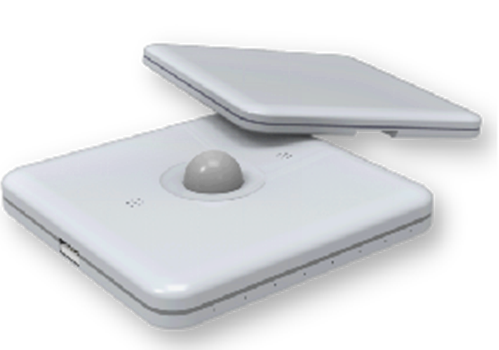
Ailekang: Non-Contact Smart Respiratory and Heart Rate Monitor
The intelligent monitoring platform equipped with this technology has already completed the development of vital signs detection and health reporting functionalities. The next phase will involve developing features such as environmental monitoring and routine body fluid analysis.The platform boasts three prominent advantages: monitoring efficiency, intelligent analysis, and data application.
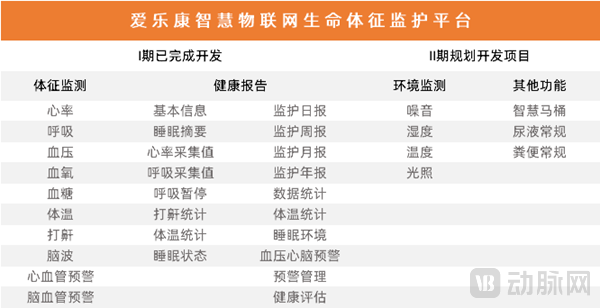
By leveraging advanced microwave radar scanning technology, the Ailekang platform enables efficient, non-wearable monitoring. The collected data can be transmitted directly to relevant cloud-based hospitals, service providers, or the family members of the individuals under care.Achieve Data Interoperability. Meanwhile, statistically evaluated vital signs data can support functions such as sleep quality assessment and nervous system balance analysis, and through AI learning, it can identify individuals with congenital hypertension or other potentially distinctive individual indicators.Customized Documentation and Assessment。
These AI-assessed data more accurately reflect the true and comprehensive physiological status of users, thereby demonstrating greater value in health management through data application.Therefore, Ailekang leverages its AI big data and machine learning capabilities to establish public safety models and personalized exclusive models, which can be applied by B-end users such as elderly care institutions and medical treatment facilities, thereby completing the data closed loop.
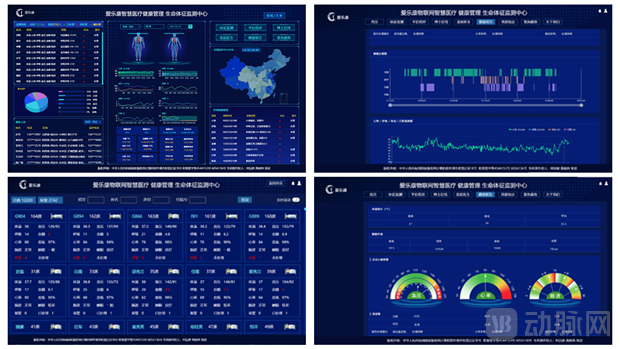
B-Side Ailekang Smart IoT Vital Signs Monitoring Platform
Ailekang Vital Signs System, Smart Cloud Hospital Management Application System, and Intelligent Respiratory and Heart Rate Monitor have all obtained national patents and relevant certifications. Compared to consumer-grade detection devices,Vital sign data collected by the Ailekang platform’s professional medical-grade detection devices are more comprehensive, more precise, and better suited for clinical diagnosis., the affiliated hospitals and licensed physicians at the backend can deliver data-driven in-depth medical services, enabling digital-intelligent monitoring, early warning, and interventional treatment.
Therefore, Ailekang’s approach to building user stickiness no longer relies merely on enhancing the fun or interactivity of its consumer-facing products; instead, it leverages users’ comprehensive understanding of their personal data trends, backed by the credibility of medical institutions and licensed physicians.By paying attention to their own vital sign data, users can enhance their awareness of self-health management, promptly recognize subtle improvements in their health under medical guidance, and thereby improve adherence to physicians’ recommendations. Meanwhile, physicians can leverage comprehensive and continuous vital sign data to develop more precise and appropriate diagnostic and treatment plans, thus improving the effectiveness of users’ health management. This creates a mutually reinforcing effect.
The Ailekang platform has achieved seamless application of consumer-side (C-end) data to business-side (B-end).By integrating the system with hospitals, we have achieved diversification of platform and hospital operations, maximized benefits for users, hospitals, and service providers, and scaled up the medical data industry.。
CEO Zhang Zheng Introduces in an Interview, Ailekang throughLeveraging product devices and system platforms as key enablers, and driven by B-side and C-side data operations, we engage in collaborations with G-side partners, including government agencies, community health organizations, transportation departments, bureaus for retired cadres, and public welfare organizations.. It not only enables more precise coverage of individuals engaged in high-intensity work, sports enthusiasts, and those who are frail or chronically ill, but also aligns with China’s “Beautiful Countryside” initiative to extend health management services to regions with scarce medical resources, thereby empowering basic healthcare provision for more left-behind elderly and children.
The Ailekang System has been included as a key project of the National Health Commission’s Research Institute. The initial operational cities include Xi’an in Shaanxi Province, Guiyang in Guizhou Province, Kunming in Yunnan Province, and Chongqing Municipality, collectively covering nearly 3,000 rehabilitation hospitals affiliated with the China Disabled Persons’ Federation.In addition to abundant government resources, Ailekang also values Guizhou’s capabilities in digital economy integration as a National Big Data Comprehensive Pilot Zone. By leveraging the system established in Guizhou, Ailekang aims to secure more opportunities for government collaboration, algorithmic innovation, applicable scenarios, and user openness. After solidifying its presence in these four major cities, Ailekang will use them as hubs to continuously expand into surrounding regions, adapting strategies to local conditions and maintaining flexibility to fully realize the platform’s potential and professionalism.
Regarding the upgrade of platform application scenarios, Ailekang will continue to develop more “vital signs data + scenario” applications.COO Zhang Tianxiong revealed in an interview, Ailekang hopes toProvide users with smart toilets capable of urine and stool analysis to capture a broader range of personal health data; offer in-vehicle vital sign monitoring systems for drivers, enabling transportation companies to manage driver fatigue and cardiac conditions; and provide electronic prescriptions and online pharmacy services to reduce geographical and cost barriers to healthcare access., etc.
Leveraging existing technologies and resources, along with future development strategies and planning, Ai Le Kang projects that its system will acquire 50,000 users within the next 1.5 years. Meanwhile, it will establish 3–5 monitoring centers in second- to fourth-tier cities, 10 township-level monitoring stations, and 20 village-level monitoring points.Conservatively estimated, the cumulative revenue generated by all business operations exceeds RMB 330 million.。

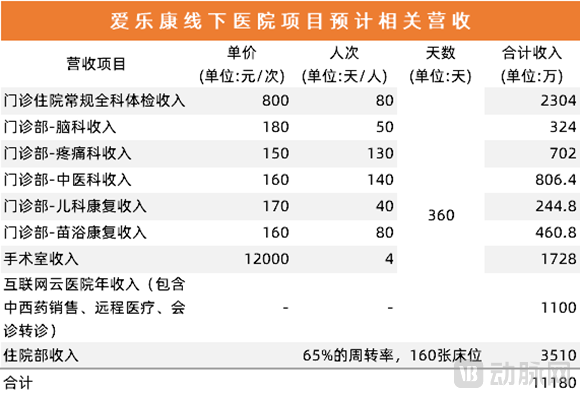
The online platform project is projected to generate RMB 221.68 million in revenue, while the offline hospital project is expected to bring in RMB 111.80 million. The combined first-year operational revenue is anticipated to reach RMB 333.48 million, with a gross profit of approximately RMB 100.044 million. Of this, the online platform project accounts for 66.5%, and the offline hospital project comprises 33.5%.
Ailekang has begun preparing for its tens-of-millions-level financing round, aiming to raise RMB 26 million in exchange for 15–20% equity.75% of the financing proceeds are allocated to marketing and promotion of the system platform and hardware production, while 25% are designated for the pre-opening preparations and initial operations of Anlan Hospital.
As the assessment targets of “Healthy China 2030” quietly approach, and as the concept of “early detection, early intervention, and early treatment” becomes increasingly ingrained in public behavior and health awareness, health management companies that have been building their capabilities for years may be poised to encounter unprecedented opportunities and challenges. “Over the past decade, health management has garnered growing attention in China,”CEO Zhang Zheng stated“We believe there is a huge demand for health management in China, and the market holds significant potential. Our original intention in building the Ailekang platform was to enter this blue-ocean industry and provide tangible benefits to the Chinese people and those around us.”
May Ailekang create greater social value by integrating biometric data with application scenarios, offering insights and experience to more enterprises in the health management sector.