

Diagnostic Robotics Files for IPO After Raising $69M to Transform Healthcare with AI-Driven Cost Control and Pandemic Prediction Tools

StageOne Ventures
Venture Capital Firms

Berkshire Partners
Startup Venture Capitalists

Technion Seed
Early-Stage Venture Capital Firms

Mayo Clinic Ventures
Venture Capital Firm
Diagnostic Robotics is a technology-driven innovative company founded in Tel Aviv, the heart of Israel’s “Silicon Wadi.” It leverages predictive analytics within artificial intelligence to provide healthcare solutions for medical institutions and organizations. Its system seamlessly integrates into key touchpoints along the patient journey, reducing administrative burdens, lowering care costs, and enhancing patient experience.
In July 2022, Diagnostic Robotics secured $45 million in Series B financing. The round was led by the prominent investment firm Stage One, with participation from Mayo Clinic, Technion, existing investors, strategic angel investor Bradley Bloom, and the founder of Berkshire Partners. With this latest round, Diagnostic Robotics has raised a total of $69 million in just five years since its inception.
“AI + Healthcare” is no longer a novelty in the medical industry. What is it about diagnostic robotics that captures investors’ attention? Let’s take a closer look.
Co-Founded by Three Technion Alumni
As a startup driven by artificial intelligence technology, all three leaders of Diagnostic Robotics possess relevant technical backgrounds and are graduates of the Technion – Israel Institute of Technology.
Kira Radinsky, 35, already boasts an impressive résumé. The Israeli computer scientist, born in Ukraine, graduated from the Technion – Israel Institute of Technology at the age of 17 and subsequently joined eBay. In 2012, she co-founded Sales Predict, a company that developed an algorithm leveraging online consumer behavior data to make predictions. The company was acquired by eBay in 2016 for $40 million.
Although the project was acquired just four years after its founding, it provided Radinsky with extensive entrepreneurial experience. 2016 proved to be a highly rewarding year for Radinsky, as the seeds he had sown began to sprout.
That year, Radinsky developed an algorithm that predicted potential disasters by analyzing news and social media, successfully forecasting the first cholera outbreak in Cuba in 50 years, which made global headlines. This marked Radinsky’s first foray into the field of medical prediction. In the same year, Radinsky became Chief Scientist and Director of Data Science at eBay Israel, serving a three-year term.
Since 2017, Radinsky has pursued her career in medical prediction, co-founding Diagnostic Robotics alongside CEO Jonathan Amir and Director of Engineering, Professor Moshe Shoham. After concluding her tenure at eBay in 2019, she shifted her professional focus to Diagnostic Robotics while also serving as a Visiting Professor at the Technion – Israel Institute of Technology.
Compared to Kira Radinsky, who boasts a rich professional resume, her co-founder Jonathan Amir is equally impressive. A former member of Israel’s national Olympic team, Amir earned bachelor’s degrees in Electrical, Electronics, and Communications Engineering as well as in Economics from the Technion – Israel Institute of Technology. He then embarked on a path of serial entrepreneurship and currently serves as the Founder and CEO of Diagnostic Robotics.
Another pivotal founder, Professor Moshe Shoham, serves as Chief Scientist at Diagnostic Robotics. He also co-founded ForSight Robotics, a company specializing in robotic ophthalmic surgery, and served as Chief Technology Officer at Mazor Robotics, a medical device company focused on robotic spine surgery.
Professor Moshe Shoham is also a Professor in the Department of Mechanical Engineering at the Technion – Israel Institute of Technology, Director of its Robotics Laboratory, and a member of the U.S. National Academy of Engineering.
In contrast to the digital and economic backgrounds of the other two co-founders, Professor Shoham has been consistently engaged in medical robotics, as “precision and tasks beyond human capability are critically important in healthcare.” Professor Shoham believes that, in terms of the development of the robotics field, “to borrow Bill Gates’ words, robotics is now where computers were in 1980.”
”
Reduce Care Costs, Alleviate Physician Burden, and Improve Patient Experience
As global population aging and the strain on medical resources continue to intensify, governments and institutions worldwide are actively seeking solutions. Diagnostic Robotics offers a “prescription” that leverages artificial intelligence to specifically address challenges related to healthcare budgets and workforce shortages.
Diagnostic Robotics has established three targeted objectives:
1) Reduce care costs. By leveraging AI-driven healthcare plans, ensure that patients are matched with the most suitable and cost-effective healthcare service providers to meet their individual needs.
2) Alleviate physician burden. Reduce physician fatigue by eliminating unnecessary steps, and leverage artificial intelligence to provide risk prediction capabilities for clinical decision-making.
3) Enhance patient experience. By navigating, categorizing, and intuitively evaluating various digital health products, we aim to provide patients with a better healthcare experience, enabling them to access high-quality medical services while reducing their expenses.
Personalized Customization of Healthcare Plans for Individuals, Suppliers, Employers, and Governments
For modern healthcare systems, the sheer complexity and intricacy of medical care often leave patients overwhelmed. For those lacking medical knowledge, accurately assessing their own symptoms and determining the appropriate care setting can be particularly challenging. By learning from millions of electronic health records and patient data from approximately 27 million individuals, Diagnostic Robotics has developed an algorithm that seamlessly integrates into every step of the patient journey, helping users assess their symptoms and rule out potential health risk factors.
Diagnostic Robotics has developed tailored solutions for four distinct groups: individuals, vendors, employers, and governments.
For individuals, diagnostic robotics reimagines how care is accessed by leveraging powerful AI algorithms for automated prediction and clinical assessment, delivering optimal healthcare solutions and improving the return on investment in population health.
This is primarily achieved through two approaches: first, by matching individuals with the interventions most likely to benefit them, thereby optimizing the return on health investments. In other words, Diagnostic Robotics collaborates with commercial payers, Medicare, and Medicaid plans to develop personalized care pathways for individuals, focusing on intervention types that are likely to be effective for them, such as care management, disease management, remote monitoring, and digital intervention programs. Through effective digital health management, it is projected that each individual can save $160 annually, resulting in a 16-fold increase in the return on investment for population health.
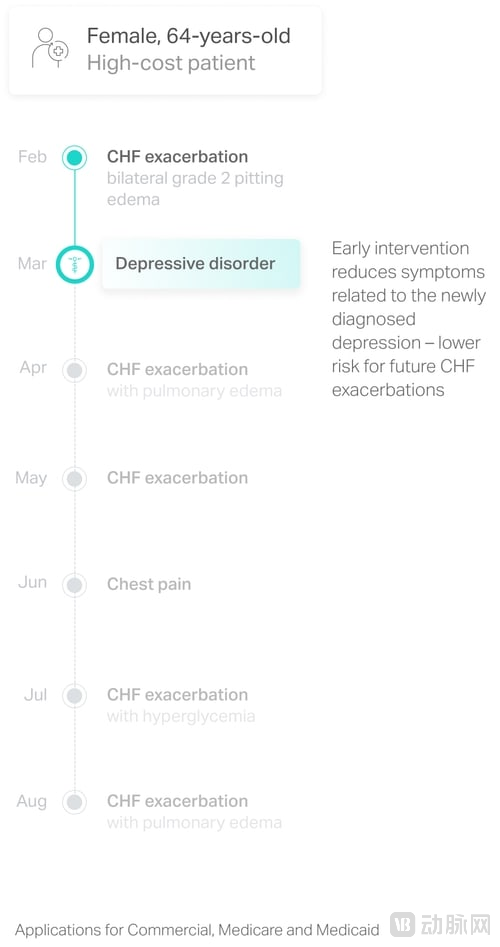
Personalized Plan Development Source: Diagnostic Robotics Official Website
Second, AI-based clinical assessment. By leveraging the Diagnostic Robotics AI triage platform to predict the most likely disease trajectories for routine patients, they are directed to the most appropriate care settings, thereby improving the patient triage experience.
According to actuaries for major payers, reducing unnecessary specialist consultations through this approach could save the healthcare system $170 million to $250 million annually. More importantly, lowering the rate of avoidable emergency department visits would free up even more medical resources for the healthcare system.
For suppliers, Diagnostic Robotics uses AI-based automated clinical assessments to guide patients, making visits more efficient while monitoring the risk of medical deterioration, and enabling relevant care organizations and insurance providers to proactively manage patient health.
This clinical triage system reduces the workload of specialist physicians by automating medical summaries and streamlining unnecessary routine processes. By partnering with companies such as Epic, Cerner, Athena Health, and Allscripts, it integrates data collection into existing Electronic Medical Records (EMR) systems and pre-populates visit notes using draft graph annotations generated from patient responses, thereby alleviating the administrative burden on clinicians.
Following system evaluation in a clinical trial setting, physicians’ routine workload was reduced by 30%, and patient satisfaction reached 93%.
For employers, Diagnostic Robotics delivers AI-powered digital care experiences that integrate clinical guidance into existing benefits ecosystems, thereby enhancing corporate healthcare benefits.
By implementing employee health management programs, companies can enhance employee loyalty, reduce absenteeism, and lower avoidable healthcare expenditures. To this end, Diagnostic Robotics has developed a platform that provides employees with affordable, top-tier care along with 24/7 consultation and visit services.
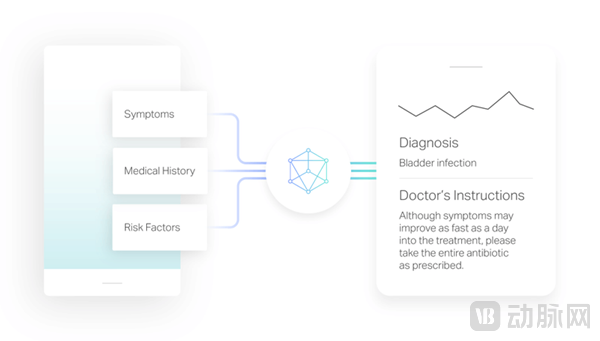
Diagnostic Robotics Intelligent Platform Provides Employees with Medical Consultation Services. Source: Diagnostic Robotics Official Website
For governments, diagnostic robotics leverages artificial intelligence and machine learning to assist local authorities in population health management, predicting clinical deterioration, and managing chronic diseases. This approach helps protect healthcare workers, reduce case numbers, and mitigate medication management risks, such as those associated with opioid addiction.
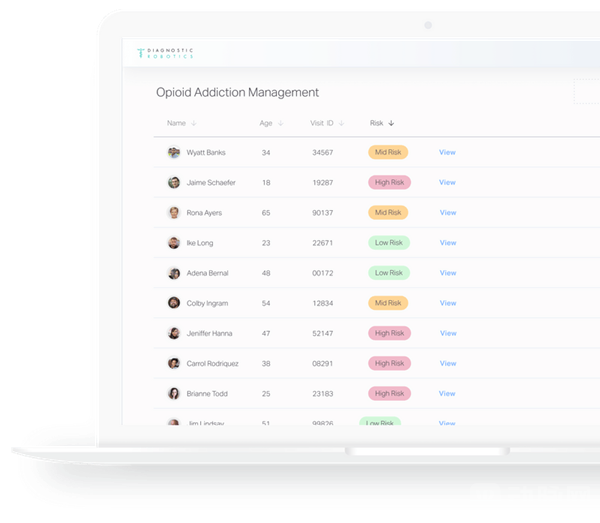
Medication Management Platform Source: Diagnostic Robotics Official Website
Using Artificial Intelligence to Predict the Fight Against COVID-19
Just as Kira Radinsky’s algorithm successfully predicted the cholera crisis in Cuba in 2016, Diagnostic Robotics is also forecasting the trajectory of the COVID-19 pandemic amid its ongoing resurgence.
In 2020, the artificial intelligence system developed by Diagnostic Robotics was adopted by the Israeli Ministry of Health as a fundamental tool for public engagement. Radinsky believes that with this tool, the Ministry of Health can determine where epidemic control policies should be tightened or relaxed. Currently, Israel’s epidemic-related policies for various towns and cities are all based on the judgments of this AI platform.
Collecting symptom information from the public anonymously to understand virus transmission in a region can not only assist in policy implementation but also predict the number of cases in each city in Israel over the next four to seven days.
“By leveraging publicly available information and intercity travel distances to determine the sphere of urban influence, we can predict the spread of cases,” said Radinsky. Currently, Diagnostic Robotics has helped map the epicenters of COVID-19 and chart the transmission of the novel coronavirus in Israel.
In addition, Diagnostic Robotics has launched a global remote assessment and monitoring tool for COVID-19, which helps individuals determine appropriate courses of action, minimizes direct contact with healthcare teams, and reduces the burden on health systems.
This tool can customize its features according to local epidemic prevention and control policies, provide information in multiple languages worldwide, and offer a web-based, installation-free solution.
The COVID-19 remote assessment and monitoring tool primarily offers the following three functions:
1) Conduct remote screening for patients. Reduce the burden of inquiries and consultations regarding suspected cases across various regions by providing personalized guidance based on patient assessments, directing individuals to appropriate healthcare facilities or advising them to remain at home.
2) Remote triage for symptomatic patients. Diagnostic Robotics provides a dashboard that enables remote monitoring and risk assessment of COVID-19 patients by highlighting changes in clinical symptoms.
3) Population-level monitoring of COVID-19 transmission trends. This platform enables dynamic surveillance of local epidemic changes, providing insights into viral transmission patterns and hotspots to ensure health systems are adequately prepared for response.
Currently, Diagnostic Robotics has become a member of the COVID-19 Healthcare Coalition. Building on its COVID-19 remote assessment and monitoring tools, Diagnostic Robotics has partnered with the State of Rhode Island to launch a web-based self-checker accessible to both mobile and desktop users, enabling individuals to perform self-assessments of symptoms and receive personalized risk evaluations.
It is evident that diagnostic robotics has proven highly effective in monitoring the spread of the novel coronavirus. Estimates indicate that its accuracy in predicting the next wave of outbreaks ranges from 72% to 78%.
For a long time, viruses have posed a major challenge to human health. The highly connected and mobile lifestyles of modern individuals in a risk society have made viral transmission more rampant and difficult to control. Traditional healthcare systems struggle to meet individual medical expectations, making modern digital healthcare solutions, such as diagnostic robotics, the optimal approach.
Collaboration with the Blue Cross Blue Shield Association
In Israel, in addition to its partnership with the Israeli Ministry of Health, Diagnostic Robotics has launched pilot projects with most major health organizations, including Meuhedet and Leumi Health Funds, as well as hospitals such as Soroka Medical Center in Beersheva, Rambam Health Care Campus in Haifa, and the Mayo Clinic in the United States. The company has also implemented a care management program with Blue Cross & Blue Shield of Rhode Island (BCBSRI), leveraging artificial intelligence to manage members with chronic diseases.
As of 2022, Diagnostic Robotics saw a significant increase in revenue, doubling its year-on-year growth compared to 2020. To date, Diagnostic Robotics has developed predictive models focused on creating robust intelligent healthcare solutions for medical institutions, organizations, and individuals. The company plans to continue designing additional models and platforms as part of its product offerings.
As stated by an investment representative from Stage One Ventures, Diagnostic Robotics “has expanded and transformed the way health plans address risk, while helping to drive significant improvements in member care management.”