Dingke Medical's Dissolve® AV Scored Drug-Coated Balloon Showcased in Prof. Guo Yong's Team Case Series on Ultrasound-Guided PTA for Dialysis Access Stenosis

DK Medtech
Vascular Interventional Balloon Product Developer
Stenosis of autologous or artificial arteriovenous fistula (AVF/AVG) is the most common complication in hemodialysis patients. Percutaneous transluminal angioplasty (PTA) has become the primary method for maintaining dialysis access. However, the blunt and irregular tearing of the intima and part of the media by traditional balloons during PTA can cause excessive damage to the endothelial vessels, leading to intense proliferation of vascular smooth muscle cells and macrophages, which quickly results in restenosis.
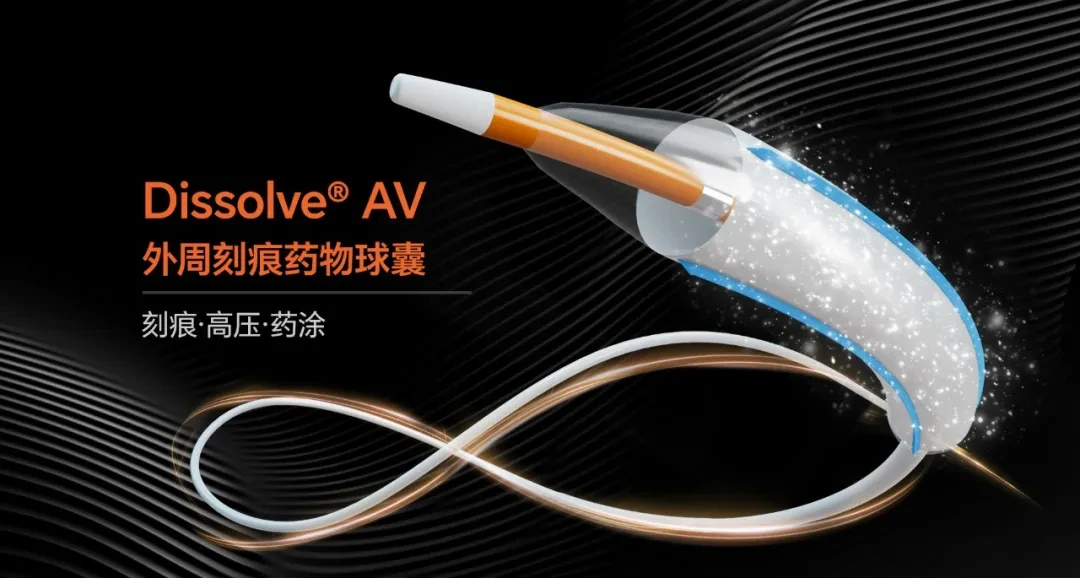
In recent years, there have been continuous explorations and clinical studies internationally on drug-coated balloons and other devices used for PTA treatment of dialysis access. DK Medtech has developed Dissolve.®AV Scoring Drug-Coated Balloon, integrating "scoring", "high-pressure", and "drug-coating" three features in one, is the world's first third-generation drug-coated balloon:
Directional Scoring: Uniform and regular tearing of the intima to reduce damage from blunt splitting.
High Burst Pressure: For high-resistance lesions, improving technical success rate.
Paclitaxel Coating: Effectively Inhibits Excessive Proliferation of Smooth Muscle Cells.
DK Medtech Special Release[Professor Guo Yong's Team: Ultrasound-Guided Balloon Angioplasty for Stenosis of Fistula Vessels] Case Presentation, demonstrating the detailed operation of each case and the clinical application of advanced equipment and instruments. From the formulation of treatment strategies for different cases, standardized intraoperative procedures and technical applications, complication prevention, perioperative management, etc., it aims to promote the standardization of diagnosis and treatment of vascular stenosis and occlusive diseases, strengthen technical exchanges and experience sharing among doctors, with the hope of providing new ideas and methods for future diagnosis and treatment, benefiting more clinical patients.
Patient Information
Basic Information:Female, 72 years old.
Chief Complaint:During dialysis, the blood flow rate of the internal fistula was less than 200 ml/min for 1 day.
History of Present Illness:Started regular dialysis in June 2022, and by March 2026, the internal fistula will have undergone balloon dilation six times, averaging once every 7.5 months.
Past Medical History:Hypertension, Cerebral Infarction, Chronic Renal Failure.
Physical Examination:The pulsation, thrill, and murmur of the internal fistula are all weak.
Preoperative Diagnosis:
1. Stenosis of arteriovenous fistula;
2. Chronic Kidney Disease Stage 5;
3. Renal bone disease;
4. Secondary hyperparathyroidism;
5. Renal Anemia;
6. Hypertensive nephropathy;
7. Hypertension Grade 3 (Very High Risk);
8. Sequelae of cerebral infarction.
Previous interventional treatment
Time | Main Treatment Process |
August 17, 2022 | Balloon Dilatation of the Stenotic Cephalic Vein in the Forearm Arteriovenous Fistula, with Balloon Diameters of 4mm and 6mm |
June 8, 2023 | Balloon dilation performed for stenosis of the cephalic vein in a forearm arteriovenous fistula, with balloon diameters of 5mm and 7mm. |
March 14, 2024 | Balloon dilation performed for stenosis of the cephalic vein in a forearm arteriovenous fistula, with balloon diameters of 5mm and 7mm. |
March 11, 2025 | Balloon dilation performed for stenosis of the cephalic vein in a forearm arteriovenous fistula, with balloon diameters of 5mm and 7mm. |
July 17, 2025 | Stenosis of the cephalic vein in the forearm, mural thrombus with proliferative material, balloon angioplasty performed with balloon diameters of 5mm and 7mm. |
March 5, 2026 | Stenosis of the cephalic vein in the forearm, with significant wall hyperplasia and thickening accompanied by minimal calcification.Balloon dilation was performed with balloon diameters of 6mm and 7mm.And use DK Medtech scored drug balloon, diameter 7mm, length 4cm. |
Preoperative Analysis
Preoperative Analysis:The patient has undergone balloon dilation multiple times due to stenosis of the internal fistula vessels, with significant thickening and hyperplasia of the vessel walls. The expected duration of this dilation is less than 6 months, so a drug-coated scoring balloon was used.
Surgical Goal:
Main Objectives:After the internal fistula dilation, it can maintain a hemodialysis blood flow rate of 250-280ml/min for more than 6 months;
Secondary Objective:After the expansion of the internal fistula, it can maintain a blood flow rate of 250-280ml/min for more than 12 months during hemodialysis.
Surgical Strategy/Plan:
The dilated portion of the cephalic vein in the upper-middle segment of the forearm was used as the access;
Select a 7F vascular sheath and a 0.35 single superconductor wire;
To be given6mm and 7mm DK Medtech Peripheral BalloonsUse after pre-dilation7mm DK Medtech Dissolve®AV Notch Drug-Coated BalloonDilate the stenosis.
Surgical Procedure
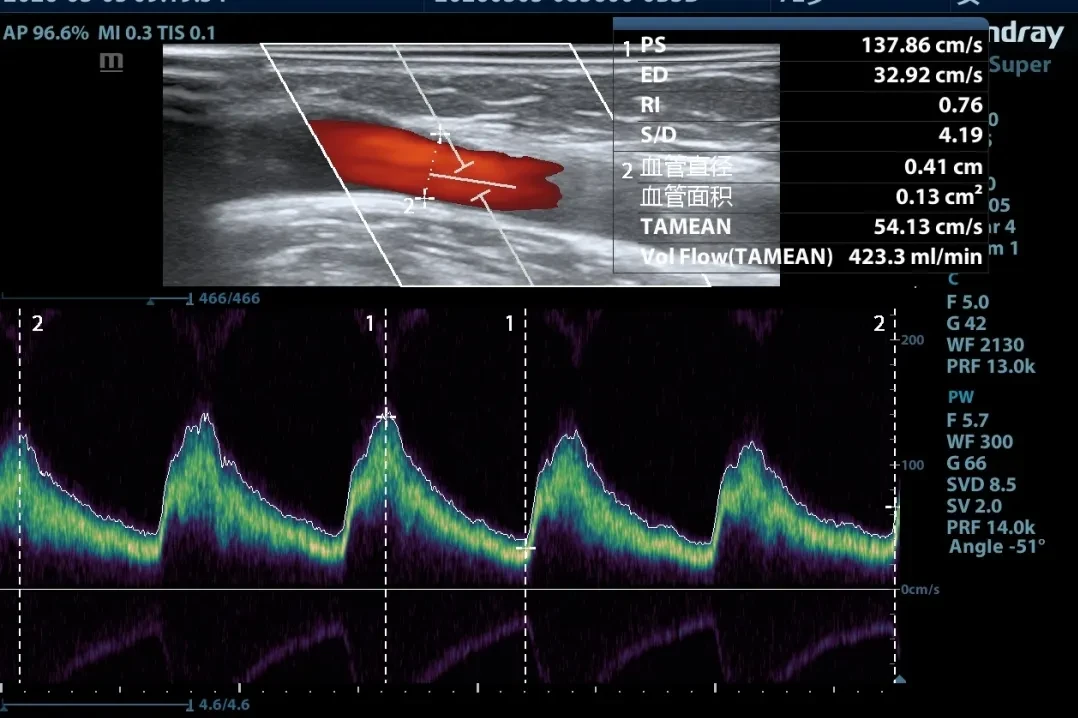
Preoperative brachial artery RI 0.76, blood flow 423 ml/min.
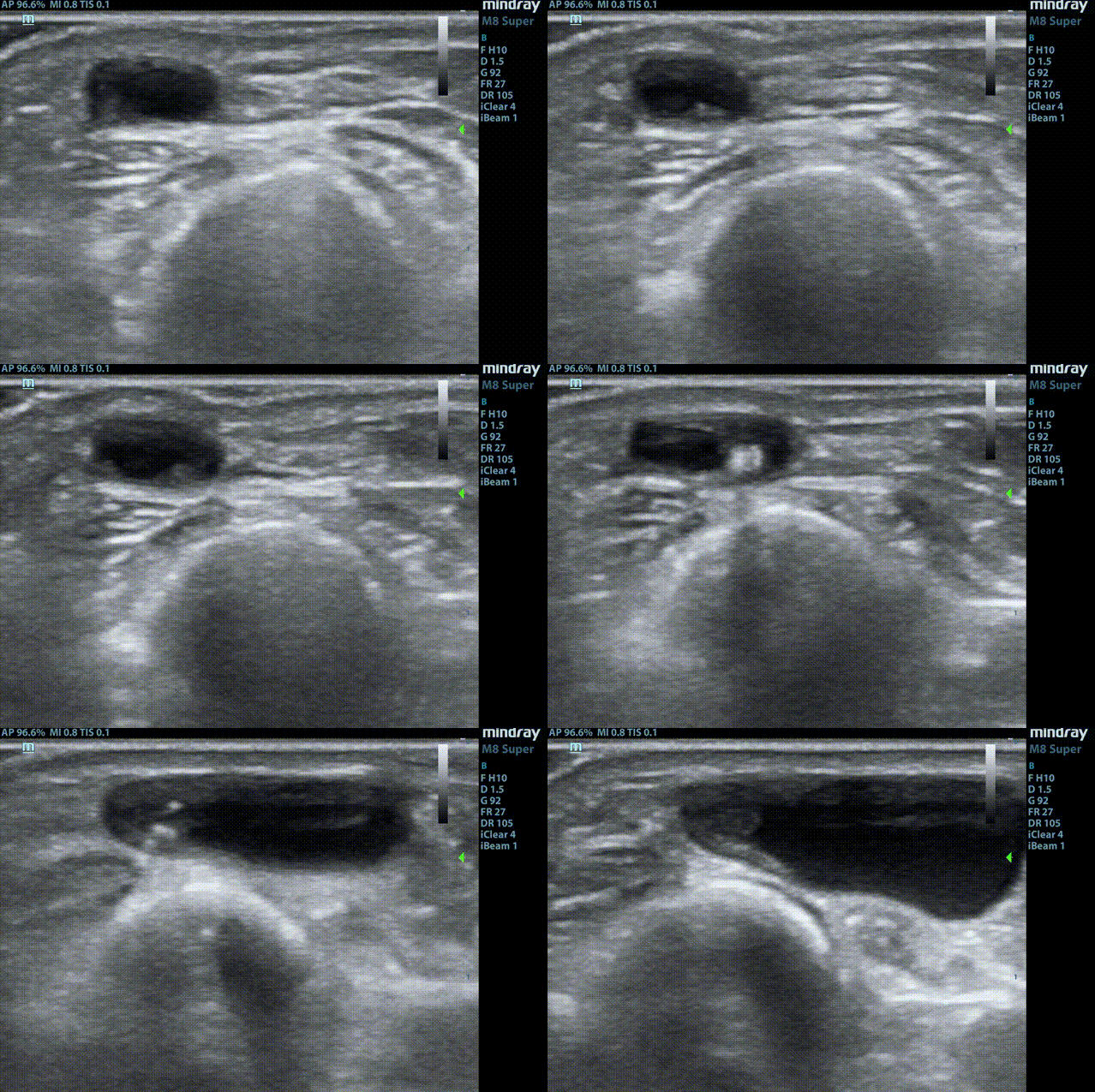
Ultrasound showed thickened vascular walls, with luminal stenosis of 1.5-2.4 mm accompanied by slight calcification.
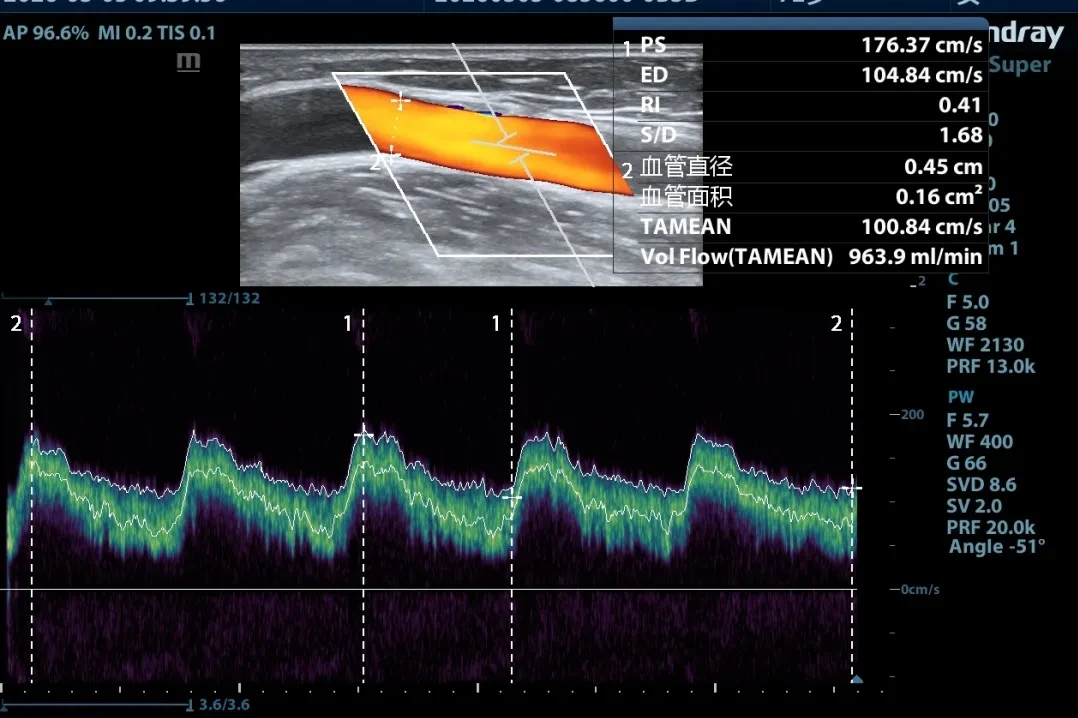
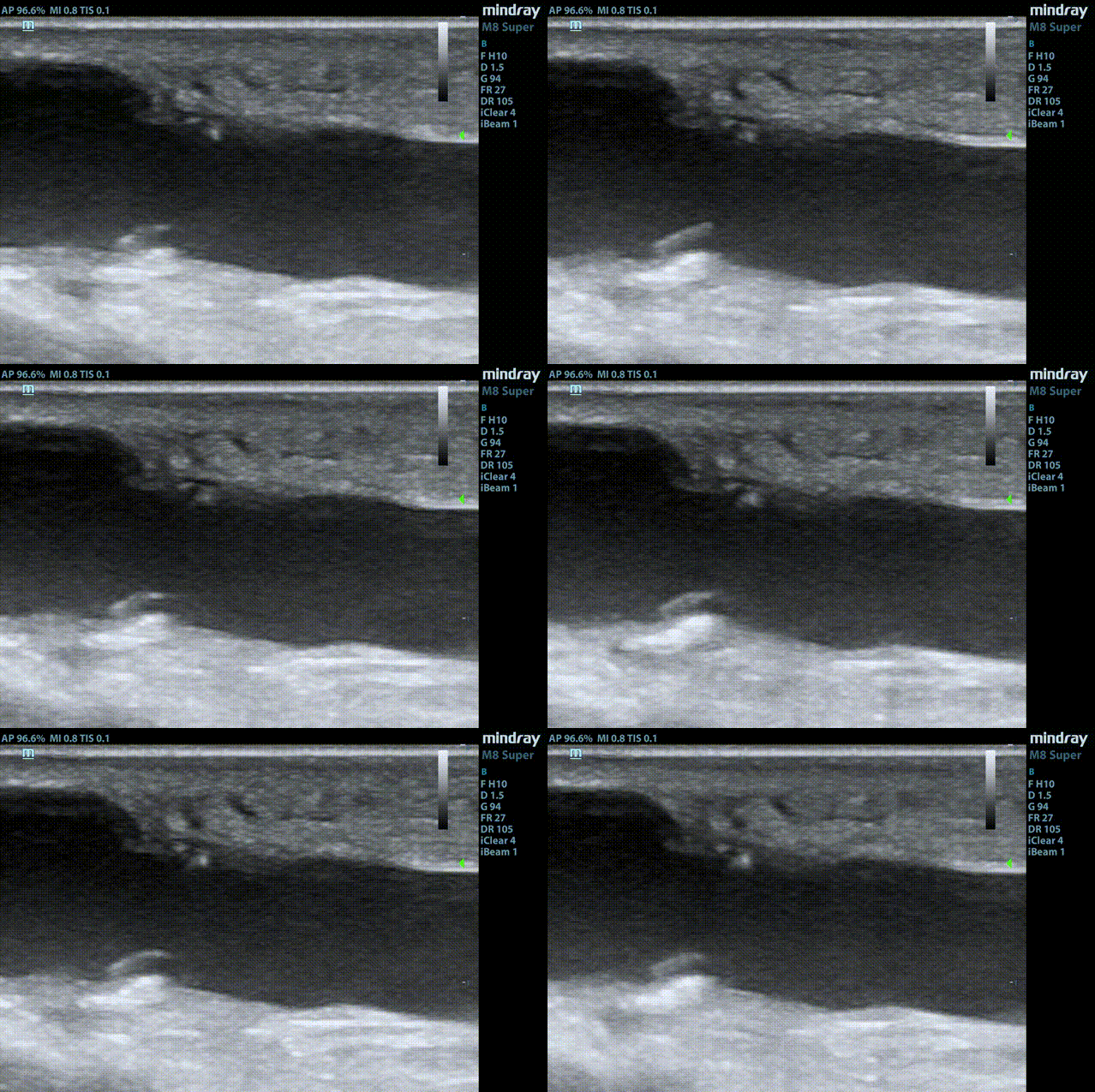
In Sequence6mm/7mmBalloonAfter satisfactory lumen gain following pre-dilation of the stenotic segment, use7mm DK MedtechDissolve® AV Scoring BalloonDilation for 3 minutes allowed for adequate drug penetration. The lumen morphology was satisfactory, with a postoperative brachial artery RI of 0.41 and blood flow of 961 ml/min.
▲Click to Play Video
DK Medtech Dissolve® AV Scoring Drug-Coated Balloon Usage TIPS:Insert the balloon into the sheath along the guidewire tail within the protective sleeve (do not remove the protective sleeve in advance). Push the balloon through the protective sleeve into the sheath, then retract the protective sleeve to the catheter inflation port to minimize the loss of the drug coating while passing through the sheath.
Follow-up
Discharge Status:At discharge, palpation of the internal fistula showed good pulsation and thrill, and auscultation revealed good vascular bruit. No bleeding or hematoma was observed at the access puncture site.
Case Summary
Case Characteristics:Elderly female, with a history of hypertension for many years, on dialysis for 4 years, and has experienced recurrent stenosis of the cephalic vein in the arteriovenous fistula 6 times.
Preoperative Assessment Key Points:The wall of the cephalic vein above the fistula showed significant hyperplasia and thickening, with an irregular lumen narrowing from 1.5mm to 2.4mm.
Surgical Strategy/Technical Key Points:
Enough space should be reserved for the placement of the balloon at the access site and the lesion location;
After pre-dilation with a 6/7mm balloon, dilation was performed using a scored drug-coated balloon.
Features/Usage Tips of the Device:
The protective sleeve of the scored drug balloon cannot be removed and must be guided along the guidewire to the vascular sheath opening, then directly enter the vascular sheath before retracting the protective sleeve.
Maintain the effective working pressure and burst pressure for 3 minutes after the drug-coated scoring balloon dilation.

Expert Introduction

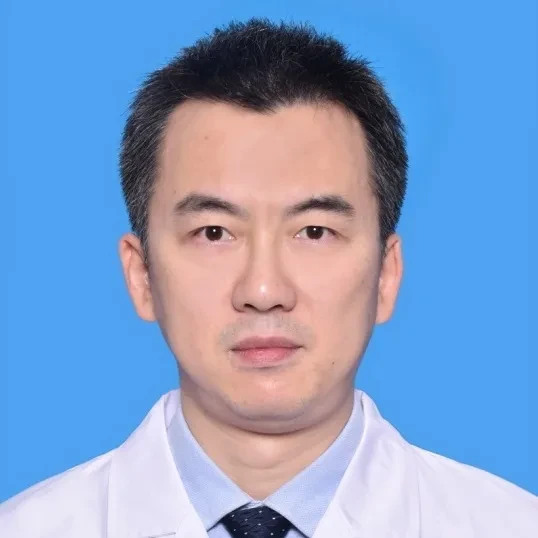
Professor Guo Yong
Department Director & Surgeon of This Case
Deputy Chief Physician of the Nephrology Department, Ninth People's Hospital of Chongqing Municipality;Member of the Second Blood Purification Professional Committee of the Chongqing Health Promotion and Health Education Association;Member of the Vascular Access Group, Nephrology Professional Committee, Chongqing Association of Integrated Traditional Chinese and Western Medicine;Member of the Blood Purification Special Committee of the Chongqing Hospital Association;Member of the Interventional Nephrology Group, 8th Committee, Chongqing Medical Association's Nephrology Branch;Member of the Vascular Access Group of the Second Committee of the Chongqing Medical Association's Blood Purification Branch.

Department Introduction

The Medical Ward (Nephrology) of the Urological Diseases Center at Chongqing No. 9 People's Hospital is the leading nephrology department in terms of specialized technology, largest scale, and most advanced equipment in northern Chongqing. The department has been recognized as a specialty unit for blood purification treatment in Chongqing, a key regional medical discipline in Chongqing, an advanced ward for high-quality nursing services in Chongqing, and the Quality Control Center for Urological Diseases in Beibei District. A total of six medical staff in the department hold positions such as vice chairman, standing committee member, and committee member in national, provincial, and municipal academic organizations.。
In the past five years, published over 20 articles in SCI and national core journals, obtained 7 provincial and municipal scientific research projects, and 2 national patents related to hemodialysis; received awards such as the Chongqing Municipal Health Commission Science and Technology Achievement Award, Chongqing Science and Technology Achievement Award, and the China Hospital Association Hospital Science and Technology Innovation Award. At the same time, the department has produced several advanced individuals at the national, municipal, and district levels.。
Specialty Technical Features: Routinely perform hemodialysis, hemofiltration, hemoperfusion, hemodiafiltration, and hemodialysis-perfusion techniques to treat acute and chronic renal failure as well as various drug and toxin poisonings; continuous blood purification for treating critical illnesses such as acute renal failure, severe pancreatitis, heart failure, respiratory failure, and multiple organ failure; peritoneal dialysis. Annually conduct 45,000 cases of blood purification treatments and carry out renal biopsy to determine the pathological classification of kidney diseases. Deep vein temporary and semi-permanent catheterization, arteriovenous anastomosis, autologous transplantation fistula formation, and artificial vascular grafting have established lifelines for hemodialysis patients. The maintenance and management of complex vascular access for dialysis patients, such as balloon angioplasty for stenosis of fistula vessels and thrombectomy of fistulas, are leading in the northern region of Chongqing. Annually perform over 400 minimally invasive interventional surgeries combined with open surgeries. Psychological intervention for dialysis patients is at the forefront among kidney departments in major hospitals across Chongqing.