

iLabService SciOne Files for IPO: Microsoft and YC-Backed Pioneer in Smart Lab Digitalization
In 2022, the field of smart laboratories gained significant traction.
In recent years, against the backdrop of "Healthy China" becoming a national strategy, smart laboratories at the upstream end of the industry have experienced rapid development, driven by the surge in demand for drug research and development, biological experiments, and testing, as well as the continuous iteration and advancement of digital technologies.
Data offers a glimpse into the growth potential of the smart laboratory market. Domestic investment institutions estimate that China’s pharmaceutical industry output reached RMB 4 trillion in 2020, with R&D expenditures accounting for approximately 20%. Spending on data management, laboratory standardization, and R&D intelligentization constitutes 10% of total R&D support, indicating that the smart laboratory market size could reach hundreds of billions of yuan.
According to VCBeat, China’s smart laboratory sector emerged in 2016 and began gaining prominence after 2021, drawing significant attention from market participants, investors, and other industry stakeholders. Innovators with deep industry expertise have also stepped into the spotlight. iLabService (Shipu Technology), which has grown alongside China’s smart laboratory industry, is a representative example.
iLabService (Shipu Technology), established in May 2016, specializes in integrating Internet of Things (IoT) and artificial intelligence (AI) technologies to provide digital operational product platforms and comprehensive solutions for highly specialized industries such as laboratories and health supervision.
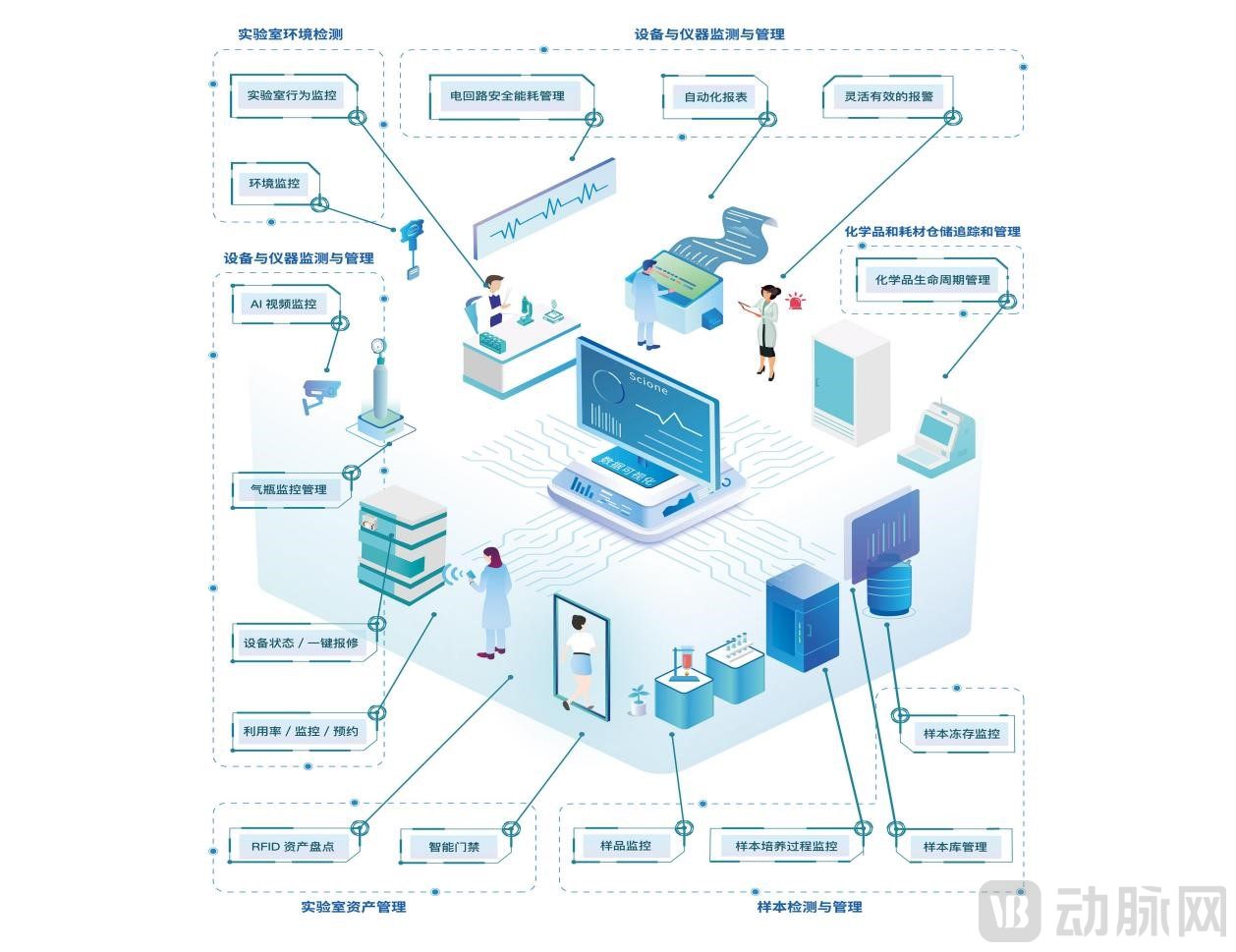
iLabService by Shipu Technology has grown alongside China’s smart laboratory industry.
Around 2016, international giants such as Agilent, Thermo Fisher Scientific, Roche, and Abbott began to establish their presence in China’s smart laboratory market. Benefiting from a favorable economic environment, these overseas leaders leveraged decades or even centuries of industrial expertise to develop integrated enterprise service offerings for laboratories. As they expanded globally, China’s vast and untapped blue-ocean market became a highly coveted opportunity.
It was also during the implementation of Thermo Fisher Scientific’s laboratory service model in China that Li Kang, who was responsible for the company’s enterprise services business, recognized the potential of China’s smart laboratory market.
This keen market responsiveness is closely tied to his background. After earning his bachelor’s degree from Zhejiang University and completing his master’s in robotics at Nanyang Technological University in Singapore, he worked at Agilent Technologies, where he was responsible for the research and development of cutting-edge laboratory equipment. During this period, Li Kang engaged in in-depth exchanges with scientists, learning how to identify their true needs to better support them.
In 2014, Li Kang joined Thermo Fisher Scientific and assumed responsibility for the overall management of the laboratory. Over the next two years, he identified a major pain point in laboratory operational management: excessive labor intensity. Leveraging his technical background, he quickly recognized that technological solutions could be employed to reduce the workload of laboratory personnel and enhance operational efficiency.
However, the laboratory is a highly interdisciplinary environment that requires not only professionals with expertise in life sciences, biotechnology and medicine, data science, and software and hardware engineering, but also research personnel who truly understand scientists’ workflows and are familiar with laboratory settings.
Building on this, Li Kang reached out to Wang Jing, a colleague at Thermo Fisher Scientific’s Boston headquarters who was responsible for establishing asset management and corporate services for the Asia-Pacific region. He then brought in Xu Ge, who had previously led Microsoft’s Windows networking team in the United States, with the aim of transforming traditional laboratories using cutting-edge, state-of-the-art technologies. Shortly thereafter, CPO Zhang Liyang, whose prior roles included Senior Manager at Amazon Web Services (AWS) in the U.S., Global Chief Application Architect at HSBC, and Consulting Director at KPMG in the U.S., also joined the team.
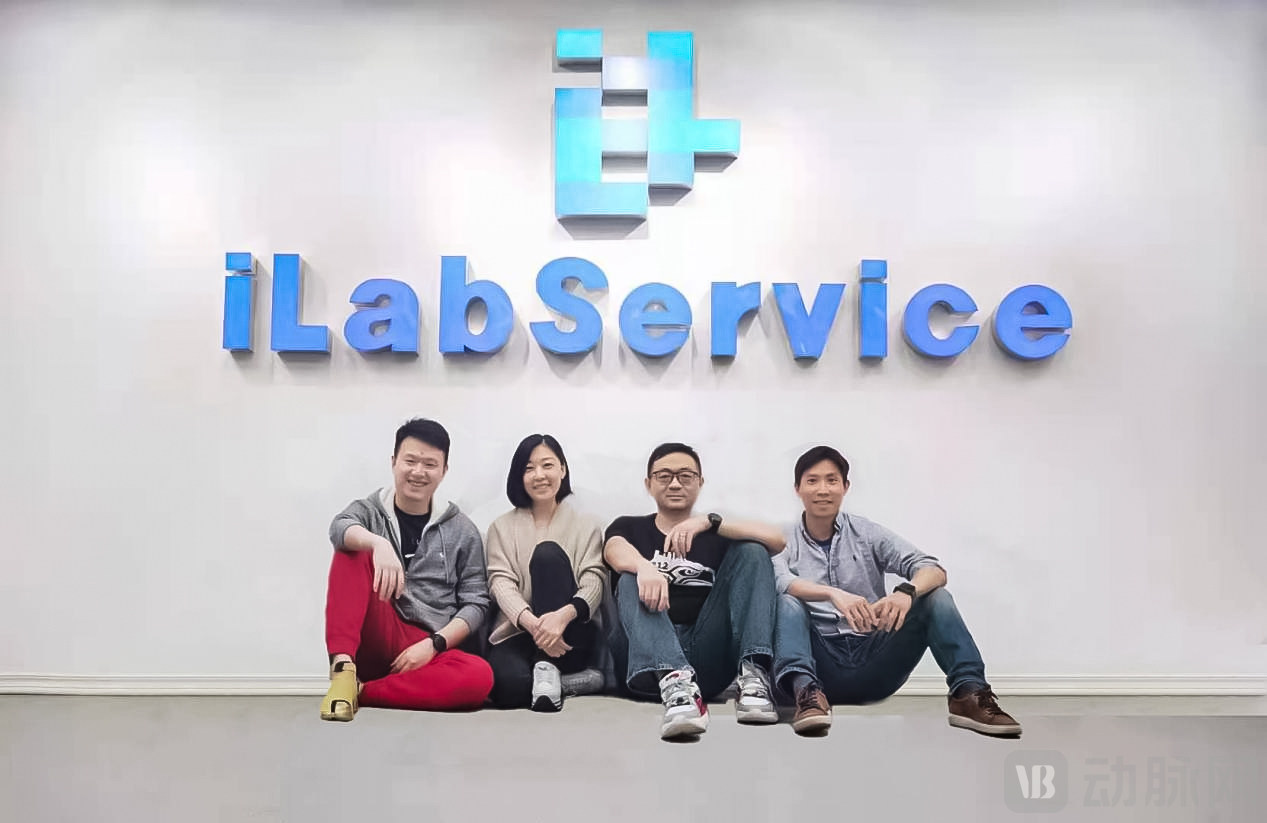
(From left: Li Kang, Wang Jing, Xu Ge, Zhang Liyang)
In 2016, iLabService Shipu Technology was established in New Jersey, USA. To better align with the domestic market, iLabService Shipu Technology returned to China and established its presence in Shanghai. By the end of that year, it became one of the first batch of enterprises to settle in the Shanghai Zhangjiang Kung Fu International Incubator.
Between 2016 and 2018, China’s smart laboratory market remained largely untapped. From an investment perspective, fewer than 10 public financing deals occurred in the smart laboratory sector from its emergence in 2016 through 2018, indicating that its market potential had yet to be recognized. Innovators in this field were also groping in the dark for a way forward.
Fortunately, after years of quiet perseverance, iLabService has seen a turning point. Since 2018, the company has received positive feedback in terms of product development, market performance, and capital investment.
The company’s product portfolio encompasses environmental monitoring, equipment management, sample tracking, and laboratory operational workflows, with annual business growth nearing 300%. Over the past four years, it has completed five rounds of financing. The seed round was funded through Y Combinator’s Demo Day in the United States. TSVC (Qinggu Capital), the lead investor in the angel round, and Mingshi Capital and Kaitai Capital, the lead investors in the Pre-A round, have also participated in multiple subsequent rounds. In 2021, Matrix Partners China joined the investor roster of iLabService (Shipu Technology).
Currently, iLabService by Shipu Technology has cumulatively served hundreds of clients, widely distributed across industries such as life sciences, testing and inspection, government agencies, healthcare, and academic research.
The influence of China’s past investments in foundational laboratory infrastructure is rippling through the industry, gradually permeating the sector and unlocking the potential of iLabService (Shipu Technology) and the broader smart laboratory market.
iLabService by Shipu Technology enters the field of laboratory digitalization and intelligence from the perspective of refined operational management.
In laboratory settings, operational management encompasses environmental safety management, compliance management, financial management, personnel management, equipment maintenance, consumables inventory management, and equipment utilization rates. The application of digital technologies can optimize the generation of operational data and the regulatory monitoring of laboratory data. For instance, by leveraging technologies such as the Internet of Things (IoT) and artificial intelligence (AI), laboratories can implement digital management of sample storage conditions, equipment operating status, ambient temperature and humidity levels, and inventory status of consumables and reagents, thereby replacing manual operations and management within the laboratory.
After years of refinement, iLabService has developed a “SaaS + Hardware” product matrix covering all laboratory scenarios. It has built SciOne, an integrated one-stop digital and intelligent laboratory service platform combining software and hardware. SciOne comprises five core functional modules—MonitorGuard, InstrumentGuard, InventoryGuard, SampleGuard, and DataHub—along with the OpsGuard backend support system. Centered on the five elements of “Man, Machine, Material, Method, and Environment” in quality management theory, the platform enables automatic collection and analysis of critical data, provides intelligent anomaly alerts, and comprehensively enhances operational efficiency.
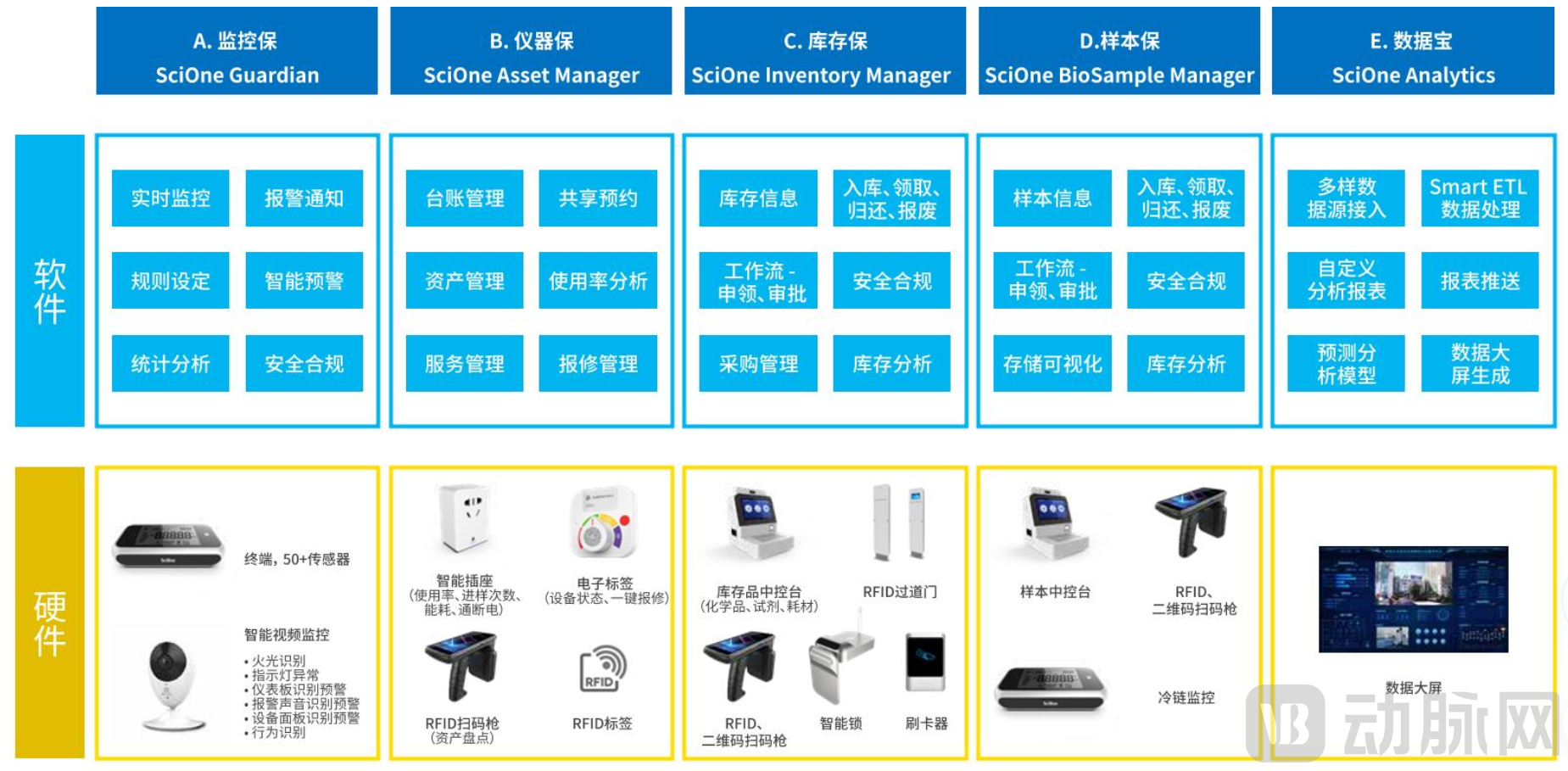
iLabService by Shipu Technology: “SciOne” deconstructs laboratory scenario-based solutions into independent functional modules, enabling on-demand invocation and flexible combination to address diverse needs.Through its modular product design, iLabService by Shipu Technology can rapidly respond to customer needs and deliver standardized solutions. Currently, iLabService by Shipu Technology boasts a repurchase rate of over 90%, with a Net Dollar Retention (NDR) rate reaching 115%.
iLabService by Shipu Technology employs two sales models: one is “SaaS + hardware” with annual subscription fees; the other involves an outright purchase of hardware, with software provided via a SaaS model, primarily targeting laboratories that require fixed-asset procurement and asset budget approvals. This flexible sales approach enables customers to address their urgent needs with minimal entry barriers, thereby accelerating product market adoption.
It is worth noting that in terms of customer acquisition, iLabService (Shipu Technology) prioritizes customer needs above all else. The company starts by addressing users’ specific, small-scale needs, then expands into broader scenarios. Following a key-account strategy, it initially serves industry-leading enterprises to establish standardized service systems, and subsequently extends its reach to mid-tier customers.
Li Kang stated that iLabService by Shipu Technology will exert efforts across three dimensions—products, business models, and industry collaborations—to deliver more valuable products and solutions to customers; adopt more innovative sales and service models to enable a broader customer base to achieve digital and intelligent laboratory transformation with lower barriers; and identify more partners to drive the development of the digital and intelligent laboratory industry.
How to Measure the Value of a Startup? Li Kang Posed This Question to Michael Siebel, CEO of Y Combinator, a Seed-Stage Investor.
“Look at what changes this company has brought to the world, whether it can disrupt an industry, and if it can impact millions of people, then go for it.” Perhaps, even before receiving this answer, Li Kang already had his own conclusion in mind.