

Zhongkangtong Empowers Innovative Pharma Marketing Transformation with Patient-Centric Care Model, Serving Nearly 200,000 Patients in Three Years
The Marketing Transformation of Pharmaceutical Companies Has Become a Trend.
On the one hand, under the influence of centralized procurement policies, pharmaceutical companies' profit margins are being further compressed.In February this year, Chen Jinfu, Deputy Director of the National Healthcare Security Administration, pointed out that “the average price reduction for the first six batches of centralized drug procurement was 53%.”Pharmaceutical companies urgently need to adjust their cost structures to achieve profitability.
On the other hand, the review and approval of innovative drugs, represented by biopharmaceuticals, continue to be accelerated.In the past, marketing strategies of traditional chemical pharmaceutical companies often placed greater emphasis on influencing physicians’ prescribing behaviors through medical representatives, thereby affecting patient decisions. However, in the era of biopharmaceuticals and high-priced orphan drugs,Patients’ demand for related medical services continues to rise, creating an urgent need for pharmaceutical companies to provide comprehensive service offerings.
Amid the backdrop of centralized procurement policies and accelerated review and approval processes for innovative drugs, pharmaceutical companies are embarking on a new round of marketing model transformation. In this process, digital transformation may be just one of the trends. Innovative drug companies are beginning to shift towards patient-centric marketing models, but there have been both successes and failures in this transition.
The transition from the physician-centric pathway to the patient-centric pathway has not been smooth.
In the process of transforming pharmaceutical marketing models, a clear evolution from physician-centric pathways to patient-centric pathways is evident.
Traditional pharmaceutical marketing has often relied on cultivating a team of medical representatives to influence physicians’ perceptions, who in turn affect patients’ medication behaviors through prescriptions. However, with the emergence of patient management programs and the rise of online pharmaceutical e-commerce platforms, a patient-centric pathway distinct from the traditional physician-focused channel has emerged. Consequently, physicians are no longer the sole conduit for pharmaceutical marketing; the patient pathway has become a new strategic option for pharmaceutical companies.
Pharmaceutical companies are increasingly pivoting toward a “patient-centric” approach. This strategy not only adjusts the traditional physician-focused engagement model but also marks a return to the essence of pharmaceutical services—ultimately, any pharmaceutical company seeking success must prioritize serving patients as its core objective.
Wang Mengliang, General Manager of Zhongkangtong, mentioned that,Marketing models are often determined by business strategies and product characteristics. China has now entered the era of biopharmaceuticals. Compared with chemical drugs, the distinct feature of biologics is that most of them are inconvenient for patients to purchase., requiring continuous injections, regular follow-up visits, and monitoring; adverse reactions are relatively complex, and the patient burden is substantial... Both the diagnostic and treatment journey and the decision-making mechanisms differ from those in the past.In the era of biopharmaceuticals, companies that are “closer to patients” (better able to meet patient needs) are more likely to achieve success.
Looking back at the past two decades, most patient management initiatives launched by pharmaceutical companies have been short-lived. This is largely because these programs were often patient-named rather than patient-centric, with the ultimate beneficiaries frequently being parties other than the patients themselves. Meanwhile, patient management programs offered by third-party pharmaceutical e-commerce platforms have often struggled to address personalized needs due to a lack of offline service support.
Based on industry insights,Wang Mengliang attributed the failure of the patient management project to the following reasons:
1) The patient did not truly benefit from it.Most patient management platforms are designed solely to acquire patients through traffic redirection. However, as independent individuals, patients do not actually belong to any company, platform, or hospital. When they fail to perceive tangible benefits, patients often vote with their feet, ultimately leading to poor retention rates for platforms that cannot deliver value to them.
2) The enterprise is unable to achieve market control.In multi-stakeholder collaborative patient management programs, the complexity of participating parties often forces pharmaceutical companies to deviate from core commercial principles, ultimately resulting in their inability to maintain control over these initiatives and reducing them to mere superficial endeavors.
3) Resistance from hospital physicians.Physicians are often constrained by their affiliated hospitals. Some hospitals, concerned about potential negative repercussions from physicians’ participation in out-of-hospital patient management programs, may restrict or prohibit such involvement. Meanwhile, physicians themselves are frequently unable to fully commit to these initiatives due to various factors. Patient management programs require physicians to perform additional work for intervention; however, their limited ability to engage effectively creates an intractable situation.
4) Underestimating the complexity of healthcare.The disease treatment process is inherently complex, and patient needs are often diverse, with the core challenges remaining difficulty in accessing care and high treatment costs. It is therefore extremely difficult to standardize the fulfillment of patient needs. Most patient management programs lack the resilience for sustained, in-depth engagement, ultimately resulting in a drift without clear direction.
These factors have led to the failure of some patient management programs. Given this, is there a successful patient-centered marketing strategy?
Refining the "Patient Care" Program to Truly Practice Patient-Centeredness
Zhongkangtong, founded in 2020, is dedicated to marketing innovation for novel and specialty drugs, ultimately enabling the implementation of a patient-centric pharmaceutical marketing model.
This strategic entry point is closely tied to the professional backgrounds of Wang Mengliang and his team.Wang Mengliang, General Manager of Zhongkangtong, has previously held positions at IQVIA, Nestlé Health Science (NHS), and Pfizer, among others, with a long-standing focus on marketing innovation and corporate management in the pharmaceutical industry. Deputy General Manager Cao Chengzhi brings over 20 years of experience in informatization and more than 10 years of expertise in digital transformation within the pharmaceutical sector.
Wang Mengliang, who managed hypertension patient programs for Novartis and Pfizer more than two decades ago, is well aware of the mindset and challenges pharmaceutical companies faced in such patient management initiatives.He noted that for prescription drug manufacturers, genuinely transforming to engage in the out-of-hospital market and launch patient management programs is akin to venturing into unfamiliar waters. They face complex and cumbersome operational challenges, along with various risks. Pharmaceutical companies often lack the top-level design, internal mechanisms, and commercial partners necessary to ensure the effective execution and implementation of such initiatives.
After launching his venture, he discovered through continuous practice and years of accumulation that “patient care” is an effective solution for the market launch of new drugs by innovative pharmaceutical companies. “‘Patient care’ refers to personalized patient services, encompassing more than just patient education or follow-up.” For innovative biologics, “patient care” covers five major service areas and can be integrated with digital management tools—
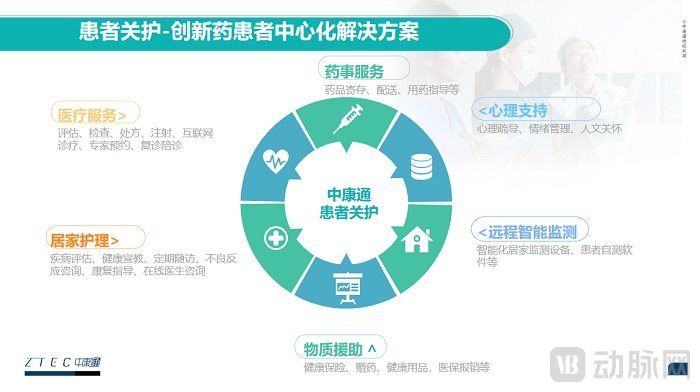
Medical Care, including common follow-up visits and prescriptions, online internet-based consultations, in-hospital patient accompaniment services, as well as out-of-hospital injection and rehabilitation services, among others;
Psychological Care, patients not only face physical suffering but may also experience anxiety caused by the disease; Zhongkangtong provides them with services including humanistic care and psychological counseling;
Pharmaceutical Care Services, including pharmaceutical distribution and medication guidance;
Home Care, the management of a large number of patients with chronic diseases is typically carried out outside hospital settings; Zhongkangtong can provide services including interpretation of remote monitoring reports, regular disease assessments, health registration, and health education;
Financial Care,Patients often encounter insurance claim procedures during their medical care. To better alleviate their financial burden, Zhongkangtong also provides assistance with social insurance claims, commercial insurance support, and charitable aid applications.
Personalized services not only enhance patients’ sense of gain but also naturally improve their adherence and encourage the enrollment of new patients. Wang Mengliang added,Unlike traditional patient education, patient management, and patient assistance programs offered by pharmaceutical companies, “Patient Care” strikes a balance among patient benefit, physician support, and pharmaceutical company profitability.The failure of previous patient management programs can be partly attributed to divergent stakeholder interests and a lack of process design and continuous optimization to ensure multi-party participation and mutual benefit.
During the implementation of patient management programs, challenges may arise, including ensuring compliance and safety, integrating with hospital patient systems without altering existing patient project management workflows, achieving digital efficiency gains through system adaptation, maintaining service quality, and promoting pharmaceutical sales without crossing regulatory red lines.
Zhongkangtong has found its own solution through continuous implementation.
Serving Nearly 200,000 Patients: Why Zhongkang Tong is Favored by Pharmaceutical Companies
Practice is the sole criterion for testing truth.
Since its establishment in 2020, Zhongkangtong has served over 40,000 patients with dermatological conditions, 120,000 patients with diabetes, 30,000 patients with hyperlipidemia, and more than 400 patients with rare diseases. In terms of healthcare professionals, the company has provided services to over 300 dermatology specialists, more than 200 sleep medicine physicians, and upwards of 800 diabetologists. Among its corporate clients are leading multinational pharmaceutical companies.
Specific outcomes, we may perhapsIn terms of its dermatology services——
In terms of patient satisfaction, based on the 1,800 patient satisfaction surveys collected, the average score was 9.7 out of 10.
Patients have also repeatedly expressed their appreciation for the services provided. Zhongkangtong’s service staff have received a total of two silk banners, two letters of commendation, and 35 messages of praise via WeChat. In one instance, a patient even attempted to give a red envelope (cash gift) to the staff member, but it was politely declined.
In terms of hospital benefits, up to 70% of dermatologists in its partner hospitals express willingness to engage in long-term collaboration; some hospitals have even incorporated its services into their “specialized patient management pathways.”
In terms of benefits to pharmaceutical companies,The project has been implemented in Grade A tertiary hospitals, achieving an average annual sales volume of over RMB 10 million, a 200% year-on-year growth in patient numbers, and a patient attrition rate of less than 15%...
These data are further facilitating collaborations between other pharmaceutical companies and Zhongkangtong. In practice,, its widespread market recognition is also attributable to two major factors—
On the one hand, driven by accelerated approval of innovative drugs and the impact of volume-based procurement policies, the pharmaceutical industry is actively exploring transformations in its marketing models.Companies that can truly reach patients, retain them, and facilitate pharmaceutical marketing will gain a competitive advantage in this landscape. Zhongkang Tongda is dedicated to this mission.
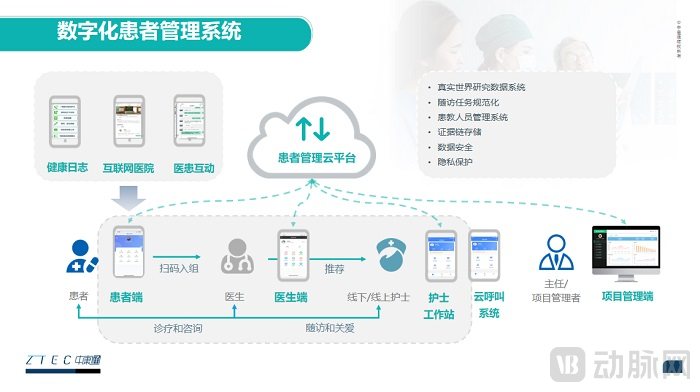
On the other hand, this is also related to Zhongkangtong’s capabilities.Currently, Zhongkangtong has an outstanding team., including online and offline nursing teams covering China and an experienced operations team; a company culture that values patients and alignment with pharmaceutical companies’ philosophies have endowed this team with strong cohesion and execution capabilities;Zhongkangtong has also established a comprehensive management system., covering various processes including talent management, skills training, data privacy, pharmacovigilance, quality control, risk control, and performance management; Zhongkangtong leverages its patient-facing interface, nurse-facing interface, physician-facing interface, administrative interface, cloud call center, and cloud-based patient management platform.Digital Tools, delivering a one-stop, agile, and efficient patient service solution for pharmaceutical companies.
Wang Mengliang emphasizes, “The key to success lies 70% with people and 30% with tools.” As one of the earliest MBA management trainees in the pharmaceutical industry, an MBA corporate mentor at Tsinghua University’s School of Economics and Management, and an external mentor for Tsinghua X-lab, Wang has witnessed countless VC-oriented startups fail. In founding Zhongkangtong, he places greater emphasis on strengthening internal capabilities, ensuring the effective implementation of services, and delivering high-quality support to hospitals, patients, and pharmaceutical companies.
Currently, Zhongkangtong is collaborating with various companies to establish a united front for patient services within the pharmaceutical ecosystem. “Some of our services are delivered by our in-house team, while others are carried out with the support of doctors, nurses, pharmacy staff, distributors, and out-of-hospital care institutions,” pointed out Wang Mengliang. Looking ahead, Zhongkangtong plans to integrate more offline services and remote technologies into its patient management processes. By providing one-stop services, the company aims to get “closer to patients” and further facilitate the transformation of pharmaceutical companies’ marketing models.