

Henan Set to Gain a Biotech IPO: Genuine Biotech Files for Hong Kong Listing
Genuine Biotech
Innovative Drug Developer
On August 4, Genuine Biotech, in a rapid push, submitted its application for listing in Hong Kong.
According to the prospectus, the funds raised by Genuine Biotech in this offering will be primarily used for the manufacturing and commercialization of Azvudine, its core product for the treatment of COVID-19. This includes financing the procurement of pharmaceutical raw materials required for the commercial production of Azvudine, expanding the production capacity of its Pingdingshan manufacturing facility, and supporting clinical development for indications such as HIV infection, hand, foot and mouth disease (HFMD), and certain types of hematologic malignancies. The specific number of shares to be issued and the amount of funds to be raised have not yet been disclosed.
Azvudine is a broad-spectrum nucleoside analog antiviral drug targeting RNA viruses. Its earlier approved indication was for adults with HIV/AIDS and high viral loads. According to its inventor, Professor Chang Junbiao of Henan Normal University, Azvudine can rapidly treat COVID-19, clearing SARS-CoV-2—including multiple variants—within approximately five days. Moreover, the required dosage is significantly lower than that of Pfizer’s previously launched oral COVID-19 medication, Paxlovid, and its price may be as low as under 1,000 yuan.
Although it does not yet have a blockbuster product, Genuine Biotech is not short of cash.
On July 25, just 10 days ago, the National Medical Products Administration (NMPA) granted emergency conditional approval to Azvudine tablets, independently developed by Genuine Biotech, for the treatment of adult patients with moderate COVID-19, making it the first domestically produced oral anti-COVID drug. On the same day its indication for COVID-19 was approved, Genuine Biotech entrusted Fosun Pharma with the rights to produce the oral COVID-19 medication at a cost of RMB 800 million. However, Fosun Pharma’s stock price experienced an unusual sharp decline on the day the news was announced.
Prior to this, Genuine Biotech had already stirred the domestic capital market on several occasions. Traditional pharmaceutical companies such as Xinhua Pharmaceutical, China Resources Double-Crane, and Union Pharma, which were considered capable of producing and distributing Azvudine, attracted significant attention from the capital market simply by signing Strategic Cooperation Agreements with Genuine Biotech. Meanwhile, active pharmaceutical ingredient (API) manufacturers such as Tuo Xin Pharmaceutical and Aoxiang Pharmaceutical experienced sharp stock price fluctuations merely due to the potential for establishing supply and distribution relationships with Genuine Biotech.
Genuine Biotech, established in 2012 and headquartered in Pingdingshan, Henan Province, has gained prominence for being the first company in China to strategically position itself in the development of oral COVID-19 therapeutics and for maintaining a leading edge in this field. In November 2020 and November 2021, prior to its initial public offering (IPO), Genuine Biotech completed two consecutive financing rounds totaling over RMB 1 billion, attracting prominent investors such as Yifeng Capital, Jinbailin, Yingke Capital, Shanghai Desano, Shenzhen Yashang, China Fuhui, and AVIC Trust. Before the IPO, Yifeng Capital held more than 13% of the shares, becoming the largest external institutional investor in Genuine Biotech, while its founder, Wang Chaoyang, retained controlling interest with a combined direct and indirect shareholding of 48.61%.
Henan is not traditionally considered a major province in the biopharmaceutical industry. However, facts have proven that it is by no means lacking in the spirit of scientific inquiry.
The development of azvudine began in 2004. At that time, Henan Province was heavily affected by the “AIDS villages” incident, with tens of thousands of HIV/AIDS patients relying solely on expensive imported drugs. In response, Professor Chang Junbiao from Henan Normal University led his team to embark on the de novo development of anti-HIV medications.
At that time, Professor Chang Junbiao chose the approach of inhibiting HIV RNA replication. Nearly two decades later, Azvudine was able to curb the spread of the novel coronavirus precisely because of its similar RNA structure. Due to the unique characteristics of HIV, Professor Chang Junbiao’s team received support from Genuine Biotech while conducting extensive, repetitive, and costly experiments. Together, they endowed Azvudine with certain attributes that would eventually make it a blockbuster drug—but that is a story for another time.
The accelerated approval of Azvudine marks a pivotal victory in breaking through intense competition.
In early 2020, almost immediately after the outbreak of the COVID-19 pandemic, numerous research teams both in China and abroad embarked on the development of specific therapeutic drugs for COVID-19.
At that time, the original strain of the novel coronavirus was highly pathogenic and lethal, plunging the world into panic. Researchers sprang into action, and a flood of potential drugs based on various mechanisms of action emerged. Small-molecule drugs, neutralizing antibodies, and proprietary Chinese medicines effective against SARS-CoV-2 appeared in rapid succession, with more than 50 related drugs entering clinical trials one after another, resulting in fierce competition.
To date, the mainstream global COVID-19 therapeutics fall into two major categories: small-molecule drugs and neutralizing antibodies.
Small-molecule drugs often effectively inhibit SARS-CoV-2 replication and gradually clear the virus by suppressing viral RNA genome replication or inhibiting the formation of proteins required for replication, thereby achieving therapeutic efficacy. Examples include Pfizer’s Paxlovid, Merck’s Molnupiravir, Genuine Biotech’s Azvudine, and Junshi Biosciences’ VV116.
Neutralizing antibody drugs treat COVID-19 by blocking viral infection of host cells. Representative agents include the marketed Tengshengbo combination of ambarexvimab/romisevirumab, Roche and Regeneron’s REGEN-COV, and GSK and Vir’s sotrovimab.
As neutralizing antibody drugs have shown diminishing efficacy against SARS-CoV-2 variants and attracted declining attention, growing hope is being placed on the continuous iteration of small-molecule anti-COVID-19 drugs to realize the vision of managing COVID-19 as an endemic disease akin to seasonal influenza. Among these, Pfizer’s Paxlovid was approved for import in February 2022. However, due to restrictions on its indications and excessively high pricing, it has failed to gain significant market traction.
In China, oral medications for treating COVID-19—including Azvudine from Genuine Biotech, VV116 from Junshi Biosciences, and Proxalutamide from Kintor Pharmaceutical—have been placed under high expectations. Compared with other candidates, Azvudine, as a repurposed drug, had already undergone comprehensive evaluations of safety and drug absorption, thereby bypassing many preclinical steps and taking a clear lead in development progress.
In January 2020, the Henan Provincial Emergency Scientific Research Project for Novel Coronavirus Prevention and Control, titled “Drug Screening Against Novel Coronavirus,” with Henan Normal University as the project undertaking institution and Professor Chang Junbiao as the chief scientist, was approved by the Henan Provincial Department of Science and Technology. Two months later, the patent “Use of Nucleoside Compounds in the Treatment of Coronavirus Infectious Diseases” was accepted by the China National Intellectual Property Administration.
Subsequently, the development of azvudine for the indication of COVID-19 proceeded smoothly. In April 2020, azvudine was approved by the National Medical Products Administration to initiate domestic Phase III clinical trials for the treatment of novel coronavirus pneumonia. The following year, azvudine received approval to conduct registrational clinical trials for the COVID-19 indication overseas. By April 2022, the blinding of the domestic Phase III clinical trials of azvudine was lifted.
Clinical data showed that on Day 7 after the first dose, the proportion of subjects with improved clinical symptoms was 40.43% in the azvudine group and 10.87% in the placebo group (p < 0.001). There was a statistically significant difference between the azvudine and placebo groups in the median time to improvement of clinical symptoms. The results indicate that azvudine can inhibit the activity of SARS-CoV-2, with a viral clearance time of approximately 5 days.
In this regard, Academician Jiang Jiandong from the Institute of Materia Medica, Chinese Academy of Medical Sciences, also stated that Azvudine has a significant anti-SARS-CoV-2 effect and is effective for both mild and severe clinical cases.
At this time, all competitor drugs to Azvudine are in Phase III clinical trials. Moreover, with the continuous mutation of SARS-CoV-2 variants and the increasing coverage of COVID-19 vaccination in China, it has become increasingly difficult to recruit patients for ongoing Phase III clinical trials of oral COVID-19 drugs, which will inevitably impact the progress of research and development.
After nearly a decade of dormancy, Genuine Biotech has reached the starting point for its IPO.
Of course, the current specific drugs for COVID-19 also require a rational assessment of their value.
As SARS-CoV-2 variants continue to emerge, public fear has gradually waned. The focus of concern has shifted from high rates of severe disease and mortality to heightened transmissibility, with response strategies evolving from a treatment-centric approach to one prioritizing prevention. Consequently, the belated arrival of specific antiviral drugs for COVID-19 appears somewhat awkward.
Pfizer’s Q1 2022 earnings report revealed that revenue from its oral COVID-19 drug, Paxlovid, amounted to $1.5 billion, falling short of the expected $2.42 billion. Analysts attribute Paxlovid’s underperformance to two main factors: first, its high market pricing led to a loss of market share in low-income countries; second, its indications are too narrow, as most current and future COVID-19 patients will not progress to the moderate or severe stages requiring treatment with Paxlovid.
Nevertheless, there are also positive voices in the market regarding specific anti-COVID-19 drugs. Goldman Sachs previously projected that the market size for oral COVID-19 treatments could reach $15 billion to $20 billion. Even as more competitors enter the market over time, potentially driving significant price reductions for these drugs, the overall market size is still expected to remain at $5 billion to $6 billion.
In the prospectus, Genuine Biotech also provided an optimistic outlook on the market prospects for azvudine, citing factors such as the rapid increase in patient numbers, the continuous emergence of new variant strains, and the limited number of globally approved drugs. As a result, azvudine still has a considerable market window period.
Currently, the global number of confirmed COVID-19 cases has exceeded 570 million. Since 2021, more contagious variants of SARS-CoV-2 have continued to sweep across regions worldwide, posing significant challenges to local healthcare systems. In some instances, this has even led to the reimposition of quarantine and other preventive measures.
In other words, the COVID-19 pandemic remains a global public health emergency, and demand for specific anti-COVID drugs continues to exist, with supply being the key factor. On the supply side, the variety and quantity of such drugs remain very limited. Currently, only three small-molecule antiviral drugs and four neutralizing antibody therapies have been approved for market launch worldwide. In China, the number is even smaller, with only two small-molecule drugs and one neutralizing antibody approved for COVID-19 indications, resulting in very limited treatment options for COVID-19 infection. It is likely due to these considerations that Genuine Biotech made significant efforts to build production capacity and expand distribution channels when Azvudine was initially approved for COVID-19 indications.
In terms of raw material supply, on the day after Azvudine was approved for a new indication, Tuoxin Pharmaceutical officially announced its collaboration, stating that its subsidiary, Xinxiang Zhijing, had passed the linked review for the Azvudine active pharmaceutical ingredient (API) and become a qualified supplier for Genuine Biotech, and would proceed with mass production and stockpiling of the Azvudine API. Previously, Tuoxin Pharmaceutical was also a supplier for Merck’s Molnupiravir.
On August 2, Azvudine officially entered production at the Pingdingshan base, with an estimated maximum annual capacity of 3 billion tablets. In terms of distribution channels, on the evening when Azvudine was approved for its new indication, Fosun Pharma announced that it had reached an exclusive commercialization agreement with Genuine Biotech for Azvudine. The cooperation covers the Greater China region and global markets excluding Russia, Ukraine, Brazil, and several other South American countries and regions.
Thus, Genuine Biotech may offer a more cost-effective solution for combating the novel coronavirus.
Wang Chaoyang, the founder of Genuine Biotech, is not a typical scientist, nor is he an entrepreneur with a background as a clinician or an executive at a multinational pharmaceutical company. He is a serial entrepreneur. Prior to establishing Genuine Biotech, Wang had already become a wealthy businessman through ventures in mining, real estate, and hospitality.
Compared with his ventures in other industries, Wang Chaoyang appears more patient and steadfast in the innovative drug sector, maintaining continuous investment in technology transfer and product development.
In 2011, prior to the establishment of Genuine Biotech, Xingyu Technology, controlled by Wang Chaoyang, entered into a technology transfer agreement with Zhengzhou University to acquire the intellectual property rights to Azvudine, which were subsequently injected into Genuine Biotech. Furthermore, driven by Dr. Du Jinfa, Chief Executive Officer and Chief Scientific Officer, Genuine Biotech entered into another technology transfer agreement with Meitaibao in 2019 to acquire the intellectual property rights to 11 patents. These intellectual property assets later formed a critical foundation for building Genuine Biotech’s R&D pipeline.
Currently, in addition to the COVID-19 indication that has already entered the commercialization stage, Genuine Biotech is expanding into multiple fields such as HIV infection and hematologic malignancies, leveraging the broad-spectrum antiviral activity of azvudine. According to the prospectus, Genuine Biotech is also developing various other innovative drug candidates for the treatment of viral diseases, cancers, and cerebrovascular diseases, including CL-197, Duoxitinib, and MTB1806.
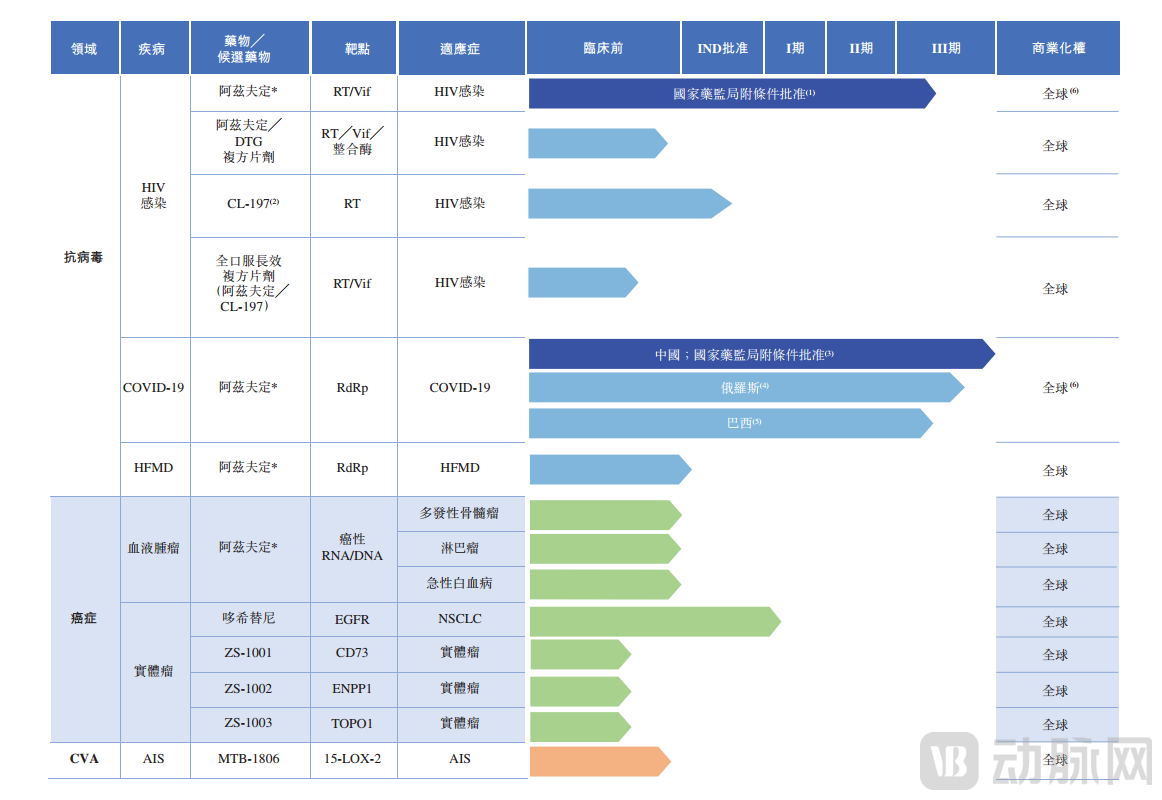 Genuine Biotech’s Pipeline in Development (Source: Prospectus)
Like other innovative pharmaceutical companies, Genuine Biotech has incurred consecutive annual losses due to its R&D expenditures. According to the prospectus, Genuine Biotech’s R&D expenditures amounted to RMB 106 million, RMB 64.05 million, and RMB 114 million in 2020, 2021, and the first five months of 2022, respectively, totaling RMB 284 million over the three-year period.
During this period, Genuine Biotech had not yet generated substantial revenue from its core business operations. According to the prospectus, the company recorded other income of RMB 68,000, RMB 1.376 million, and RMB 8.451 million in 2020, 2021, and the first five months of 2022, respectively. During these periods, it incurred net losses of RMB 151 million, RMB 197 million, and RMB 218 million, respectively, amounting to a cumulative loss of RMB 566 million over the three years.
Nevertheless, Genuine Biotech maintains a robust cash flow position. As of the end of May 2022, the company held RMB 263 million in cash on hand, representing a significant year-on-year increase, largely attributable to its previous equity financing rounds. During the intensive 3.5-year clinical trial period, Genuine Biotech incurred R&D expenditures of RMB 284 million. Given its current cash reserves, the company is well-positioned to sustain its R&D investments for a considerable period.
Of course, new drug development is inherently risky, and sustained R&D efforts inevitably require continuous capital infusion. This may well be why Genuine Biotech chose to go public even during a period of strong financial health. We look forward to seeing Genuine Biotech demonstrate its value in the treatment of COVID-19 and hope to see it deliver more high-quality, original innovative drugs.