

Shilinpu Files IPO Prospectus: Pioneering Precision Cardiovascular Risk Prediction Platform Powered by Three Core Technologies and Two Decades of R&D
The Seemingly Calm Sleep Process Conceals Many Disease Risks.
The most typical example is cardiovascular disease, the “number one killer” of human health. Taking stroke as an example, it often occurs during nighttime rest. Moreover, strokes that occur at night are easily overlooked, leading to a missed golden window for treatment. Consequently, sudden nocturnal onset of cerebrovascular and cardiovascular diseases often results in high mortality rates.
According to data from the “Report on Cardiovascular Health and Diseases in China 2020” released by the National Center for Cardiovascular Diseases, there are currently 290 million people with cardiovascular disease in China. Cardiovascular disease ranks first in the proportion of deaths among urban and rural residents. In 2018, cardiovascular disease accounted for 46.66% and 43.81% of all causes of death in rural and urban areas, respectively. Two out of every five deaths are due to cardiovascular disease.
Therefore, it is imperative to reduce the incidence and mortality of cardiovascular diseases. Effective nighttime blood pressure monitoring and prevention of cerebrovascular and cardiovascular diseases are crucial measures to mitigate disease risk. In response, Shilinpu, leveraging its proprietary technology as the core, has developed an AI-powered platform for precise disease risk prevention, monitoring, and chronic disease health management.
Medical-Grade Continuous Nighttime Monitoring for Precise Prevention of Cardiovascular and Cerebrovascular Diseases
Leveraging the SC-500 sleep monitoring device, Shilinpt conducts non-intrusive acquisition and monitoring of physiological data—including heart rate, respiration, blood pressure, sleep patterns, cardiovascular metrics, and indicators related to cognitive disorders—to analyze long-term trends and assess user health status. Integrated with a life-health early warning system based on the collected data, it enables comprehensive health management, fostering an ecosystem that supports self-monitoring, family-based mutual checks, data sharing, and platform-driven preventive services.
Moreover, the device is extremely user-friendly; users simply need to place it under their mattress. When a user lies down to rest, Schrimp’s sensors can “listen” to the echoes of blood flowing through the vessels.
Li Dongquan, Founder and General Manager of ShilinpuHe introduced a vivid analogy to VCBeat: “How can one determine the amount of oil in a sealed tank? Typically, an ECM microphone sensor is attached to the outer surface of the tank to listen to the echoes inside; the echoes vary depending on the flow dynamics associated with different oil levels. Our sensors cover a vibration frequency range of 0.01 Hz to 10 kHz, enabling us to study cardiovascular status based on the echoes of blood flow within the vessels.”
However, industrial oil tanks are fixed and non-elastic, making it relatively easy to interpret echo signals. In contrast, human blood vessels are elastic and compliant; therefore, data solely “heard” by sensors is insufficiently accurate. To address this issue, Schrimp spent three years developing an AI-based 3D cardiovascular assessment model that infers vascular compliance from heart rate variability (HRV) and integrates it with echo signals of blood flow. The assessment primarily focuses on the following two aspects.
The first is vascular stenosis.According to Li Dongquan, blood flow at the site of vascular stenosis is jet-like, manifesting as vortex echoes. When winter arrives, the vessel walls are relatively thin and have poor elasticity; coupled with the jet-like blood flow, this makes them highly susceptible to rupture, leading to cerebral hemorrhage.
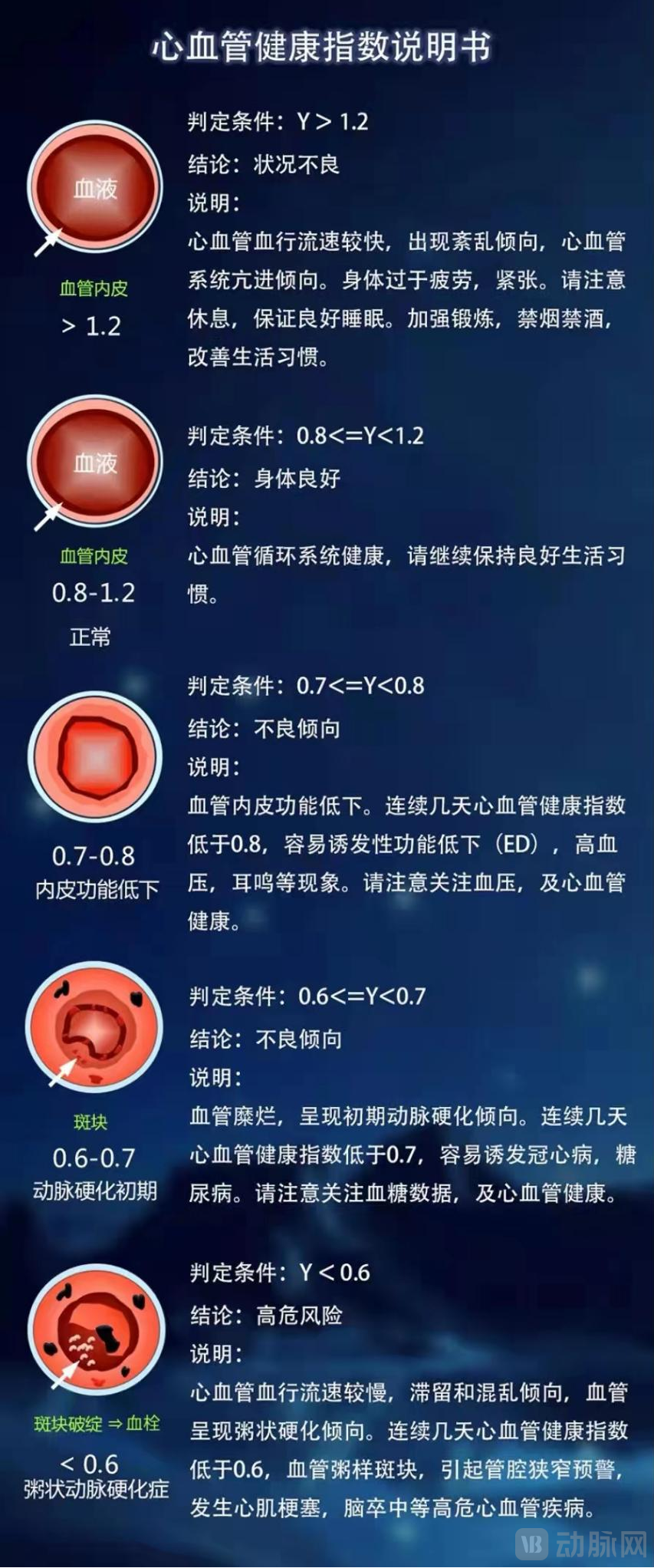
The second is vascular occlusion.Infarction essentially results from plaque accumulation causing vascular occlusion of 70% or more, a condition common to both cerebral and myocardial infarctions. In response, Schrimp has established a monitoring and early-warning range: a cardiovascular variability index above 1.2 indicates a risk of cerebral hemorrhage, while a value below 0.6 suggests a risk of infarction. If monitoring data remain outside this range for three consecutive days, the platform will immediately advise the user to seek medical attention.
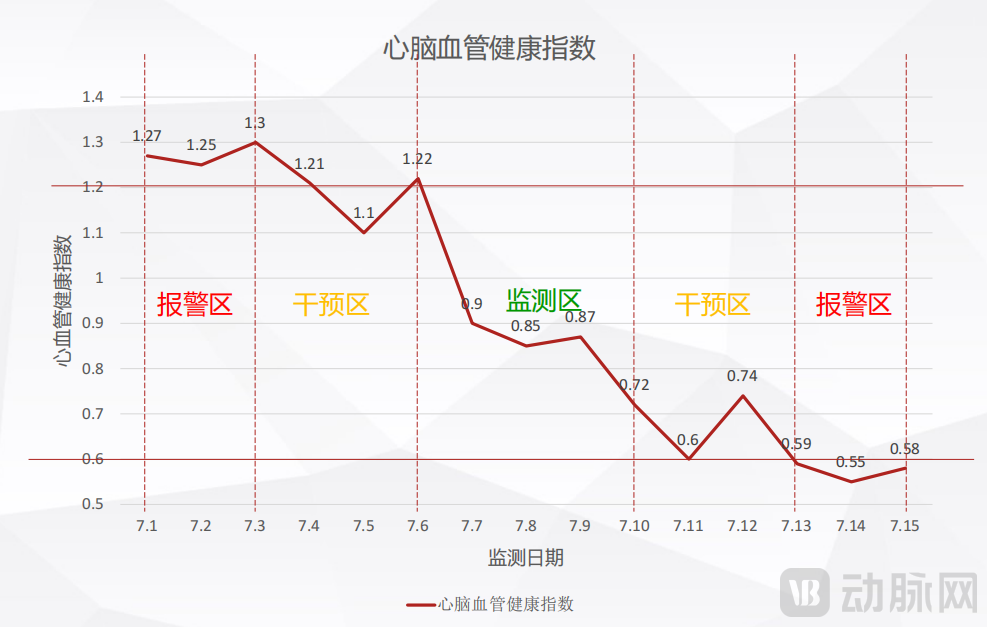
This 3D vascular assessment system demonstrated an 84.5% concordance rate when benchmarked against Doppler ultrasound and has obtained medical device certification in Japan. Currently, the disease confirmation rate for patients referred through the platform is high, with no false positives reported.
"Building China's First Health Gateway"
In 2020, Schrimpf and Kailuan General Hospital conducted an innovative study to develop a clinical AI system based on the LF (Low-Frequency component)/HF (High-Frequency component) ratio for monitoring and early warning of mental stress and fatigue, as well as for assessing anxiety, depression, and cognitive disorders.
Li Dongquan explained that during the day, the sympathetic nervous system dominates to control our limb movements, while at night, the vagus nerve takes the lead. The activity levels of the sympathetic and vagus nerves are important parameters for diagnosing anxiety, depression, and even cognitive disorders. By combining the switching activity of these two types of nerves with cortical indices and artificial intelligence algorithms, it is possible to monitor and provide early warnings for the aforementioned diseases.
In 2021, the company conducted 1,050 clinical trials at Kailuan General Hospital. RCT data showed that the platform’s algorithm achieved an average accuracy of 92%, with a peak accuracy of up to 98%.
“The value of our platform is also reflected in the timing of data collection. For the vast majority of chronic diseases, such as hypertension, diabetes, and cardiovascular conditions, data captured during the nighttime transition between vagal and sympathetic nervous system activity is particularly valuable,” said Li Dongquan.
Taking cardiovascular disease as an example, human blood vessels exhibit poor vasodilation at night; consequently, any occlusion can easily lead to extensive ischemia, triggering cerebral infarction or myocardial infarction. Therefore, data collected and monitored during nighttime hours holds greater clinical value. The same principle applies to blood pressure: daytime readings may be less precise due to the influence of diastolic pressure. However, if blood pressure abnormalities persist during the quiet of night, the risk of disease is imminent.
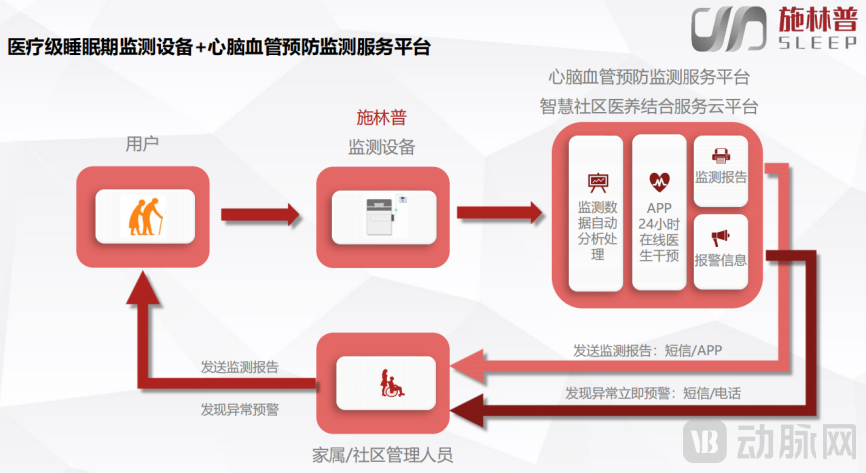
Shrimp’s core product capability lies in continuous nighttime data collection, capturing metrics such as heart rate, respiration, blood pressure, and cardiovascular variability. The platform supports both pre-disease monitoring and early warning, as well as post-treatment rehabilitation tracking, making it a vital component of user health management.
Thus, Schrimp has also found its precise market positioning. “We do not provide treatment; we focus solely on monitoring. However, a monitoring device or platform capable of such precise data collection and offering such ease of use undoubtedly helps enhance user stickiness. Therefore, hospital rehabilitation departments, insurance companies, internet hospitals, and comprehensive health management platforms can all be our partners,” introduced Li Dongquan.
Currently, one of the most significant challenges facing smart wearable monitoring products remains data accuracy and continuity. Even with single-lead monitoring, improper electrode placement by users can compromise the authenticity, precision, and continuity of data acquisition.
Shrimp’s monitoring devices can be placed under the mattress to enable unobtrusive data collection while users sleep. As a result, Shrimp’s cardiovascular and cerebrovascular monitoring and prevention service generates large volumes of precise consumer-side user data daily, which can be integrated into any health management platform.
Based on this, Schrimp’s vision is to create “China’s First Health Entry Point.”
Currently, Schrimp has established close industry-academia-research collaborations with medical institutions and universities such as the Chinese PLA General Hospital, the Air Force Medical Center, the First Affiliated Hospital of Guangzhou Medical University, Kailuan General Hospital, Beijing Chaoyang Hospital of Capital Medical University, and Beihang University.
Independently developed, pioneering low-frequency ECM sensing and digital filtering technology
In an era of rapid development in IoT-enabled healthcare, sensors, as the source of data acquisition, play a critical role. However, unlike the “explicit” chokehold challenges faced by the chip industry, the bottleneck issues surrounding sensors have not yet received sufficient attention from the industry. In key technological areas and high-value-added application fields, enterprises capable of mastering high-precision sensor technology are few and far between; Schlinp is one of them.
According to Li Dongquan, traditional industrial ECM sensors are typically capable of capturing vibration signals only within the frequency range of 1 Hz to 1 kHz. In contrast, low-frequency signals associated with human vital signs in medical applications are subject to significant low-frequency noise interference, making both signal acquisition and separation from noise extremely challenging.
To address these challenges, Schrimp’s proprietary ECM sensor can detect pressure variations as minute as one part per million, covering all low-frequency tremor signals in the range of 0.01 Hz to 10 kHz, making it one of the company’s core technologies. Furthermore, the company secured the invention patent for this sensor in Japan as early as 2003.
After securing the patent, the Schrimp R&D team continued to dedicate themselves, as they had for a decade, to another core technology following signal acquisition: signal filtering. This process isolates the low-frequency tremor signals associated with physiological signs. Upon completion of signal acquisition and separation, the project entered the phase of product value validation based on AI algorithm technologies.
The first indication is ECG monitoring.Only by comparing with medical-grade acquisition methods such as ECG monitors and achieving a high degree of concordance can the product possess clinical application value; otherwise, it will be reduced to an ordinary electronic device capable of monitoring vital sign changes but lacking precision. In 2013, the company initiated comparative validation studies, which demonstrated that Schrimp achieved a concordance rate of over 95% against medical devices in vital sign signal processing (heart rate, respiration, and BCG). In 2018, it obtained registration certification as a Class II medical device.
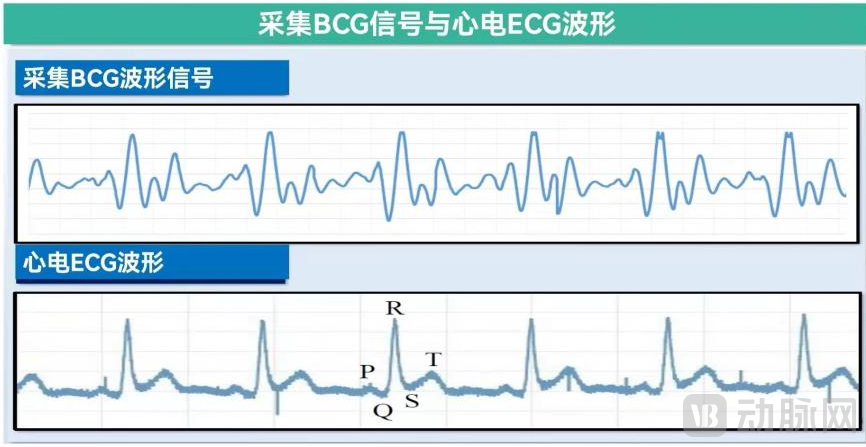
The second indication is respiratory monitoring.. Traditional hospital-based respiratory examinations require the use of nasal cannulas (sensors) to detect conditions such as apnea, intermittent breathing, and hypopnea by monitoring fluctuations in airflow. In contrast, Schrimp’s electronic data acquisition method enables detection and monitoring during user sleep, offering high sensitivity and accuracy, and has obtained Class II medical device certification.
In fact, heart rate and respiration are coupled during sleep. In 2005, a team of sleep experts from Harvard Medical School identified this relationship as cardiopulmonary coupling (CPC). During sleep, the human body undergoes periodic cycles transitioning from wakefulness to light sleep and then to deep sleep, along with periods of rapid eye movement (REM) sleep associated with dreaming. CPC can determine the timing and proportion of each sleep stage, characterize sleep architecture, and indicate whether users have any sleep problems.
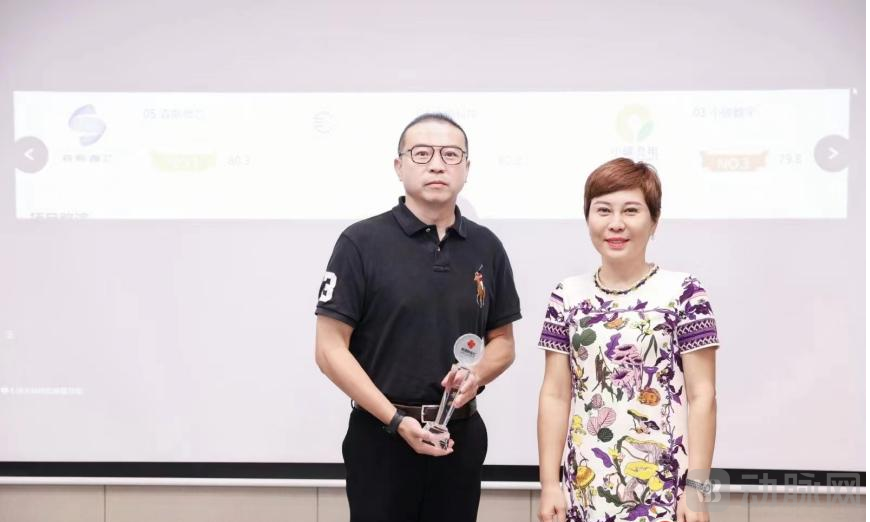
Li Dongquan (left) accepts the award on behalf of the company from Angel United.
Therefore, after covering the indications for ECG and respiration monitoring, Shilinpu further expanded and integrated its application scenarios into the field of sleep monitoring. Currently, the SC-500 sleep monitoring device has been deployed in multiple Grade A tertiary hospitals across Guangdong, Beijing, Shanghai, Hebei, Henan, and other regions. Recently, Shilinpu’s platform company also won first prize at the Q3 Project Roadshow Salon of the 2022 Angel Union.