

Breaking Through: KandeSai's IND Application for Personalized mRNA-Edited DC Cancer Vaccine CUD002 Officially Accepted

CUNDE
Tumor Immunotherapy Technology and Drug Developer
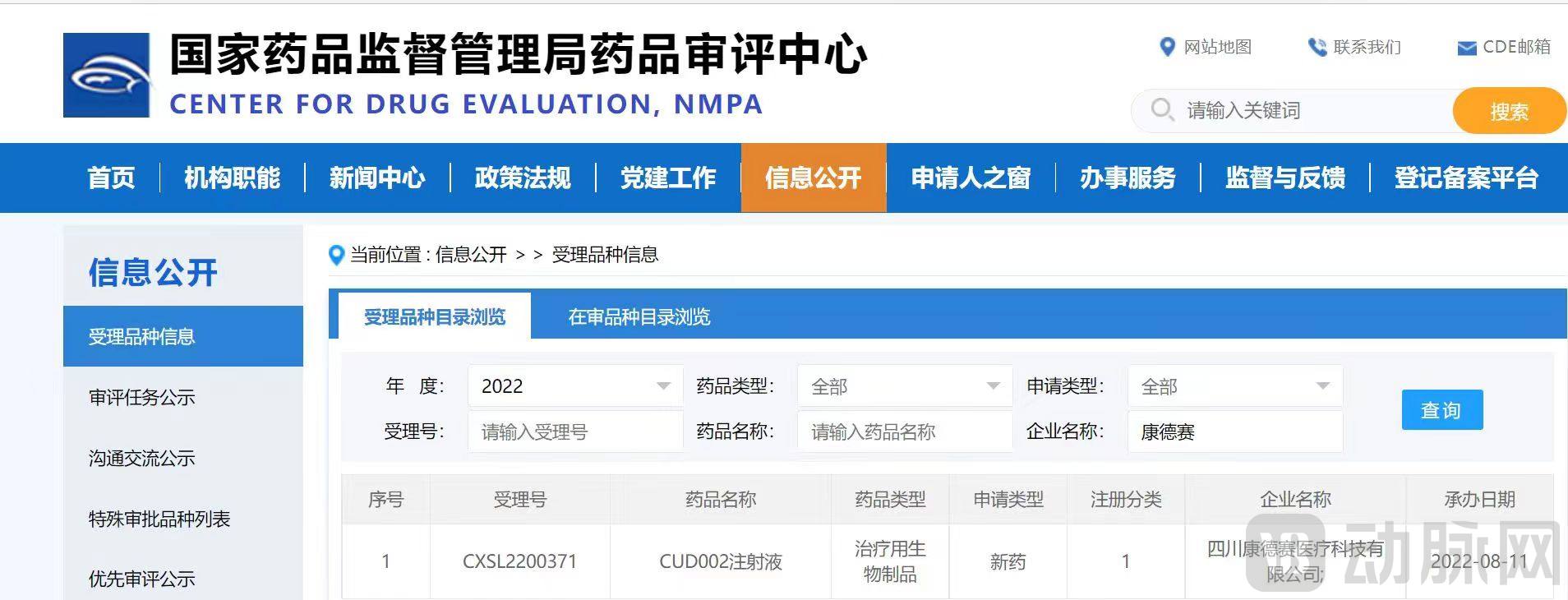
On August 9, 2022, the Center for Drug Evaluation (CDE) of the National Medical Products Administration (NMPA) of China announced that it had accepted the clinical trial application for CUD002 Injection, an individualized dendritic cell (hereinafter referred to as “DC”) therapy independently developed by Sichuan Cunde Therapeutics Co., Ltd. (hereinafter referred to as “Cunde”) for the treatment of advanced ovarian cancer (Acceptance Number: CXSL2200371 Guo).This product is China’s first mRNA-edited dendritic cell (DC) cancer vaccine based on patient-specific tumor neoantigens. Through five years of dedicated development, CUNDE has established the CUNDE platform for cellular immunotherapy of solid tumors.®CUD002 is the first cell therapy product from this platform to enter clinical trials, poised to pioneer new frontiers in cellular immunotherapy for solid tumors in China.
Personalized Cancer Therapy Targets: Neoantigens
The vast majority of human tumors evolve from normal cells that have undergone genetic mutations. During this process, the human immune system recognizes peptides generated by these genetic mutations (neoantigens), thereby effectively controlling tumor progression. The core of anti-tumor immunity lies in dendritic cells (DCs) presenting and activating specific T cells that recognize these neoantigens; once activated, these specific T cells can selectively identify tumor cells harboring such neoantigens. Consequently, the immune system can accurately distinguish between our normal cells and tumor cells, leading to the precise elimination of tumor cells. Since tumor-associated antigens (TAAs) are present not only in tumor cells but also in certain normal cells, drugs targeting TAAs may cause collateral damage to normal cells. Furthermore, central immune tolerance typically results in weak immunogenicity of TAAs. Therefore, compared with current clinical trials targeting tumor-associated antigens (TAAs), selecting neoantigens that exist exclusively in tumor cells as targets can effectively avoid these drawbacks. Ovarian cancer is the gynecological malignancy with the highest mortality rate. Due to the lack of shared small-molecule drug targets among patients with ovarian cancer, the five-year survival rate has not improved significantly over the past decade. Another characteristic of ovarian cancer is the near absence of shared high-frequency gene mutations across different patients. Therefore, personalized immunotherapy targeting patient-specific tumor neoantigens holds promise for achieving precise killing of tumor cells and improving patient survival rates, thereby breaking through the current therapeutic impasse.
CUNDE, in close collaboration with its strategic partner Yuce Bio, has established a proprietary neoantigen screening and validation platform. By leveraging novel combinations of neoantigen targets and immunomodulatory factors, the company’s approach has demonstrated potent tumor-killing efficacy, which has been thoroughly validated in preclinical studies.
Breakthrough Innovations in DC Vaccine Technology
In recent years, translational research on cancer vaccines has experienced explosive growth, primarily focusing on whole-tumor cell vaccines, mRNA vaccines, peptide vaccines, and dendritic cell (DC) vaccines. The first three approaches feature relatively simple manufacturing processes but are limited by instability, low immunogenicity, and uncertain in vivo distribution. As the most efficient antigen-presenting cells, DCs not only offer a safe and effective therapeutic profile but also effectively address the limitations associated with the aforementioned vaccine types; however, their industrial-scale production presents significant technical barriers. CUNDE has been dedicated to developing and optimizing GMP-compliant cell manufacturing processes, enabling the production of DC products with high purity, high differentiation efficiency, and high potency, while maintaining controllable production costs.
Meanwhile, to enhance the anti-tumor immune capability of dendritic cells (DCs), CUNDE’s research and development team has developed China’s first therapeutic tumor vaccine that combines mRNA with DCs. mRNA vaccines have emerged as a new hotspot in novel drug development, gaining widespread attention following the rollout of the BioNTech and Moderna COVID-19 vaccines. Delivering mRNA into DCs can effectively circumvent the instability issues associated with conventional mRNA vaccines. Through structural modification and design of mRNA, CUNDE has achieved enhanced stability and superior expression performance. In terms of mRNA production, CUNDE possesses mature GMP-compliant manufacturing capabilities, yielding mRNA characterized by high expression levels, high activity, and high purity.
CUD002, China’s first mRNA-edited dendritic cell (DC) therapeutic cancer vaccine based on tumor neoantigens, is custom-designed and manufactured according to each patient’s unique mutation profile. It stimulates the patient’s own immune system to recognize ovarian cancer antigens, elicits an anti-tumor immune response, and kills tumor cells, offering new hope to patients who currently do not benefit from existing therapies. In the fight against cancer, CUNDE leverages its four independently developed platforms: the “Bioinformatics Analysis Platform,” the “mRNA Platform,” and “CUNDE®The cell platform and in vivo efficacy evaluation platform continue to develop candidate cell therapies with further translational potential, leveraging the iterative advancements of next-generation DC tumor vaccine technology supported by four major platforms, which will be applied to the treatment of triple-negative breast cancer, liver cancer, and other indications. CUNDE is also expanding its pipeline of other cell-based products, primarily targeting conditions such as liver cirrhosis. With continuous technological innovation and breakthroughs, CUNDE aims to consistently provide patients with precise, personalized cell therapy solutions.
CUNDE has secured multiple rounds of investment from funds including BGI Miracle Light, Beikong Medical, KIP, Xingtong Capital, and Tsinghua TusHoldings, with total financing exceeding RMB 100 million. To further advance the progress of multiple clinical trials, the company is currently seeking a new round of financing.