

Zhongke Gene's Whole Exome Sequencing Facilitates Discovery of WDR62 as a Novel Pathogenic Gene for Congenital Heart Disease
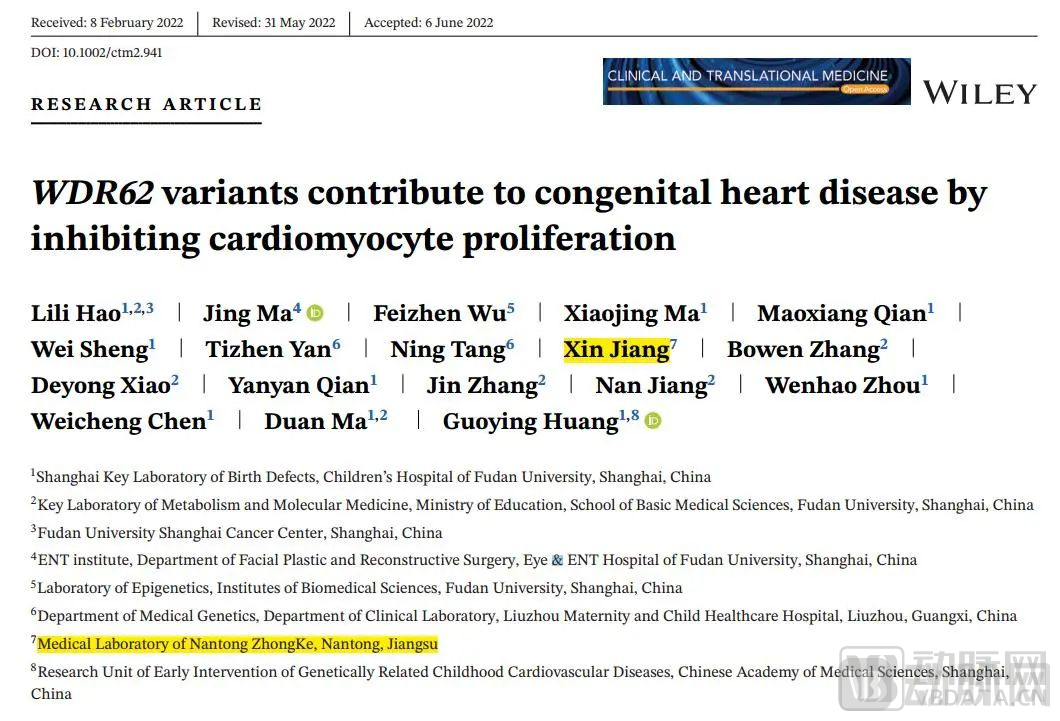
Recently, Professor Huang Guoying, President of Children’s Hospital of Fudan University, and Professor Ma Duan’s team from the School of Basic Medical Sciences at Fudan University published their latest research findings online in the internationally renowned academic journal Clinical and Translational Medicine (IF=11.492). On May 31, 2022, the prestigious international academic journal Clinical and Translational Medicine, published by Wiley, released the study titled “WDR62 variants contribute to congenital heart disease by inhibiting cardiomyocyte proliferation” by Professor Huang Guoying and Professor Ma Duan’s research groups. This study is the first to report WDR62 as a pathogenic gene for congenital heart disease (CHD). Through whole-exome association analysis combined with targeted capture sequencing of specific genes, the research team identified and confirmed a high frequency of WDR62 variants in a large cohort of sporadic CHD cases. In vivo and in vitro experimental studies revealed that WDR62 deficiency inhibits cardiomyocyte proliferation by affecting the cell cycle and spindle assembly, thereby confirming WDR62 as a novel pathogenic gene for CHD. As a collaborating partner, Nantong Zhongke Medical Laboratory Co., Ltd., affiliated with Zhongke Gene, provided sequencing and personalized bioinformatics analysis services for this study. Dr. Jiang Xin, General Manager of the company, was listed as an author for his participation in the research.
Congenital Heart Disease (CHD) is the most common birth defect, with an incidence of approximately 1% among live-born neonates, and it is also a leading cause of intrauterine fetal death. Most cases of CHD are complex disorders, in which genetic variations play a significant role in their pathogenesis. Although some disease-causing genes for CHD have been identified, the genetic etiology remains unknown in more than 70% of cases.
WD repeat domain 62 (WDR62) belongs to the WD40 repeat domain protein family, localizes to spindle microtubules during cell division, and participates in centriole replication and spindle assembly. Previous studies have shown that WDR62 gene mutations and abnormal expression are associated with microcephaly, reproductive system disorders, and cancer; however, no reports have yet addressed whether WDR62 is associated with congenital heart disease (CHD).
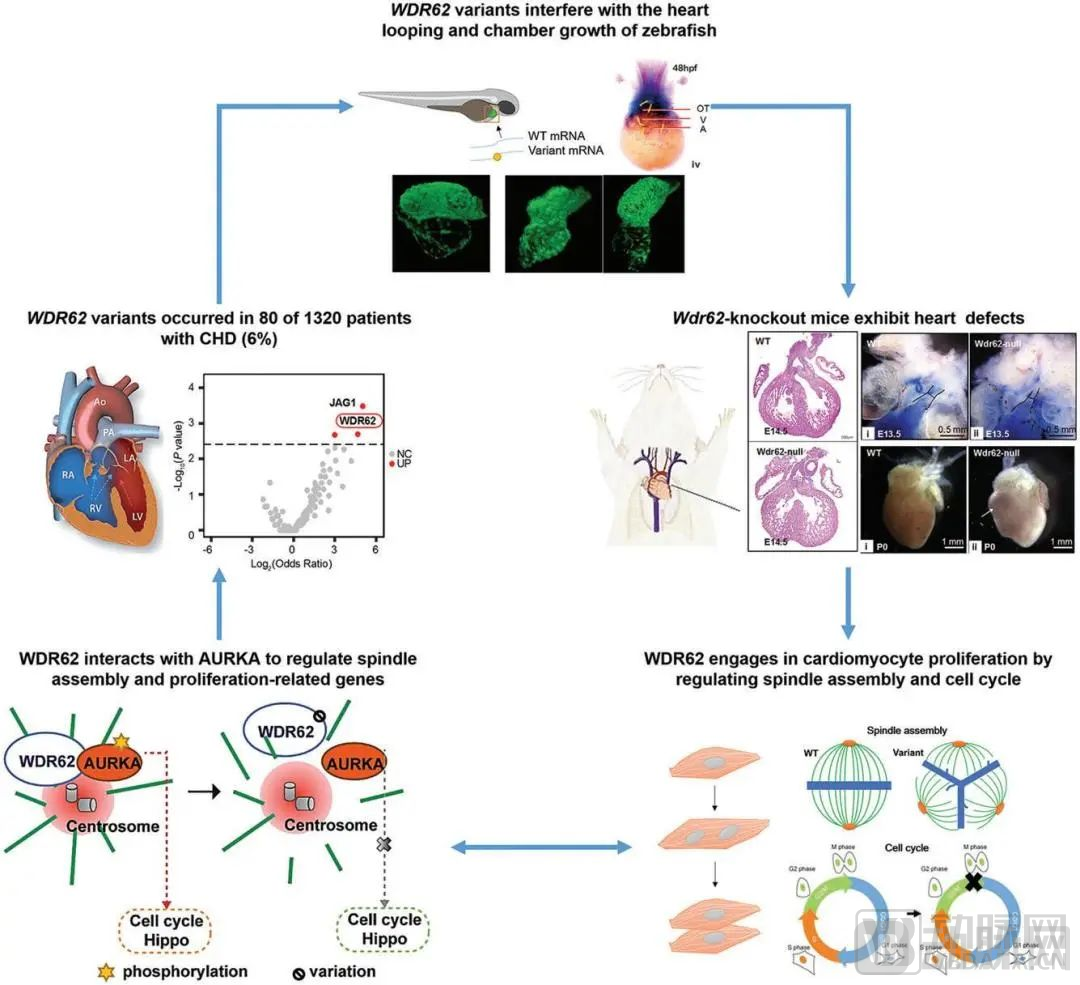
Tetralogy of Fallot (TOF) is the most common form of cyanotic congenital heart disease (CHD), posing a severe threat to the life and health of affected children. The team first performed a whole-exome association analysis on 37 TOF patients and 208 Han Chinese controls from the 1000 Genomes Project, and subsequently validated the findings through Sanger sequencing in an additional 200 TOF patients. They identified seven variants in the coding region of WDR62, which were demonstrated to be loss-of-function variants by zebrafish experiments.
Further studies in mouse models revealed that WDR62 is highly expressed in the outflow tract and right ventricular cardiomyocytes during early fetal heart development. Knockout of WDR62 in mice resulted in outflow tract malformations, right ventricular hypoplasia, and ventricular septal defects. To investigate the genetic contribution of WDR62 variants across different types of congenital heart disease (CHD), the research team performed targeted capture sequencing on 1,083 CHD patients exhibiting cardiac phenotypes similar to those observed in the knockout mice. Ultimately, WDR62 variants were identified in 6% of a total cohort of 1,320 CHD patients.
Given that WDR62 deficiency was found to cause cell cycle abnormalities and an increased proportion of multipolar spindle cells in both cardiomyocyte cell lines and mouse models, the research team further explored the underlying molecular mechanisms. They discovered that WDR62 regulates the expression of genes associated with cardiac development and cardiomyocyte proliferation, and interacts with the mitotic kinase AURKA. WDR62 deficiency impairs its binding to AURKA at the spindle poles, reduces AURKA phosphorylation, and consequently decreases the expression of target genes involved in cell cycle regulation and spindle assembly that are co-regulated by WDR62 and AURKA.
This study is the first to identify WDR62 as a novel pathogenic gene for congenital heart disease (CHD) and elucidates that WDR62 participates in cardiac development by regulating spindle assembly and the cell cycle in cardiomyocytes. These findings hold promise for early molecular diagnosis of certain severe and complex forms of CHD, such as tetralogy of Fallot (TOF), thereby guiding eugenic practices and healthy reproduction.
Zhongke Gene has accumulated extensive expertise in the field of genetic disease testing. Its custom-developed panel-based targeted capture sequencing, whole-exome sequencing, and whole-genome sequencing have provided precise medical testing for tens of thousands of patients, benefiting countless families.Newly Launched Super Panel for Genetic Disease Whole Exome Testing—CapTruth Human Exome Panel 2.0 simultaneously detects nearly 20,000 genes, achieving industry-leading performance in capture efficiency, GC bias, and probe coverage uniformity. The target regions are primarily selected based on the latest versions of the RefSeq (109, 2021) and CCDS databases. This product is suitable for detecting diseases associated with nuclear and mitochondrial gene mutations. In addition to identifying small exonic variants and pathogenic intronic abnormalities, it provides alerts for large fragment abnormalities and dynamic mutations, includes mitochondrial gene testing, and comprehensively covers multiple types of genetic variants. Furthermore, the databases used for data analysis are regularly updated to keep pace with the latest advancements.
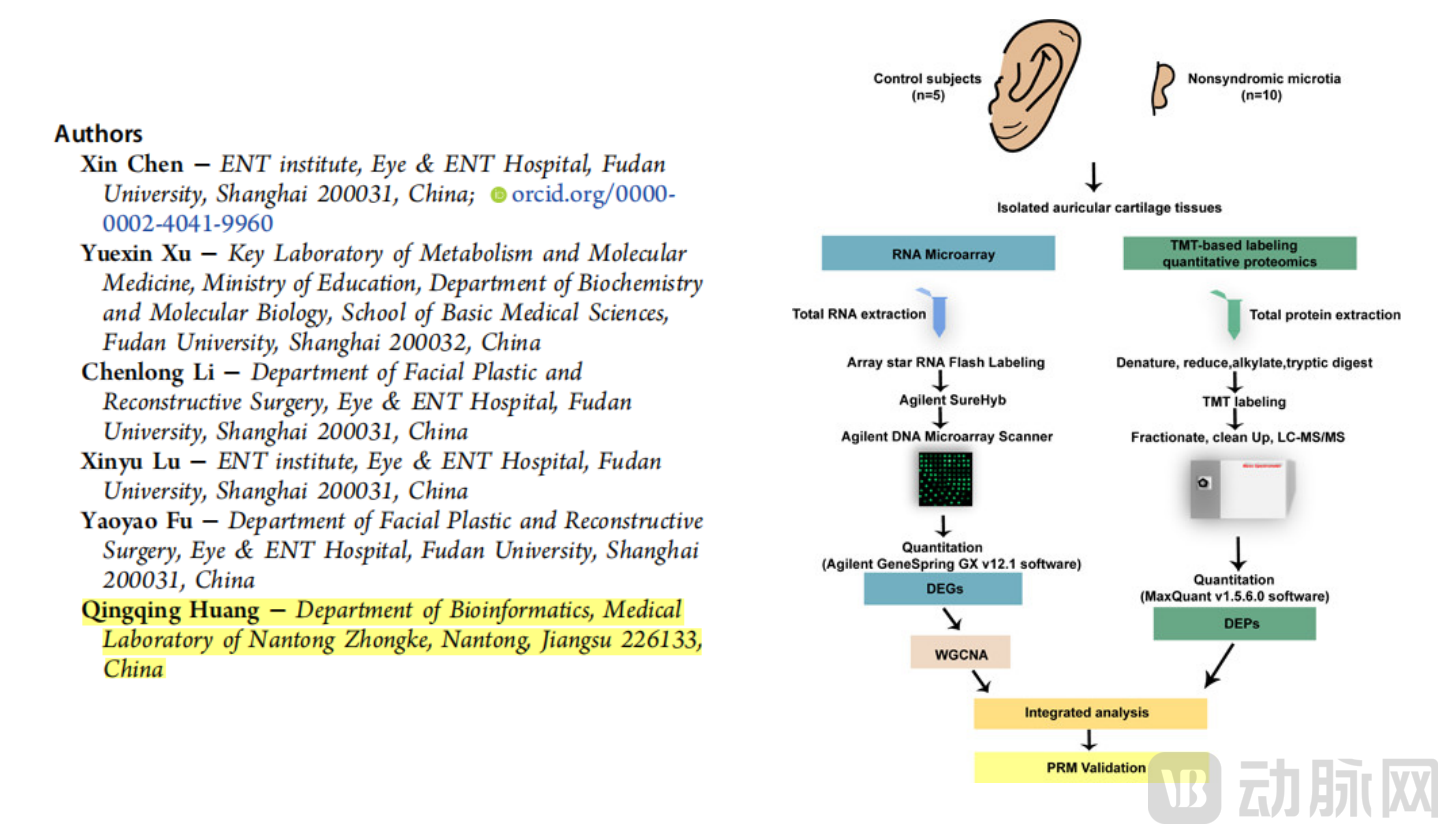
Furthermore, Zhongke Gene assisted the Eye and ENT Hospital of Fudan University in uncovering key regulatory genes for non-syndromic microtia:Recently, the clinical research findings on Nonsyndromic Microtia (NSM) by Professor Zhang Tianyu and Associate Researcher Ma Jing’s team from the Eye, Ear, Nose, and Throat Hospital of Fudan University were published in the internationally renowned academic journal ACS Omega (IF=4.132). Through combined analysis using expression profiling arrays and TMT proteomics, this study revealed key regulatory genes involved in nonsyndromic microtia. As a collaborating partner, Nantong Zhongke Medical Laboratory Co., Ltd., affiliated with Zhongke Gene, provided sequencing and personalized bioinformatics analysis services for this study. Huang Qingqing, a senior bioinformatics analysis engineer at the company, was listed as a co-author for her contribution.
Zhongke Gene, together with its subsidiary Nantong Zhongke Medical Laboratory Co., Ltd., is committed to providing high-quality services to clinical patients and researchers, with the mission of ensuring that data is easy to use for our clients! InWhole-Transcriptome, Whole-Genome, Microbial Diversity, and Epigenetic SequencingWith extensive project experience in analytical services, our professional experimental and analytical team has provided high-quality, efficient sequencing analysis for hundreds of scientific research projects. We are committed to meeting researchers’ needs and facilitating the high-impact publication of their findings.