

A New Inflection Point in the Trillion-Yuan Health Management Market: How Premium Healthcare Players Are Gaining a Competitive Edge
High-end health management that integrates professional screening, diagnosis, and treatment into a one-stop solution is becoming the new growth frontier in this industry.
Previously, as a branch of high-end health management, the demand for premium physical examinations has expanded beyond high-net-worth individuals. In China, establishing premium physical examination services has long become an important tool for checkup institutions to build their second growth curve. Data shows that nearly 100 million people undergo physical examinations annually in China, with the overall market size exceeding RMB 200 billion. The premium physical examination segment accounts for approximately 10% of the total market share and is growing at an ultra-fast annual rate of nearly 20%.
It is evident that a growing number of people are allocating greater weight to health management within their mental accounting. Currently, driven by the continuous iteration of clinical diagnostic and therapeutic technologies, as well as the spillover of in-hospital demand for imaging, genomics, and metabolomics testing, the high-end health management market is accelerating its expansion. So, what specific problems does high-end health management address? And how can high-end health management be effectively delivered? This article attempts to provide answers.
If conventional health management is viewed as a single point, premium health management offers users customized, closed-loop services for full-course disease management. In this sense, the more precise and effective management of health has become the fundamental logic driving the rapid expansion of this market.
Specifically, in terms of program design, high-end health management offers greater customization.Currently, the user base for high-end health management primarily consists of three major groups: high-net-worth individuals, high-risk populations, and the elderly. These groups differ significantly in their service preferences and physical conditions. Merely offering homogeneous routine check-up packages without conducting targeted, systematic examinations often makes it difficult to provide truly valuable health management recommendations.
In contrast, premium health management must be tailored to individual differences such as the client’s gender, age, occupation, medical history, and family history. Typically, premium health management institutions establish health records for users and implement a membership-based management model centered on families composed of first-degree relatives. The health big data accumulated from repeated tests and laboratory results of family members will further inform the design of subsequent health management plans, thereby enabling a more precise assessment of users’ health status.
Secondly, in terms of screening and laboratory tests, high-end health management emphasizes early detection, comprehensiveness, and precision.On one hand, there is precise early screening and diagnosis. In routine testing and examination scenarios, although users undergo various checks with the aim of screening for diseases, the absence of medical devices specifically designed for disease screening means that the results of such examinations often only indicate disease risk with limited accuracy. Consequently, most users either ignore these ambiguous risk alerts or overreact to them. However, detecting pathological signs at the very earliest stages of disease onset and intervening promptly holds significant clinical and health economic value. Taking malignant tumors as an example, the progression from molecular carcinogenesis in the ultra-early stage to tissue-level carcinogenesis in the mid-to-late stages spans more than 10 years. This provides a optimal prevention window of up to 10 years and an optimal treatment window of up to 3 years for clinical diagnosis and therapy. Early intervention will undoubtedly greatly enhance the efficiency of diagnosis and treatment throughout the entire course of tumor management.
Therefore, as a key approach to early screening and diagnosis of diseases, high-end health management is actively incorporating cutting-edge molecular, genomic, and imaging screening programs, such as early cancer screening products for colorectal cancer and lung cancer, as well as AI-based solutions for pulmonary nodules and fundus lesions, thereby achieving the goal of shifting health management interventions to an earlier stage. VCBeat has learned that in the area of early disease detection and screening, Ping An Health (Testing) Center integrates genomic, metabolomic, and radiomic testing products, leveraging multi-omics approaches to provide highly accurate early disease assessment.
On the other hand, there is professional-grade clinical diagnosis.At the current stage, the expansion of demand for high-end health management reflects, to some extent, that the rapidly growing need for precision diagnosis and treatment has exceeded the capacity of healthcare institutions.Taking PET/CT scans as an example, the annual demand for such examinations in China is approximately 3 million cases and continues to grow rapidly. However, the capacity of hospitals to perform these tests often meets less than half of this demand. A significant supply-demand gap also exists for more common imaging modalities such as CT and MRI, resulting in relatively long patient wait times. In these respects, certain high-end health examination institutions effectively complement public healthcare providers by leveraging their specialized diagnostic and treatment capabilities.
It is worth noting that the precision diagnostic and therapeutic tools involved in high-end health management often require examination institutions to possess corresponding medical qualifications and be staffed with professional medical personnel. Taking PET/CT as an example, this clinical tool for tumor diagnosis is subject to strict regulations regarding its application scenarios, scope of use, and operational procedures. It cannot be directly applied for general health checkups or tumor screening purposes, which in turn drives third-party institutions to continuously strengthen their capabilities in delivering rigorous medical services.
Taking Ping An Health (Testing) Center as an example, it holds the “License for Allocation of Large-Scale Medical Equipment” and is equipped with large-scale medical imaging devices such as 3.0T MRI scanners and 256-slice CT scanners. It has also proactively deployed cutting-edge technological products, including whole-gastrointestinal-tract examinations and early cancer screening services. This enables the center to meet a portion of the demand for precision diagnostics outside public medical institutions, facilitate specialized medical services for cancer patients such as postoperative staging and prognostic assessment, thereby alleviating patient pressure on public hospitals. Alternatively, in cities with relatively insufficient medical resources, it provides local residents with medical experiences comparable to those available in first-tier cities. For instance, the Qingdao Testing Center recently officially opened, bringing high-end, full-course diagnosis and treatment services to the local community.
Finally, comprehensive and professional report interpretation.Conventional health management institutions merely provide users with their test and laboratory results, whereas reports from premium testing and laboratory services serve as tools to facilitate physician-led interpretation. Typically, once the report is issued, the chief reviewing physician at a premium health management institution provides a detailed explanation of the findings, recommends preventive and therapeutic measures based on the individual’s health status, and establishes a comprehensive personal health record. At some premium health management institutions, the final report undergoes review by expert-level physicians before issuance; when necessary, they also provide users with expedited referral channels to top-tier medical institutions, thereby creating a closed loop encompassing screening, diagnosis, and treatment.
In fact, high-end professional services have long become a fiercely contested battleground for all participants in the health management sector.
On one hand, premium packages centered on precision diagnosis and treatment of major diseases have become popular offerings among in-hospital health checkup institutions. A search on the Zhongkang Health Checkup website conducted by VCBeat using “premium health checkups” as a keyword revealed that nearly every hospital’s health checkup center offers such packages, with prices ranging from several thousand to tens of thousands of yuan.
Among these “ten-thousand-yuan-level” health checkup packages, a prominent common feature is the integration of multiple cutting-edge technologies to provide precise screening and prevention/control programs for major diseases. For instance, in Peking Union Medical College Hospital’s VIP package, in addition to routine departmental examinations, a substantial number of laboratory and medical technology tests constitute the core components. These items combine clinical laboratory testing with medical imaging to enable early screening and diagnosis of high-incidence cancers such as lung cancer, gastric cancer, and liver cancer—services that themselves carry relatively high unit prices within clinical medical service offerings. In other words, the ultra-high pricing of premium health checkup packages is fundamentally driven by the inclusion of innovative examination items, which aim to enhance the efficiency of health screenings, such as enabling timely detection of lesions at earlier stages of disease development.
On the other hand, as private health checkup institutions begin to intensify their focus on high-end business lines, premium professional third-party medical institutions such as Ping An Health (Testing) Center have established an early presence. Since its establishment in 2015, the center has continuously strengthened its medical and health management service capabilities. By leveraging cutting-edge equipment—including PET/CT, 3.0T MRI, and 256-slice low-dose spiral CT—employing a team of physicians led by department chairs, and operating self-built medical laboratories, it provides users with high-end, one-stop medical service solutions covering the entire course of disease. With the successive opening of centers in Qingdao, Xi’an, and Shanghai, Ping An Health (Testing) Center has deployed 11 directly operated flagship centers across China, gradually building brand influence among high-net-worth individuals.
Thus, it is evident that the ever-evolving demand for health management has ignited the high-end market.
As previously mentioned, the pandemic has redirected the demand for cross-border high-end medical care to the domestic market, positioning high-end health management as a new growth frontier in China’s health checkup industry. In reality, the underlying logic driving the rapid development of China’s high-end health management sector lies in the continuous enhancement of service capabilities by professional health management institutions, fueled by the ongoing iteration of medical innovations. This trend has become a significant force in optimizing the structure of domestic medical resources.
Among these, Ping An Health (Testing) Center’s layout in high-end health management across multiple cities in China is highly representative. For Ping An Health (Testing) Center, backed by the vast financial conglomerate Ping An Group, its first-mover advantages in traffic acquisition and payment channels are self-evident. However, its ability to rapidly establish and expand its influence in the high-end health management market within a short period may be more attributable to its endogenous growth drivers.
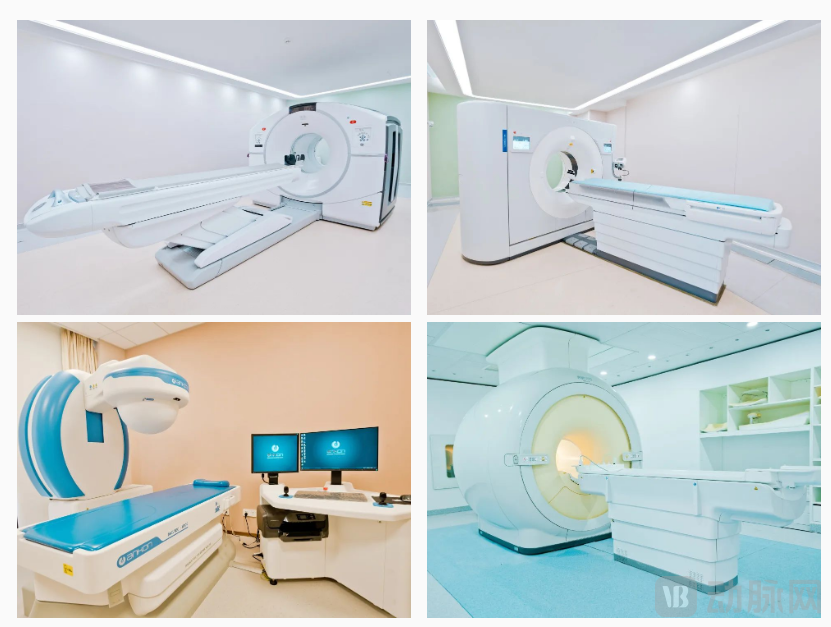
Selected Equipment at Qingdao Ping An Health (Testing) Center
In terms of professionalism, in addition to the high-end imaging equipment mentioned earlier, Ping An Health (Testing) Center has innovatively established its own Ping An Haoyi Medical Laboratory. By replicating advanced overseas laboratory standards, it shortens sample transport time and ensures the authenticity and reliability of test results. Meanwhile, targeting diseases with high prevalence among the Chinese population, such as tumors and cardiovascular diseases, Ping An Health (Testing) Center has developed specialized screening products for specific conditions. Through the integration of “genetic testing + early tumor screening,” it enhances the efficiency of early detection and diagnosis of tumors. The center has also launched specialty outpatient clinics, such as those for gastroenterology and cardiology. Leveraging large-scale medical equipment, it provides high-quality specialized examinations outside traditional hospital settings, including coronary CTA, cardiac MRI, and full gastrointestinal tract assessments. By integrating resources in imaging, clinical laboratory services, and renowned specialists, it establishes regional centers of excellence for specific diseases. Furthermore, Ping An Health (Testing) Center has introduced TCM-specialty outpatient clinics in cities such as Shanghai, Xiamen, and Qingdao, creating high-end TCM specialties featuring treatments like Tuina massage and Sanfu herbal patches.
In terms of whole-course health management, Ping An Health (Testing) Center has launched a membership system to maintain archival tracking of clients’ health status. It offers a suite of health management benefits, including value-added services such as popular science health salons, redemption of points for home self-testing products, and online consultations, as well as one-on-one, one-stop health management services. Furthermore, leveraging the resources of renowned physicians and hospitals within Ping An Group’s healthcare sector, Ping An Health (Testing) Center facilitates one-stop referrals for specific diseases across China, bridging diagnosis and treatment to achieve full-cycle, end-to-end, and comprehensive scenario-based management of user health.
“Our high-end health management is driven by both products and services. Customer service is a critical ‘opportunity’ link in business advancement, serving as the bridge between customers and products,” said an executive at Ping An Health (Testing) Center to VCBeat. “Every touchpoint must reflect a sufficiently high level of professionalism.”
Meanwhile, Ping An Health (Testing) Centers have also leveraged their brand advantages to drive the decentralization of high-end medical and health examination resources. In the past, high-end health management was primarily concentrated in megacities. These markets are relatively mature, with consumers having a clear understanding of high-end health management services. Additionally, the concentration of medical resources in these cities enables strong radiating effects on surrounding areas. “However, competition within the industry is also extremely fierce, which requires us to enhance our differentiated service capabilities,” said the person in charge.
New first-tier cities offer more favorable medical policies. More importantly, there is a substantial amount of unmet demand for high-end health management services in these areas. “In new first-tier cities, we are introducing an innovative product portfolio tailored to local characteristics to attract users from the local area and surrounding cities,” pointed out the person in charge. Taking the recently opened Qingdao Center as an example, Ping An Health (Check-up) Center plans to leverage Qingdao’s advantages as a coastal tourist city by developing premium products such as travel-oriented health checkups.
Admittedly, the rapid emergence of high-end health management has injected strong growth momentum into the domestic health management market, whose expansion had slowed due to the pandemic, while also offering domestic innovators in health management the possibility of expanding their business boundaries. However, how to leverage professional service capabilities to overtake competitors in the health management market undoubtedly tests the medical professional service capabilities of physical examination institutions. Of course, we also hope to see the domestic physical examination industry cultivate high-end brands with global influence.