

Seeking Certainty Amid Change: Trends and Opportunities in Pharmaceutical Industry and Supply Chain | Honghui Fund CEO Summit

Yeasen
Tool Enzyme Raw Materials and Diagnostic Product R&D, Manufacturer

HighLight Capital
Medical Investment Firms

Visum
High-end Oral Solid Dosage Form Developer
On August 4, the 2022 Taihu Bay Life and Health Future Conference & HLC CEO Summit was grandly held in Wuxi.
At the summit,Wang Feng, Co-founder and General Manager of LePure; Cheng Zhongyi, General Manager of Jingjie Bio; Liu Xuejun, Founder of Shanghai Yaotan; Shi Yibo, Deputy General Manager of Yeasen; Zhu Honggang, Founder of VisumAs for"Trends and Opportunities in the Pharmaceutical Industry and Supply Chain"In-depth discussions and exchanges were conducted on this topic., He Xing of HLCServed as the moderator. VCBeat has compiled the on-site materials as follows.
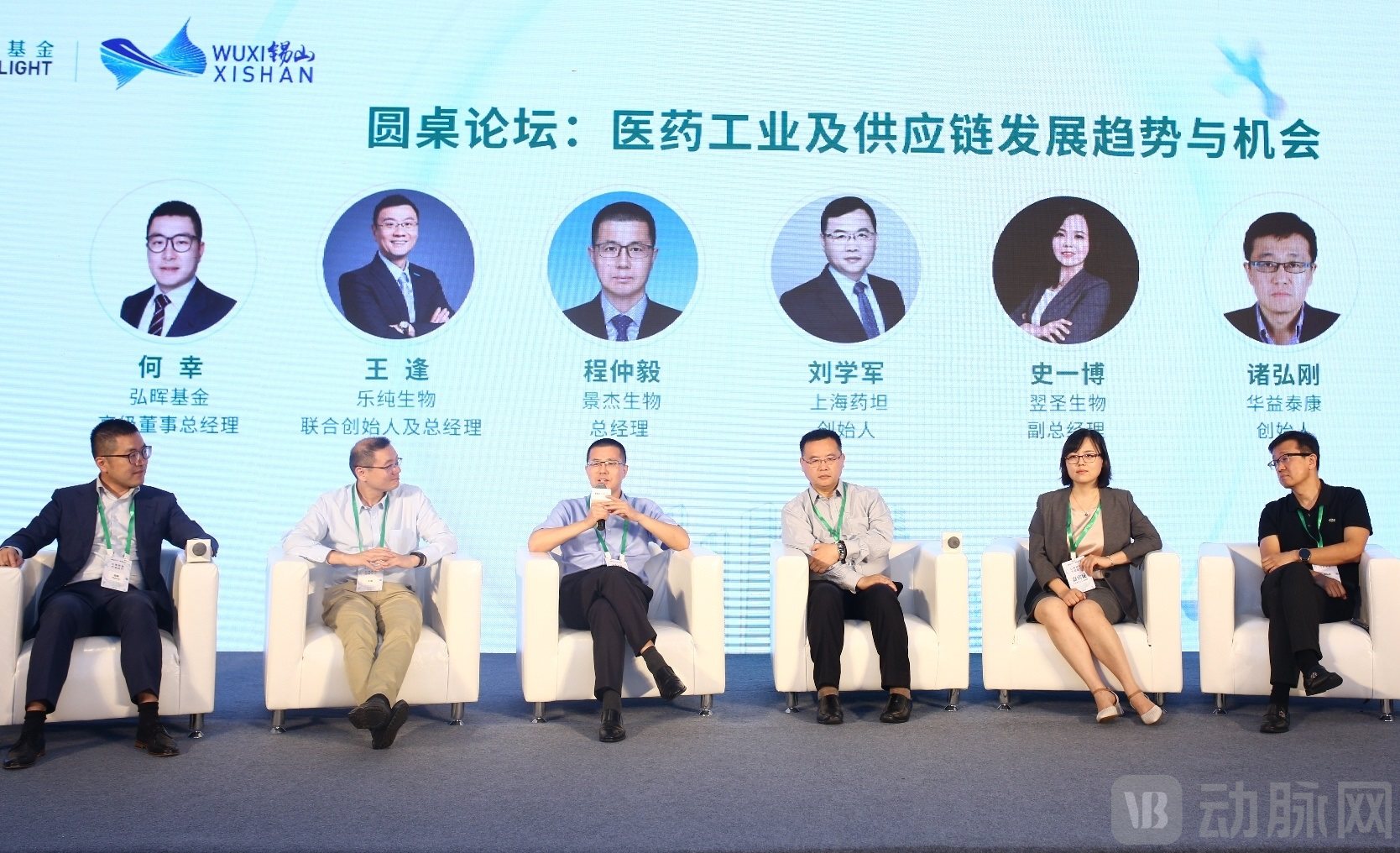
He Xing, HLC:In recent years, Chinese CRO and CDMO companies have been flourishing. Influenced by the pandemic and shifting international dynamics, increasing attention has been directed toward "chokepoint" products in the biopharmaceutical industry. LePure, Yeasen, and Jingjie Biotech are among the companies operating in this space. We invite the three entrepreneurs to discuss the trends observed over the past two years in these critical segments of the biopharmaceutical sector. Additionally, within what timeframe can we expect to achieve domestic R&D and manufacturing capabilities for upstream equipment, raw materials, and consumables?
Wang Feng, Co-founder and General Manager of LePure Introduction:Over the past two years, single-use consumables have been essential tools supporting capacity expansion for all COVID-19 vaccine manufacturers. Many companies actively responded to the national demand for COVID-19 vaccines, leading to temporary capacity shortages. With comprehensive improvements in both production volume and quality, we have basically met the needs of three major customer segments in China’s biopharmaceutical industry: antibody-related products or antibody CDMOs, the vaccine sector, and cell therapy companies. In addition to fulfilling basic customer demands, we have continued to advance the localization of our upstream supply chain, including all raw materials for single-use products.
"I believe that with the development of China's biopharmaceutical industry and the growth of its customers, the gap between our products and imported ones is continuously narrowing. I think a significant portion of import substitution can be achieved within two to three years."
He Xing, HLC:So, do you think there are still any products in this area that remain vulnerable to supply chain chokepoints? How far are we from achieving full self-sufficiency?
Wang Feng, Co-founder and General Manager of LePure Introduction:Currently, the industry is collectively advancing in the fields of single-use consumables and single-use equipment. However, I personally believe that equipment development faces greater challenges at present. We are capable of manufacturing such equipment, and its performance has improved significantly; for instance, the antibody expression concentration achieved by domestic single-use bioreactors is now on par with imported counterparts. Nevertheless, many fundamental electronic components within these devices remain entirely dependent on imports, a challenge that requires more Chinese startups to join forces in addressing.
"In the past couple of days, I visited some suppliers in Shenzhen and found that alumni from the Department of Precision Instrument Manufacturing at Tsinghua University have been launching startups to tackle this very challenge. As an upstream supply chain enterprise, we have the responsibility and obligation to help them improve quality, enabling them to create high-precision products and achieve complete domestic substitution."
Cheng Zhongyi, General Manager of Jingjie BioFrom the perspective of technological chokepoints, common vulnerabilities lie in hardware procurement and raw material acquisition. As a proteomics company specializing in mass spectrometry analysis, although we currently source our high-end mass spectrometers from Europe and the United States, we are not currently affected by supply chain restrictions in this area. Furthermore, given the advancement of China’s high-end manufacturing capabilities, I am confident that all hardware-related bottleneck issues will be resolved in due course.
From the perspective of raw materials, there are two types of bottlenecks: one involves restrictions on production technology for raw materials, and the other involves constraints on the supply of raw materials. Relatively speaking, bottlenecks related to raw materials are easier to resolve. At least in the field of proteomics, we face no risk of foreign supply chain restrictions on the raw materials used in biological reagents. For instance, regarding antibodies, we possess fully independent research and development capabilities as well as production capacity, making us immune to such external constraints. Therefore, from this standpoint, Jingjie is not constrained by any bottlenecks. On the contrary, I believe that our self-developed technologies and our world-first, proprietary antibody products could even position us to exert leverage over others.
Shi Yibo, Deputy General Manager of Yeasen:Mr. Cheng’s impassioned remarks just now truly ignited my enthusiasm. Yeasen is engaged in the basic scientific research sector, a market also facing so-called “chokehold” challenges. Specifically, despite limited growth in funding, researchers are under increasing pressure to publish in higher-impact journals and conduct more comprehensive experiments, compounded by supply lead time issues. Therefore, we initiated our domestic substitution strategy early on. Given the wide array of research techniques and methodologies involved in the basic scientific research market, we have developed and reserved a broad portfolio of products. This explains why we already had relevant offerings well before the rise of mRNA technology. At Yeasen, we live by the motto, “Winning the scientific research community means winning the market,” and we will continue to deepen our presence in this segment. Meanwhile, we have found that the scientific research market has provided us with seed customers. Leveraging their trust in Yeasen and our commitment to continuous customer service, we have expanded our business into industrial markets such as diagnostic testing, biopharmaceuticals, and vaccines.
In the early stages, our clients’ supply chains were relatively mature and stable. Consequently, replacing core raw materials carried the risk of introducing new uncertainties, leading to low client willingness to test alternatives regardless of product quality. Yeasen proactively encouraged many industrial clients to test its molecular enzymes at an early stage. As a result, when the pandemic erupted, we became the brand that came to mind first and the products prioritized for testing and evaluation. Our current success is built on the groundwork laid during the company’s early development. Driven by protein engineering and enzyme evolution technologies, Yeasen independently develops and manufactures over 1,500 types of core raw materials and reagents, including molecular, protein, and cell-based products. We have strengthened our R&D investment, production facilities, and quality systems to provide customers with stable, safe, and reliable products, thereby achieving autonomous control over the industrial chain at the source.
He Xing, HLC:Although the macroeconomic environment has been lackluster this year, the CRO companies we have invited today—Visum and Shanghai Yaotan—have both delivered impressive results. How have you adjusted your corporate strategies and business layouts? And what are your considerations regarding future development directions?
Zhu Honggang, Founder of Visum:We primarily operate in the field of small-molecule chemical drugs, where business scalability largely depends on downstream demand. Based on our direct experience over the past two years, there has been substantial demand for CMO services in the small-molecule chemical drug sector, which is dominated by generic drugs. In China, the implementation of the Marketing Authorization Holder (MAH) system has stimulated the development of a large number of enterprises. To achieve sustainable growth, these companies must establish manufacturing capabilities. Given the lengthy industry chain spanning R&D, production, sales, and quality systems, the vast majority opt to engage CRO and CMO providers. Consequently, over the past two years, demand in this segment has not declined due to volume-based procurement policies; instead, it has increased significantly, particularly among small and medium-sized enterprises.
Companies need to enhance their comprehensive capabilities. Simply building a manufacturing facility is insufficient for securing projects. To excel in business operations and effectively undertake product manufacturing, companies must possess strong R&D expertise and a capable R&D team. This is because when clients transfer development projects, there is often a disconnect between their R&D personnel and our production processes. Experienced R&D professionals can effectively communicate with clients regarding quality system requirements, production scale, costs, and other critical factors.
Liu Xuejun, Founder of Shanghai Yaotan:As the saying goes, “Whoever controls active pharmaceutical ingredients (APIs) rules the world.” If the supply of raw materials is constrained, all subsequent efforts will be compromised in terms of cost, quality, and other aspects. Therefore, we have established an end-to-end open platform spanning from intermediates to APIs and finally to finished dosage forms. Innovative drug companies indeed seek such comprehensive service chains to enhance their output efficiency.
Meanwhile, to adapt to the current market, we are also continuing to extend our reach upstream. Previously, we only focused on identifying starting points in the early stages; now, we are delving deeper to assist biotechnology companies with the “discovery” phase. Given our profound understanding of industry products, we can significantly enhance their early-stage efficiency and subsequently channel more projects to them.
Furthermore, each company should possess its own technical specialties. For instance, photochemical reaction technology is highly specialized, and we have developed distinct capabilities in this area. When other manufacturers struggled to source sodium cyanide for large-scale production, we were able to secure the reagent thanks to our specific qualifications and robust safety management systems, thereby expanding the boundaries of our service offerings.
More importantly, CDMOs must adopt a global outlook. As China’s innovative drug industry advances, we are poised to shine on the world stage. Therefore, we should grow alongside domestic innovative pharmaceutical companies and jointly drive innovation onto the global market.
HLC's He Xing:In a complex and ever-changing environment, each enterprise has its own distinct growth strategy. We would also like to hear about various companies’ considerations and outlooks for their future growth strategies, as well as the opportunities or challenges they foresee in this process.
Wang Feng, Co-founder and General Manager of LePure Biotech:LePure initially pursued horizontal expansion. In biopharmaceutical manufacturing, four major categories of consumables account for more than 80% of the total production cost per batch: first, various filtration systems; second, single-use technology products; third, cell culture media; and fourth, purification resins.
Currently, by combining independent R&D with inorganic growth, we have acquired a filter manufacturing company and established an R&D center in Boston, USA, to conduct fundamental theoretical research and development. Meanwhile, we have also achieved vertical integration by localizing the production of certain upstream raw materials for our products.
Furthermore, the overseas market also deserves significant attention. Our overseas revenue in the first half of this year has already matched the full-year total from last year. You will find that biopharmaceutical customers in Southeast Asia and along the “Belt and Road” routes are also flourishing. In the second half of the year, we will gradually expand into Southeast Asian countries, serving growing biopharmaceutical clients in “Belt and Road” nations just as we have served China for the past decade.
Jingjie Bio General Manager Cheng Zhongyi:Amidst volatile and unpredictable changes, the most critical question for any enterprise is whether its chosen track is in decline or on the rise, as this determines the fundamental logic underlying its potential for further development. For Jingjie, we are fortunate to be positioned in the sunrise industry of proteomics, which affords us sufficient time, patience, and courage to lead the development of this field.
Mr. He Xing just mentioned the horizontal and vertical layout of enterprises. For Jingjie, internationalization of business is an inevitable trend in terms of horizontal expansion. From a vertical perspective, internal commercial integration is an essential component of endogenous development for the enterprise. For instance, five years ago, we primarily provided proteomics technical services. However, three years ago, we recognized that antibody reagent development had become an endogenous growth driver, given the challenges with upstream raw materials, national policy directions, and our accumulating customer base and protein data. Consequently, we naturally integrated antibody reagents into our overall business workflow.
Therefore, regardless of how complex the situation may be, enterprises must adhere to the original starting point of business development and respond to all changes with constancy.
Liu Xuejun, Founder of Shanghai Yaotan:CDMO companies must first stay true to their original mission. We focus on CDMO services rather than holding equity positions, a distinction that provides greater reassurance to our clients. Furthermore, the “D” (Development) in CDMO is the core of our business; it is unacceptable for a company to lack development capabilities due to insufficient technical support. Therefore, we will continue to increase investment in this area. For instance, in synthetic biology, we employ innovative methods to replace traditional processes. Although some products are well-established, our new technologies can significantly reduce their production costs.
There was a saying in the past: “Extend horizontally to the edges, and vertically to the bottom.” Vertical integration must have a certain depth. For instance, with nucleic acid-based drugs and vaccines, we previously supplied only basic raw materials. Now, we need to advance further by providing more products and services to innovative pharmaceutical companies. This is a new direction we should strive toward.
Only through continuous technological iteration can we sustain our momentum in the CDMO sector. Furthermore, strict compliance is essential. For instance, our manufacturing facility in Anhui Province operates in full accordance with EU standards. We have also assisted marketing authorization holders in submitting several Drug Master Files (DMFs). Our quality management system is aligned with international standards, thereby facilitating global expansion.
Shi Yibo, Deputy General Manager of Yeasen:We have plans at two levels.
First, from a commercial perspective, Yeasen has designed a three-step strategy: the first step is for sales of self-developed and self-manufactured products to exceed those of distributed products; the second stage is for industrial market sales to surpass those in the research market; and the third stage is for overseas sales to exceed domestic sales. We have now launched the third stage.
To unlock production capacity, enterprises must expand into overseas markets. As the panelists in the preceding roundtable discussion noted, global expansion is essential. They further added that while there are many paths forward, the domestic market is highly saturated; only by meeting international standards can companies remain competitive within China. Given this reality, Yeasen is committed to going global.
Second, regarding industry positioning, Yeasen will continue to focus on core raw materials and platform technologies. While assisting customers in drug development, we also strive to understand scientific research, clinical issues, and manufacturing processes. A comment I once heard, “Those who make magnetic beads do not understand IVD applications,” has long resonated within me. We at Yeasen are determined to avoid such pitfalls. Therefore, we have established front-end R&D centers for direct customer engagement, while our mid-tier operations concentrate on enzyme development or the R&D of specific technology platforms. Meanwhile, we maintain close collaborations with many leading scientists to ensure the advancement of our foundational technological understanding and research. From this perspective, Yeasen is unequivocally focused on providing tools and expanding its technology platforms to support the R&D of life science tools.
Zhu Honggang, Founder of Visum:We have observed an increase in demand over the past two years, which has given rise to four key insights. First, we must maintain confidence and are committed to scaling up our CDMO business. Second, we recognize the inherent risks; while we identify opportunities, so do our competitors. Although we possess certain first-mover advantages—such as a quality system that has already supported the export of numerous products to the United States—we must carefully consider how to expand these advantages and enhance production capacity. Without sufficient and stable capacity, it is impossible to take on a broader portfolio of products. Third, we will strengthen close collaboration and communication with clients, making strategic early investments in specialized areas, such as unique manufacturing processes. This approach not only addresses customer needs but also resolves our own corporate development challenges. Fourth, we are pursuing internationalization by increasing our investment in global operations.