

WeDoctor Among Five Health Sector Firms Named to Forbes China's 2022 Top 50 Most Innovative Enterprises
On August 12, Forbes released the “2022 China’s Top 50 Innovative Companies” list. Five companies from the big health sector were included, such as WeDoctor Group, WuXi Biologics, and Hengrui Medicine. Other selected innovative companies from different fields include CATL, iFlytek, Huawei Cloud, Luxshare Precision, DJI, and DingTalk.
“Forbes” stated that the 2022 Top 50 Innovative Companies in China list evaluates corporate innovation strength by starting from basic dimensions such as business models, R&D investment, and intrinsic growth potential, while analyzing the development status, competition, and industry trends across different sectors.
Unlike in previous years, due to the severe volatility in domestic and overseas capital markets, Forbes has also referenced an innovation premium indicator—derived from cash voting by secondary market investors—for its sample of listed companies, to gauge the market’s confidence in technology-driven innovators.

Since its inaugural release in 2018, this marks the fifth year of the Forbes China Top 50 Innovative Enterprises list. In the big health sector, WeDoctor, as China’s largest digital healthcare platform, has been included in the Forbes 2022 China Top 50 Innovative Enterprises list once again, following its initial selection in 2018 and consecutive inclusion in 2019. It is the only enterprise in the big health sector to have been listed three times, becoming one of the most frequently featured and widely watched companies on the list.
Public data shows that as of June 2022, WeDoctor had connected with nearly 8,000 hospitals across China, with 300,000 registered physicians on its platform. The company operates 34 internet hospitals nationwide, 19 of which have integrated local medical insurance payment systems. According to the evaluation criteria of Forbes’ 2022 China Most Innovative Companies list, WeDoctor demonstrated strong resilience and breakthrough innovation capabilities in key dimensions such as business model, R&D investment, and self-growth potential.
In terms of business model, as the founder of China’s first internet hospital—Wuzhen Internet Hospital—WeDoctor pioneered the “Digital Health Community” model in 2019. This model leverages the advantages of digital technologies and internet platforms to digitally integrate regional healthcare institutions, forming tightly-knit internet medical consortia and health management organizations. While alleviating pressure on large hospitals, enhancing the capabilities of primary care facilities, and improving the efficiency of medical insurance payments, it provides the public with integrated online-and-offline health management services accessible nearby.
Currently, the WeDoctor Digital Health Community model has been implemented and achieved routine operations in provinces and municipalities such as Shandong, Fujian, and Tianjin. In multiple cities, the business volume and revenue of the Digital Health Communities have reached the scale of Grade A tertiary hospitals. For instance, the Tianjin Grassroots Digital Health Community commenced construction in early 2020. As of now, it has been under construction and operation for 30 months, with daily outpatient visits exceeding 10,000. Following the establishment of routine operations, it rapidly developed large-scale revenue-generating capabilities.
 WeDoctor Digital Health Consortium Chronic Disease Management Center
Meanwhile, through sustained and constructive R&D investment, WeDoctor has accumulated unique and highly competitive “key assets” distinctive to the digital healthcare industry, establishing dual barriers in technology and cost, thereby securing a strong market advantage within the sector.
Public data shows that as of December 31, 2020, WeDoctor held more than 470 patents and software copyrights in China, and had established a medical tagging library comprising nine major categories with over 840,000 tags in total, enabling precise matching of patient and physician needs through its relationship engine and knowledge graph.
Notably, WeDoctor’s “Computer-Aided Diagnostic Software for Fundus Imaging” was included in the National Medical Products Administration’s latest list of approved medical devices for domestic production this April, becoming another ophthalmic AI-assisted diagnostic system approved for market launch in China, following diabetic retinopathy products from companies such as Silicon Intelligence and Airdoc. This product also serves as a key breakthrough for WeDoctor in strengthening its digital healthcare industry chain and continuously expanding its technological advantages in digital healthcare applications.
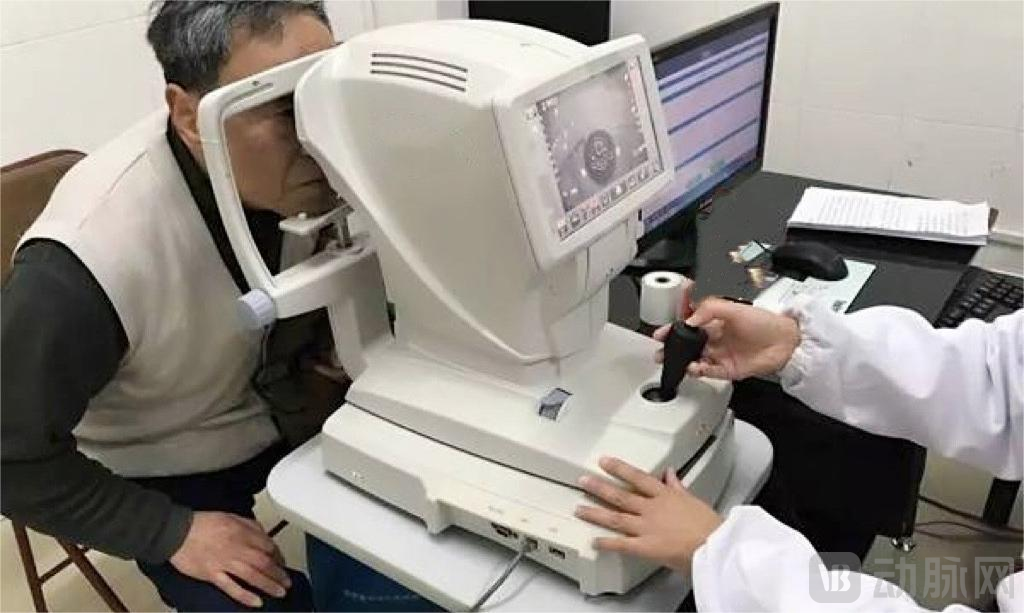 WeDoctor Ophthalmology AI Fully Automated Fundus Camera
Currently, China’s healthcare reform is entering a new phase. The country is comprehensively promoting a shift from a “treatment-centered” to a “health-centered” approach. Digital health has become a critical pathway for China to reshape healthcare management and service delivery models, optimize the allocation of medical and health resources, ensure equitable and accessible healthcare services, and meet the public’s multi-level and diversified needs for medical and health services.
In this process, Chinese-style health stewardship organizations, represented by WeDoctor’s Digital Health Community, are flourishing with the support of digital technologies. In April 2022, five central ministries and commissions, including the Cyberspace Administration of China, the Ministry of Agriculture and Rural Affairs, and the National Development and Reform Commission, jointly issued a document proposing to “guide localities in exploring the development of grassroots digital health communities.” This will accelerate the nationwide promotion and replication of the digital health community model, further underscoring the growth potential of this business model.