

Emulate Inc. Files for IPO: The Commercial Leader in Organ-on-a-Chip Technology Backed by Johnson & Johnson, Roche, and Takeda

Emulate
Organ Chip Technology Developer

Founders Fund
Venture Capital Firm

Northpond Ventures
Venture Capital Firms
Recently, the FDA approved the first Investigational New Drug (IND) application supported by preclinical data derived from “organ-on-a-chip” studies, once again drawing attention to this field. The debate over whether organ-on-a-chip technology can replace traditional animal testing has also been reignited.
However, over the past few years, financing in the organ-on-a-chip sector has not been particularly robust, with only a handful of startups securing substantial investment. According to public data, Insphero, founded in Switzerland in 2009, has raised $35.2 million to date; Mimetas, established in the Netherlands in 2013, has raised $32.4 million; and Hesperos, which has recently gained significant prominence, has raised a total of $5.9 million.
Emulate, Inc., officially established in 2014, after its Series E financing round last September,Total funding has approached $225 million, making it the most heavily funded company in this niche. Prominent investors in Emulate include well-known firms such as Founders Fund and Northpond Ventures.
Emulate’s financing pace reflects the market’s recognition of its commercial operations. Its more integrated solutions, abundant collaborative resources, and outstanding commercialization capabilities have enabled it to maintain close partnerships with a wide variety of clients.In addition to academic research institutions, 10 of the world’s top 25 biopharmaceutical companies are using Emulate’s products.
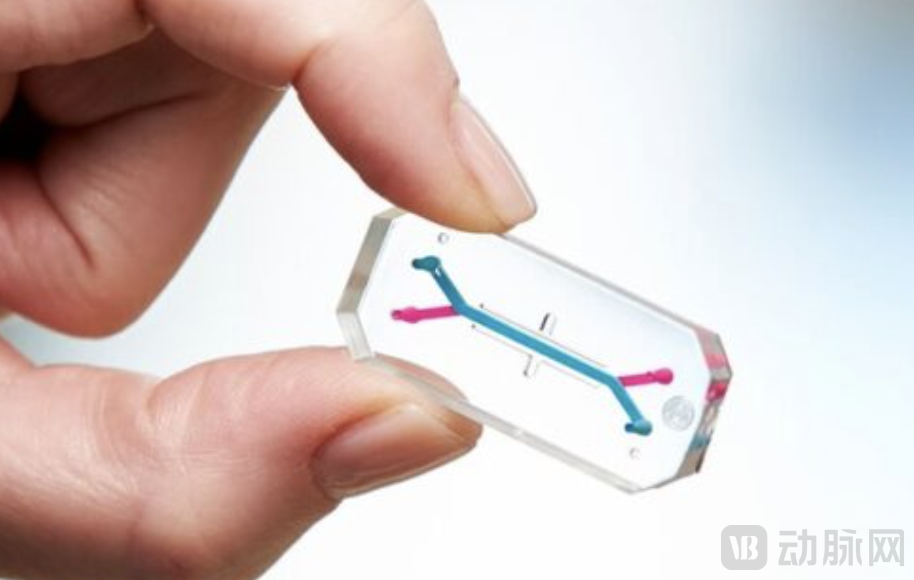
Emulate’s Organ-on-a-Chip, Image Source: Company Website
From Lab to Industry Chain, Emulate Launches Integrated Solutions
Emulate, based in Boston, USA, is a globally renowned company specializing in the development of organ-on-a-chip technologies and associated equipment. Its “Human Emulation System” is hailed as a “cutting-edge technology” that is revolutionizing the drug discovery process.
Organ-on-a-chip companies spun out of university research institutes are the main players in this sector, such as TissUse from the Technical University of Berlin, Hesperos from Cornell University, and Mimetas from Leiden University.Emulate hails from Harvard University and was spun out of the renowned Wyss Institute for Biologically Inspired Engineering.
The Wyss Institute for Biologically Inspired Engineering is an interdisciplinary research institution focused on developing new biomimetic materials and devices for applications in healthcare, manufacturing, and other fields. It has garnered significant attention for its novel model of integrating academic and industrial R&D, and is even regarded as an incubator for biomedical innovation startups.
As early as 2007, Donald Ingber, the founding director of the Wyss Institute for Biologically Inspired Engineering, was inspired to begin developing the lung-on-a-chip. In 2010, his team’s successful construction of the lung-on-a-chip was published in Science.
The chip model is divided into upper and lower layers, separated by a biological membrane. The upper layer consists of lung cells exposed to air flow, while the lower layer comprises lung capillary cells perfused with culture medium, thereby simulating the physiological process of respiratory expansion and contraction in human alveoli.
In 2012, the U.S. National Institutes of Health (NIH), the Food and Drug Administration (FDA), and the Defense Advanced Research Projects Agency (DARPA) jointly launched the “Organs-on-Chips” Challenge with a $75 million investment, aiming to develop a chip-based system that simulates human organs.
The Wyss Institute for Biologically Inspired Engineering became involved and ultimately secured investment. Over the following two years, the Wyss Institute developed a “Human Emulation System” based on organ-on-a-chip technology.
In July 2014, the research team spun off from the Wyss Institute for Biologically Inspired Engineering to formally establish Emulate, Inc., with the aim of further developing and promoting organ-on-a-chip technology and advancing it toward commercialization.
Organ-on-a-chip companies have long been searching for the ideal business model.Within the industry chain, the downstream customers of such companies are primarily academic institutions, contract research organizations (CROs), and large pharmaceutical companies. In terms of products, some organ-on-a-chip companies focus on providing ready-to-use microfluidic devices, while others develop operable, ready-to-use single-organ chips or offer multi-organ models toHelps with UnderstandingMetabolism and Function Among Organs.
Many companies adopt a business model that combines product sales with services, as stakeholders in the scientific and industrial sectors have diverse application needs for organ-on-a-chip technology.
For instance, academic and research institutions may aim to leverage organ-on-a-chip technology to elucidate pathophysiological mechanisms; biotechnology and pharmaceutical companies may prefer high-throughput, low-cost platforms for preclinical drug screening, as well as toxicity and efficacy evaluation; while hospitals may favor standardized systems or customized services for personalized drug screening.
Emulate offers a more integrated solution: its “Human Emulation System,” a highly standardized organ-on-a-chip platform comprising organ chips, hardware, and software applications.
Customers can purchase organ chips directly. Emulate’s current organ chip portfolio includes Brain-Chip, Colon Intestine-Chip, Duodenum Intestine-Chip, Lung-Chip, Kidney-Chip, and Liver-Chip, among others. Complete systems are also available for purchase. In addition to the organ chips, each system includes the “Zoë® Culture Module,” accessories, and analysis software.
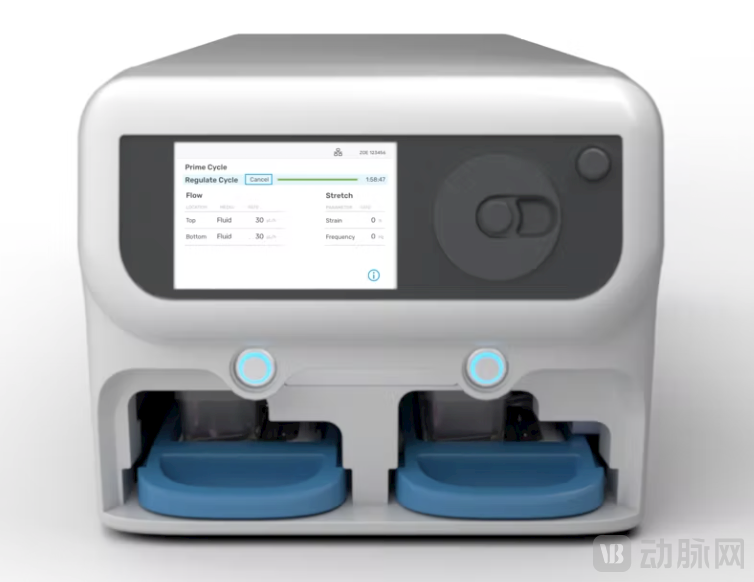
Zoë® Culture Module, image source: company website
Zoë provides the biological fluids, mechanical forces, and other components required to build microphysiological systems. With Zoë, researchers can design organ models for use with analytical software, as well as remotely plan studies, update experimental parameters, and monitor experimental outcomes.
“The Human Body Simulation System” eliminates researchers’ reliance on complex manual injection pumps and enhances experimental reproducibility. This integrated solution has gained popularity by addressing researchers’ needs and improving upon traditional organ-on-a-chip technologies.As of March 2020, Emulate’s Zoë® Culture Module had been installed and was in use in 150 laboratories.
Capturing 15% of the Global Market Share: Emulate’s Path to Commercialization
Currently, leading organ-on-a-chip companies such as Emulate, TissUse, and Hesperos account for more than 50% of the global market share, with Emulate holding a market share as high as 15%.
In 2015, Johnson & Johnson purchased Emulate’s Blood Clot-on-a-Chip for the first time., to assess its procoagulant properties in marketed drugs or drugs under investigation.
Roche Uses Emulate’s “Human Emulation System” for New Drug Development, and leverage patient-derived cells and corresponding chips to test drug responses in individual patients or patient populations, thereby advancing personalized therapy;Takeda Uses Emulate’s Intestine-Chip for Gastrointestinal Disease Drug Development;AstraZeneca Integrates Emulate’s Organ-on-a-Chip Technology into Its IMED Drug Safety Laboratory。
Emulate, Inc. has also received various government orders.In the collaboration between Emulate and NASA, Emulate’s human tissue-based chips will be sent into outer space to conduct a series of experiments on the International Space Station. Subsequently, they will be compared with their counterparts remaining on Earth to observe the effects of Earth’s gravity or space microgravity on brain cells and their cognitive functions.
In 2020, Emulate collaborated with the FDA to evaluate autoimmune effects during COVID-19 infection and the safety of COVID-19 vaccines using its Lung-on-a-Chip model. The FDA also plans to engage in multiple collaborations with Emulate, including using Brain Chips to simulate Alzheimer’s disease and Liver Chips to predict patient drug responses.
Subsequently, Emulate collaborated with the U.S. Army to study how the novel coronavirus interacts with lung cells.
Throughout its development, Emulate has maintained close collaboration with clients across various sectors, addressing diverse needs and incorporating feedback to continuously validate the efficacy of its organ-on-a-chip technology and expand its application scenarios. Emulate’s commercialization efforts have also driven progress across the entire industry.
As an industry bellwether, Emulate is venturing into the deep waters of commercialization.
Emulate appointed Jim Corbett as its new CEO in 2020, succeeding James Coon, who guided the company through its early stages and successfully secured multiple rounds of financing.
Jim Corbett brings over 25 years of commercialization experience in the medical and life sciences sectors. As a former executive at PerkinElmer, where he managed more than 4,000 employees, he has amassed extensive operational expertise. He will help Emulate further expand its team and enhance its commercialization capabilities.
The potential of organ-on-a-chip technology in drug development and its prospects for personalized precision medicine are promising. The FDA’s multiple initiatives also reflect a positive stance toward this technology. The future trajectory of industry leader Emulate, Inc. warrants continued attention.