

Kerubal Health & Science Accelerates R&D-Industry Integration in Medical Foods Through Joint Lab with Academician Chen Jian's Team
In 2022, the integration of industry and research continued to accelerate.
An increasing number of university researchers are moving into the industry sector, striving to translate theoretical research into practical applications; meanwhile, more enterprises are partnering with universities and research institutes to lay out strategies for source innovation.
In the field of foods for special medical purposes, the same scenario is unfolding.
On August 13, the Second Summit Forum on Future Food and Biotechnology and the Unveiling Ceremony of the Yixing Institute of Food and Biotechnology were held. The Yixing Institute of Food and Biotechnology, jointly established by the expert team led by Academician Chen Jian from Jiangnan University and the Yixing Economic and Technological Development Zone, was officially launched in the Yixing Life and Health Industrial Park.
The Yixing Institute of Food and Biotechnology has also partnered with several leading industry enterprises, including Bloomage Biotech and Mengniu Group, to jointly establish multiple laboratories. Among these is the Joint Laboratory for Research and Development of Foods for Special Medical Purposes, co-established by Academician Chen Jian’s team and KHS.
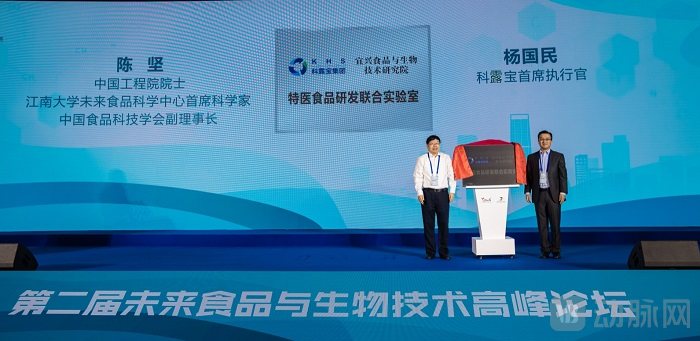
In the field of foods for special medical purposes (FSMP), the integration of production and research and development is accelerating.
With the deepening aging population and rising nutritional demands for patient rehabilitation, coupled with accelerated R&D and production expansion in the medical food sector, the industry is on the verge of an explosive growth phase.
Strategically Deploying Source Innovation to Accelerate R&D of Ingredients and Processes for Foods for Special Medical Purposes
From 2018 to 2022, public financing data showed that the cumulative number of financing deals in the FSMP (Food for Special Medical Purposes) sector was fewer than 10, with most rounds occurring at early stages.
Established in 2017, Zhejiang Kelubao Group is one of the few companies to have secured financing. In 2019, Kelubao Group, which received investment led by Mifang Capital, emerged as an innovative company in China specializing in the research and development (R&D) and production of foods for special medical purposes (FSMP). It is also among the earliest companies in China to engage in the R&D, production, and sales of FSMP products for infants.
The ability to secure capital investment in the early stages of industry development is attributable to its strong R&D and manufacturing capabilities.
To address the specific disease conditions, nutritional needs, and taste preferences of Chinese infants and young children, KHS Group has been deeply engaged in the field of foods for special medical purposes (FSMP) for infants and young children for many years. The company conducts independent research and development and production across multiple dimensions, including raw material selection, rational formulation, specialized processing technologies, and clinical feedback. Its product pipeline covers areas such as food allergies, preterm and low-birth-weight infants, lactose intolerance, and amino acid metabolism disorders, providing comprehensive solutions for the prevention and management of these conditions.
In terms of production, KHS Group adopts internationally advanced production equipment, processes, and production flow management, with manufacturing bases established for dry-process, wet-process, and liquid formulations. Its in-house laboratory is capable of performing over 2,000 specialized tests across the entire process, from raw materials and production processes to finished products.
“Compared with European and American countries, a major factor currently constraining the development of the FSMP (Foods for Special Medical Purposes) industry is the lack of source innovation in areas such as raw materials and process R&D,” mentioned Dr. Gao Yuyou, Vice President of R&D at KHS Group. He noted that although KHS Group has accumulated certain advantages in R&D and production, relying solely on corporate innovation is far from sufficient; collaboration with university research teams is needed to drive source innovation and achieve breakthroughs in raw material and process development.
From the perspective of higher education institutions, universities serve as the primary vehicles for undertaking national scientific research in the food industry. Taking Jiangnan University as an example, Academician Chen Jian revealed that “future foods represent a key area of development and support within China’s 14th Five-Year Plan for the food industry.” The Future Food Science Center at Jiangnan University has undertaken multiple national-level strategic research and planning tasks in the food sector. By integrating the “3T” disciplines—Food Technology, Biotechnology, and Information Technology—the center aims to enhance food supply and quality, ensure food safety and nutrition, and meet the needs of specific scenarios and population groups. In this process, the commercialization of research achievements from academic institutions can bring substantial benefits to the general public.
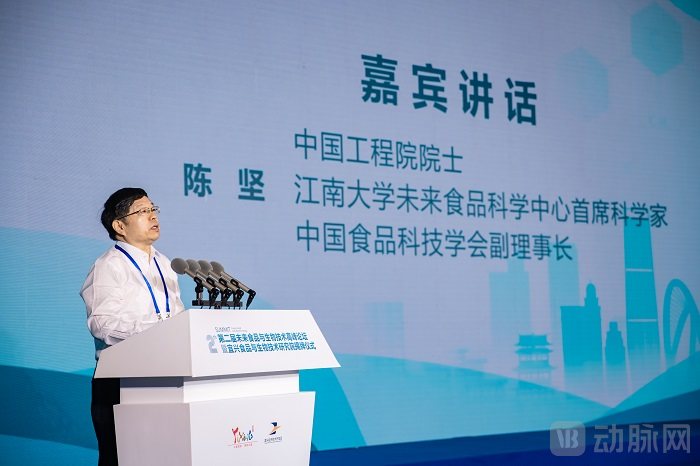
At an academic conference, Yang Guomin, CEO of the Kelubao Group, met Academician Chen Jian. Their shared vision for industry-academia collaboration paved the way for a strategic partnership between the two parties. One is a leading figure in academia, and the other a pioneer in industry; they came together due to aligned philosophies and common goals. However, to ensure long-term success, complementary strengths are required in addition to shared objectives.
For KHS Group, as a co-founder of the Joint Laboratory for R&D of Foods for Special Medical Purpose (FSMP), the Yixing Institute of Food and Biotechnology focuses its core research on FSMP development and clinical translational applications. Furthermore, strong support from an expert team ensures that R&D activities proceed in an orderly manner.
It is reported that the team of Academician Chen Jian, which collaborates with KHS Group, includes Academician Chen Jian, Chief Scientist at the Future Food Science Center of Jiangnan University; Associate Professor Zhang Guoqiang from Jiangnan University (who holds a Ph.D. in Biochemistry from the Chinese Academy of Sciences); Assistant Researcher Guan Xin from the Future Food Science Center of Jiangnan University (who holds a Ph.D. in Cell Biology from Peking Union Medical College [Medical Department of Tsinghua University]); and Assistant Researcher Liu Xiao from the Future Food Science Center of Jiangnan University (who completed a joint Ph.D. program between South China University of Technology and Wageningen University), among others. Associate Professor Zhang Guoqiang, along with Guan Xin, Liu Xiao, and other team members, have repeatedly led national and provincial/ministerial-level Natural Science Foundation projects, accumulating substantial academic expertise in fields such as foods for special medical purposes (FSMP).
For Academician Chen Jian’s team, KHS offers dual advantages: on one hand, its long-standing commitment to the field of foods for special medical purposes (FSMP) enables it to accurately identify market demands and pain points, thereby facilitating research with a commercialization-oriented approach; on the other hand, as a commercial entity, KHS has assembled a team of professionals with extensive experience in channel development within the pharmaceutical and specialized nutrition sectors. Leveraging its familiarity with hospital and maternal-infant distribution channels, KHS is well-positioned to effectively bring related research outcomes to market.
Kelubao Group also demonstrates significant advantages in research and development and production. As of August 5, Kelubao Group has accumulated over 40 patent applications and approvals, including invention patents, utility model patents, and copyright registrations, primarily covering production processes, equipment, and manufacturing methods for foods for special medical purposes (FSMP).
The strategic alliance between Academician Chen Jian’s team and the R&D team of KHS Group will undoubtedly facilitate comprehensive collaboration across all stages, from academia to market commercialization and from raw material development to product manufacturing.
Driven by Commercialization, KHS Group Advances Full Product Line Layout
Dr. Gao Yuyou mentioned that, at present,The Joint Laboratory for R&D of Foods for Special Medical Purposes primarily conducts collaborative research in three areas concerning formula foods for special medical purposes, including: studies on production processes of key raw materials, preclinical studies on the efficacy of major active ingredients, and research on the rationality of comprehensive nutritional composition and flavor.
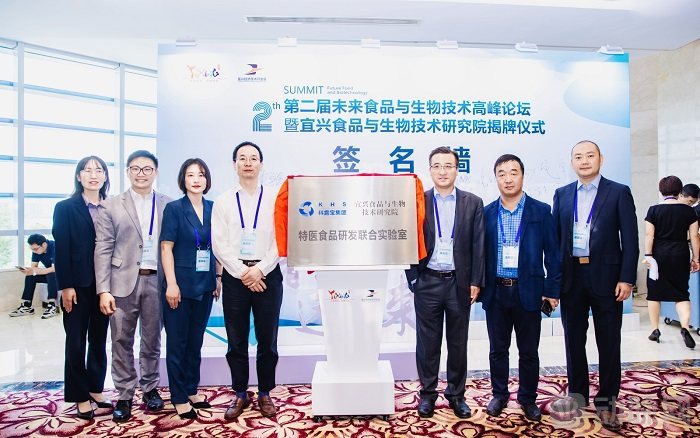
The choice to pursue collaboration in the aforementioned areas is associated with the following factors:
First, there are still unmet user needs in the current market.As living standards and health awareness continue to rise, both physicians and patients increasingly recognize the critical importance of nutritional support in patient recovery. Population aging and the growing prevalence of chronic diseases, including cancer, have driven substantial demand for foods for special medical purposes (FSMP). In 2020, the global FSMP market reached RMB 87 billion, with a growth rate of approximately 6%, while China’s FSMP market was valued at around RMB 5.7 billion, registering a growth rate of 30%. Significant room for future development remains.
However, the reality is that the FSMP (Food for Special Medical Purposes) sector has long been dominated by imported products, with a lack of offerings tailored to the nutritional characteristics and needs of East Asian populations. KHS is targeting this market, where demand is robust yet remains insufficiently met, aiming to develop FSMPs suited to the physiological constitution of Chinese individuals. The exploration of this market undoubtedly holds significant commercial growth potential.
Secondly, it is determined by Kelubao Group’s own positioning and market strategy. Kelubao Group positions itself as a leading platform-based enterprise providing personalized nutritional dietary solutions for chronic disease management, which means that Kelubao Group aims to offer comprehensive solutions to its target user population. The layout of related research directions can facilitate the development of Kelubao Group’s solutions.
From this perspective, it is only logical that KHS Group, while pursuing R&D in the aforementioned areas, has also strategically invested in the development of specialized medical foods for infants and young children, as well as hypoallergenic complementary foods. During infancy and early childhood, specialized medical foods alone are insufficient to address nutritional needs; hypoallergenic complementary foods are also essential to manage issues such as food allergies that may arise during nutrient intake. Under the KHS Group, the Yishi brand is dedicated to providing safe, nutritious, and high-quality professional hypoallergenic food solutions for infants and young children with food allergies. Currently, Yishi has launched a range of hypoallergenic complementary food products.
It is reported that while positioning itself in the market for infant and young child foods for special medical purposes (FSMP), Kelubao Group has also chosen to invest in the research and development of adult oncology nutrition products, a decision driven by its market strategy. On one hand, there is currently a lack of FSMP products tailored to the physiological characteristics of the Chinese population in the infant sector, which is closely linked to public welfare. Addressing this rigid demand can serve as a rapid entry point into the market. On the other hand, the move into adult oncology nutrition can be seen as Kelubao Group’s proactive preparation for the future. In the FSMP sector, stringent review processes and lengthy registration cycles often mean it takes several years to obtain approval and certification. By strategically laying the groundwork in adult oncology nutrition now, thereby establishing its own technical barriers and process development capabilities, Kelubao Group positions itself to rapidly enter the adult FSMP market in the future.
More importantly, perhaps, is the fact that Academician Chen Jian’s team and the R&D team of KHS Group possess the capacity to undertake research and development in the aforementioned areas.
Associate Professor Zhang Guoqiang specializes in food enzyme engineering and synthetic biology. He has led multiple national-level scientific research projects, with primary research interests including rational design and directed evolution of enzyme molecules, development and optimization of high-efficiency expression systems for functional proteins, and construction and application of ultra-high-throughput screening systems. His expertise can help KHS Group address relevant process-related challenges. Guan Xin’s main research focuses on the developmental mechanisms and regulation of animal stem cells, high-efficiency manufacturing of cell-based alternative proteins, and development of specialized medical foods for tumor patients; she holds 18 invention patents. Liu Xiao primarily researches green biomanufacturing of plant-based foods and development of special dietary foods. He has presided over projects such as those funded by the Natural Science Foundation of Jiangsu Province and published numerous papers indexed in SCI and EI. This expert team ensures the steady advancement of R&D efforts.
As for the Kelubao Group, with the participation of Dr. Gao Yuyou and others, its primary role is to safeguard the research direction and progress from a commercialization perspective. Leveraging Kelubao Group’s inherent advantages in production-oriented R&D and manufacturing, it can facilitate the translation of R&D products from the laboratory to factory-scale production.
In accordance with national regulations on the registration of foods for special medical purposes (FSMP), manufacturers must serve as the primary entities for formula registration applications. The formula, trademark, and product must correspond one-to-one, which undoubtedly raises the market entry threshold for FSMP.With the establishment of the joint R&D laboratory for foods for special medical purposes (FSMP), KHS Group will undoubtedly leverage this collaboration to address the aforementioned challenges, build a comprehensive product pipeline, and establish its own technological barriers in the industry through source-level innovation, thereby further unlocking greater commercial value.
Accelerated Integration of Production and R&D: The FSMP Industry Is Poised for Explosive Growth
In the field of foods for special medical purposes, collaborations between enterprises and university research institutes are not uncommon.
Dr. Gao Yuyou noted that enterprises, as the production end, can address issues in downstream manufacturing, while universities, as the R&D end, are often capable of solving problems in upstream research and development. “Few companies excel in both R&D and production.” Industry-academia collaboration in production and R&D can drive the rapid development of the entire special medical purpose food industry.
In fact, the industry widely believes that the special medical purpose food sector is still on the eve of an explosion, and the entire industry needs to invest more human and material resources to achieve rapid development.
In this process, the tasks of “how to discover new raw materials, how to formulate micronutrients, and how to translate R&D into production to truly help patients improve their health” remain arduous and require long-term efforts.
After achieving integration of production and R&D across the entire FSMP (Food for Special Medical Purpose) industry, encouraging scientists to step out of their ivory towers and prompting enterprises to prioritize source innovation in technology, the industry may usher in new development opportunities—
The FSMP sector may truly be poised for an explosive boom.