

Can the 'National Team' Solve the Long Payback Cycle in China's Elderly Care Industry?
On August 8, 2022, Dalian Health and Elderly Care Group was officially unveiled. This follows the establishment of Shanghai Health and Elderly Care Group in June, Beijing Health and Elderly Care Group earlier this year, and Suzhou Health and Elderly Care Group in July 2021, indicating that local governments are organizing state-backed entities to enter the health and elderly care industry.
State-owned enterprises’ participation in elderly care is nothing new; however, what we have been familiar with in the past are central state-owned enterprises such as China Health & Elderly Care Group, China Health Investment Group, and Guozhong Kangjian. Their capabilities are unquestionable. With local governments now stepping in, this shift may bring forth more measures tailored to local realities.
The elderly care industry is characterized by high upfront investment and a long payback period, imposing stringent requirements on companies’ financing, investment, and operational management capabilities. Consequently, over the past decade, even well-capitalized real estate developers have struggled to establish viable business models in this sector.
Compared with real estate enterprises, state-owned enterprises (SOEs) may be better suited to participate in the elderly care industry. With strong financing capabilities, SOEs possess the conditions and capacity to serve as pioneers in the development of elderly care services. Furthermore, the brand image of SOEs is more readily recognized by consumer-end customer groups.
State-owned enterprises' participation in elderly care is both a fulfillment of their responsibility and a reflection of their inherent advantages.
According to data from the Suzhou Municipal Government, there are currently 1.8884 million elderly individuals among the registered population of Suzhou, accounting for 24.78% of the total population. The average life expectancy has reached 84.33 years, placing Suzhou at the forefront of population aging in China. It is therefore imperative to accelerate the development of elderly health and wellness services and the broader health and wellness industry.
Suzhou Kangyang Group Centrally Signed 13 Projects in JulyThrough these 13 projects, we can see that Suzhou Kangyang Group has laid out its business across sectors including elderly care institutions, real estate for wellness, medical services for the elderly, home-based care, education in geriatric wellness, and health-focused tourism.
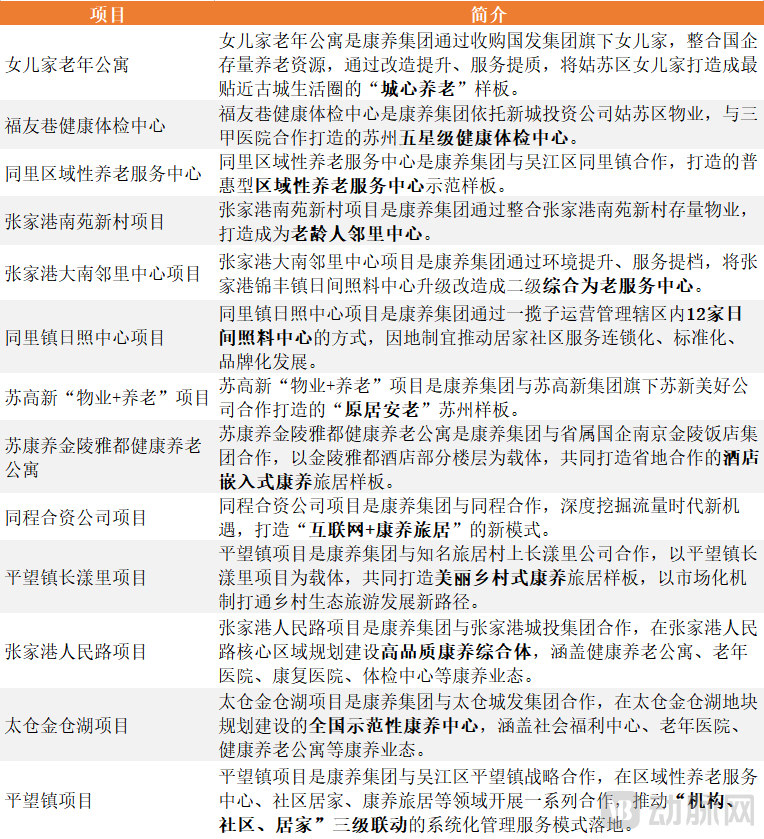
Su Kangyang’s Recently Signed Projects, Data Sourced from the Official Website
It is evident that the projects included in this centralized signing cover a wide variety of elderly care models, ranging from urban core senior living and adult day care to hotel-based wellness retreats and rural health tourism. Does this mean that the “national team’s” strategy for entering the elderly care sector relies solely on its substantial strength, launching full-scale, multi-pronged initiatives?
Perhaps we should look beyond the surface of business operations and explore the core advantage of state-owned enterprises’ participation in elderly care: revitalizing resources.
Here, beyond the capital, technology, and talent required for elderly care services, the most critical resource is the exploration of repurposing underutilized properties.
The implementation of elderly care projects and services hinges on the availability of facilities, with facility costs constituting the largest proportion of investment in elderly care institutions. If local governments can effectively integrate idle venue resources and successfully pave this path, it will undoubtedly alleviate the heaviest burden borne by elderly care service providers, enabling them to accelerate their growth and seize new development opportunities.
The persistent coexistence of “a bed is hard to find” and “half the beds are vacant” in elderly care institutions.
On one hand, the substantial infusion of various resources into the elderly care industry has yielded results that fall short of expectations. On the other hand, vacant beds represent failed investments and fail to contribute positively to the development of the sector. In other words, this phenomenon constitutes one of the core contradictions in the development of the elderly care industry.
While the issue can be simply explained by supply and demand dynamics, the underlying logic requires the inclusion of macro-level factors such as policy and market conditions. We can analyze this issue from the respective perspectives of the government, elderly care institutions, and users; it is the differing mindsets of these three stakeholders that have given rise to this phenomenon.
01 Planning Phase
For local governments, the development of elderly care services is a key performance indicator.
A common phenomenon is that the discourse on the development goals of elderly care institutions mainly focuses on “achieving X beds per 1,000 elderly people,” “reaching a total of X beds in welfare institutions,” and “adding X new beds.” The commonality among these metrics lies in their emphasis on bed coverage rates and the growth in the total number of beds.
While pursuing quantitative growth, the government may cause a mismatch between the service supply of elderly care institutions and market demand, resulting in structural imbalances.
For the supply sideElderly Care Institutions, to achieve rapid expansion, it is essential to align with government demands.
Although the elderly care industry serves an aging population, it is itself a sunrise industry. According to projections in the White Paper on the Development of China’s Elderly Care Industry released by the Chinese Academy of Social Sciences, the scale of China’s elderly care industry is expected to reach approximately RMB 13 trillion by 2030. Faced with a market of this magnitude, social capital is rapidly flowing in.
Driven by development plans and local governments prioritizing bed capacity expansion as a key growth target, social capital has rapidly entered the market to establish elderly care institutions under these policy incentives. In this process, however, social capital has overlooked the actual needs of older adults, including their preferences regarding pricing, service offerings, and location of elderly care facilities.
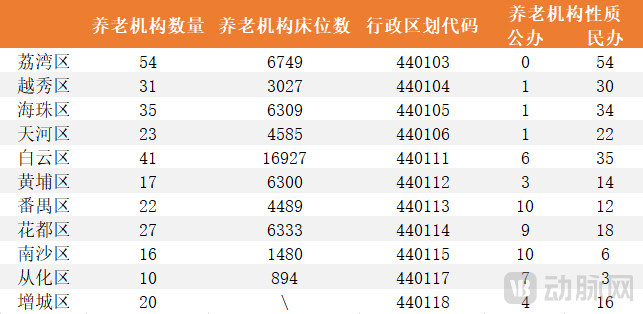
Distribution of Elderly Care Institutions in Guangzhou, Data Sourced from the Guangzhou Civil Affairs Bureau
On the demand sideElderly, actual needs were not listened to carefully.
The actual needs of the elderly are complex and dynamic, making it difficult for both elderly care institutions and government agencies to accurately describe and predict their demand characteristics; consequently, these factors are often excluded from decision-making processes. Furthermore, domestic family environments in China somewhat restrict the channels through which the elderly can voice their needs.
The expressive and cognitive abilities of the elderly are gradually declining. Their children often experience ambivalence when deciding whether to place them in long-term care facilities, failing to accurately convey the seniors’ true needs to external parties. As a result, governments and care institutions cannot access the genuine perspectives of the elderly, leaving the actual end-users as outsiders.
In other words, during the planning phase, the lack of effective information exchange among the three parties led to a structural imbalance between supply and demand, resulting in the coexistence of “a severe shortage of available beds” and “a 50% vacancy rate.”
02 Construction Phase
YesGovernmentFor elderly care institutions, their development is contingent upon urban construction.
Currently, there are two primary approaches to securing sites for the construction of elderly care facilities: one is to acquire new land plots for building such facilities from scratch; the other is to retrofit existing buildings or venues into elderly care facilities. Regardless of the approach chosen, there is a noticeable trend toward suburbanization in the site selection for elderly care institutions.
Over the past decade, the predominant theme of urban development in China’s first- and second-tier cities has been the continuous outward expansion of central urban areas, leading to sustained urban growth. During this process, the pace of population migration has lagged behind the rate of urban expansion, resulting in a declining distribution of the elderly population from the city center toward the suburbs.
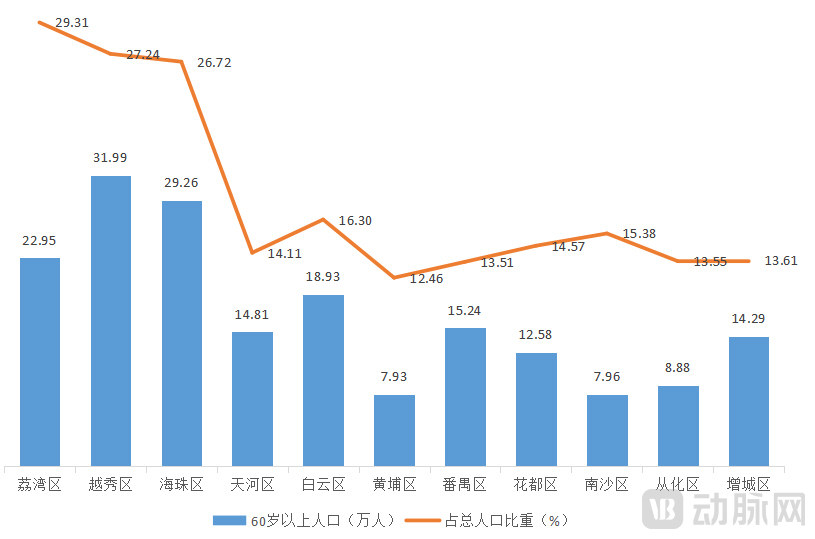
Number of Registered Elderly Population in Guangzhou in 2021, Data Source: Guangzhou Municipal Bureau of Statistics
However, in reality, land reserves in central urban areas are limited and rents are high, so the government lacks the incentive to develop such land into elderly care facilities with low economic returns. Consequently, newly added elderly care institutions are mostly located in suburban areas, despite this being mismatched with the distribution of the elderly population.
Local governments have no intention of making changes, as urban construction and development remain their top priority. Urban expansion often requires strategic industrial layout to attract population inflows. Elderly care is itself a service-oriented industry; rather than restricting it, governments hope that the establishment of elderly care institutions will drive population growth in their respective areas.
YesElderly Care InstitutionsIn contrast, large institutions can secure prime territories, while small ones are relegated to suburban areas.
As a service-oriented industry, elderly care institutions are significantly influenced by transportation accessibility, surrounding medical resources, and demographic factors. Locations with superior transportation infrastructure, high-quality medical resources, and dense populations are often the optimal sites for establishing elderly care facilities.
However, land resources in central urban areas are scarce, making it difficult to secure new plots for the construction of elderly care facilities. To meet demand, the only option is to identify suitable abandoned sites, such as former factories, within central urban areas and retrofit them into elderly care facilities. Yet, the limited availability of such sites fails to satisfy market demand.
Notably, under the logic of government subsidies based on bed count, elderly care institutions tend to prioritize maximizing bed capacity, which entails larger facility footprints and higher construction costs.
After comprehensively considering factors such as demand, rental costs, and land appreciation potential, elderly care institutions tend to choose locations in relatively accessible suburban areas. The distinction lies in the fact that large, well-capitalized institutions prioritize land value appreciation, leveraging the construction of elderly care facilities to acquire substantial land holdings, whereas small and medium-sized institutions are limited to leasing arrangements.
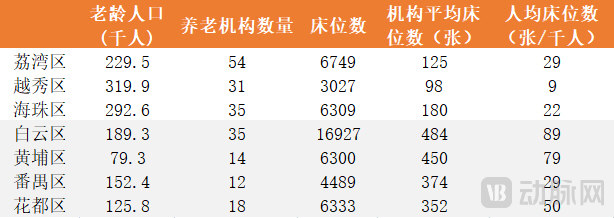
Comparison of Elderly Care Resources Between New and Old Districts in Guangzhou; Data Sourced from the Guangzhou Municipal Bureau of Statistics and the Civil Affairs Bureau
The suburbanization of private elderly care institutions has made it common for the number of beds in urban suburbs to approach or even exceed that in central city areas.
Taking Guangzhou as an example, the city’s former “old four districts”—Yuexiu, Dongshan, Haizhu, and Liwan—had the largest elderly population in the city, except that Dongshan District has been abolished. The remaining three districts have fewer total nursing home beds and fewer beds per capita than the emerging districts of Baiyun, Huangpu, Panyu, and Huadu. Will Nansha, Conghua, and Zengcheng also evolve in this direction in the future?
YesElderly PeopleFor elderly care institutions, location considerations are primarily based on three aspects: family care, medical conditions, and transportation accessibility.
Many elderly people are reluctant to move into senior care facilities primarily because the location of these facilities tends to isolate them from their existing family and social networks. At this stage of life, older adults place particular importance on emotional support and familial care; even when opting for institutional care, they prioritize facilities located close to their own homes or their children’s residences.
As individuals age and experience a decline in physiological function, their demand for medical services continues to rise. Elderly care facilities located in proximity to large hospitals are more likely to be favored by the elderly population.
High-quality medical resources are typically concentrated in central urban areas, leading to relatively higher occupancy rates for elderly care facilities in these regions. In contrast, privately operated elderly care institutions in suburban areas with weaker infrastructure experience lower occupancy rates, making the phenomenon of “high vacancy rates” unsurprising.
Transportation accessibility is an extended consideration for family caregiving and medical resources. If suitable facilities cannot be found within the optimal range, suburban elderly care institutions with convenient transportation, facilitating visits by children and access to medical resources, become a trade-off choice.
In other words, during the construction phase, driven by urban expansion needs, the government’s macro-level planning for the location of elderly care facilities has gradually shifted toward suburban areas. This trend, compounded by cost considerations on the part of care providers and location preferences among the elderly, has resulted in a situation where “beds are hard to come by” in central urban areas while “nearly half remain vacant” in near-suburban regions.
03 Operational Phase
GovernmentDepartmental resource allocation has resulted in significant disparities in the operational conditions between public and private elderly care institutions.
Constrained by fiscal pressures and given the inherent social welfare nature of elderly care institutions, local governments lack the incentive to significantly expand public elderly care facilities. Instead, they tend to allocate limited resources toward creating demonstration projects. In terms of quantity, both the number of public elderly care institutions and their share of total beds remain very small.
In recent years, the Chinese government has continuously expanded the categories and increased the amounts of subsidies for the operation of private elderly care institutions; however, these subsidies have not effectively alleviated the operational pressures faced by such institutions.
Take the substantial one-time “Medical-Nursing Integration Subsidy” as an example. To qualify, elderly care institutions must provide certain medical services or even establish on-site medical facilities. This is an insurmountable task for small and medium-sized elderly care providers, which already operate on razor-thin margins. Such a “strength-reinforcing rather than weakness-supporting” approach has instead intensified the operational pressures on these smaller institutions.
Furthermore, operational subsidies from the government constitute the primary form of financial support available to most private elderly care institutions. However, as the government increasingly standardizes eligibility criteria—imposing stricter requirements on both hardware and software aspects, such as building area and fire safety equipment—the difficulty of securing these subsidies is gradually increasing.
For privateElderly Care InstitutionCompliance with regulatory requirements is certainly mandatory; however, in practice, while software-related standards are relatively easy to meet through improvements, hardware-related aspects—such as the infrastructure of existing buildings, which have long been planned and established—are far more difficult to modify. Starting from scratch would entail prohibitive costs.
An industry insider told VCBeat, “The largest cost components for elderly care institutions are site construction, renovation, and equipment procurement, which typically account for around 70% of the total investment. Moreover, the elderly care business is a capital-intensive, long-tail model with a prolonged payback period, leaving operators with little capacity to start over from scratch.”
In addition, the imbalance in site resources has also led to differences in the fee standards of elderly care institutions.
For public elderly care institutions, venue and facilities are provided by the government, thereby avoiding the largest cost component. Coupled with the logic of creating demonstration projects, many public institutions not only charge low fees and offer well-equipped facilities but are also located in central urban areas. In contrast, private elderly care institutions, constrained by high venue costs, charge significantly higher fees than their public counterparts. Additionally, due to less favorable locations, their appeal to older adults is limited.
“Low Subsidies → High Fees → Low Occupancy Rates → Low Subsidies” is a vicious cycle that private elderly care institutions are forced to confront.
ForElderly People, cost is the primary consideration. Currently, the income of elderly people in China mainly comes from pensions; enterprise annuities and occupational annuities have not yet developed, and the development level of commercial pension insurance is relatively low. The elderly still need to use their own savings or support from their children to make up for the insufficiency of pensions, so their willingness to pay for elderly care services is relatively low.
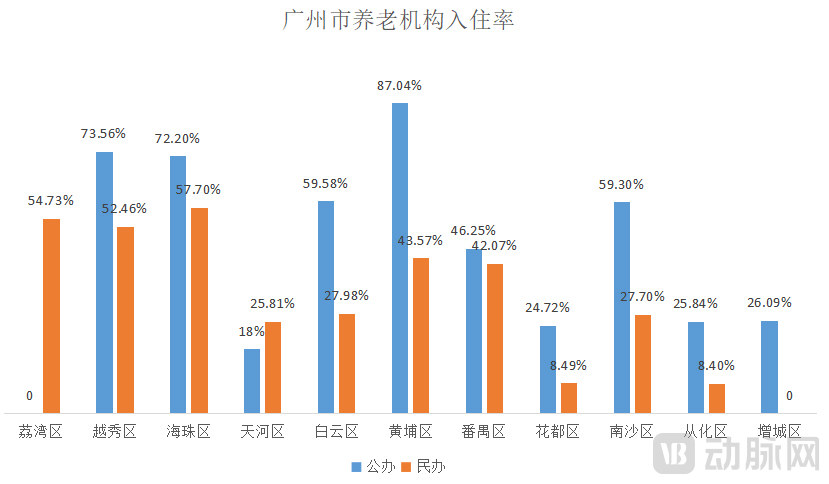
Statistics on Occupancy Rates of Elderly Care Institutions in Guangzhou, Data Sourced from the Comprehensive Platform for Elderly Services of the Guangzhou Civil Affairs Bureau
Unequal allocation of resources, exemplified by disparities in facility access, has led to variations in operational costs. When the limited payment capacity of the elderly is taken into account, private elderly care institutions fall into a vicious cycle of “low subsidies → high fees → low occupancy rates → low subsidies,” whereas public elderly care institutions enter a virtuous cycle of “high subsidies → low fees → high occupancy rates → high subsidies.”
Data on occupancy rates at elderly care institutions in Guangzhou also reveal that, overall, publicly run facilities generally have higher occupancy rates than privately operated ones, and those in central urban districts have higher occupancy rates than those in newer districts.
In summary, the phenomenon of “a bed is hard to find” in public institutions in the central urban areas and “half vacancy” in private institutions in the suburban areas is caused by the asynchronous understanding of elderly care among the government, private elderly care institutions, and the elderly. However, the core contradiction fundamentally lies in the issue of venue.
High venue costs result in long investment cycles and slow returns. Can the entry of national teams change this ecosystem?
State-owned enterprises (SOEs), as a vital component of the national economy, have accumulated substantial stock assets, such as real estate and land, over the course of economic development. How to revitalize these idle resources has long been a key consideration for SOEs.
As early as 2016, the General Office of the Communist Party of China Central Committee and the General Office of the State Council issued guidance to state-owned enterprises (SOEs) on “revitalizing existing state-owned capital resources to develop the elderly care industry.” In 2021, the National Development and Reform Commission (NDRC) further emphasized that, in promoting the transformation of training and sanatorium facilities affiliated with local party and government organs and state-owned enterprises and public institutions into elderly care service facilities, particular attention should be paid to revitalizing existing assets.
01 Site Supply: Balancing Cost Differences Between Public and Private Institutions
Common existing real estate assets held by state-owned enterprises mainly include state-owned properties, government properties, idle real estate assets, and hotel properties.
Properties such as community centers, Party-mass service centers, and sub-district ancillary facilities are typical examples of state-owned assets. Characterized by widespread distribution but relatively small individual sizes, coupled with uncertainties in regional population distribution and elderly care demands, and fragmented ownership across various state-owned enterprises lacking effective centralized management, there has historically been no viable commercial model for operating these venues.
Other government-owned properties, such as former office buildings and collective dormitories, offer larger floor areas and are more amenable to centralized renovation. Local governments are also inclined to collaborate with external enterprises to leverage synergistic advantages and adopt the public-private partnership model of “publicly built, privately operated” to deliver a diverse range of elderly care products and services.
Furthermore, state-owned enterprises engaged in real estate development have constructed commercial supporting facilities, such as apartment buildings, in accordance with planning requirements. Due to lower sell-through rates compared to residential properties, a significant number of these units remain vacant. Repurposing these assets presents a promising development direction, whether by renovating them into senior living apartments or integrating medical and elderly care services in coordination with nearby hospitals.
Additionally, hotel resources include convalescent facilities affiliated with enterprises and public institutions across various regions. Revitalizing excess hotel capacity has long been a challenge that local governments seek to address, such as by leveraging hotel properties to establish postpartum care centers. Following the same logic, age-friendly renovations of hotels and the transformation of convalescent facilities will provide substantial venue resources for elderly care services.
Finally, there are the leftover sites from collectively owned enterprises, such as factory buildings. Due to issues of ownership, these sites have long lacked proper channels for resolution. However, benefiting from urban expansion, they are often located in relatively central areas, making them ideal locations for the development of elderly care services.
Previously, state-owned enterprises’ involvement in elderly care focused largely on the repurposing of internal idle properties, with benefits confined to the group’s own development and limited impact on regional elderly care. Today, by establishing new health and elderly care groups on a regional basis and revitalizing idle resources—represented by real estate assets—within a given area, there is a significant boost to the overall improvement of elderly care services across the region.
02 Integrate Local Resources to Build Industrial Clusters
State-Owned Enterprises Enter the Fray to Establish Health and Elderly Care Groups: Beyond Venue Resources, How Can They Truly Excel in “Health” and “Elderly Care”?
According to traditional thinking, it is common to interpret “Kangyang” (health and elderly care) as simply health plus elderly care. However, from the perspective of industrial development, Kangyang should be centered on health and wellness, while also taking elderly care into consideration.
The concept of health and wellness needs to be upgraded to "Health and Wellness+."
The development of the “Health and Wellness+” industry encompasses models such as the extension of traditional pharmaceuticals, tourism collaborations, commercial real estate partnerships, government cooperation, senior living communities, integrated community health services, the integration of medical care with elderly care, and investment in healthcare real estate. Meanwhile, health and wellness technology products—including medical and wellness equipment, telemedicine, the Internet of Things (IoT), big data, health screenings, health supplements, wellness tourism, and age-friendly products—are all poised to become the next growth drivers for the industry.
Furthermore, local competitive advantages must be taken into account. Taking Suzhou as an example, the city has accumulated substantial experience over the past few years in industries such as biopharmaceuticals, electronic information, and equipment manufacturing. The establishment of the Suzhou Health and Elderly Care Group can leverage a “market-oriented + industrialized” development model to build a health and elderly care industry cluster that meets market demands.
The development of industrial clusters is not limited to Suzhou alone but also extends products and services to the Yangtze River Delta region.
From a results-oriented perspective, the most direct outcome is likely the elimination of cognitive biases. In the past, older adults were viewed as consumers of public resources, and elderly care was considered merely a non-profit welfare endeavor that did not generate profits.
With the development of the health and wellness industry, the increasingly large elderly population may be regarded as significant contributors to and promoters of economic growth. This perspective helps clarify the relationships among the government, society, and older adults, thereby enabling more precise provision of elderly care services and products.
03 Institutional Derivative Services, Facilitating the Rapid Renovation of Idle Properties
The renovation of idle properties ultimately aims to promote their sustainable development, ensuring optimal utilization. To achieve this goal, functional upgrades and transformations of these properties are essential. While the renovation process itself is not overly challenging, the difficulty lies in ensuring that the renovated properties meet the requirements of subsequent operations. To mitigate future risks, thorough preliminary groundwork is indispensable, which also presents emerging opportunities.
There are numerous vendors providing solutions for elderly care institutions, but previously, these were predominantly generic offerings aligned with the industry’s earlier phase of extensive,粗放 growth. With such a large volume of vacant properties available, how can one determine their suitability for development into health and wellness facilities? This necessitates that vendors deliver more refined and detailed services.
For instance, project feasibility assessment requires designing appropriate elderly care service products by taking into account factors such as the demographic structure and categories of the surrounding elderly population, public healthcare resources, the pace of sectoral development, the regional competitive landscape, the form and scale of vacant properties, and the willingness of local residents. Furthermore, a financial model should be established based on investment criteria to conduct a comprehensive evaluation.
For state-owned enterprises with a large pool of idle properties to choose from, such services can effectively reduce post-investment operational risks, making them a worthwhile investment.
04 Elderly Care Services Evolve Toward Small-Scale, Aesthetic, Specialized, and Refined Models
Based on the review of Suzhou Kangyang Group’s recent batch of centrally signed projects, it is evident that after revitalizing venue resources, the state-backed entity does not intend to monopolize all operations. Instead, it is vigorously introducing social capital into the elderly care industry to provide products and services.
At this juncture, the core competitiveness of social institutions lies in their service capabilities.
In the past, to rapidly expand elderly care coverage, the government adopted a strategy of providing bed subsidies. However, from a commercial perspective, relying on subsidies does not constitute a stable business model. As the number of beds reaches a certain level, the gradual reduction of subsidies is a foreseeable event. Without sustainable operational capabilities, providers will ultimately be eliminated by the market.
In the past, private elderly care institutions were constrained by subsidy policies and focused primarily on bed capacity expansion. Subsequently, as subsidies have been phased down and state-backed entities have assumed responsibility for covering venue costs, service capability will determine the upper limit of development for elderly care institutions.
Moreover, given the vast number of state-owned properties, there are few venues capable of accommodating hundreds of beds. Future elderly care institutions may therefore evolve toward a “small and exquisite” model.
From the perspective of operational efficiency, if an institution serves both active seniors and those with disabilities or dementia, staffing arrangements will inevitably face challenges, making it impossible for the entire team to achieve optimal operational efficiency.
From a payment perspective, the willingness of end users to pay for comprehensive, inclusive elderly care is not high; in contrast, users demonstrate a higher willingness to pay for personalized and customized elderly care services targeted at specific populations.
From the user’s perspective, if adult children of elderly parents visit a senior care facility and find that its service prices range from 3,000 to 13,000 yuan, and despite having only about 100 beds, it offers various types of professional nursing care tailored to diverse disease-related needs, would they trust such an institution?
For elderly care institutions, it is essential to adopt a more focused target demographic in the future. For instance, by specifically catering to disabled seniors, designing corresponding service standards and making them public, and disclosing detailed cost breakdowns, these institutions can enable the children of elderly clients to quickly grasp the value of the services provided.
Ultimately, elderly care is a service industry, with its core focus on “people.” In the past, enterprises involved in this sector, particularly first-tier elderly care institutions, had limited room to operate due to cost constraints, especially site-related costs. Looking ahead, as state-owned enterprises provide a safety net at this level, how to develop the elderly care industry in a people-centric manner and offer diversified elderly care services has become a critical issue for elderly care institutions to carefully consider.
With the removal of site costs—the biggest constraint—the lower entry barrier may help resolve the challenge of long cycles and slow returns in the elderly care industry. For this RMB 13 trillion market, how capital will engage next remains to be seen.