

Yizhun Intelligence Secures National 'Little Giant' Status as Medical Imaging AI Leader Amid IPO Filing

MEDICAL AI
AI-Assisted Medical Imaging Diagnosis System Developer
The so-called “Specialized, Refined, Differential, and Innovative ‘Little Giants’” are a group of leading enterprises selected by the Ministry of Industry and Information Technology in accordance with the Interim Measures for the Gradient Cultivation and Management of High-Quality Small and Medium-sized Enterprises, characterized by “Specialization, Refinement, Distinctiveness, and Innovation“Characterized by a focus on niche markets, strong innovation capabilities, high market share, mastery of key core technologies, and superior quality and efficiency, these leading enterprises serve as critical pillars for future industrial chains and play a pivotal role in strengthening and supplementing supply chain resilience.”
The Ministry of Industry and Information Technology (MIIT) hopes that these enterprises can leverage innovative approaches to address critical issues, including the lack of core industrial technologies and hardware gaps at the national level; the overreliance on absorbing advanced manufacturing capabilities coupled with insufficient independent innovation; and the weak export performance of high-end industrial products by small and medium-sized enterprises.
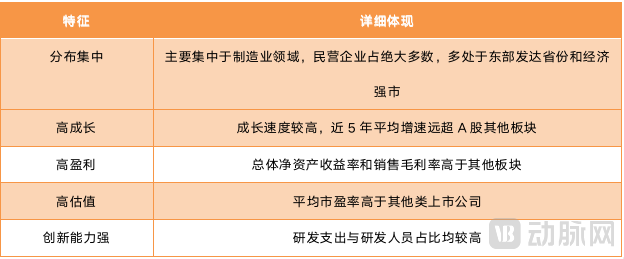
Characteristics of Listed “Little Giant” Enterprises Specializing in Refinement, Uniqueness, and Innovation
In addition to enjoying special support provided by the state, listed enterprises must also assume corresponding responsibilities: filling gaps in industrial development, securing strategic positions in supply chain competition, and maintaining their standing in international competition. Therefore, the certification criteria for “Little Giant” firms specializing in refined, distinctive, and innovative fields are far from simple.
In addition to basic requirements such as legal and regulatory compliance, under the “General Conditions,” enterprises must simultaneously meet multiple criteria within the innovation capability indicators, including “Operating Revenue and R&D Investment,” “R&D Institution Requirements,” and “Intellectual Property Requirements.” The “Operating Revenue and R&D Investment” criterion alone disqualifies many enterprises.
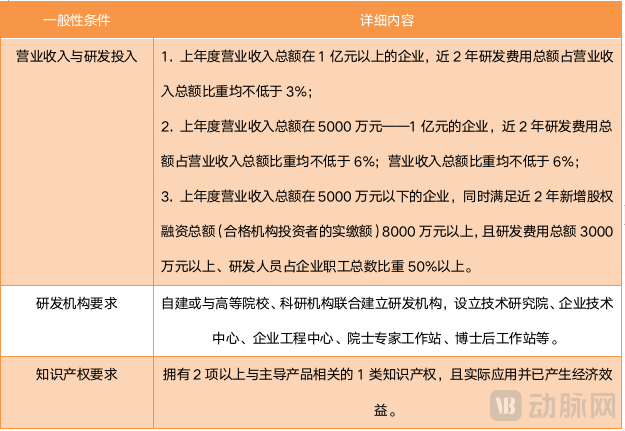
Criteria for Recognizing “Little Giant” Enterprises Specializing in Refinement, Innovation, and Uniqueness: Innovation Capability Indicators (Partial)
As a highly promising and globally competitive innovative industry in China, AI for medical imaging urgently requires attention and policy support. However, due to the long R&D cycles and slow commercialization across the sector, it was only in the past two years, as AI commercialization began to take shape, that companies started to see exponential growth in revenue. It is at this stage that AI medical imaging enterprises have begun to be included in relevant rankings, though their number remains very limited.
On August 12, Beijing Medical Standard Intelligent Technology Co., Ltd., a representative enterprise in imaging AI, was included in the newly released list of the fourth batch of national-level specialized, refined, distinctive, and innovative “Little Giant” enterprises.To better understand the value and significance of imaging AI companies being selected as “Little Giant” firms specializing in refinement, innovation, and uniqueness, VCBeat conducted an in-depth interview with Cao Ying, Vice President of MEDICAL AI.
Regarding the inclusion of medical imaging AI companies in the list of specialized, refined, distinctive, and innovative “Little Giants,” Cao Ying believes this serves as proof of China’s technological strength in the medical imaging AI industry.
“The development and global influence of ‘Made in China’ are evident to all. With the enhancement of technological capabilities, it is natural for us to ascend to the new height of ‘Intelligent Manufacturing in China.’ In recent years, amid the slowdown in global economic growth and structural changes on the demand side, as well as the proposal of goals for industrial structural upgrading, the issue of homogeneous innovation in China’s intelligent manufacturing has emerged to some extent, thereby weakening our country’s competitiveness in the global market.”
Medical imaging AI serves as a concrete example. When the industry was in its nascent stage, numerous startups flocked to this field by leveraging publicly available deep learning algorithms and pulmonary nodule datasets. However, within the fundamental logic that algorithms and data determine AI capabilities, homogeneity implies a lack of differentiation and confines the product’s scope of application. Such AI systems struggle to meet complex requirements for deployment across various hospitals and fail to generalize from pulmonary nodule detection to lesion screening in other organs.
“Such situations often occur at the early stages of an industry. During the industry consolidation from 2018 to 2020, companies with a solid understanding of medicine and strong R&D capabilities gradually broke through, while AI solutions with single functionalities, poor algorithm robustness, and inability to adapt to clinical scenarios slowly faded into history,” said Cao Ying.
“AI imaging companies focused on the head and neck region now boast strong competitive capabilities, with increasingly pronounced differentiation among them. The industry is gradually moving beyond an era of homogenization, as each company cultivates its own ‘specialized expertise.’ This specialization has facilitated the widespread clinical adoption of artificial intelligence in hospitals across China and enabled the export of high-quality products to overseas markets.”
Overall, being selected as a national-level specialized and sophisticated “Little Giant” enterprise is not only an affirmation of MEDICAL AI but also holds greater significance as a recognition of the entire medical artificial intelligence industry. Whether in terms of research translation capabilities or commercial viability, medical imaging AI is achieving scale and fostering a new wave of innovation.
Early applications of medical artificial intelligence were often criticized, largely because they were designed with a computational mindset rather than a clinical one. While these systems could indeed achieve the specific objectives set by their technical teams, those objectives did not integrate well into clinical practice.
Therefore, the "specialization" of medical AI must be grounded in specific clinical scenarios, enabling the value of the software to be measured through quantifiable benefits.
For example, breast cancer is currently the most prevalent cancer worldwide, with a total of 2.26 million new cases in 2020, including 420,000 in China. It should be noted that “new cases” here refers to statistically newly diagnosed cases, meaning that 420,000 patients were identified through screening in that year. In reality, a large number of patients are diagnosed at moderate to advanced stages. If detected early during the initial stages, diagnosis and treatment costs would amount to only a few thousand yuan, making it unnecessary to “panic at the mention of cancer.”
Therefore, to mitigate the impact of breast cancer, the most effective current approach is to promote regular breast cancer screening among women of appropriate age, andWhat MEDICAL AI aims to do is to use AI to fill the gap in the currently scarce medical resources.
Cao Ying told VCBeat, “In China, breast cancer screening for eligible women is primarily conducted by initial screening institutions and referral institutions. Initial screening institutions, with grassroots medical facilities as the main body, assess the breast health status of screened women through ultrasound examinations based on BI-RADS categorization. In accordance with the standardized screening protocols established by the National Health Commission, these institutions urge women with abnormal or suspicious screening results to seek further examination and treatment at referral institutions, including modalities such as mammography.”
However, even the most robust processes require human agents to lead and execute them.
There is a significant shortage of ultrasound physicians in primary screening institutions. These doctors face high workloads and are prone to fatigue, making it difficult for them to maintain sustained concentration, which can easily lead to missed or incorrect diagnoses. Furthermore, there is variability among physicians in assigning BI-RADS categories. Inaccurate categorization and diagnosis pose substantial risks of delayed treatment or overtreatment for patients, thereby undermining the efficient utilization of already scarce medical resources and eroding public trust in primary healthcare institutions.
Receiving institutions face similar challenges. Currently, there are only slightly over 1,000 physicians in China specializing in mammographic diagnosis. Interpretation results can vary by up to 30% among radiologists with different levels of experience. Furthermore, Asian women tend to have dense breast tissue, which leads to significant superimposition artifacts on mammograms. These factors collectively constrain the effective implementation of breast cancer screening.
To address the numerous issues inherent in the aforementioned processes, MEDICAL AI has introduced the “Pink Guardian AI” integrated solution for intelligent breast cancer screening and diagnosis, directly targeting both “supply” and “quality.” “Supply” refers to leveraging AI products capable of dynamic ultrasound image analysis to assist primary care physicians in making diagnoses, while “quality” entails implementing real-time quality control during the diagnostic process. This approach identifies images with acquisition issues during patient examinations, enabling timely correction of errors and ensuring that medical services deliver their intended effectiveness.
Merely achieving "specialization" can help a company survive, but it fails to build sufficient barriers to withstand shocks from beyond the normal business environment, let alone enable expansion and output beyond its regional base.
“German companies have a distinctive characteristic: while not particularly large in scale, each excels in its own niche, achieving excellence in specific fields. The ‘Little Giant’ enterprises specializing in specialized, refined, distinctive, and innovative sectors aim to encourage us not only to be ‘specialized’ but also ‘refined,’ so as to achieve corresponding accomplishments in niche markets.”
In contrast, within the field of medical artificial intelligence, numerous enterprises are capable of developing AI for assisted diagnosis. However, if such solutions merely serve as diagnostic tools without deep integration into physicians’ workflows, they fail to constitute a core competitive advantage.
Taking MEDICAL AI as an example, the company took two key actions in its deepening transition from “specialization” to “excellence.”
On one hand, while most medical imaging AI companies are “rushing in” to expand their coverage to more diseases, MEDICAL AI has concentrated its R&D efforts to develop in greater depth. In the field of breast health, it has achieved a full-stack intelligent solution covering “screening, diagnosis, treatment, research, and education.” The fundamental purpose is to expand coverage to more clinical scenarios and improve efficiency at every stage of physicians’ workflows. This is what we previously referred to as the “Pink Care AI” integrated intelligent solution for breast cancer screening, diagnosis, and treatment.
On the other hand, MEDICAL AI has launched a real-time dynamic AI-assisted diagnostic product to address pain points in ultrasound examinations. In traditional ultrasound procedures, physicians must frequently pause during scanning to capture screenshots for documentation, verbally describe findings and assessments, and subsequently complete the report with assistance after the examination—a process that is extremely cumbersome. By leveraging convolutional neural network feature fusion and simulated 3D reconstruction algorithms, MEDICAL AI’s solution analyzes every frame generated during the ultrasound scan, identifies optimal key planes, and enables real-time classification of lesions as benign or malignant along with intelligent BI-RADS categorization. This significantly reduces physicians’ workload, allowing them to devote more energy to patient care. This constitutes MEDICAL AI’s second solution: the “What You See Is What You Diagnose” real-time dynamic ultrasound imaging intelligent analysis solution.
After achieving extensive scenario coverage with its AI products, MEDICAL AI’s technological accumulation has begun to evolve from single-product solutions toward the comprehensive intelligent upgrading of imaging equipment.These efforts are encapsulated in the solution “Smart All-in-One.”
“Intelligence in Omnipotence”: A Comprehensive Intelligent Imaging Solution Born in the Post-Medical AI Era, Addressing the Deep-Seated Needs Following the Widespread Hospital Deployment of Imaging AI—Such as Better Accommodation of Diverse Data Types, Coverage of Multi-Scenario and Multi-Link Applications, and Support for the Concurrent Operation of Multiple Products.
Integrating vast amounts of data, interfaces, and applications cannot be achieved through simple pairwise connections. MEDICAL AI’s approach is to break free from the constraints of single AI application products by building an AI application solution that covers multiple scenarios—including image quality control, assisted diagnosis, research output, and education/training—while achieving full coverage of imaging data types. This is the core focus of “Comprehensive Intelligence.”
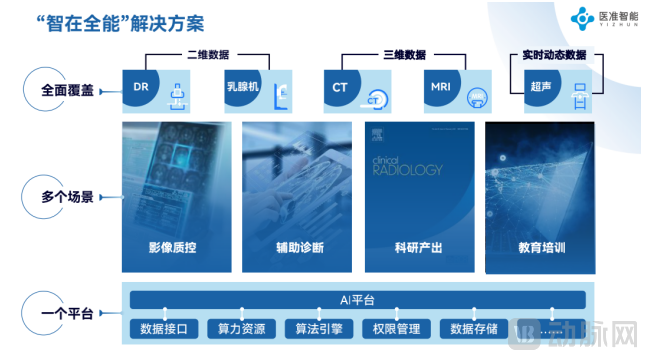
Transitioning from “specialized” to “comprehensive” is no easy feat. Looking ahead, against the backdrop of tiered diagnosis and treatment, service demand at primary healthcare institutions will grow rapidly, drawing significant attention to the strengthening of primary care capabilities. How to better implement “AI-powered comprehensiveness” and maximize its effectiveness remains a prospect worth anticipating.
At the end of the interview, Cao Ying revisited the significance of being a national-level “Little Giant” firm specializing in sophisticated, niche, and innovative products.
“From the perspective of the original intent behind the establishment of national-level ‘Little Giant’ enterprises specializing in refinement, uniqueness, and innovation, the state aims to cultivate a cohort of companies capable shouldering the ‘new’ responsibilities amid the development of ‘new infrastructure.’ Against the backdrop of China’s growing overall scientific and research strength, it is essential to lay a solid foundation for development. This need is even more pronounced as international exchanges diminish, requiring such enterprises to step forward and assume the burden of construction tasks.”
"At the same time, technological innovation should also bring benefits to the development of all mankind. Every Chinese person hopes to see more outstanding Chinese enterprises active on the international stage."
Few medical innovations in China have managed to break through geographical barriers, but imaging AI has achieved this and now holds a leading technological position worldwide. In this process, the value contributed by medical AI companies—whether they are currently in the spotlight or have already exited the stage—cannot be overlooked.
Nevertheless, the development of medical AI remains highly dynamic. To solidify the temporary leading advantage held by Chinese enterprises, continued support from policy and market forces, as well as sustained innovation by the enterprises themselves, remain indispensable.
Therefore, becoming a “Little Giant” signifies that medical imaging AI companies such as MEDICAL AI have entered a new phase. However, whether they can shed the “Little” label amid future changes remains to be answered by MEDICAL AI over time.