

Hanerxi Medical: Breaking Monopolies and Empowering Chinese Pharma's Global Expansion with Proprietary Injection Pens
The 21st Century Is Destined to Belong to Biologics.
On one hand, capital continues to flood into the biopharmaceutical sector. According to the “H1 2022 Global Healthcare Industry Capital Report” released by VCBeat and Eggshell Research Institute, global biomedical investments in H1 2022 topped all healthcare subsectors with 565 deals totaling $19.63 billion (approximately RMB 131.605 billion). In China’s healthcare investment market, the biomedical sector has exhibited a similar trend. Indeed, over the past several decades, biomedical investments have consistently held the top position among pharmaceutical subsector investments.
On the other hand, the approval process for new drug development continues to accelerate. A decade ago, it took three years or even longer for an innovative drug to gain approval. Today, however, the time lag for the market launch of certain innovative biologics has been shortened to less than one year. Policy support for innovative drugs has further reduced the time required from research and development to commercialization.
As the biopharmaceutical industry flourishes, a question arises—Biopharmaceuticals are often formulated as injectables, making drug administration a major challenge for the vast number of patients requiring such therapies.Taking the most common insulin injection as an example, data from the International Diabetes Federation (IDF) shows that the prevalence of diabetes is 11.3%, with 30% of diabetic patients requiring insulin injection therapy. This translates to a market potential for injection pens exceeding RMB 10 billion. It represents both an opportunity and a challenge.
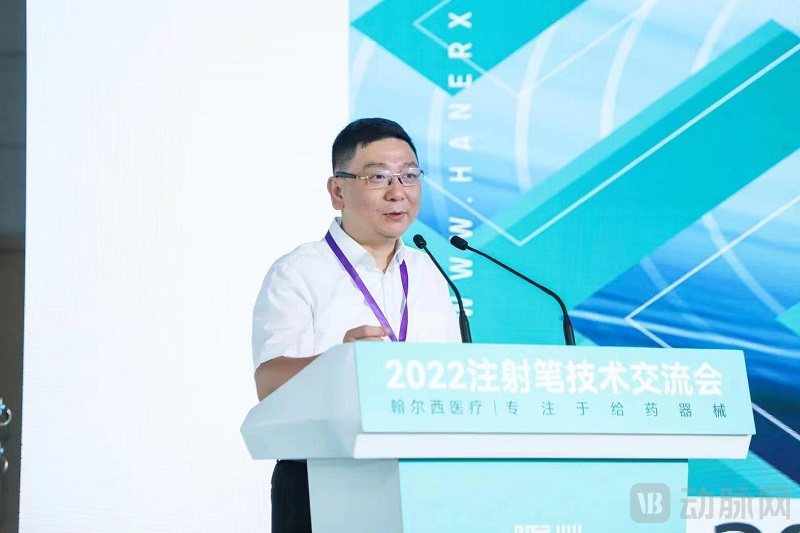
Healthy CEO Chu Yaoqiang Shares Insights On-Site
On August 16, at the “2022 Injection Pen Technology Exchange Conference,” attended by nearly 40 domestic pharmaceutical companies including Wanbang Biochemical, Tianmai Biologics, Yifan Pharmaceutical, Chia Tai Tianqing, Livzon Group, and CSPC Pharmaceutical Group,HEALTHY, which specializes in the R&D and manufacturing of drug delivery devices, shared insights on the current industry challenges facing domestically produced injection pens and available solutions., some of the corporate representatives present also expressed their willingness to collaborate with them.
Patents for Injection Pens Are Mostly Held Overseas, Limiting the Development of Innovative Pharmaceutical Companies
The dilemma faced by domestic biopharmaceutical manufacturers in selecting drug delivery devices is closely linked to a major reality in the injection pen sector—patents are highly concentrated, with core patents largely held by foreign companies.
Chu Yaoqiang, CEO of HEALTHY, stated that there are currently as many as 40,000 patents related to injection pens, including over 1,500 core patents. The vast majority of structural patents for injection pens have been preemptively registered by foreign companies. This means that achieving technological breakthroughs from scratch is nearly insurmountable for enterprises. Furthermore, this patent blockade has led to further concentration in manufacturing: according to a 2018 survey, there were only about ten suppliers holding patents for injection pens. Among no more than seven specialized injection pen manufacturers, none were Chinese companies.
In contrast, major overseas insulin manufacturers—including Eli Lilly, Novo Nordisk, and Sanofi—have accumulated a substantial portfolio of injection pen-related patents as part of their product strategies. These companies also bundle their proprietary medications with injection pens to facilitate cost-effective sales. Together, these three firms account for nearly 80% of the injection pen market share.
In addition to the unfavorable competitive landscape, patent blockades have further exacerbated the supply-demand imbalance in China’s injection pen market.
In recent years, the centralized procurement of drugs—including insulin—along with the accelerated market launch of biosimilars and innovative biologics, has spurred substantial demand in the drug delivery device market.
However, YPS, a contract manufacturer of injection pens for companies such as Eli Lilly, Novo Nordisk, and Sanofi (with some overseas firms also holding injection pen patents sourced from YPS), has naturally formed business synergies with these international enterprises. Consequently, it tends to prioritize supporting the use of originator drugs from these manufacturers. As a result, more cost-effective equivalent drugs from Chinese brands often fail to effectively enter the global market and benefit the broader population, primarily due to unresolved drug delivery challenges.
The contradiction has thus deepened. Domestic brands urgently need a breakthrough in the injection pen market.
Breaking Through the Blockade of 1,564 Core Patents to Develop a Domestically Developed Original Injection Pen
With core patents controlled by overseas giants, domestic biopharmaceutical companies have limited options—
First, collaborate with injection pen manufacturers that possess independent intellectual property rights, such as YPS. However, their high-end, cost-effective products are often already utilized by industry giants, leaving biopharmaceutical companies with limited options for injection pens. This situation consequently reduces the cost-effectiveness of pharmaceutical companies’ drug offerings.
Second, collaborating with manufacturers of domestically produced generic injection pens. On one hand, the product quality of these injection pens may not be effectively guaranteed; on the other hand, even if pharmaceutical companies adopt domestically made generic pens, their promotion would be limited to China and underdeveloped regions with weak intellectual property protection awareness, making it impossible to enter the more affluent developed markets in Europe and America. This would further constrain corporate growth.
In reality, regardless of the choice made, core patent intellectual property rights remain a Damocles’ sword hanging over everyone’s head—the lawsuit filed by Sanofi against Merck for patent infringement of its glargine insulin pen has served as a wake-up call to numerous pharmaceutical companies.
Truly breaking through at the source is the ultimate solution.
However, reality is often harsh.In the past, there were indeed attempts to achieve breakthroughs in patent innovation at the source, but these efforts often faced challenges such as long R&D cycles and high investment costs. HEALTHY is one of the few domestic brands that have successfully broken through.
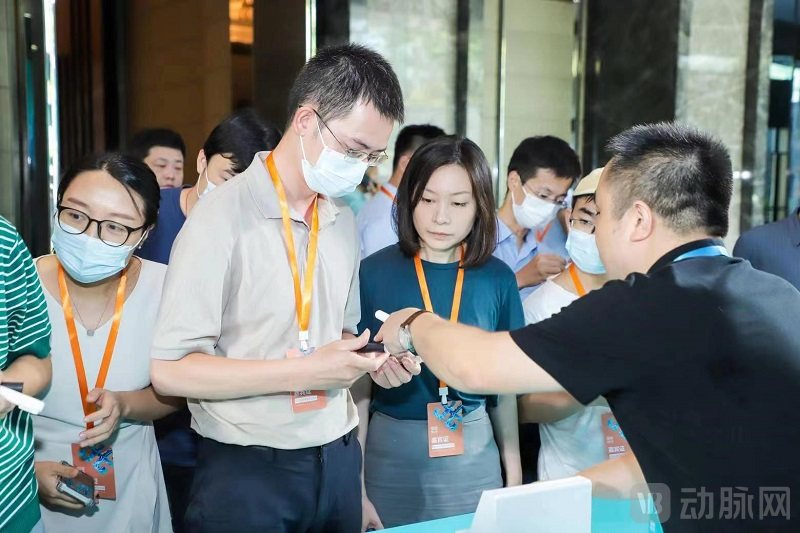
On-Site Demonstration of HEALTHY Medical Injection Pens
It is reported that HEALTHY was established in 2014. However, the company began conducting market research and continuously exploring and refining its technologies as early as 2012. In January 2015, Chu Yaoqiang led his team to successfully develop the first-generation injection pen, which was then transferred to Chengji Biology (later acquired by HanYu Pharmaceutical). In 2017, the company successfully developed the second-generation injection pen, which is currently the only product in China with a complete set of independent intellectual property rights. Beijing PatentEn Intellectual Property Agency Co., Ltd. conducted a third-party investigation on the core product patents of HEALTHY and issued a report. The report stated that after comparing 1,564 global patents related to the structure of injection pens from companies including Novo Nordisk, Eli Lilly, Sanofi, YPS, SHL, OM, and HSM, no infringement was found.
To safeguard future collaboration, a major domestic biopharmaceutical company also conducted an FTO (Freedom to Operate) analysis on HEALTHY’s patents in the United States, confirming that HEALTHY’s injection pen technology represents a completely new technological approach.
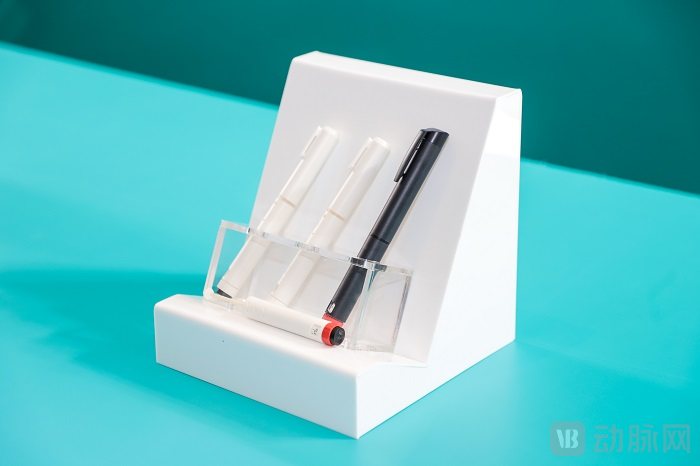
Behind the breakthrough lay a two-year-long patent comparison.
Chu Yaoqiang noted that injection pen manufacturers must navigate 1,564 core structural patents out of more than 40,000 injection pen-related patents. “Even if one patent is compared in the morning and another in the afternoon, the entire patent comparison process could take as long as 782 days. Building on early-stage comparison experience and accelerating later-stage reviews, HEALTHY still took more than two years to complete this patent comparison.”
HEALTHY’s breakthrough has undoubtedly instilled confidence in domestic brands. It enables Chinese biopharmaceutical manufacturers to lift their own sales restrictions after achieving technological breakthroughs, without worrying about overseas infringement issues, thereby better accessing the global market and engaging in direct competition with other enterprises worldwide.
Injection Pen Quality Matches Competitors, with Production Costs Expected to Decrease Further
But technological breakthroughs are still just the beginning.
For biopharmaceutical manufacturers, the more pressing concerns are product quality, ensuring supply stability, and reducing costs.
We still take HEALTHY as an example.
With the financial support from the CCB Medical Growth Fund, which addressed challenges in the R&D and sales of injection pens, HEALTHY successively obtained the NMPA medical device registration certificate and production license in July and September 2020. The company has since established a product portfolio comprising standard injection pens, disposable injection pens, and single-use injection pens. These products are compatible with various medications, including conventional insulin, interferon, growth hormone, cosmetic injections, Gonal-f, GLP-1 receptor agonists, and others.
To ensure product quality meets standards, HEALTHY implements strict control throughout the entire production and manufacturing process.Leveraging its proprietary foundational architecture and scalable infrastructure patents, the company can maximally meet customer product requirements. It is reported that its standard injection pen features a replaceable cartridge design, with a designed lifespan of 5,000 injections, ensuring precise delivery for over 2,000 uses. The disposable pen model is designed for 500 injections, guaranteeing accurate dosing for more than 100 uses. Furthermore, the relevant injection pens utilize high-lubricity materials to provide a smooth injection experience. In addition to visual scale markings, the dosage adjustment mechanism also supports tactile operation for visually impaired users.
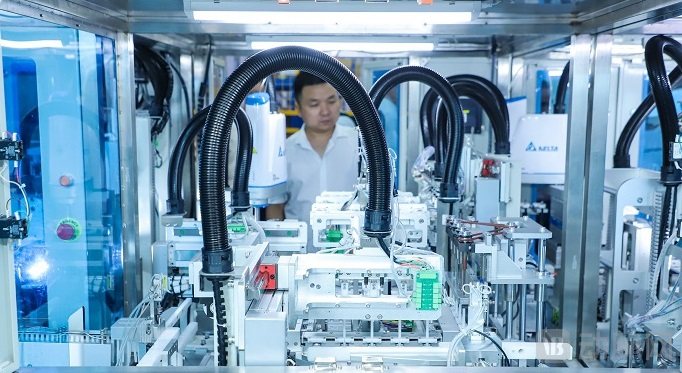
HEALTHY Kunshan Factory
From the laboratory to mass production, various factors such as the stability of product supply must be considered.Backed by investments from the Kunshan High-Tech Zone government, CCB International, Huixinli Capital, and Shanghai’s “New Silk Road,” HEALTHY has commenced trial production at its Kunshan facility. Currently, the HEALTHY Kunshan plant operates an automatic injection pen assembly line, an automated flexible assembly line, and a fully automated inspection line. Notably, its fully automated inspection equipment was designed and manufactured by TEAM TECHNIK of Germany.
Chu Yaoqiang stated that most manufacturers of generic injection pens currently rely on manual assembly, whereas HEALTHY has sought to address manufacturing challenges through mechanized production since its inception. By implementing full automation, HEALTHY has further ensured the efficiency and quality of its product supply. The company’s Kunshan factory currently has an annual production capacity of 24 million injection pens.
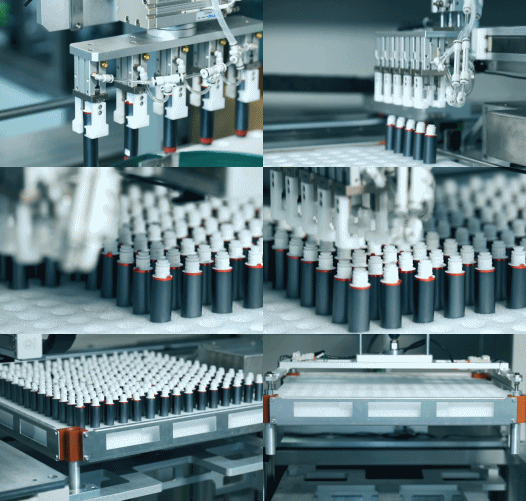
HEALTHY Kunshan Factory Assembly Line
Furthermore, to meet future customer demands, HEALTHY’s new production facility is currently under construction and planning. With the assistance of the Kunshan High-Tech Industrial Development Zone government, the Phase II plant has entered the layout planning stage. HEALTHY plans to add 10 production lines within the next three years, expanding its annual injection pen production capacity to 200 million units.
Amid the broader context of centralized procurement, how to better control production costs is often one of the most pressing concerns for pharmaceutical companies.By leveraging its proprietary injection pen, HEALTHY has resolved the issue of third-party control over costs. On one hand, compared with international originator manufacturers, HEALTHY matches top-tier competitors in product quality while demonstrating more pronounced cost advantages and offering greater cost-effectiveness. For instance, its device features a unique 3-second flow cutoff function. On the other hand, strategically, HEALTHY currently offers competitive supply pricing for large-volume orders. Customers can even achieve reduced per-unit costs by meeting volume thresholds based on their multi-year product demand. Furthermore, HEALTHY is further realizing a fully integrated production-to-transportation system by establishing a “5-kilometer supply circle,” thereby lowering costs and passing these savings on to customers.
Exploring Digital Injection Pens to Upgrade Drug Delivery Devices
After resolving the patent bottleneck issue with injection pens, how to achieve further innovation has become a question that companies like HEALTHY need to consider.
In fact, as acceptance of internet-based healthcare grows, an increasing number of users, including those with diabetes, have adopted online chronic disease management. However, medication adherence remains poor among some patients. When a patient’s condition deteriorates, physicians often struggle to determine the underlying cause—whether it stems from issues with the prescribed regimen or from poor patient adherence. Consequently, improving patient adherence and delivering superior services has become a key challenge that numerous internet healthcare platforms seek to address.
At a time when glucose meters and similar products are achieving tangible benefits by enabling data connectivity and upload,HEALTHY is also targeting the digital injection pen sector, seeking to integrate data with internet healthcare platforms and online hospitals to help physicians better monitor patients’ medication adherence and empower patients to more effectively manage their conditions.
As a company focused on the production and R&D of drug delivery devices, after overcoming the patent bottlenecks associated with injection pens, it has also set its sights on the production and R&D of DPIs (dry powder inhalers). This shift is driven by the fact that respiratory diseases are increasingly becoming another major “killer” threatening public health, presenting broad market prospects. For HEALTHY, this signifies the opening of entirely new possibilities.
For the entire biopharmaceutical industry, the breakthrough in patents for HEALTHY’s injection pen delivery devices, along with the upgrade of digital injection pen delivery systems, serves as a catalyst that will ultimately facilitate the expansion of domestic biopharmaceutical companies into overseas markets, contributing its own strength to the global competition among pharmaceutical enterprises.