

Huajan Medical Robotics Files IPO Prospectus: Redefining Minimally Invasive Surgery with an Innovative 'Hand-Eye-Brain' Integrated Robotic System

HUGER MEDICAL ROBOTICS
Medical Robotics Developer
Domestic surgical robots are like an iceberg hidden beneath the water, with only a small tip visible above the surface.
In the past, the da Vinci Surgical System dominated the global market almost exclusively. However, as its initial batch of patents has gradually expired, the landscape of the surgical robotics sector has changed dramatically. Not only has the global market size for surgical robots grown significantly, but the domestic market in China has also seen widespread development and diversification.
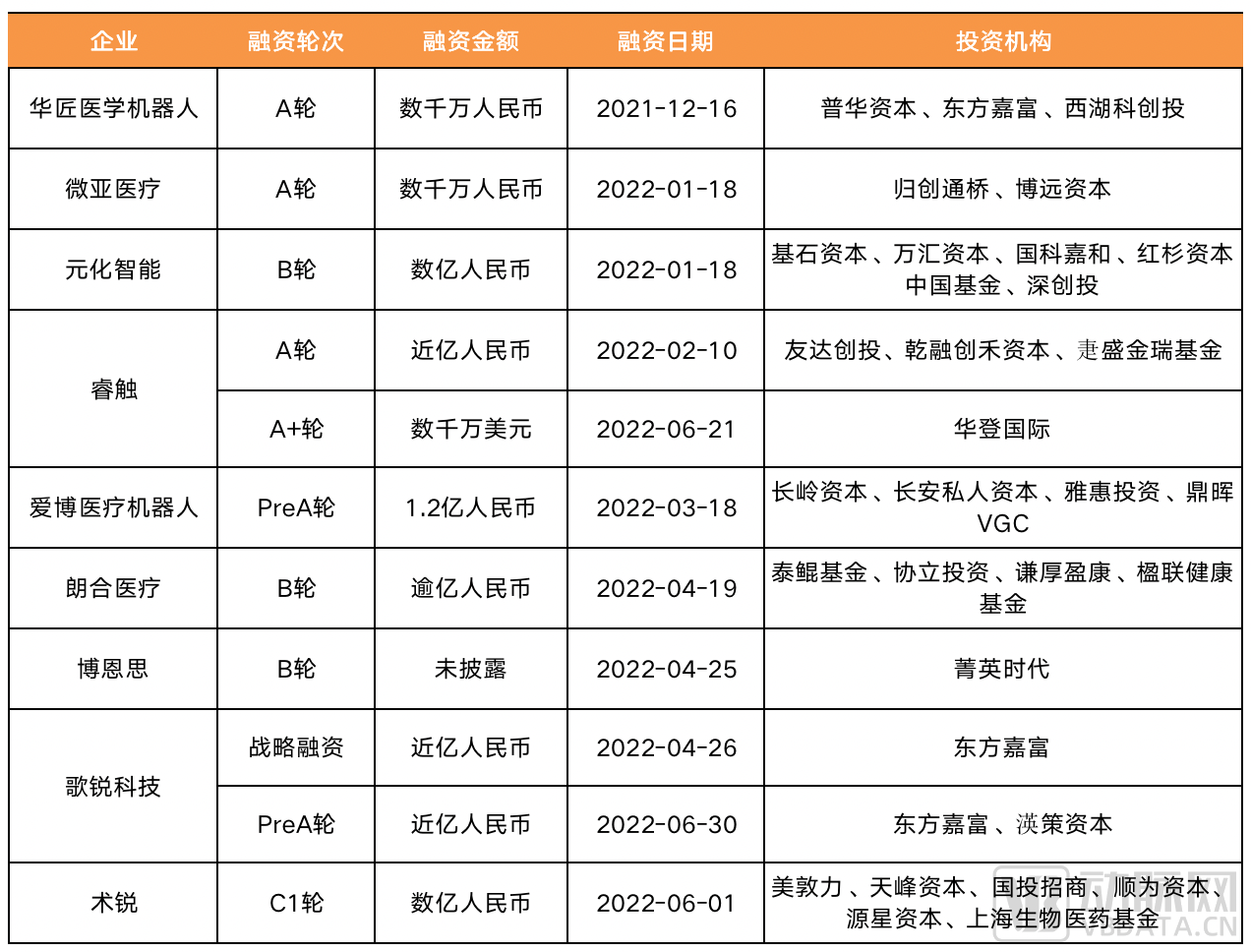
Recent Major Financing Events for Surgical Robots in China
In the surgical robotics segment, laparoscopic surgical robots hold the largest market share. According to Frost & Sullivan data, the global market size for laparoscopic surgical robots grew from $2.71 billion in 2016 to $5.22 billion in 2020, representing a compound annual growth rate (CAGR) of 18.0%.
In China’s laparoscopic surgical robot market, MicroPort MedBot—the first publicly listed company in this sector—went public last year, with its market capitalization once exceeding RMB 60 billion. Meanwhile, the implementation of favorable policies, such as the Development Plan for the Medical Equipment Industry (2021–2025) and the Notice on Regulating and Adjusting Pricing for Medical Service Items Including Physical Therapy, which encourage certain medical institutions to pilot initiatives related to insurance reimbursement and pricing for relevant medical equipment, has laid the foundation for further promotion and application of surgical robotic products.
New industry trends will inevitably give rise to more advanced surgical robotic solutions that disrupt traditional surgical procedures. Hangzhou Huajiang Medical Robot Co., Ltd. (hereinafter referred to as “Huajiang Medical Robot”) adopts a product design philosophy distinct from that of the da Vinci Surgical System, independently developing innovative technologies to revolutionize surgical robotic systems.
Recently, VCBeat conducted an exclusive interview with the founding team of Huajiang Medical Robotics. It was learned that the company has currently established three major product portfolios: steerable instruments, instrument-holding robots, and surgical robots, with multiple products having entered the stages of registration testing, clinical trials, or regulatory approval. Meanwhile, the company has filed 40 patent applications, 16 of which have been granted.
Despite two decades of development, the surgical robot market has generally stabilized. However, high-end surgical robots, represented by the "da Vinci" system, remain somewhat misaligned with China’s national conditions due to factors such as system complexity and high costs.
From a policy perspective, during the 14th Five-Year Plan period, the National Health Commission proposed promoting the resolution of common diseases at the primary care level, focusing on developing county-level medical communities led by county hospitals, and comprehensively advancing the implementation of the tiered diagnosis and treatment system. It further reaffirmed the importance of technological innovation that aligns with China’s national conditions while taking into account both technological advancements and clinical needs.
From the perspective of the overall minimally invasive surgery market, even with a significant reduction in the cost of surgical robots, most procedures remain unsuitable for their use. To address this segment of the market, there is a need for innovative medical device solutions at a lower cost.
Zhang Dahong, the initiator of Huajiang Medical Robotics, and Feng Zailin, the company’s founder, set out from the very inception of the company with the goal of developing and commercializing surgical robots that are “effective,” “affordable,” and “accessible.” Leveraging their accumulated expertise in electromechanical engineering and information technology,Simplify and reconstruct surgical robots through technological innovation, continuously advance the productization of core technologies, and develop minimally invasive surgical robots with integrated “hand, eye, and brain” capabilities.
CurrentlyThe company has achieved precise manipulation of surgical instruments within the patient’s abdominal cavity using micro-bionic arms. By leveraging high-definition 3D electronic endoscopes, it restores surgeons’ open-surgery visual fields and depth perception. The next step involves utilizing AI and data intelligence to assist physicians with preoperative planning and intraoperative execution.
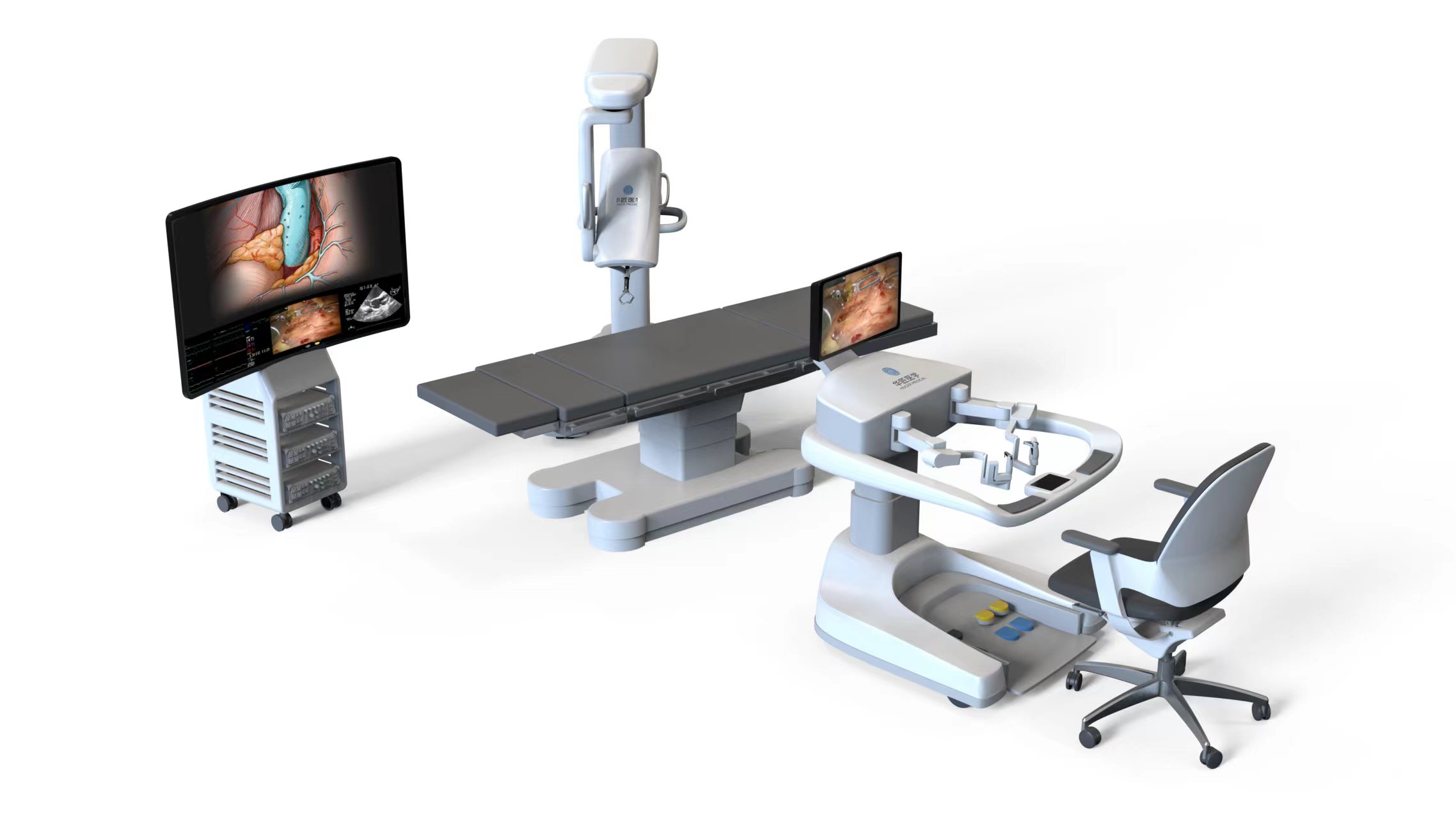
A key technical aspect of surgical robots is flexible hand-eye coordination.
Huajiang Medical's surgical robot, based on micro bionic arm technology, throughSimulated human arm form combined with ergonomic proportional design, enabling the robot to mimic the natural movements of a surgeon’s shoulder, elbow, and wrist. Meanwhile, the surgical robot’s highly integrated sensing and real-time motion mapping capabilities can replicate the precise maneuvers of both of the surgeon’s arms, allowing the robotic arms to reach any corner within the patient’s body.
The implementation of this technology means that doctorsIt will provide a wider surgical working space within the patient's body.. Its high flexibility lays the foundation for performing more complex surgeries. Moreover, the camera arm of the Huajiang surgical robot is equipped with a 3D camera, capable of providing surgeons with a 360-degree view inside the patient’s body."Observe lesions at a visual distance unattainable by the human eye or even standard monitors, thereby enabling precision surgery."。
To address potential issues arising from physician judgment errors, such as suture breakage during knot tying, tissue tearing, overly loose suturing, and inadvertent injury to healthy tissue, Huajiang Medical Robot willPrecise AI-driven haptic feedback for surgical robots to extend instrument lifespan while enhancing surgical efficiency and success rates.
In the phases of preoperative planning and intraoperative executionBy comprehensively analyzing multimodal data, patient clinical records, and disease characteristics, enterprises can accurately, automatically, and rapidly provide predictions for entry points, trajectories, and risk zones. Through techniques such as 3D tissue reconstruction, depth estimation, visual navigation, feature tracking, risk prediction, and quality assessment, they reduce surgical difficulty and risks while improving surgical efficiency and quality.
Guided by the philosophy of “moderate trauma,” Huajiang Medical Robotics introduces a real-time reconstruction technology for single-port and multi-port approaches. With a single system, it offers two solutions, returning the decision-making power over surgical methods to surgeons while providing patients with the most suitable procedure.
It is reported that the company has been selected for Zhejiang Province’s 2022 Key Research and Development Program, the “Vanguard Initiative.”
With industry giants paving the way and policy support providing a tailwind, domestically produced surgical robots in China are entering a period of robust growth driven by multiple catalysts. However, this very momentum presents companies with challenges that are fundamentally different from those of the past.
From a macro perspective, policy-driven pressures and intensifying market competition make channel penetration into lower-tier markets an inevitable trend. Upon entering the commercialization phase, companies must develop surgical robots that are affordable.
From a technical perspective, given the limited resources within clinical departments, surgical robot manufacturers need to maximize integration at the level of hardware robotic arms and navigation systems. This approach enables the hardware to support as many surgical procedures as possible, thereby optimizing both user experience and cost-effectiveness.
Meanwhile, the value of data and intelligence should be fully leveraged. On one hand, given the current scarcity of high-quality medical resources, empowering physicians with intelligent technologies to enable junior doctors to effectively utilize surgical robots represents a critical approach. On the other hand, from the perspective of technological evolution, automation and intelligence are irreversible trends; therefore, product development should prioritize these directions as the next key focus.
Therefore, developing surgical robots that are “easy to use,” “affordable,” and “accessible” represents three key trends that companies must embrace during their growth.
In the future, Huajiang Medical Robots will redefine the next generation of surgical robots through technological innovation, building a product matrix that meets diverse clinical needs to shape the company’s development and product strategies. Focusing on intelligence, convenience, and accessibility, the company will strategically position itself to enter the high-end market while promoting widespread adoption in secondary hospitals, ensuring that healthcare institutions at all levels can afford its solutions.
Addressing clinical pain points, we continuously innovate medical devices to ensure surgical instruments are “highly effective in use.” By empowering physicians with intelligent technologies, we enable even junior doctors to “competently utilize” these tools. We are developing more innovative electronic medical devices tailored to China’s specific healthcare context for clinical application.