

WeDoctor Named to Forbes China's 'Top 50 Most Innovative Companies' for the Third Time, Driving Digital Transformation in Healthcare with Three Key Innovations
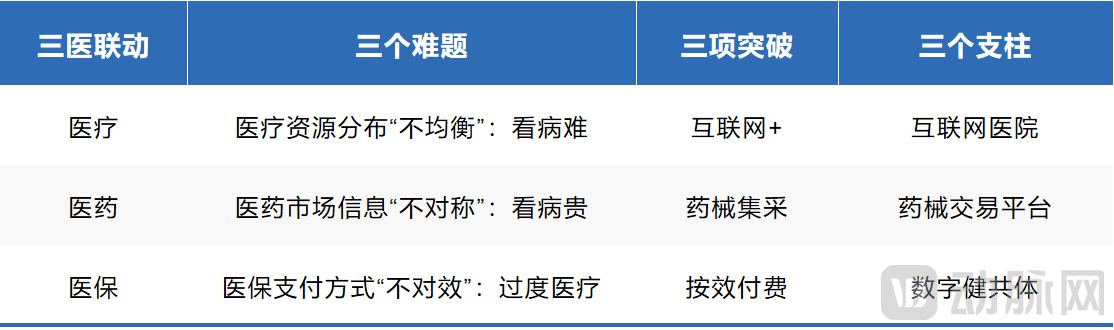
Forbes recently released its “Top 50 Innovative Companies in China 2022” list, with five companies from the broader healthcare sector selected, including WeDoctor Group, WuXi Biologics, and Hengrui Medicine. Notably, WeDoctor Group has been named to the Forbes China Top 50 Innovative Companies list for the third time—having first appeared in 2018 and retained its position in 2019—and is the only company from the digital health industry to be included. WeDoctor’s inclusion stems from its three innovative initiatives—internet hospitals, a pharmaceutical and medical device trading platform, and the Digital Health Community—designed to address reform challenges across healthcare services, pharmaceuticals, and health insurance.

Since its inaugural release in 2018, this marks the fifth year of the Forbes China Top 50 Innovative Companies list. The list evaluates corporate innovation strength by analyzing basic dimensions such as business models, R&D investment, and organic growth, while also examining the current development status, competitive landscape, and industry trends across various sectors. Specific evaluation criteria include innovation capability, corporate governance, corporate growth potential, innovation-driven market advantages, and corporate social image.
The primary reason for the recognition of WeDoctor’s innovative strength lies in its continuous breakthroughs and leadership role in the digital healthcare industry. As China’s largest digital healthcare platform, WeDoctor established the country’s first internet hospital, the Wuzhen Internet Hospital, in 2015; currently, the number of internet hospitals across China has exceeded 1,700. In 2017, the Haixi Pharmaceutical Trading Center, founded by WeDoctor to support the Sanming healthcare reform, undertook the construction of the National Healthcare Security Administration’s national platform for drug and medical consumable procurement and bidding management. It was also exclusively entrusted by the Sanming Procurement Alliance (National) to conduct cross-regional joint procurement of drugs and medical consumables. Furthermore, in 2019, WeDoctor took the lead in proposing the exploration of a Chinese-style Health Maintenance Organization—the Digital Health Community—which digitally integrates regional medical and health service institutions to provide accessible, integrated online-and-offline health management services to the public.
Latest data shows that as of June 2022, WeDoctor has connected with nearly 8,000 hospitals across China, with 300,000 registered doctors on its platform. The company operates 34 internet hospitals nationwide, 19 of which have integrated local medical insurance payment systems. WeDoctor’s Digital Health Community has achieved normalized operations in provinces and municipalities such as Shandong, Fujian, and Tianjin, with digital health communities in multiple cities reaching the business and revenue scale of Grade A tertiary hospitals.
As China’s new healthcare reform continues to advance, digital health companies represented by WeDoctor are continuously unlocking their development potential through ongoing technological and business model innovation. Currently, the “three-medical linkage” reform—integrating medical care, pharmaceuticals, and health insurance—has entered a new phase, comprehensively driving the transformation of healthcare services from a “treatment-centered” to a “health-centered” approach. In this process, leveraging the advantages of digital health has become a key strategy for China to reshape its healthcare management and service systems, achieve optimal allocation of healthcare resources, and ensure equitable and accessible healthcare services.
In fact, it is not only in China that the healthcare management and service systems universally suffer from “uneven distribution of medical resources,” “information asymmetry in the pharmaceutical market,” and “ineffective health insurance payment methods.” These issues have led to persistent problems such as “difficulty in accessing medical care,” “high costs of medical treatment,” and overtreatment. China’s decade-long “Three-Medical Linkage” new healthcare reform has been specifically designed to address these three major challenges, seeking to solve the global dilemma of healthcare reform with a “Chinese solution,” and has achieved significant breakthroughs. Digital healthcare has become a key element of the “Chinese solution,” playing a crucial supporting role.
"Three Innovations" Driving the Upgrade of the Healthcare Industry through Digitalization
Under the “Chinese approach” to new healthcare reform, “Internet + Healthcare” measures such as online consultations and telemedicine have alleviated the uneven distribution of medical resources and the difficulty grassroots populations face in accessing care. Centralized volume-based procurement of pharmaceuticals, medical devices, and consumables has eliminated artificially inflated prices through open and transparent market bidding and large-scale centralized purchasing. Meanwhile, reforms to health insurance payment methods aim to shift healthcare services from fee-for-item and fee-for-volume models toward a health-centered, pay-for-performance model.
In alignment with this, WeDoctor has successively established and integrated three innovative systems: its Internet Hospital, the centralized procurement platform for pharmaceuticals and medical devices, and the Digital Health Community. This has formed a digital healthcare development pathway that aligns with China’s comprehensive reform of the “Three-Medical Linkage” (medical care, pharmaceuticals, and health insurance), while also exploring a sustainable business model for the robust growth of digital healthcare.
For example, the Tianjin Digital Health Community, initiated by WeDoctor in early 2020 and led by the Tianjin WeDoctor Internet Hospital, deployed a unified “Four Clouds” platform—comprising cloud management, cloud services, cloud pharmacy, and cloud diagnostics—across 266 primary healthcare institutions in Tianjin. This initiative leveraged chronic disease management as an entry point to achieve digitalized, intensive, and standardized delivery of medical services. Meanwhile, it implemented condition-specific joint procurement of pharmaceuticals through the WeDoctor Northern Pharmaceutical and Medical Device Centralized Procurement Platform, and adopted value-based payment models within the Digital Health Community, including capitation and diagnosis-related group (DRG) payments.
In terms of the construction and operational effectiveness of the Digital Health Community, public reports indicate that as of now, the WeDoctor Tianjin Digital Health Community has been in operation for 30 months, with daily outpatient visits exceeding 10,000. It has established health records and provided management services for over one million chronic disease patients in Tianjin, including those with diabetes and hypertension.
The successful practice of WeDoctor’s Digital Health Community has once again charted a clear development path for China’s digital healthcare industry. In April this year, five central ministries and commissions, including the Cyberspace Administration of China, the Ministry of Agriculture and Rural Affairs, and the National Development and Reform Commission, jointly issued a document proposing to “guide localities in exploring the construction of grassroots digital health communities.” This initiative will accelerate the promotion and replication of the digital health community model across more regions in China. Therefore, according to forecasts from relevant industry analysis reports, Chinese-style Health Maintenance Organizations (HMOs), represented by WeDoctor’s Digital Health Community, are poised for robust growth amid the deepening reform of China’s healthcare system.