

Nationwide First: Wuhan Union Hospital's Dong Nianguo Team Completes Minimally Invasive Implantation of Extracorporeal Artificial Heart
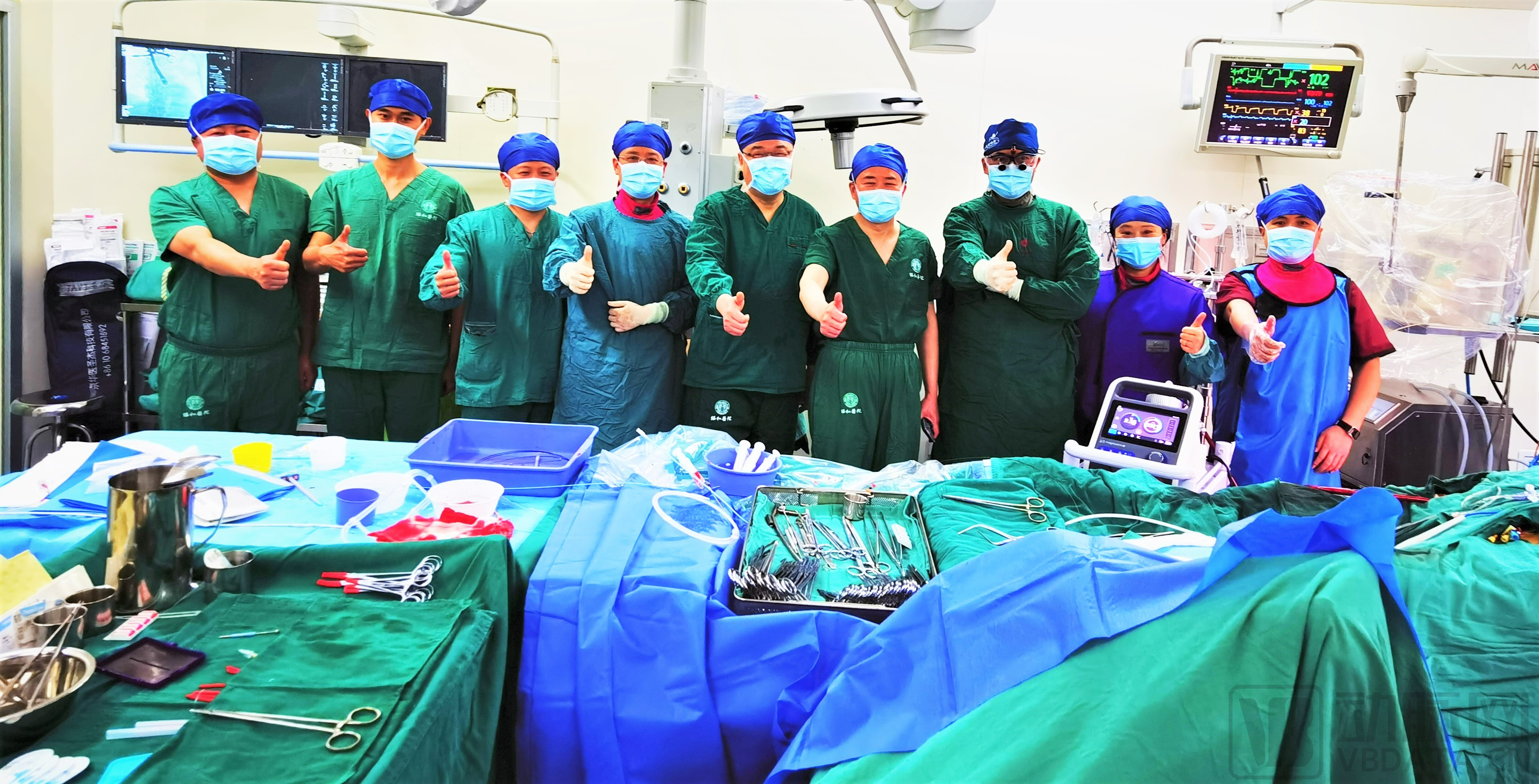
Recently, the Department of Cardiac Surgery at Union Hospital, Tongji Medical College, Huazhong University of Science and TechnologyProfessor Dong Nianguo’s TeamUtilizing the independently developed MoyoAssist, a short- to medium-term extracorporeal fully magnetically levitated ventricular assist device®, successfully treated three critically ill patients with end-stage heart failure.
Two of the cases, Professor Dong Nianguo’s teamPioneering a minimally invasive interventional approach via the jugular vein and axillary arteryConnection to an extracorporeal magnetically levitated artificial heart provides circulatory support while minimizing patient trauma. The procedure employs minimally invasive techniques for upper-body cannulation, preserving lower-limb mobility. During implantation, patients can eat independently and engage in ambulatory exercise, allowing them to await heart transplantation in a stable condition.
This surgical technique is a first in China, marking the full realization of minimally invasive implantation of domestically developed short-to-medium-term extracorporeal magnetically levitated artificial hearts, and holds epoch-making significance.
Case 1
A 24-year-old male patient with dilated cardiomyopathy, NYHA class IV, and end-stage heart failure sought treatment at the Department of Cardiovascular Surgery, Union Hospital, Wuhan. During the waiting period, his condition progressively deteriorated. He was urgently transferred to the ICU on July 18, 2022, with a blood pressure of 60–70/40–50 mmHg and a heart rate of 82 bpm, facing imminent life-threatening risk. To save the young patient’s life, Professor Dong’s team pioneered a minimally invasive interventional approach for the first time, establishing an extracorporeal artificial heart circulation system by performing transjugular transseptal puncture for left atrial drainage and end-to-side anastomosis of a prosthetic graft to the axillary artery for reinfusion. The procedure went smoothly, and the patient returned to the ICU in stable condition. He regained consciousness six hours postoperatively, had his endotracheal tube removed nine hours later, and was able to eat that same evening. Due to the use of minimally invasive upper-body cannulation, which did not impair lower limb mobility, the patient was able to get out of bed and walk for exercise the following day.
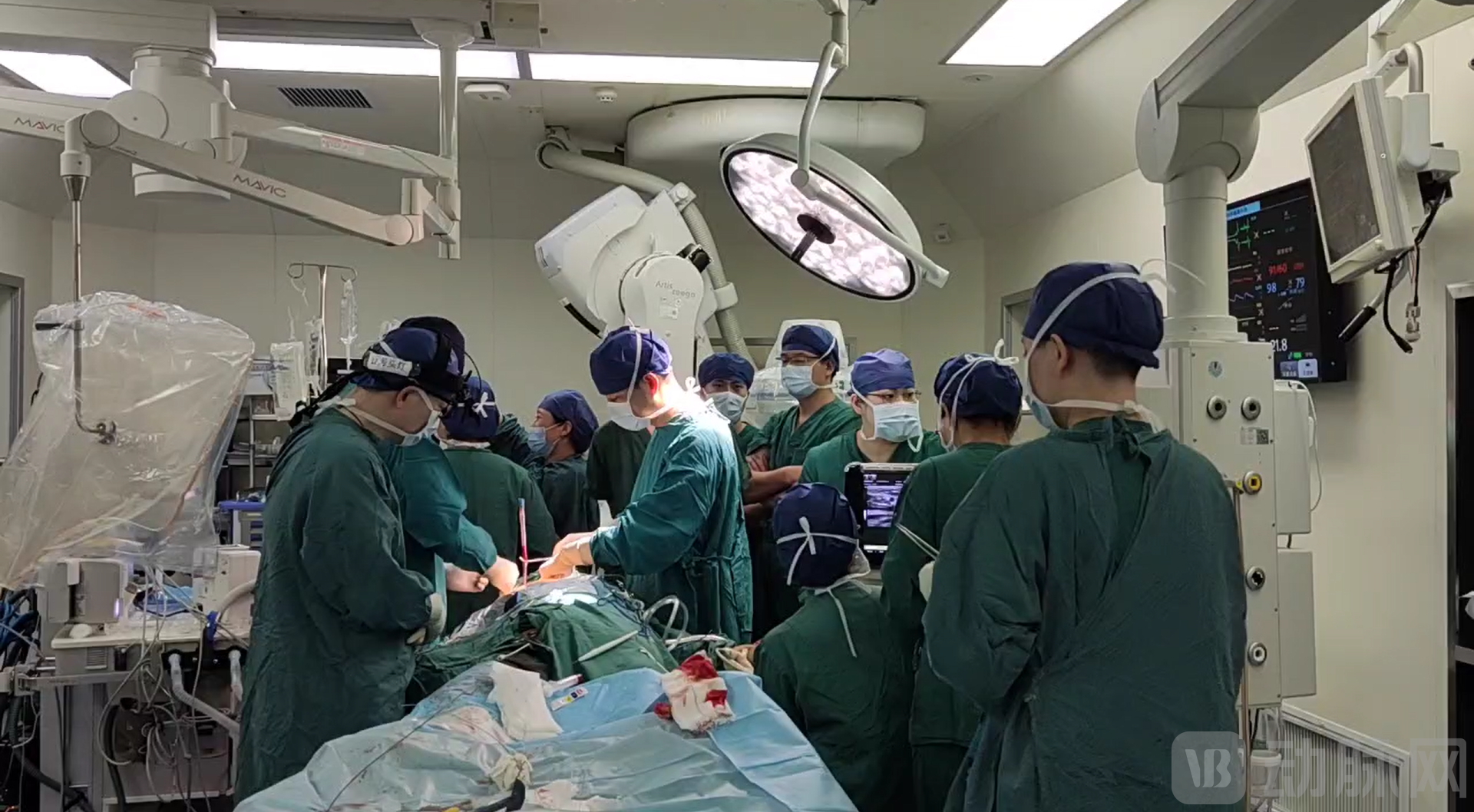
Supported by an extracorporeal artificial heart, the patient remained stable for two weeks and received a well-matched, precious donor heart on the 12th day after surgery. On the same day, Professor Dong Nianguo’s team successfully performed the heart transplant and simultaneously removed the extracorporeal artificial heart. Thanks to effective pre-transplant support from the extracorporeal artificial heart, which significantly improved the patient’s circulatory status, the patient recovered rapidly postoperatively and was transferred to a general ward one week later.
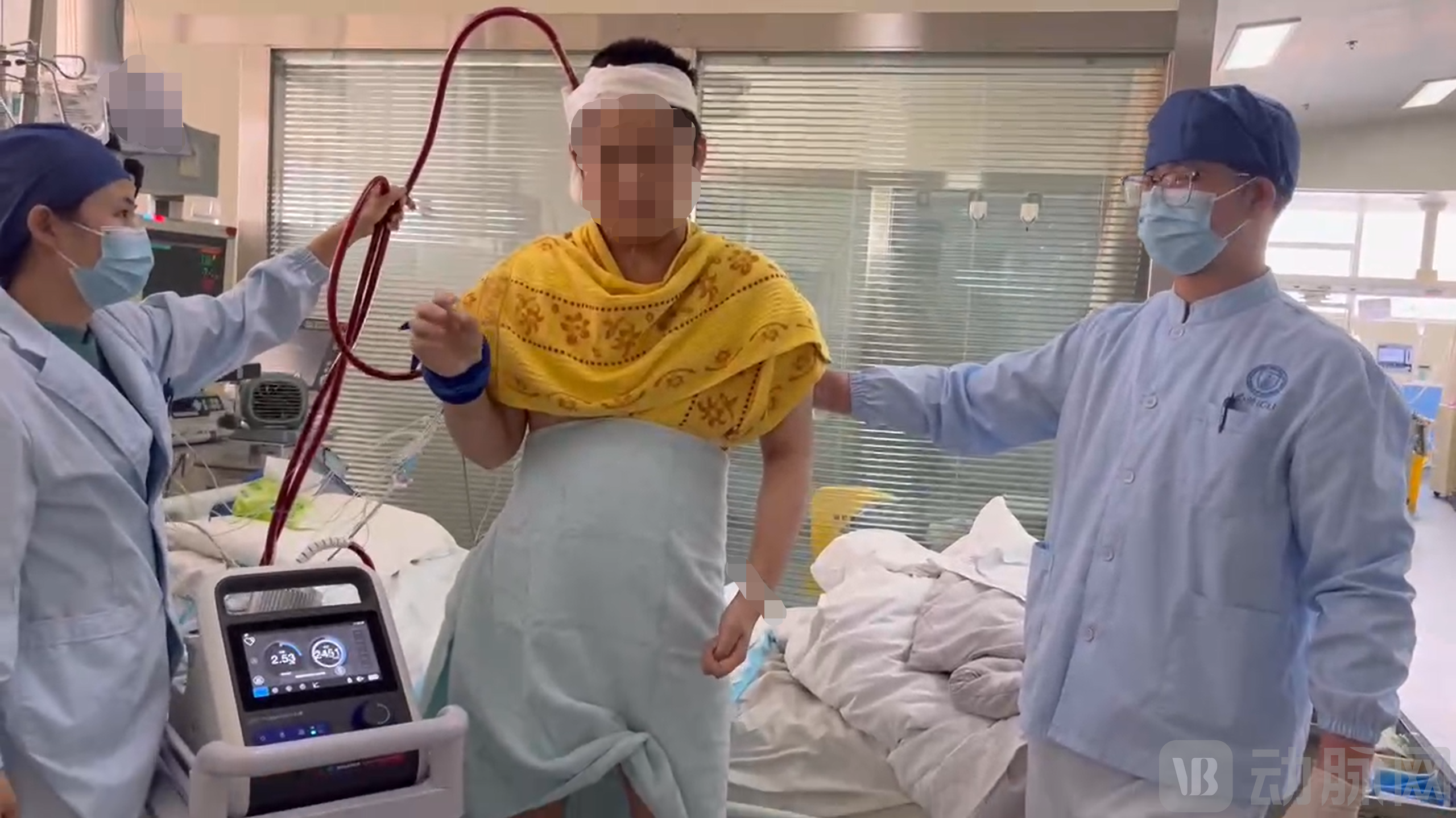
Patients Undergo Exercise After Implantation of an External Artificial Heart
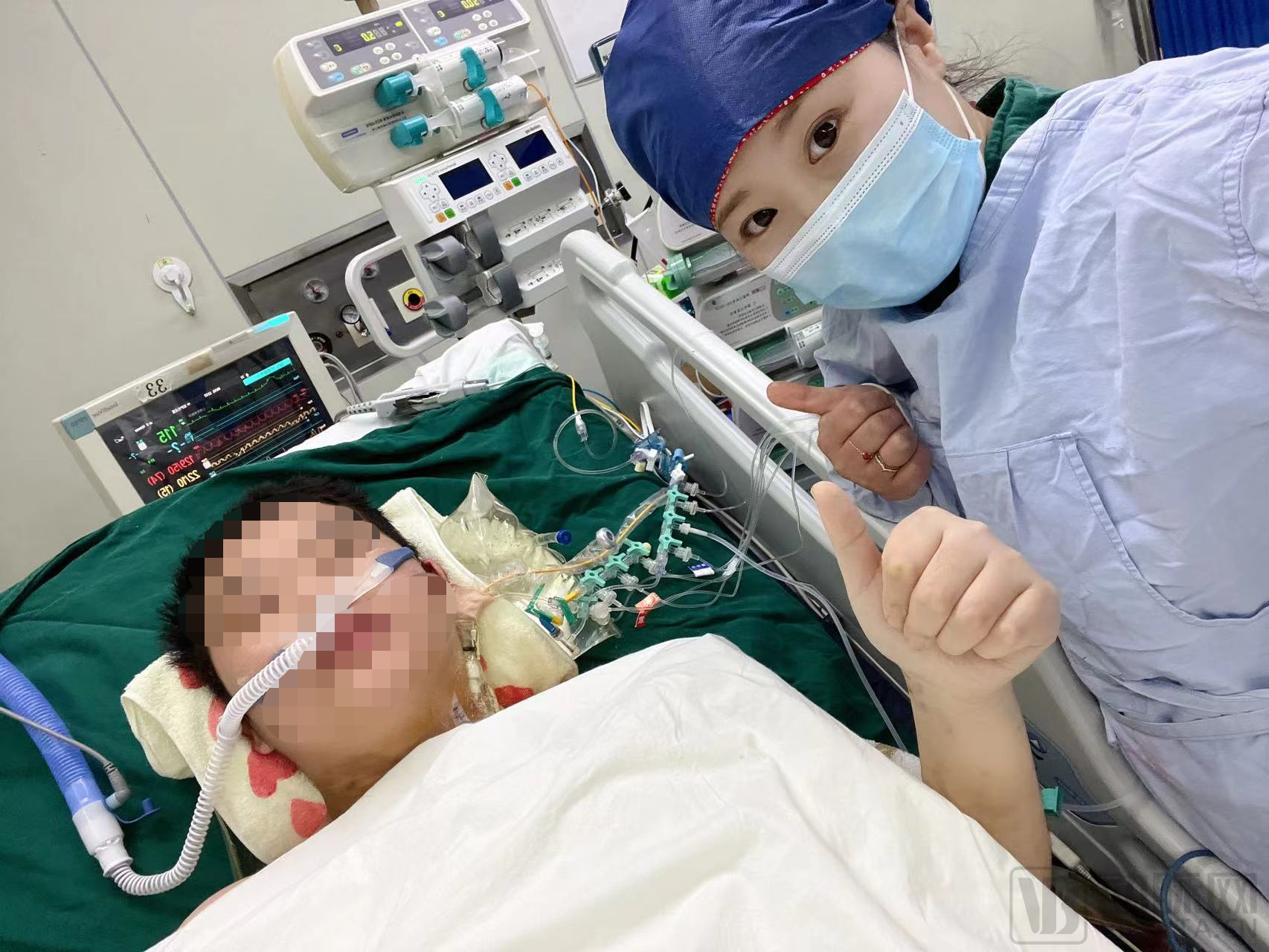
The patient is in stable condition after completing the heart transplant.
Case 2
A 56-year-old male patient with end-stage dilated cardiomyopathy and malignant arrhythmia was urgently transferred from an outside hospital to the ICU of the Department of Cardiac and Vascular Surgery at Wuhan Union Hospital. On the day of admission, the patient experienced frequent ventricular arrhythmias, placing his life in imminent danger. The surgical team proceeded with a minimally invasive interventional approach, successfully establishing cannulation via the jugular vein and axillary artery to connect the patient to an extracorporeal artificial heart circulatory support system. The procedure went smoothly, and the patient was returned to the ICU in stable condition. He regained consciousness six hours postoperatively, had his endotracheal tube removed at 11 hours, and was able to eat independently by 14 hours. By the second postoperative day, he was already out of bed walking and engaging in rehabilitation exercises. Supported by the extracorporeal artificial heart, the patient maintained stable hemodynamics, showed significant improvement in appetite compared to preoperative levels, actively cooperated with the medical staff, and awaited a donor heart with an optimistic and positive mindset.
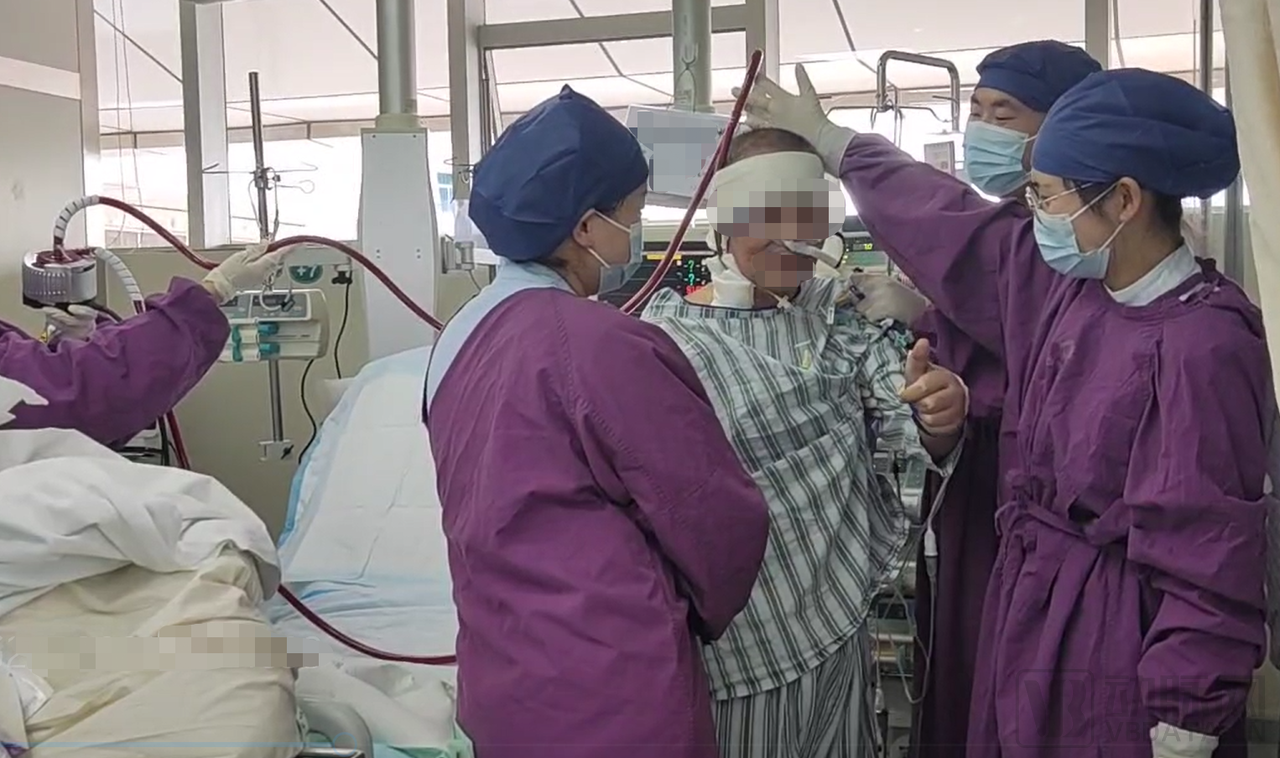
Exercise After Implantation of an External Artificial Heart
Professor Dong Nianguo stated, “The successful breakthrough in establishing an extracorporeal magnetically levitated artificial heart circulatory system via minimally invasive peripheral cannulation is a boon for critically ill patients with heart failure, particularly those with end-stage heart failure transitioning to heart transplantation.”We aim to achieve the therapeutic goals of high efficiency, cost-effectiveness, and optimized clinical outcomes by promoting the use of domestically developed, minimally invasive extracorporeal artificial hearts with Chinese characteristics.”
As the incidence of heart failure continues to rise, heart transplantation remains the optimal treatment option for patients with end-stage heart failure. However, due to a shortage of donor hearts, potential waiting times are prolonged, and critically ill patients face the risk of sudden life-threatening events during this period. Establishing circulatory support via an extracorporeal artificial heart can help these patients safely navigate the high-risk waiting period for a donor organ, thereby enabling more patients to “afford the wait.”
Currently, the short-to-medium-term extracorporeal artificial heart, jointly developed by Professor Dong Nianguo’s team and Suzhou Heartware Medical Technology Co., Ltd., has achieved remarkable results in multi-center clinical trials over the past year as a critical device for treating critically ill patients. Multiple successful recoveries have been reported across all participating clinical centers.
Clinical data indicate that short- to medium-term extracorporeal artificial hearts offer advantages such as low complication rates and prolonged effective support duration. For patients with acute heart failure or cardiogenic shock who have preserved pulmonary function, these devices can provide effective circulatory support, allowing physicians sufficient time to determine the subsequent treatment strategy.
In recent years, driven by government incentives and clinical demand, the independent research and development and localization of high-end medical equipment in China have rapidly advanced toward the international frontier. Over the past two decades, China has successfully achieved the domestic production of high-end endovascular stent grafts, as well as mechanical and biological heart valves. This has enabled a broad patient population to benefit from superior products while reducing overall healthcare costs, thereby creating substantial social value. The application of extracorporeal magnetically levitated artificial hearts is expected to more precisely address the unmet clinical needs in the current treatment of cardiogenic shock, offering a more cost-effective option for both patients and the healthcare system.
Professor Dong Nianguo stated, “In China, beyond the commonly used IABP and ECMO for short- to medium-term mechanical circulatory support, there exists a range of other mechanical assist modalities, such as extracorporeal artificial hearts, which can provide targeted support to the left and right ventricles. Previously, this therapeutic approach was unavailable in China. It is the responsibility and obligation of medical researchers to strengthen innovation in China’s medical technology sector, develop short- to medium-term mechanical circulatory support devices that meet international standards, and translate them into clinical practice.”
This extracorporeal artificial heart features multiple conceptual innovations. First, its fully magnetically levitated centrifugal pump suspends the rotating impeller within the blood field without any mechanical contact. The absence of bearing contact points minimizes blood trauma to the greatest extent. Second, the optimized flow path design ensures stable flow rates and minimal blood shear stress. Consequently, in clinical practice, this device does not require concomitant use of a membrane oxygenator, offering simplified management, fewer complications, reduced transfusion requirements, and lower overall costs.“It is a boon for patients, doctors, and nurses alike, and is better suited to the treatment of acute heart failure and pre-transplant bridging support in the context of China’s national conditions.”