

United Imaging Healthcare: A Decade of In-House Innovation Drives $22B Market Cap—Where Is It Headed Post-IPO?

United Imaging
High-end Medical Device Developer
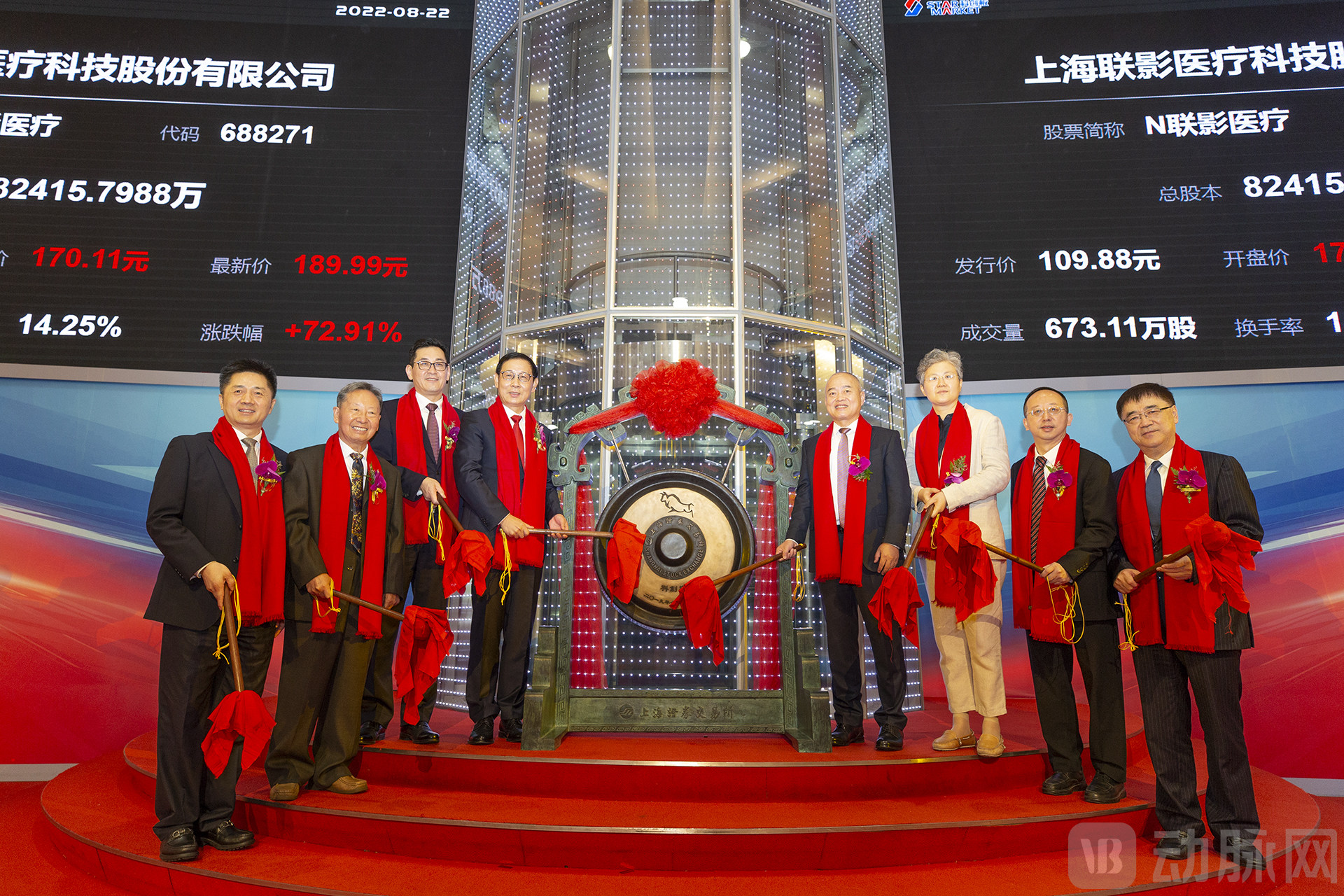
On August 22, 2022, the largest initial public offering (IPO) on China’s STAR Market this year rang the opening bell.
United Imaging, a leading domestic enterprise in high-end medical equipment, was listed at an issue price of RMB 109.88 per share and opened at RMB 170.11. As of press time, its stock price had risen to RMB 190.00, marking a 72.92% increase, with a real-time market capitalization of RMB 156.6 billion.
Since completing its RMB 3.333 billion Series A financing in 2017, United Imaging has been highly anticipated by stakeholders both within and outside the healthcare industry. Some regard it as the most formidable challenger to Mindray Medical, while others expect it to break the monopoly of multinational corporations and reshape the industry landscape for a new era.
What Exactly Is United Imaging’s Confidence? Where Will It Head After Its IPO?
Competition among contemporary major powers often centers on high-end technology.
The large-scale medical equipment industry is precisely such a “high-end, precision, and advanced” sector. It is knowledge-intensive, talent-intensive, and capital-intensive, characterized by extremely high industry barriers, substantial investment requirements, and exceptionally long R&D cycles. Its knowledge-intensive nature is evident in the fact that a single device often comprises tens of thousands of components, spanning more than a dozen interdisciplinary fields including magnetism, acoustics, optics, electronics, and medicine. Its talent-intensive nature reflects the exceedingly high demands for personnel quality and experience. These factors collectively establish the large-scale medical equipment industry as a “top-tier” track, distinguished by its high technological content, high added value, and high application value.
In the global high-end medical equipment industry, the market landscape has long been “impregnable, with the strong getting stronger,” as a handful of foreign companies, leveraging centuries of accumulated expertise, have monopolized the global medical imaging equipment market, including in China. The emergence of United Imaging has disrupted this long-standing domestic market structure, making it the only Chinese company capable of competing with these foreign giants.
The Scarcity in the Market Conceals the True Value of United Imaging
Xue Min, Chairman of United Imaging Group, once stated, “In the high-end medical equipment market, long dominated by foreign brands, our goal is not merely to survive, but to triumph. We are not content with securing a small share in the mid- and low-end markets through low-quality, low-priced products; instead, we possess the conviction and courage to compete on par with the world’s leading players.”
Moreover, against the backdrop of a complex international landscape during the pandemic era, competition among major powers has increasingly focused on the realm of high-end technology. A review of the series of policies introduced in China clearly reveals the national determination to build a “science and technology powerhouse.”
The State Council’s “Outline of the Healthy China 2030 Plan” explicitly calls for strengthening innovation capabilities in high-end medical devices and enhancing the international competitiveness of medical diagnostic and therapeutic equipment with independent intellectual property rights. The national 14th Five-Year Plan proposes concentrating superior resources to tackle key core technologies in medical equipment and critical components and parts; high-end medical equipment and preclinical scientific instruments have been designated as national major scientific research facilities.
Meanwhile, the state has further strengthened the “innovation-driven development strategy” by establishing a technological innovation system that is enterprise-led, market-oriented, and characterized by deep integration of industry, academia, and research. Ten ministries and commissions, including the Ministry of Industry and Information Technology, the National Health Commission, and the National Development and Reform Commission, jointly issued the 14th Five-Year Plan for the Development of the Medical Equipment Industry, which sets forth the goal that by 2025, six to eight Chinese enterprises will rank among the top 50 globally in the medical device industry.
Favored by timing and location, the high-end medical equipment industry has become an emerging national strategic industry concerning national welfare and people's livelihood, shouldering the historical mission of great-power competition. As a leading enterprise in the industry, United Imaging will undoubtedly play a key role.
In the high-end medical equipment sector, technology reigns supreme. While many have amassed wealth in the tide of the market economy by leveraging price and channel advantages, taking the next step forward proves exceedingly difficult. United Imaging clearly understands this principle, as evidenced by its strategic path revealed through its business layout: comprehensive product line coverage, independent research and development of core technologies, and benchmarking against the highest international standards.
United Imaging’s product portfolio encompasses high-performance medical imaging systems, including CT, MRI, PET-CT, PET/MR, and X-ray; radiotherapy products such as CT-guided linear accelerators; and digital healthcare solutions. Furthermore, its product lines extend beyond clinical applications to preclinical settings, covering the field of life science instruments.
For each product line, United Imaging has established its “United Imaging Standard”: all products must achieve world-class hardware and software capabilities through independent innovation, and every product in the portfolio must feature unique innovative highlights—even those in the general radiography category.
Guided by this philosophy, United Imaging has launched a range of products that benchmark against the highest international standards and fill gaps in the industry, including the world’s first total-body PET-CT, the world’s first 3.0T MRI with an ultra-large 75-cm bore, the world’s first integrated CT-linac, as well as China’s first ultra-high-field animal MRI system (uMR 9.4T) and the first domestically produced ultra-high-performance whole-body PET/CT for large animal research.
Particularly noteworthy is the field of molecular imaging, where total-body PET-CT occupies a commanding position globally and was recognized by the Institute of Physics’ *Physics World* as one of the “Top 10 Breakthroughs of 2018.”
The world’s first 2-meter PET-CT scanner has enabled humanity, for the first time in history, to visually observe the entire process of drug distribution, diffusion, and metabolism throughout the body with the naked eye. Hailed as the “Hubble Telescope” for human body exploration, it opens up infinite possibilities for precision cancer diagnosis and treatment, brain science research, and new drug development.
Independent research and development of core technologies and key components has laid the foundation for continuous improvement in product performance, sustained cost reduction, and greater initiative and flexibility in innovation. Zhang Qiang, Chairman of United Imaging, has repeatedly emphasized at industry forums: “Only by mastering core technologies can we truly break away from imitation and low-end follow-on strategies, and no longer be constrained by others.”
United Imaging has achieved independent research and development of core components for its full range of high-end medical imaging and radiotherapy products, including PET digital light-guide detectors, MR superconducting magnets, MR gradient power amplifiers, MR RF power amplifiers, CT spatiotemporal detectors, and RT multi-leaf collimators. Its proportion of self-developed core components leads the industry. Furthermore, United Imaging stated that core components such as high-power CT X-ray tubes, high-reliability high-voltage generators, and large-capacity X-ray tubes are currently under development, with mass production expected to be realized in the near future.
According to the prospectus, the company is also accelerating the application of new materials and new technologies in the research and development of next-generation core components, including CT photon-counting detectors, MI’s new-generation TOF detectors, and RT’s next-generation power source systems, which are core components for its full range of high-end medical imaging and radiotherapy products.
“Full product line coverage, independent R&D of core technologies, and benchmarking against the highest international standards”—this strategic path has paved a broad runway for United Imaging. As reflected in its prospectus, this is evidenced by sustained high-intensity R&D investment, an unparalleled team of R&D engineers, and robust business performance.
United Imaging has never been stingy with R&D investment. Data disclosed in the prospectus shows that during the reporting period, its R&D expenditures were RMB 690 million, RMB 850 million, and RMB 1.048 billion, respectively, with annual growth rates exceeding 20%. From 2019 to 2021, United Imaging achieved revenues of RMB 2.979 billion, RMB 5.761 billion, and RMB 7.254 billion, respectively, representing a compound annual growth rate (CAGR) of 56.03%.
In the first half of 2022, United Imaging projected its operating revenue to reach RMB 3.702 billion to RMB 4.165 billion, representing a year-on-year increase of 20% to 35%; net profit attributable to shareholders of the parent company was expected to be RMB 745 million to RMB 874 million, a year-on-year increase of 15% to 35%. Its full product portfolio has been adopted by nearly 900 Grade A tertiary hospitals across China, including all of the top 10 leading hospitals in the country. The company’s PET-CT has maintained the largest share of new installations in the Chinese market for six consecutive years. In 2020, United Imaging ranked first in the domestic market share of new installations across its entire product line, including MR, CT, PET-CT, and mobile DR.
The interdisciplinary nature of high-end medical equipment development dictates that the industry’s growth relies on deep integration among industry, academia, research institutions, and healthcare providers. By collaborating with top-tier international hospitals, universities, and research institutes, and addressing actual clinical research needs through multi-party synergy, United Imaging Healthcare has pioneered agile innovation from the source. This approach fosters the construction of an innovative ecosystem across the entire industry chain, representing another unique and hard-to-replicate innovation pathway for the company.
Leveraging its product portfolio spanning the “preclinical–diagnostic–therapeutic” continuum and backed by a robust team of engineers and scientists, United Imaging is pursuing a dual strategy. On one hand, it collaborates with top-tier Chinese hospitals—including Peking Union Medical College Hospital, West China Hospital, Zhongshan Hospital, and Ruijin Hospital—to establish centers of medical excellence, tackle major diseases, and actively participate in national research initiatives, leading multiple key national-level projects. On the other hand, it partners with globally renowned universities and research institutions—such as Yale University, the University of California, Davis, Washington University School of Medicine, Fujita Health University Hospital, and Southern Tohoku General Hospital—to explore frontier medicine and build a global innovation community.
In November 2021, the project “Independent Development and Industrialization of High-Field Magnetic Resonance Medical Imaging Equipment,” led by United Imaging in collaboration with the team headed by Chief Scientist Zheng Hairong, a researcher at the Shenzhen Institutes of Advanced Technology, Chinese Academy of Sciences, as well as the Chinese PLA General Hospital (301 Hospital) and Zhongshan Hospital affiliated with Fudan University, was awarded the First Prize of the 2020 National Science and Technology Progress Award. This marks the first time that the high-end medical equipment industry has received this highest honor in the field of science and technology, serving as a paradigm of deep integration and collaborative innovation among industry, academia, research, and healthcare sectors.
Ma Lin, Director of the Department of Radiological Diagnosis at the Chinese PLA General Hospital, stated: “United Imaging’s MRI equipment was introduced to the 301 Hospital in late 2014. At that time, the technology was not yet fully mature. Through continuous feedback and suggestions during clinical application, we worked closely with United Imaging to adjust and refine the equipment, optimizing MRI sequences, parameters, and overall system performance to better align with the hospital’s clinical needs.”
Ma Lin also pointed out that in the past, the most advanced medical equipment was typically refined and applied overseas, entering the Chinese market only after reaching maturity. As a result, Chinese physicians rarely had the opportunity to participate in original, high-quality scientific research. Today, however, leveraging United Imaging’s globally leading cutting-edge technologies and its robust local team of engineers and scientists, enterprises and hospitals can jointly pursue original innovation through deep, open collaboration among industry, academia, and research institutions. This partnership enables them to incubate forward-looking scientific achievements and effectively promote the translation of industrial innovations into clinical practice.
Not long ago, a research team from the University of California, Davis, one of the world’s top academic institutions, announced a groundbreaking achievement at the 2022 SNMMI (Society of Nuclear Medicine and Molecular Imaging) Annual Meeting, the largest and most influential global conference in nuclear medicine. For the first time, researchers visually and non-invasively observed the distribution of T cells in patients recovering from COVID-19 using United Imaging’s Total-body PET-CT uEXPLORER. It is reported that T cells play a critical role in combating the SARS-CoV-2 virus and evaluating related immune responses and vaccine reactions.
Furthermore, the University of California, San Francisco (UCSF) and the University of California, Davis (UC Davis) jointly developed a novel monoclonal antibody tracer targeting HIV. Leveraging United Imaging’s Total-body PET-CT uEXPLORER, this breakthrough enabled humans to visually and clearly observe the distribution of HIV throughout the entire body for the first time, significantly advancing precision efficacy assessment and treatment of AIDS.
After eleven years of accumulation and strategic layout, United Imaging has become a pioneer possessing core underlying technologies, application scenarios, expert resources, and ecosystem resources. Moreover, as a rising star in the industry, its late-mover advantage has laid a solid foundation for exploring new product scenarios, expanding industrial boundaries, enhancing industrial value-added, and seeking broader opportunities for growth in an era marked by the explosive emergence of new technologies.
“Late-mover advantages stem from the foundational technologies of large-scale medical equipment. Once the underlying technical architecture and platform are established, they will continuously empower the company’s product portfolio, sustaining its competitiveness for a decade or even longer,” stated United Imaging. The company explained that late-mover advantages provide the opportunity to leverage newer and more advanced technologies to continually strengthen the foundational technology platform, enhance the technological capabilities of its integrated systems, and unlock greater potential and distinctiveness in technical performance and specialized applications.
Its MRI product line was the first to launch the uAIFI brain-inspired platform, which integrates cutting-edge artificial intelligence, thereby driving the intelligent transformation of MRI technology. During the pandemic, United Imaging Healthcare rapidly developed and focused its R&D efforts on emergency projects, delivering a series of innovative products and solutions for epidemic prevention and control, including the Tianyan Intelligent CT, Fangcang (Mobile Cabin) CT, and Vehicle-Mounted CT. In response to clinical needs in hospitals, it customized ankle-foot coils for Peking University Third Hospital, among other initiatives. These achievements exemplify United Imaging Healthcare’s rapid response capabilities and agile innovation.
Recently, domestically produced high-end medical equipment has begun to serve as national research infrastructure, being applied in the top-tier national scientific research initiative known as the “China Brain Project.” The major project “Infant and Toddler Brain Development Cohort” at ShanghaiTech University, along with its sub-project “ShanghaiTech University–Child and Adolescent Development Cohort Construction,” will leverage United Imaging’s latest research-grade 3.0T magnetic resonance imaging (MRI) system to conduct studies on brain and cognitive development covering two critical age groups: infants/toddlers and children/adolescents. In China, large-scale scientific research facilities remain an emerging market—a high-precision, advanced technological sector where over 90% of equipment has historically relied on imports. Previously, no domestic medical equipment manufacturer had the capability to participate in this field.
Today, the new generation of information technology, represented by artificial intelligence, 5G, and the metaverse, is flourishing. The digitalization of healthcare is accelerating its upgrade, and industrial boundaries are continuously expanding. McKinsey predicts that the global digital health market will reach $600 billion by 2024. With favorable policies, technological advancements, and rising public health awareness, China's digital health industry is expected to maintain a compound annual growth rate (CAGR) of over 30%. The maturity of new technologies presents a historic opportunity for domestic medical equipment manufacturers to catch up and surpass their competitors from the same starting line.
Backed by United Imaging Group, United Imaging has already established a strategic layout encompassing advanced imaging diagnosis and treatment equipment, surgical robots, medical wearable devices, as well as cutting-edge technologies such as artificial intelligence, chips, and imaging diagnostic center services. It is foreseeable that United Imaging possesses profound potential for future development.