

JD Health Launches "Digital-Intelligent Healthcare" Solution Framework to Drive High-Quality Development of Medical Service Systems
On August 20, the 2022 JD Health Digital Intelligence Healthcare Conference was held in Beijing. At the conference, JD Health unveiled for the first time its “Digital Intelligence Healthcare” solution framework designed to drive high-quality development of the healthcare service system, and released comprehensive solutions tailored to diverse hospital application scenarios, thereby accelerating the integration of healthcare service scenarios, interoperability of medical institution data, and connectivity of value across the healthcare industry.

JD Health believes that digital-intelligent healthcare is a capability system that covers the entire informatization process of the medical service system, representing a comprehensive integration of digitization and intelligence in technology, service models, and management within healthcare delivery.
Jin Enlin, CEO of JD Health, stated that digital-intelligent healthcare, by integrating capabilities such as digital and intelligent technologies, big data applications, operational support, and supply chain management, will become a powerful new engine for the high-quality development of the medical service system.
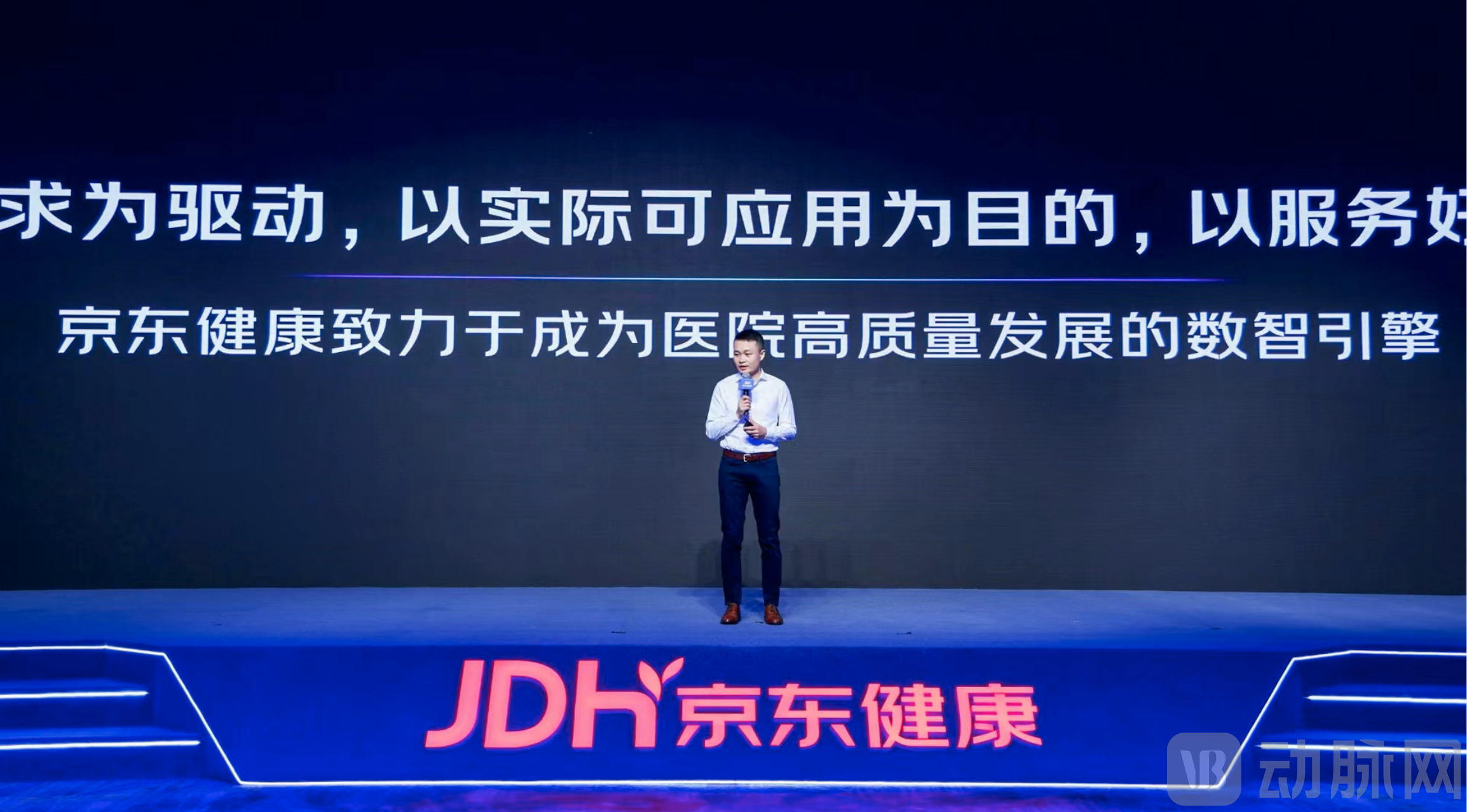 Jin Enlin, CEO of JD Health
In recent years, the multi-level and diversified demand for medical and health services among the public has continued to grow, posing an urgent requirement on the healthcare service system: to accelerate improvements in the quality of medical and health supply and the level of services.
To better meet the people’s growing demand for medical and health services, the healthcare service system has placed high-quality development in a more prominent position. In 2021, the General Office of the State Council officially issued the Opinions on Promoting High-Quality Development of Public Hospitals, which set forth relevant requirements for the high-quality development of public hospitals and emphasized strengthening the supporting role of informatization to lead new trends in their high-quality development. Subsequently, the Action Plan for Promoting High-Quality Development of Public Hospitals (2021–2025) and the Evaluation Indicators for High-Quality Development of Public Hospitals (Trial) were released successively, providing clear direction for “improving service quality through model innovation,” with medical informatization serving as a critical link.
After more than 30 years of development, China’s healthcare service system has entered a stage of comprehensive informatization. To meet the requirements for high-quality development, it is essential to break new ground in technology, service models, and management, solidly apply core capabilities such as digitalization and intelligence, and accelerate the transition of the healthcare industry and medical institutions into a phase of high-quality development.
Liang Zhigang, Director of the Information Center at Xuanwu Hospital of Capital Medical University, stated in his address that the development of digital and intelligent healthcare must always be patient-centric. It is essential to break down the barriers between online and offline services and optimize service workflows, thereby minimizing the need for patients to make physical visits while maximizing the flow of information.
High-quality development is imminent. After years of exploration and practice, JD Health has systematically organized and consolidated its experience in pioneering new medical service models, as well as in delivering health services and operations to hundreds of millions of users. Building on this foundation, the company has established a comprehensive digital-intelligent healthcare capability matrix encompassing technological, product, and application capabilities. Furthermore, JD Health has integrated and upgraded its product and capability modules across all scenarios of medical services, publicly unveiling for the first time the “JD Health Digital-Intelligent Healthcare Four Major Solution Systems” to accelerate the high-quality development of the medical service system.
It is understood that JD Health’s Digital Intelligence Healthcare Solution framework comprises a “Technology Open Platform,” a “Big Data Application System,” an “Operations Support System,” and a “Supply Chain Management System.” Through an integrated delivery model, it provides comprehensive, customized digital intelligence healthcare solutions to diverse medical service institutions.
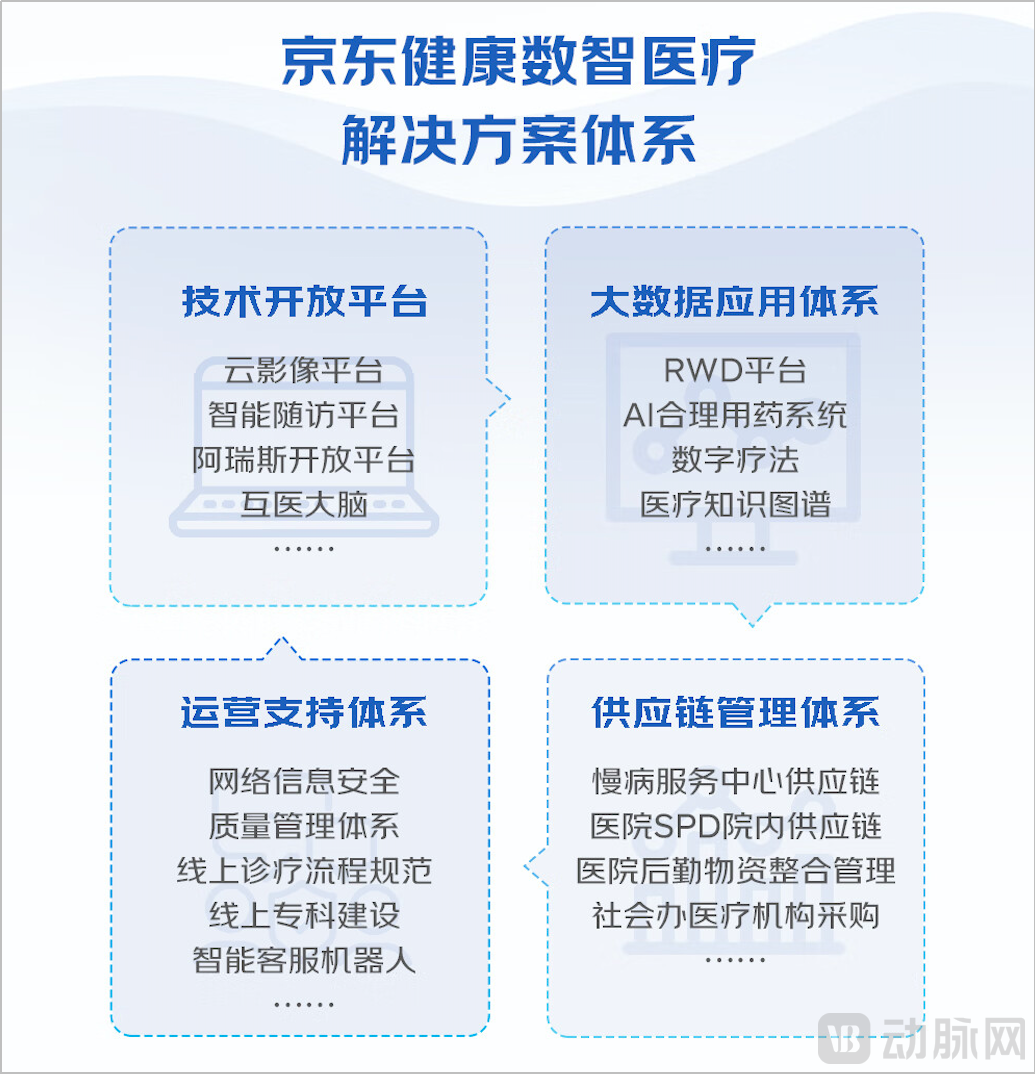
Among these, the “Technology Open Platform” addresses the technical upgrade needs of the healthcare service system, offering solutions such as cloud imaging, intelligent follow-up, the Ares Open Platform, and Huyi Brain. These solutions help shorten the implementation cycle for complex informatization projects within the healthcare service system. Furthermore, its modular applications facilitate iterative upgrades, while efficient technology promotes the establishment of industry standards.
The “Big Data Application System” addresses the healthcare service sector’s need for data interoperability and efficient utilization. By integrating massive amounts of information into standardized products, it provides healthcare institutions with solutions such as a Real-World Data (RWD) platform, AI-driven rational drug use, digital therapeutics, and medical knowledge graphs, thereby enhancing hospitals’ technological innovation capabilities.
The “Operational Support System” encompasses solutions such as quality control, information security assurance protocols, standards and consensus for online diagnosis and treatment, development of online specialty services, and intelligent customer service chatbots. These initiatives promote efficient synergy among medical service models, clinical diagnostic and therapeutic technologies, and the overall service framework, while enhancing user experience and application effectiveness through the provision of operational services.
“Supply Chain Management System” leverages JD Group’s robust digital and intelligent supply chain infrastructure, encompassing solutions such as the Chronic Disease Service Center Supply Chain Solution, Hospital SPD (Supply, Processing, and Distribution) In-Hospital Supply Chain Service Solution, Integrated Management Solution for Hospital Logistics and Materials, and Integrated Procurement Solution for Private Healthcare Institutions, thereby helping hospitals reduce costs, enhance efficiency, and achieve more refined management.
Amid the wave of high-quality development in the healthcare service system, JD Health will leverage the aforementioned solution framework to promote the deep integration of next-generation information technologies with medical services and hospital management, thereby enhancing the comprehensive service capabilities of hospitals.
Medical institutions are the primary arena for healthcare delivery. Helping hospitals break through temporal and spatial constraints to enhance the quality, broaden the scope, and stratify the content of medical services is essential to achieving a more balanced allocation of medical resources, thereby promoting the high-quality development of the healthcare service system and advancing the implementation of the Healthy China initiative.
Therefore, targeting hospitals, JD Health has developed an integrated Internet Hospital solution based on offline medical service scenarios. This solution addresses the different stages of care—pre-consultation, during consultation, and post-consultation—and caters to various stakeholders—patients, healthcare professionals, and hospitals. Its objectives are to optimize the medical care process, improve consultation efficiency, and enhance satisfaction among all parties involved.
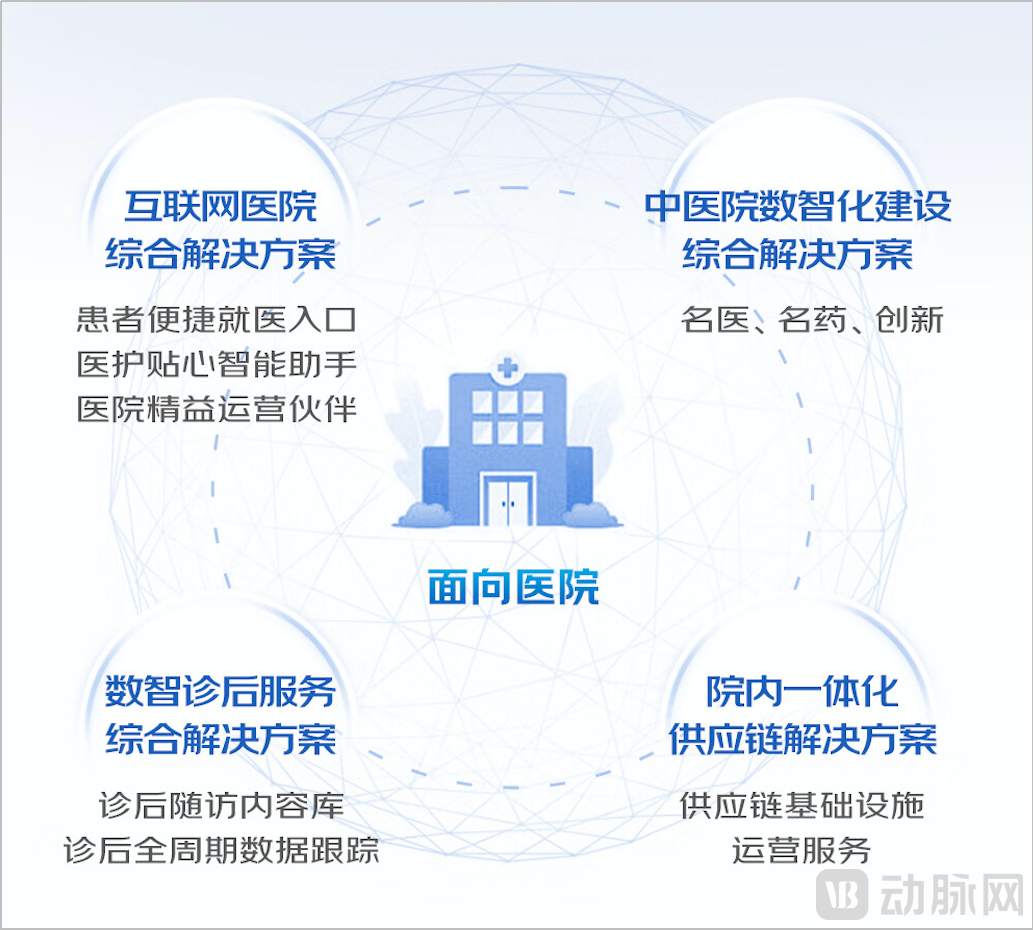
In the comprehensive solution for internet hospitals, we continue to prioritize “residents’ health” as the fundamental need. By integrating digital and intelligent healthcare capabilities, internet hospitals help medical institutions establish a primary gateway that enables convenient access to care and addresses health concerns. This approach not only serves patients with diagnosed conditions but also extends its scope to individuals in sub-health and healthy states, providing end-to-end medical and health management services encompassing prevention, wellness, diagnosis, treatment, and rehabilitation.
Designed for healthcare professionals, the comprehensive Internet Hospital solution leverages technology to enhance work efficiency by providing services such as intelligent follow-up, scheduling management, smart calendars, and data governance. To address the challenges of post-consultation patient management, it comprehensively improves physicians’ follow-up efficiency through multiple approaches—including building a post-consultation follow-up content library, establishing effective incentive mechanisms, and integrating with intelligent monitoring devices—thereby helping physicians better manage their patients.
To help medical institutions better achieve cost reduction and efficiency improvement in overall management and operations, the integrated solution for internet hospitals incorporates JD Health’s capabilities in refined user operations and supply chain services. Through modules such as the Operational Support Middle Platform, Cloud Pharmacy Operations Center, and Medical Consortium Operations Center, the solution assists hospitals in developing diversified services, expanding service coverage, and enhancing inter-institutional collaboration. The in-hospital supply chain capabilities can meet the full-category needs of various internal scenarios, including outpatient and emergency pharmacies, outpatient diagnostic and technical departments, inpatient pharmacies and wards, logistics warehouses, and information centers. Furthermore, by leveraging service formats and models such as JD Pharmacy’s self-operated stores and the O2O medication delivery service “JD Express Medicine,” the solution supplements pharmaceutical care scenarios outside the hospital.
To address the specific needs of high-quality development in traditional Chinese medicine (TCM) hospitals, JD Health TCM Hospital integrates academic resources and technical capabilities. It supports hospitals in building key specialties by establishing inheritance studios for renowned senior TCM practitioners and creating platforms for collaborative development between traditional Chinese and Western medicine. Additionally, it facilitates the translation of achievements by eminent physicians into practical applications through innovative uses of in-house hospital preparations. Furthermore, it promotes cooperation in constructing a standardized TCM system via supply chain oversight, precision-standardized pharmacies, and drug efficacy evaluations.
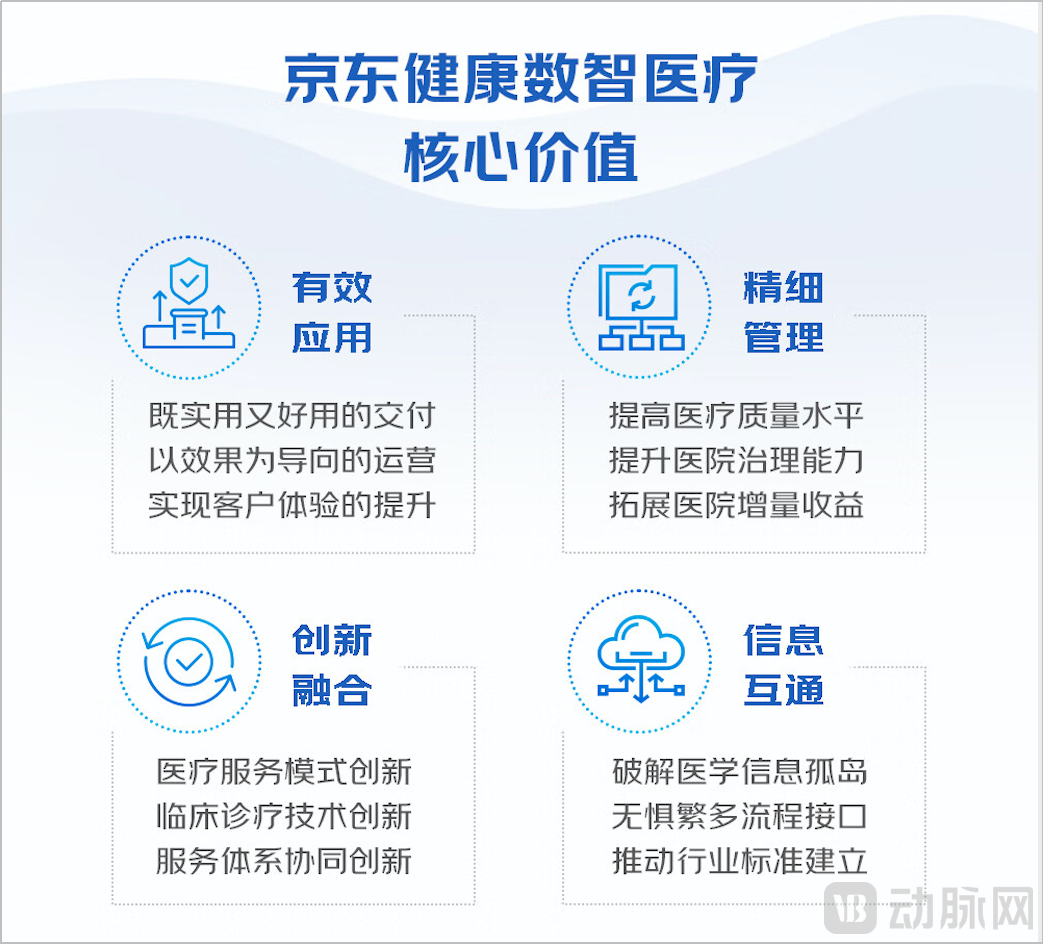
During his keynote address, Chen Jinxiong, Chairman of the Electronic Medical Record Committee of the China Medical Information Association, stated that hospitals urgently need to transform and upgrade their information systems. It is essential to ensure that informatization delivers tangible value, rather than merely satisfying functional delivery requirements. A deeper understanding of clinical operations is required to achieve seamless integration between products and business processes. By focusing on innovation across functionality, user experience, workflows, efficiency, cost, and quality, hospitals can enable high-frequency, high-efficiency, and high-quality utilization of these systems.
This aligns perfectly with JD Health’s approach to providing solutions for healthcare service providers. Guided by operational outcomes, JD Health’s Digital Intelligence Healthcare division deeply understands customer needs and places greater emphasis on the effective implementation of practical applications. Leveraging its extensive experience in serving hundreds of millions of users online, JD Health has developed industry-leading, scalable capabilities in user operations and product management.
Taking the First Affiliated Hospital of Henan University of Chinese Medicine (hereinafter referred to as “Henan TCM First Affiliated Hospital”) as an example, Zhengzhou is home to numerous Grade A tertiary hospitals. To help Henan TCM First Affiliated Hospital enhance its medical service capabilities and improve patient operations management, JD Health leveraged the hospital’s distinctive advantages in traditional Chinese medicine (TCM) to co-establish and jointly operate Henan’s first TCM internet hospital. After two years of operation, the cumulative number of registered patients approached 300,000. In August 2021, when a cluster outbreak occurred in Zhengzhou, the monthly prescription volume at “Henan TCM First Affiliated Hospital” increased by 520% month-on-month.
As an innovative healthcare services enterprise, JD Health will continue to leverage its open strategy and technological innovation in the future. By adopting a modularized, productized, platform-based, and ecosystem-driven approach, it aims to enhance supply chain efficiency, promote the deep integration and innovative application of technology and medical services, and serve as a powerful engine for the high-quality development of the healthcare service system, thereby accelerating the realization of digital economy objectives within the broader health sector.