

Qingyuan Kaiwu Files IPO Prospectus Amid Rapid Expansion in China's Billion-Dollar Laboratory Automation Market
Laboratory automation has emerged as a highly sought-after technology in recent years, drawing significant attention from research institutions, industrial sectors, and the testing and inspection industry.
With continuous innovation and transformation in science and technology, along with ongoing advancements in pharmaceutical research and medical testing, market demand for automated and intelligent laboratory solutions is growing steadily, driving increasing interest in laboratory automation.
In terms of capital, data from the Artery Orange database shows that in 22 financing events in the smart laboratory sector between 2020 and June 2022, various investors injected a total of over RMB 2.5 billion. Prominent first-tier venture capital firms such as Northern Light Venture Capital, Sinovation Ventures, Sequoia China, and Matrix Partners China were among the participants.
In terms of policy, the newly revised Law on Progress in Science and Technology officially came into effect on January 1, 2022. For the first time, national laboratories were highlighted as a key component of China’s strategic scientific and technological capabilities, with requirements to establish and improve a laboratory system led by national laboratories and supported by national key laboratories, while enhancing mechanisms for stable funding support. A nationwide surge in laboratory construction ensued. As of April 2022, nearly 100 “provincial laboratories” across China had either been officially unveiled or had initiated preparatory work for their establishment.
According to Jiacheng Capital’s estimates, China’s pharmaceutical output value reached RMB 4 trillion in 2020, with R&D expenditure accounting for approximately 20%. Given that spending on data management, laboratory standards, and R&D intelligence constitutes 10% of total R&D expenditure, the market size for smart laboratories could reach hundreds of billions of RMB.
However, at the current stage, laboratory automation equipment in China is predominantly imported. According to Frost & Sullivan data, over 70% of hospitals in China adopt imported products. Issues such as high equipment costs, expensive customization and communication barriers, and inadequate after-sales support persist. With the successive implementation of policies including tiered diagnosis and treatment, the two-invoice system for procurement and sales, and medical insurance cost containment, end-users are not only increasing their demand for biochemical diagnostic products but also strengthening cost control requirements. This creates development opportunities for cost-effective domestically produced alternatives, indicating substantial potential for import substitution.
In response to the aforementioned pain points, a cohort of innovative players in laboratory automation equipment has emerged in China. Among them, founded in October 2021,Beijing Qingyuan Kaiwu Technology Co., Ltd. (hereinafter referred to as “Qingyuan Kaiwu”)—Caught the attention of VCBeat—
This emerging startup, established just three months ago, has successively secured two rounds of financing totaling tens of millions of RMB from renowned industrial investment funds such as Shuimu Ventures and the Changfa Zhiheng Direct Investment Fund. Within less than a year of its inception, the company has developed a series of products, including a library preparation workstation for high-throughput sequencing, a mass spectrometry sample pre-processing workstation for large-scale screening needs, and a fully automated nucleic acid detection workstation for drug screening. It has also secured bulk purchase orders from multiple leading industrial clients. Furthermore, its founder is a rare talent in the industry who combines academic and industrial expertise, boasting an advanced degree, over 20 years of hands-on experience in continuous innovative development, and extensive senior management experience.
How Did Qingyuan Kaiwu Achieve Impressive Results Within Less Than a Year of Its Establishment? What Are the Logic Behind Its Product Portfolio and the Technologies Underpinning Its Core Products? What Are Its Perspectives on Industry Development? With These Questions in Mind, VCBeat Conducted an Interview withWang Dong, Founder of Qingyuan Kaiwu。
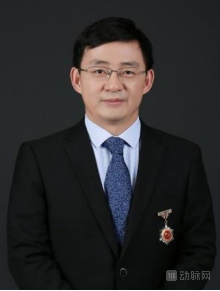
Wang Dong, Founder of Qingyuan Kaiwu
Qingyuan Kaiwu was established in October 2021, with its R&D base located in the Life Science Park in Changping District. Addressing the unmet demands for highly customized, integrated, automated, and intelligent solutions in the life sciences, biopharmaceuticals, and clinical diagnostics markets, the company leverages its founding team’s nearly two decades of experience in innovative product development and commercialization within the IVD sector. It focuses on laboratory intelligence, high-end instrumentation, and complementary consumables.
Frontier life science technologies, represented by sequencing and mass spectrometry, are rapidly advancing into application scenarios such as in-hospital testing, new drug discovery, and synthetic biology. As the industry is still in its early stages, abundant opportunities exist. There is an urgent need for teams that not only understand the core principles of these technologies and the demands of their industrial applications but also possess expertise in laboratory automation, intelligent technologies, and product commercialization. This imperative serves as the primary driving force behind Qingyuan Kaiwu’s decision to enter this sector.
However, the domestic market is currently dominated by comprehensive solutions provided by international peers. Domestic instrument and equipment suppliers offer relatively limited product portfolios and have yet to establish complete product ecosystems, remaining heavily reliant on third-party suppliers—often international ones—for core components. There is still a gap between domestic offerings and overseas products in terms of stability, user-friendly human-computer interaction, and technological sophistication. Providing integrated innovative solutions to instill confidence in laboratory managers is key to achieving domestic substitution. This is precisely why Qingyuan Kaiwu remains committed to technological innovation, starting from foundational technologies.
The company currentlyMultidimensional Liquid Control Systemas the core, buildFlexible Modular Technology System, implement a two-pronged product layout:Automated and Intelligent Laboratory EquipmentandHigh-End Life Science Equipment, focusing on industrial application scenarios such as sequencing, mass spectrometry, synthetic biology, and drug development.
Liquid handling control systems represent one of the foundational technologies underlying intelligent laboratories and high-end analytical instrumentation. For most conventional laboratories, although numerous analytical instruments enable automated detection, the automation level of front-end sample processing remains relatively low. This necessitates substantial manual labor and inevitably involves many repetitive and tedious tasks. For instance, in the realm of liquid handling, while some standardized automated pipetting systems are available on the market, these devices generally focus solely on pipetting and solution preparation, lacking comprehensive processing capabilities.
To address the aforementioned pain points, Qingyuan Kaiwu has launchedMulti-Dimensional Fluid Control System, which involves precise control over the volume, flow direction, and flow rate of liquids. According to Wang Dong, “multi-dimensionality” is reflected in both form and volume. The former refers to the manipulation of trace amounts of liquid and ultra-micro-sized droplets, manifested in controlling liquid volume, flow direction, flow rate, and liquid motion; regarding the latter, Qingyuan Kaiwu has already achieved a leap from microliters to milliliters, and will next realize pipetting at the nanoliter level.
Flexible Modular Technology SystemComprising nine components—precision liquid handling, precision temperature control, multimodal substance separation, centrifugation module, motion module, ultrasonic actuation module, fluorescence monitoring module, AI recognition module, and information management module—each module can operate independently or in coordination with others. Users can flexibly configure the system according to their specific needs. Meanwhile, the related products demonstrate leading advantages in key evaluation metrics such as cost control, quality assurance, operational stability, and spatial integration.
Regardless of the field, talent is the key driving force behind its development.
Laboratory automation systems are intensive, multidisciplinary engineering systems that integrate a wide range of technologies. They emphasize the balanced, mature, and stable integration of multiple scientific disciplines. Consequently, the demand for talent extends beyond professional expertise in life sciences, biotechnology, and medicine to include skills in data science, artificial intelligence (AI), and software and hardware engineering.
Qingyuan Kaiwu boasts a dynamic, technically proficient, professional, and user-savvy R&D team.
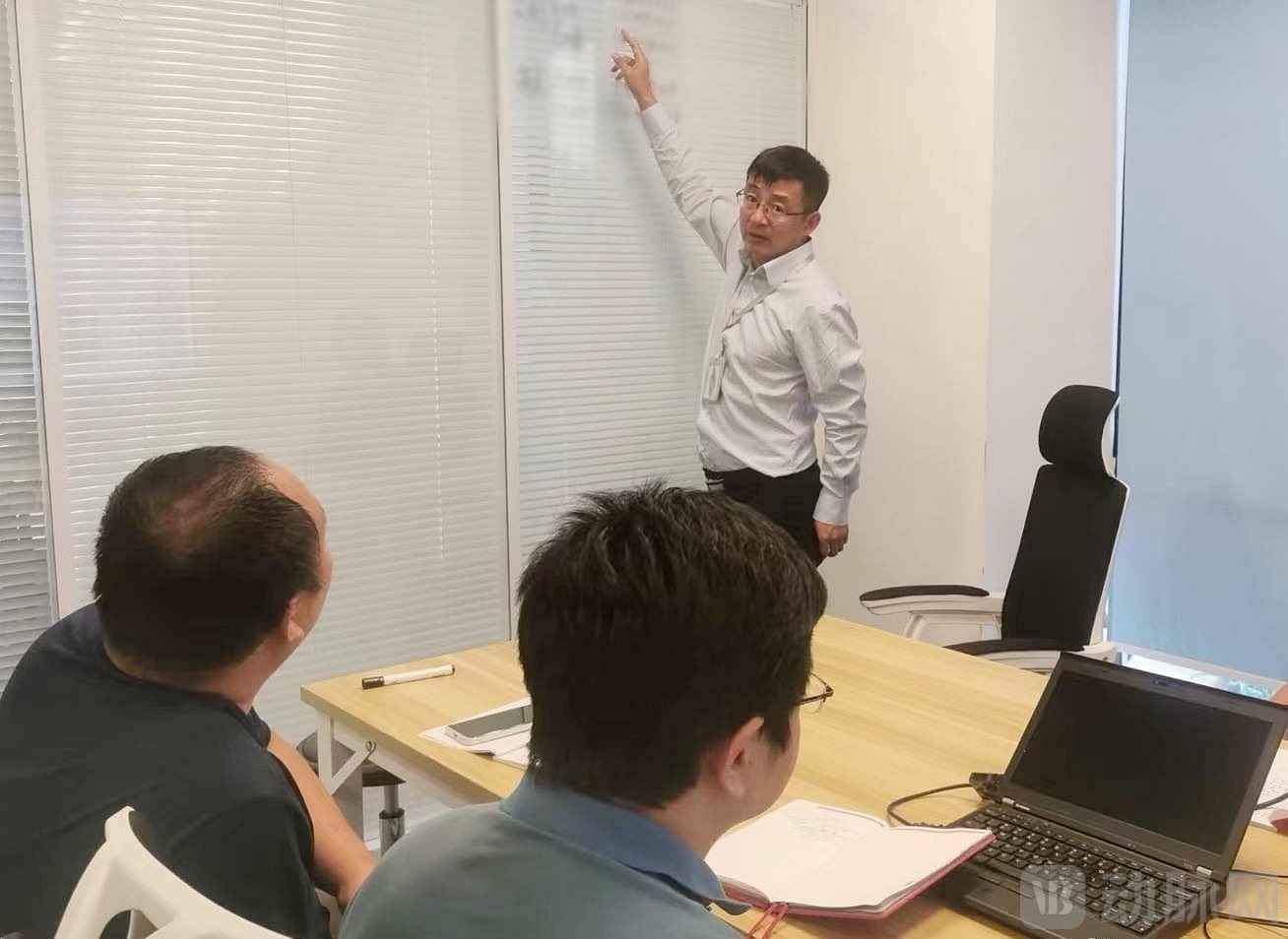
Professor Wang Dong Discusses Technology with the R&D Team
Wang Dong, Founder of the CompanyGraduated from the Department of Precision Instruments at Tsinghua University. Recipient of numerous honors, including Beijing Capital Science and Technology Innovation Leading Talent, the First Outstanding Engineer Youth Award of the China International Science Exchange Foundation, Beijing Excellent Young Talent, and Beijing Science and Technology New Star. Serves as a member of the expert group for the National Key R&D Program on “Proactive Health and Technological Responses to Aging,” Secretary-General of the Medical Instrument Branch of the Chinese Society for Scientific Instrument, and joint master’s supervisor at Tsinghua University and Northwestern Polytechnical University.
With nearly two decades of service at CapitalBio Corporation, a leading enterprise in genetic diagnostics, he established two research institutes and spearheaded the development of over 80 products in areas such as genetic diagnostics, immunodiagnostics, cell analysis, and intelligent diagnostics. He managed multiple ODM projects for international industry giants and led several key national R&D programs and initiatives, securing more than 20 certifications from the NMPA, CE, UL, and WEEE. Under his leadership, the team achieved technological breakthroughs in picoliter- and nanoliter-scale liquid dispensing technologies, complete equipment sets for high-throughput microarray chips, and clinical-grade flow cytometers. He took the lead in formulating four national standards, filed over 100 patent applications, and has developed profound expertise and an extensive professional network within the life sciences and biopharmaceutical industries.
Other core members of the founding team possess comprehensive backgrounds in the R&D of automated detection equipment—such as sequencers, mass spectrometers, and flow cytometers—as well as in market operations, along with experience in the development and industrialization of innovative products. Having achieved significant accomplishments in their respective fields, their profound understanding and insights into the industry and products have enabled Qingyuan Kaiwu to establish a path of independent innovation in underlying technologies from its inception.
Led by an interdisciplinary team, Qingyuan Kaiwu continues to be driven by independent R&D and technological innovation, having filed over ten patent applications. Within less than a year of its establishment, the company has developed a series of products, including a library preparation workstation for high-throughput sequencing, a mass spectrometry sample pre-processing workstation for large-scale screening needs, and a fully automated nucleic acid detection workstation. These offerings provide automated and intelligent sample pre-processing solutions for life science research and medical testing services, with related products securing bulk purchase orders from multiple leading industrial clients.
In terms of development strategy, Qingyuan Kaiwu focuses on critical needs and insists on independently mastering foundational technologies. Compared with other laboratory automation companies in the market, taking the automated production line for pre-sequencing sample preparation as an example, Qingyuan Kaiwu’s product differentiation strategy features the following three characteristics:
First, comprehensive strategic positioning has been established in the field of pre-sequencing sample preparation. For instance, Qingyuan Kaiwu has implemented a full-spectrum layout across key stages of pre-sequencing processing, including nucleic acid extraction, nucleic acid fragmentation, sequencing library construction, and sequencing library quality control (QC).
Second, build differentiated technical barriers for each segment of the layout. For example, in the area of library preparation, Qingyuan Biotech has anchored its innovation on solving contamination issues by implementing anti-contamination designs; in the areas of nucleic acid fragmentation and QC, the focus is on addressing the need for domestic substitution.
Third, an open system. Qingyuan Kaiwu’s product ecosystem is not closed or restricted to proprietary connections; instead, it can interface with analytical instruments from any manufacturer. This inclusive compatibility helps users enhance efficiency, reduce labor costs and error-checking burdens, and improve the accuracy and safety of experiments.
Qingyuan Kaiwu has currently achieved partial automation and will next continue to deepen its expansion toward full automation. To maintain technological leadership and provide sustained momentum for corporate development, the company is strengthening collaborations with top-tier domestic and international research institutes to jointly develop high-end instruments and equipment that address critical technological bottlenecks, thereby enhancing the specificity of existing products and driving robust upgrades.
In the long run, Qingyuan Kaiwu will continue to enrich its product portfolio, upgrade and iterate its laboratory automation solutions, provide verticalized solutions for the industry, and constantly expand the boundaries of application scenarios, thereby facilitating the rapid development of China’s high-end life sciences equipment industry.
Looking ahead, Wang Dong has clearly mapped out the future development direction for Qingyuan Kaiwu: First, while the company has currently achieved partial automation, it will further deepen its efforts to advance toward full automation. Second, to maintain technological leadership and sustain long-term corporate growth, the company will strengthen collaborations with top domestic research institutes to jointly develop high-end instruments and equipment that address critical technological bottlenecks, thereby enhancing the specificity of existing products and driving their robust upgrading.
Achieving all this requires a large pool of high-caliber talent within the industry, such as scientists who are well-versed in sequencing, mass spectrometry, and drug R&D, capable of bridging R&D with customers and managing the full lifecycle planning of product lines; business development (BD) professionals who grasp market dynamics and drive business expansion in alignment with the company’s strategic goals; software, hardware, and mechanical R&D engineers with a solid foundation in biology; production leaders familiar with medical device supply chains and manufacturing management; and personnel skilled in process quality control and maintenance. Only by possessing a substantial number of multidisciplinary talents who have a deep understanding of application scenarios and precise mastery of technology can companies stand out in the development of laboratory automation and intelligence, thereby accelerating their growth.
Recently, Qingyuan Kaiwu has reached an intent agreement for its Pre-A financing round. Moving forward, with the right talent in place and financial support secured, Qingyuan Kaiwu will continue to expand its product portfolio, upgrade and iterate its laboratory automation solutions, provide specialized solutions for the industry, and continuously broaden the boundaries of application scenarios, thereby accelerating the rapid development of China’s high-end life sciences equipment industry.