

Non-Vascular Intervention Leader Carden Medical Completes Tens of Millions Pre-A+ Financing Round Led by Jinding Capital and Shenzhen SME Guaranty
VCBeat has learned that Kaben Medical recently completed a pre-A+ financing round worth tens of millions of yuan, jointly led by Jinding Capital and Shenzhen Huibo Growth Venture Capital Corporation. The funds raised will be primarily used for channel development of Kaben Medical’s new products, R&D investment in new projects, clinical support, and team building.
Kaben Medical, established in April 2018, focuses on the field of non-vascular interventional therapy. Leveraging its image-fusion ultrasound platform technology for precise localization, the company provides comprehensive equipment and surgical consumables to procedural departments including urology, hepatobiliary surgery, and rehabilitation medicine.
Kaben Medical’s flagship product, the VENUS Real-Time Multi-Modal Image Fusion Ultrasound Diagnostic System, not only facilitates efficient and convenient lesion localization, tracking, and puncture path planning, but also enables rapid and precise guidance for establishing interventional access. This system visualizes non-vascular interventional procedures and simplifies surgical techniques, thereby enhancing both procedural safety and efficiency.
The VENUS product has received unanimous endorsement from leading experts and department directors. It is a domestically leading product, with regulatory approval imminent. Its founder, Zhang Shiping, hails from Siemens’ Imaging Division, where he served as a medical imaging software engineer, MRI architecture architect, and global expert in interventional medical imaging. He previously represented Siemens in discussions on draft regulations in China concerning DSA and wireless healthcare technologies.
What Is a Multi-Image Fusion Interventional Navigation System?
Multi-Image Fusion Interventional Navigation System (Real-time Virtual Sonography, RVS) imports three-dimensional volumetric data from ultrasound, CT, or MRI into the ultrasound equipment. By leveraging an electromagnetic sensor mounted on the ultrasound probe and an electromagnetic converter within the virtual navigation system, it achieves spatial localization and tracking. Based on real-time ultrasound display, the system fully co-registers ultrasound images with CT/MRI scans. As the operator freely moves the probe to change imaging planes, the ultrasound, CT, and MRI images are updated in real time in synchronization.
Whether it is ultrasound, CT, or MRI, each imaging modality has its own limitations, posing certain challenges to the precise implementation of percutaneous nephrolithotomy in urology and local ablation therapy for liver cancer in hepatobiliary surgery. Fusion imaging technology utilizes hardware and software to enable the display, interpretation, comparison, and analysis of images from one or more imaging modalities on a single platform.
This concept was first proposed by Townsend and Nutt at the University of Pittsburgh Medical Center in the 1990s and was successfully applied to single-photon emission computed tomography (SPECT)/CT for the first time in 1993.
Enhancing the Ease of Non-Vascular Interventional Procedures: Kaben VENUS Delivers High-Cost-Performance Equipment
The VENUS system is the first-generation product independently developed by Kaben Medical, benchmarked against international high-end color ultrasound diagnostic systems. Currently, manufacturers such as GE, Philips, Esaote, Hitachi, and BK have all launched high-end equipment with image fusion capabilities. Among them, Philips and Esaote focus on the general field of non-vascular interventions (neurosurgery, urology, hepatobiliary surgery, and musculoskeletal), while BK is a major competitor in the global urology market.
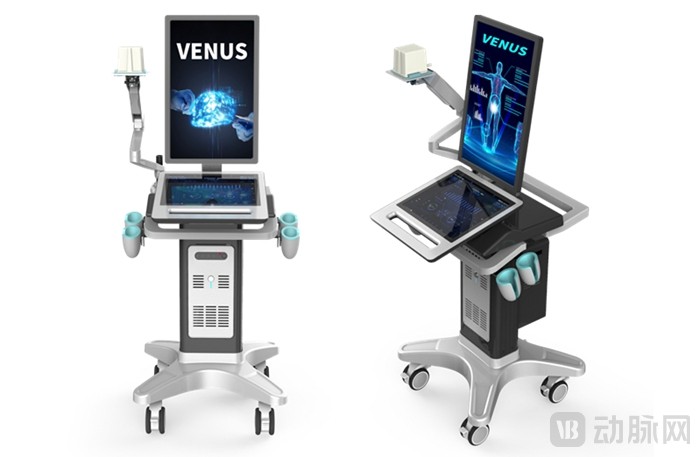
Kaben VENUS simultaneously addresses three major challenges in the field of non-vascular interventional procedures: rapid lesion localization, precise surgical path planning, and swift guidance for establishing accurate interventional access. Leveraging technologies such as overlapping precision fusion, organ segmentation, dynamic needle tip recognition, lesion tracking and delineation, and targeted puncture guidance, Kaben Venus delivers more precise, safer, more efficient, and patient-friendly clinical services, providing a superior medical imaging solution for non-vascular interventional surgeries.
Compared with foreign competitors, Kaben VENUS offers advantages such as faster speed, simpler operation, higher surgical efficiency, and better cost-effectiveness.
Reduces the time required for preoperative clinical preparation and puncture.Each surgery saves at least 30 minutes, increasing the daily surgical capacity from 3–5 to 4–6 procedures. This improvement in surgical efficiency enables limited medical resources to benefit more patients.
Lowers the surgical threshold and provides a more intuitive, multi-perspective visualization of organs.It also provides navigational guidance to enhance the precision and safety of surgical procedures, enabling more physicians and hospitals to master and develop techniques that were previously limited to chief physicians and tertiary hospitals.
High cost-effectiveness.Ultrasound systems from leading international brands with image fusion capabilities have a starting price of over RMB 3 million, and since image fusion is offered as a separately billed premium feature, the total cost typically exceeds RMB 4 million. Kaben Medical focuses on image-fusion ultrasound solutions for the operating room, offering functionality comparable to that of international-brand ultrasound systems while delivering superior cost-effectiveness, better serving clinical practice, and benefiting a broader patient population.
Policy-driven domestic substitution mandates 100% procurement of domestically produced ultrasound equipment. The Notice issued by the Ministry of Finance on printing and distributing the "Guidance Standards for Reviewing Government Procurement of Imported Products" (2021 Edition) explicitly states that medical ultrasound devices are included in the list of products to be entirely sourced from domestic manufacturers, representing a significant policy tailwind.
Zhang Shiping, Chairman of Kaben Medicalstated: “We extend our sincere gratitude to Jinding Capital for its recognition and support of Kaben Medical. Kaben Medical focuses on the field of non-vascular interventional therapy. Leveraging three independently developed core technology platforms, and starting with the VENUS multimodal image-fusion ultrasound system, we have expanded into endoscopy and electrosurgical systems and consumables, providing integrated, innovative medical product solutions that make surgeries more efficient, safer, healthier, and cost-effective. Jinding Capital is a venture capital firm that places strong emphasis on R&D, which aligns closely with our development philosophy. With the support of Jinding Capital, Kaben Medical will further increase its R&D investment and enhance its technological innovation capabilities. On the journey of developing domestically produced medical equipment, Kaben Medical will take even more solid steps. In the future, Kaben Medical will continue to be guided by clinical applications, aiming at technology promotion and the translation of innovative achievements, constantly improving China’s medical technology standards, leading the frontier of innovation in interventional medicine diagnosis and treatment, and working hand in hand with Jinding Capital to achieve outstanding results!”
Project Lead, Jinding CapitalIt was stated: “The non-vascular interventional industry faces pain points such as complex procedures and lengthy surgical preparation times. Due to the high technical difficulty and stringent requirements for physician expertise, non-vascular interventional procedures—such as percutaneous nephrolithotomy in urology and tumor biopsies in hepatobiliary surgery—are typically restricted to tertiary hospitals. Currently, only 600 tertiary hospitals in China offer percutaneous urological puncture services. Physicians require years of experience, and traditional ultrasound-guided procedures demand rigorous preoperative assessment, with each surgery taking 30–60 minutes, resulting in low efficiency. Furthermore, the lack of three-dimensional imaging leads to a low first-attempt success rate for needle punctures. Kaben (Shenzhen) Medical Technology Co., Ltd. has introduced real-time fusion and dynamic recognition technologies, achieving precise guidance through multi-modal image fusion rather than single-modality imaging. Real-time fusion of ultrasound with CT or MRI compensates for the limitations of conventional ultrasound guidance. This fused imaging enhances lesion detection rates, enables precise planning of the optimal puncture path while avoiding blood vessels and adjacent organs, shortens the puncture distance, and thereby improves both procedural efficiency and safety. This advancement allows limited medical resources to benefit a broader patient population. JINDING CAPITAL looks forward to partnering with Kaben Medical to continuously build a leading Chinese domestic brand in the field of non-vascular interventions.”