

Sinotherapeutics Debuts on STAR Market, Challenging Merck with High-End Generic Drugs

Sinotherapeutics
High-end pharmaceutical formulation technology and its product development and production
On August 25, Sinotherapeutics officially listed on the STAR Market, with an opening price of RMB 15.80, followed by a surge of over 60%.
The prospectus reveals that Sinotherapeutics was established in 2012 through joint investment by Lianhe Investment, Xintai New Technology, and Finer. Its core business encompasses high-end generic drugs and CRO services, with the majority of revenue derived from the overseas sales of high-end generic drugs. During the reporting period, Sinotherapeutics generated RMB 270 million in revenue from the United States in 2020, accounting for 85.39% of its total revenue; in the first half of 2021, it recorded RMB 116 million in U.S. revenue, representing 74.75% of the total.
The funds raised by Sinotherapeutics will be primarily used for the formulation production facility project, the research and development of high-end generic drugs and improved new drugs, as well as to supplement working capital.
In the past two years, the importance of formulation technology and its role in driving pharmaceutical innovation have gradually gained recognition and attention. A number of companies specializing in active pharmaceutical ingredients (APIs), drug formulations, and high-end generic drugs have been listed on the STAR Market. Not long ago, Lipin Pharmaceutical submitted its prospectus. Huayitaikang Pharmaceutical, another comprehensive pharmaceutical enterprise integrating R&D, manufacturing, export, and sales of high-end formulations, completed a nearly RMB 100 million Series B+ financing round at the end of June. According to VCBeat New Medicine, the company is also planning an initial public offering (IPO).
Sectors that previously struggled to gain recognition from the capital markets are quietly gaining momentum amid the winter of pharmaceutical investment.
"The Value of 'First-to-Market Generic'"
Sinotherapeutics’ IPO journey once encountered a minor hiccup. In November 2021, the company made its initial appearance before the listing committee, but the Shanghai Stock Exchange raised questions about its scientific and technological innovation attributes, leading to a deferred vote on its IPO. It was not until January this year that Sinotherapeutics passed the review during its second committee hearing.
The key points of the Shanghai Stock Exchange’s inquiry include: the source of Sinotherapeutics’ core technologies, as multiple formulation-related patents were acquired through assignment; and the rationality of its main business operations, given that health supplements were previously included in the revenue from its primary business in its prospectus.
Stricter Scrutiny of Sci-Tech Innovation Attributes on the STAR Market: Termination of Reviews for Pharmaceutical Companies Is Not an Isolated Case, Possibly Due to Insufficient Sci-Tech Innovation Credentials or Positioning as Generic Drug Manufacturers
This is also a common criticism leveled at such companies: they are seen as innovative on one hand, yet akin to copycats on the other.
According to the prospectus, Sinotherapeutics positions itself as a “high-tech enterprise driven by R&D innovation.”
For Sinotherapeutics’ focus on high-end generic drugs, formulation technology is the key to their development. Sinotherapeutics has developed three major technology platforms: the “Poorly Soluble Drug Solubilization Technology Platform,” the “Sustained and Controlled-Release Drug Formulation R&D Platform,” and the “Fixed-Dose Combination Drug Formulation R&D Platform.”
Companies that master advanced formulation technologies can establish certain market barriers. Posaconazole enteric-coated tablets, which contribute the majority of Sinotherapeutics’ revenue, best exemplify the company’s business model.
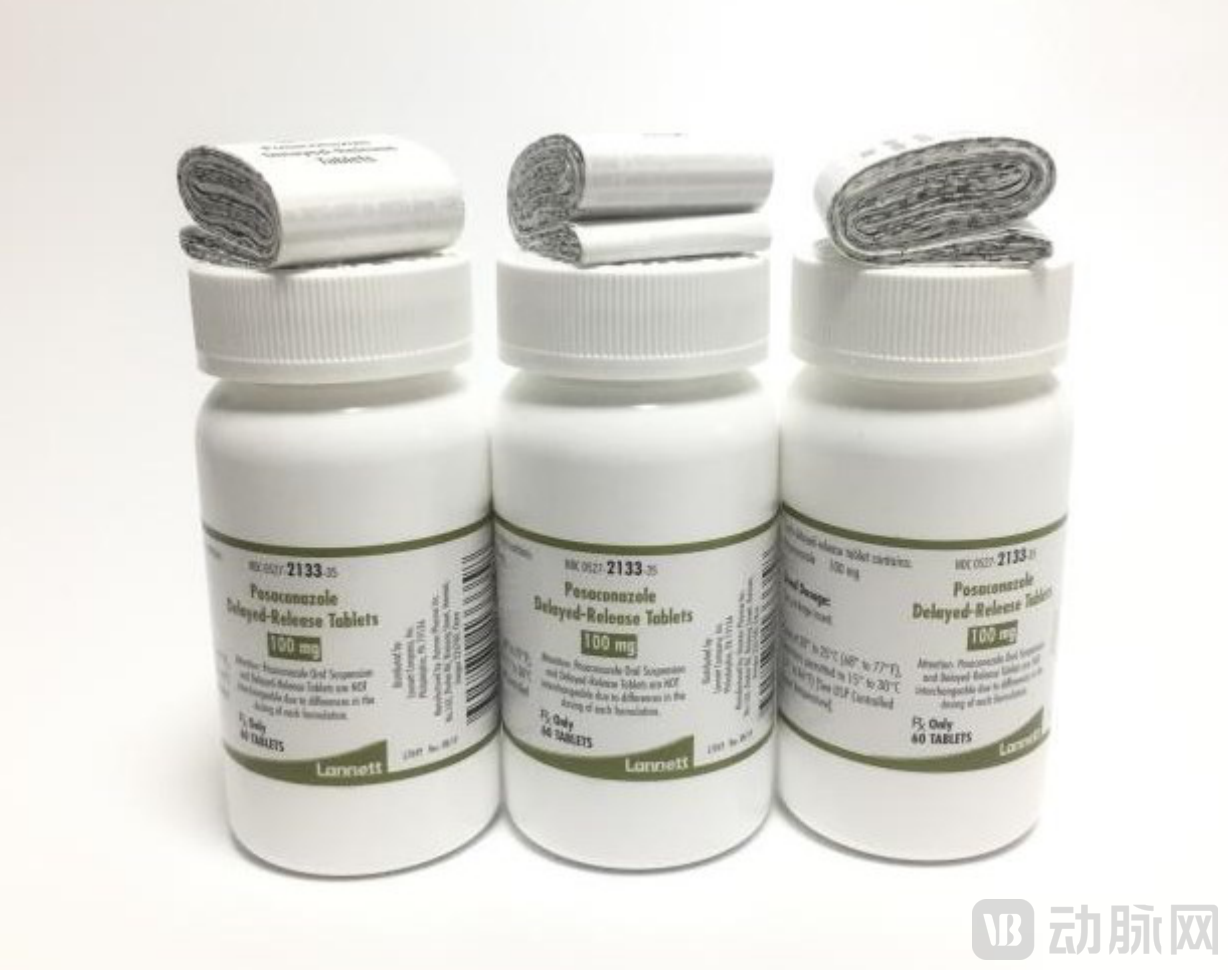
Posaconazole Enteric-coated Tablets (Image source: Sinotherapeutics prospectus)
Posaconazole is a representative drug developed by Sinotherapeutics based on its hot-melt extrusion technology, which is part of its “Poorly Soluble Drug Solubilization Technology Platform.” Hot-melt extrusion is a continuous process that uniformly disperses drugs within polymer carriers. This technology, characterized by high technical barriers, is being vigorously developed in Europe, North America, and Japan. As of the end of the reporting period for Sinotherapeutics, only nine originator drugs utilizing hot-melt extrusion technology had been approved by the U.S. Food and Drug Administration (FDA).
The originator of posaconazole is Merck & Co., and it is used to treat invasive Aspergillus or Candida infections. Leveraging its R&D capabilities and patent challenges, Sinotherapeutics successfully secured the first generic approval for posaconazole in 2019. In the U.S. market, the first-filer generic manufacturer is granted a 180-day exclusivity period, allowing it to compete for market share by pricing its product at 50%–80% of the originator drug’s price.
At the time, Merck priced posaconazole at $58 per tablet, while Sinotherapeutics priced it at under $40. Leveraging its price advantage, Sinotherapeutics rapidly captured nearly half of the market share from Merck.
Posaconazole has thus become the growth engine for Sinotherapeutics’ business performance. From 2019 to the first half of 2021, Sinotherapeutics reported operating revenues of RMB 138 million, RMB 319 million, and RMB 156 million, respectively. During the same periods, revenue from posaconazole amounted to RMB 53.45 million, RMB 250 million, and RMB 120 million, accounting for 38.69%, 79.23%, and 77.16% of the total revenue in each respective period.
Given the substantial profits generated, the value of being the first generic manufacturer cannot be overlooked. Success in the “first-to-file” generic competition, where speed is paramount, further validates the technical prowess of Sinotherapeutics’ “Poorly Soluble Drug Solubilization Technology Platform.”
Capacity Decision: Drug Manufacturing vs. High-End Formulations
While posaconazole sales surged in the United States, the proportion of CRO revenue at Sinotherapeutics declined significantly. In 2020, CRO revenue dropped from its previous 61% to nearly 12%, before slightly recovering to 15% in 2021.
Sinotherapeutics’ primary source of revenue was previously formulation CRO services. Leveraging its technical advantages in formulation technology, the company provided clients with R&D, manufacturing, and regulatory submission services for new drug formulations in China and the United States, as well as technical services for quality consistency evaluation of generic drugs and generic drug R&D services.
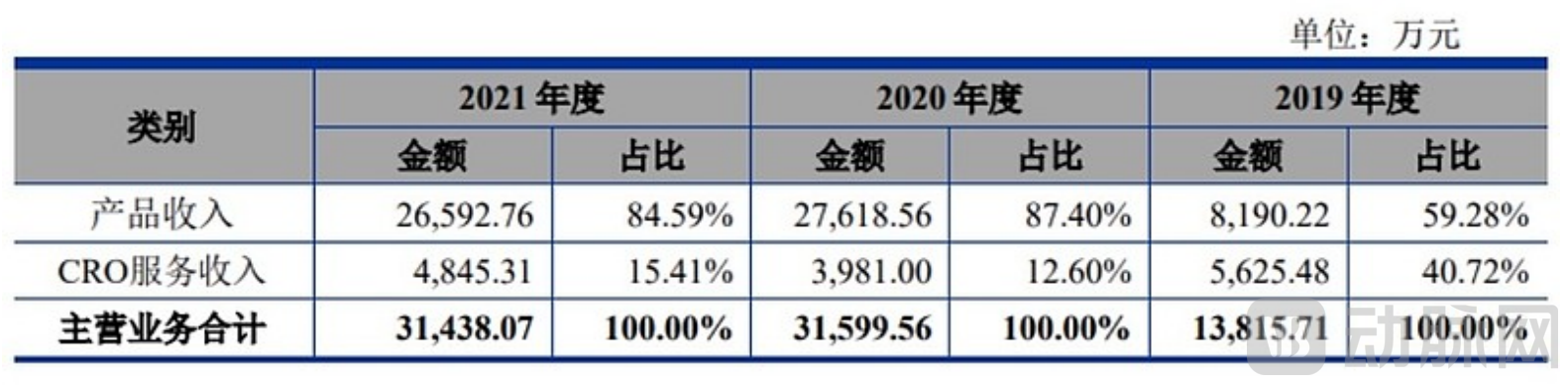
Composition of Sinotherapeutics' Main Business Revenue (Source: Sinotherapeutics Prospectus)
In response, Sinotherapeutics stated that CRO services also require the use of the company’s production equipment, and the company prioritizes the production of posaconazole. Given limited production capacity and considering corporate revenue, Sinotherapeutics chose production over R&D.
This is because high-end generic drugs not only pursue speed in R&D, but also seek to capitalize on the market window in sales. Posaconazole can be used to treat various complications caused by COVID-19, and its sales volume in 2020 was closely linked to the prevalence of COVID-19 in the United States.
As the pandemic subsided and AET’s posaconazole product received approval, Sinotherapeutics saw its market share decline and was compelled to compete by lowering end-user prices.
However, Sinotherapeutics boasts a robust pipeline of drugs under development. In addition to posaconazole, its other high-end generic drugs already generating sales include bupropion hydrochloride extended-release tablets for the treatment of depression and propafenone hydrochloride sustained-release capsules. Products that have successfully completed R&D and are awaiting market launch include macitentan tablets for the treatment of pulmonary arterial hypertension and omeprazole enteric-coated capsules.
Sinotherapeutics has a relatively clear strategy, targeting many blockbuster drugs with global market sizes exceeding $1 billion. However, compared to posaconazole, the other drugs in Sinotherapeutics’ pipeline face more intense market competition and are unlikely to generate substantial profits comparable to those of posaconazole.
Revenue generated from pharmaceutical manufacturing is more rapid and straightforward, but sustainable development hinges on the iteration and breakthroughs in formulation CRO technologies.
Sinotherapeutics has also demonstrated a clear long-term commitment to R&D. Its prospectus reveals that cumulative R&D expenditure over the past three years accounted for 34% of cumulative operating revenue, and emphasizes that the company will continue to increase its R&D investment to safeguard sustained innovation and technological reserves.
Currently, Sinotherapeutics’ formulation CRO clients include multiple listed companies such as Ascletis Pharma, Ascentage Pharma, Zai Lab, Allist, and Chasen Pharmaceutical, as well as renowned domestic and international pharmaceutical companies including Pfizer Upjohn, Haihe Biopharma, and Innovent Biologics.
Formulation development technology significantly impacts the efficacy and safety of high-end generic drugs and improved new drugs. Formulations can control drug release, reduce dosing frequency, maximize therapeutic efficacy while minimizing adverse reactions, and facilitate storage, transportation, and use.
In the pharmaceutical industry chain, advanced drug delivery systems serve as a critical link between upstream and downstream sectors. They not only represent the optimal solution for generic drugs and improved new drugs but also support novel drug development, facilitating the ultimate industrialization of new therapies. Through the research and development of novel advanced drug delivery systems, China’s pharmaceutical industry can gradually escape the predicament of high consumption, high pollution, and low-value exports associated with the production of low-end active pharmaceutical ingredients.
High-end formulations represent a business sector with substantial entry barriers, requiring not only technological platforms and production lines but also stringent manufacturing conditions.
Therefore, it is not difficult to understand why more than 50% of the funds raised by Sinotherapeutics in this offering will be allocated to the construction of the integrated formulation production building and related supporting facilities.
At its current scale, Sinotherapeutics still needs time to become a company that advances both production and R&D.
What Positive Signals Has Sinotherapeutics’ IPO Sent to China’s Pharmaceutical Industry?
Regarding future development, Sinotherapeutics stated that the company has multiple improved new drug projects currently under research and development, aiming to facilitate its transformation from a “generic-focused” pharmaceutical manufacturer into an innovation-driven enterprise integrating generic production with original drug creation.
Although improved new drug projects are a subsequent development, they illustrate a typical innovation pathway for Chinese pharmaceutical companies: entering the market with advanced formulations, progressing from high-quality generics to modified drugs, and ultimately to innovative drugs, thereby achieving a combination of generic and innovative development.
On this path, it is worth mentioning Borui Medicine, the first globalized high-end generic drug company listed on the STAR Market. Listed in 2019, Borui specializes in the research and production of pharmaceutical intermediates, active pharmaceutical ingredients (APIs), and formulated drugs with high technical barriers. The company has made substantial R&D investments, entering the market through high-end APIs and then breaking into the formulated drug sector—which has become its primary revenue source in the past two years—while continuously improving its R&D system and developing innovative drug projects. Through years of development and strategic layout, Borui has established a relatively solid position in the global industrial chain.
Companies such as Ruihua Pharmaceutical and Huayi Taikang have not pursued “original innovation” directly; instead, they have chosen to maximize the clinical efficacy of existing drug ingredients through innovations in formulation technology.
For a long time, China has been a major producer of generic drugs, and the transition from imitation to innovation has been a tortuous path. Formulation technologies, along with high-end generics and improved drugs, will be China’s strengths in participating in global pharmaceutical innovation.
China boasts significant cost advantages, a robust manufacturing foundation, and strong commercial service orientation. In recent years, an increasing number of biomedical professionals have returned to China to launch startups. Having gained firsthand experience in overseas markets, these entrepreneurs are well-positioned to lead their companies into global competition, leveraging comprehensive capabilities across the entire value chain—from R&D, regulatory approval, and manufacturing to after-sales services.
Sinotherapeutics is no exception. Wan Jiansheng, the General Manager, previously worked at international pharmaceutical giants such as Roche, Pfizer, and Merck & Co., with his most recent position before joining Sinotherapeutics being Vice General Manager of WuXi AppTec’s New Drug Development Division. In addition to the United States, Sinotherapeutics’ products are exported to multiple countries, including Australia, Singapore, Mexico, Israel, and Canada, among which sales revenue has already been realized in Australia.
After achieving success in overseas markets, companies exporting generic drugs and finished pharmaceutical products also choose to return to China to develop distribution channels, aiming to avoid being constrained by foreign policies and environmental factors. As a massive market in its own right, China allows pharmaceutical companies to continuously introduce application-oriented technologies and leverage market feedback to enhance their products.
Sinotherapeutics has multiple products approved or pending approval in China, such as bupropion hydrochloride extended-release tablets. Currently, only the immediate-release formulation of propafenone hydrochloride tablets is available in the Chinese market, with no approved extended-release formulations. Sinotherapeutics’ propafenone hydrochloride extended-release capsules were submitted for marketing approval in October 2019 under the Class 3 drug registration category and currently face no competition.
The transition from a major pharmaceutical producer to a leading pharmaceutical power is a protracted process. In addition to enterprises exploring innovative pathways through high-end generics and advanced drug delivery systems, capital markets are also supporting incremental pharmaceutical innovation. For instance, the STAR Market acknowledges the technological breakthroughs achieved in high-end generics and improved drugs, thereby helping to redefine pharmaceutical innovation. Across the Pacific, companies such as Teva Pharmaceutical Industries and Mylan have grown into industry giants with the backing of capital markets.
For investors, the original intention to support pharmaceutical innovation remains unchanged, but positive feedback in terms of investment returns is also necessary. Pharmaceutical companies seek a balance between “imitation” and “innovation,” while investors expect these enterprises to maintain R&D investment while ensuring stable cash flow. After all, only by surviving soundly can they have the strength to pursue continuous innovation.
In any case, Sinotherapeutics’ listing on the STAR Market is a positive signal that China’s pharmaceutical innovation continues to advance.